
The Trump Iran Peace Talks record took a sharp turn, when President Donald Trump officially canceled a high-stakes diplomatic mission to Pakistan. The decision to halt the travel of senior envoys Steve Witkoff and Jared Kushner came as a response to the sudden departure of Iranian Foreign Minister Abbas Araghchi from Islamabad. This development underscores a “wait-and-see” approach from the U.S. administration, which maintains that it holds the superior bargaining position in the ongoing regional conflict.
The Trump Iran Peace Talks were originally aimed at establishing a framework to de-escalate hostilities that have crippled global energy markets. However, the President dismissed the necessity of an eighteen-hour flight for his team, characterizing the potential negotiations as “unproductive” under the current circumstances. Trump emphasized in an interview with Fox News that the United States would no longer pursue long-distance diplomatic travel without clear, direct initiation from Tehran. This cancellation reflects a calculated move to exert strategic pressure while the U.S. naval blockade remains in effect.
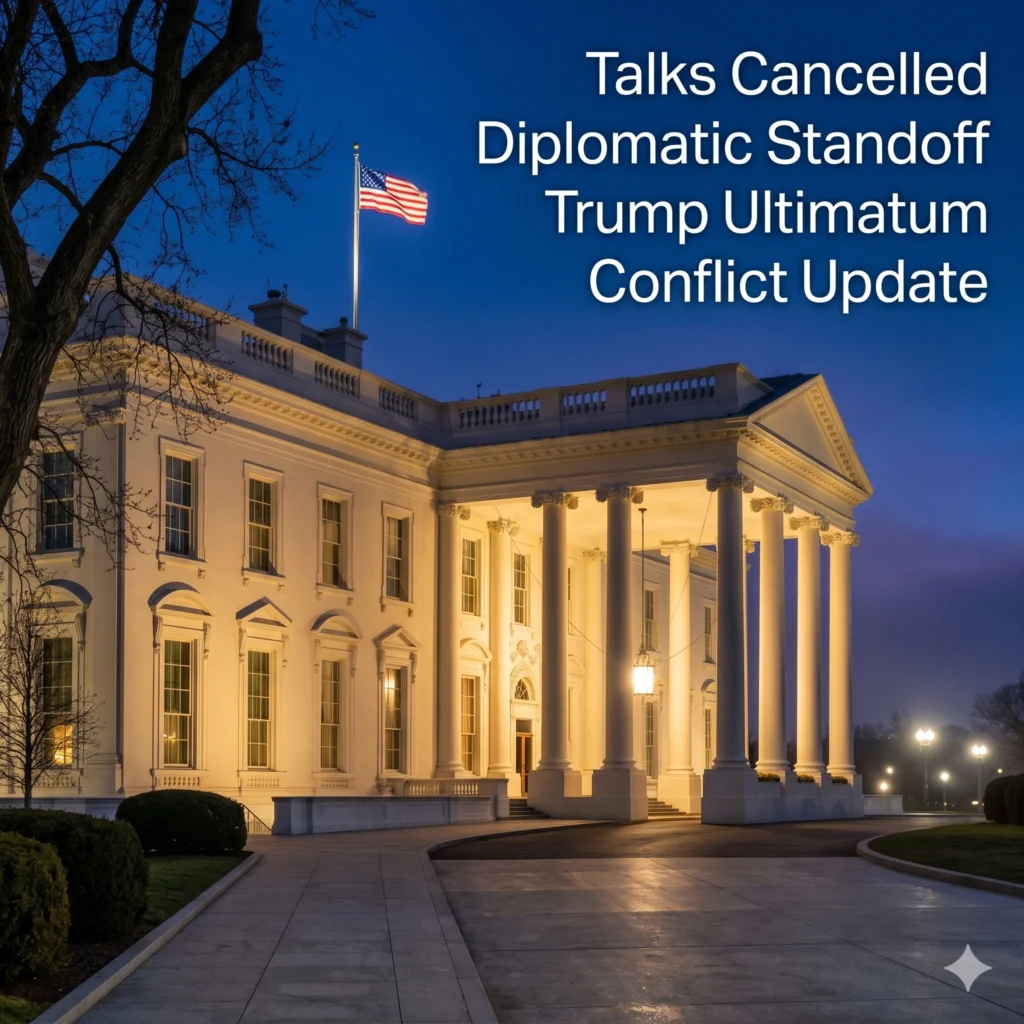
Trump Iran Peace Talks
The Trump Iran Peace Talks record was impacted by the timing of Foreign Minister Araghchi’s diplomatic tour. After meeting with Pakistani Prime Minister Shehbaz Sharif and Army Chief Asim Munir, Araghchi departed for Oman and Russia. This move was seen by the White House as a lack of commitment to the Islamabad summit. The Trump Iran Peace Talks record now shows a shift toward direct messaging rather than utilizing neutral third-party grounds. Trump’s refusal to send Kushner and Witkoff signals a demand for higher-level, face-to-face commitments from the Iranian leadership.
Strategically, the Trump Iran Peace Talks serve as a backdrop to the “maximum pressure” campaign being executed on the water. The U.S. administration believes that the economic toll of the naval blockade will eventually force Iran to return to the table with more favorable terms. Analysts from Al Jazeera suggest that the cancellation is a tactic to show that the U.S. is not desperate for a deal. The Trump Iran Peace Talks record is thus a testament to a hardline negotiation style that prioritizes American leverage over diplomatic convenience.
The Iranian Foreign Ministry has hinted that Araghchi may return to Pakistan after consultations in Muscat, but the U.S. has shown no sign of rescheduling the envoy trip. The Trump Iran Peace Talks narrative is currently one of “strategic patience,” with the U.S. waiting for a clear signal that Tehran is ready to discuss a total cessation of hostilities. This period of stagnation is particularly dangerous given the high concentration of military assets in the region. Every day without a dialogue increases the risk of a miscalculation on either side of the blockade.
Impact on Global Energy and Security
The failure to progress with the Trump Iran Peace Talks has immediate consequences for the global economy. The Strait of Hormuz remains a primary chokepoint, and its continued blockade by the IRGC has sent shockwaves through energy sectors. The Trump Iran Peace Talks record is closely monitored by oil-dependent nations who are desperate for a resolution. Without a diplomatic breakthrough, the cost of liquefied natural gas (LNG) is expected to remain at record highs, impacting heating and industrial costs across Europe and Asia.
In terms of security, the Trump Iran Peace Talks are seen as the only viable alternative to a widening regional war. While President Trump stated that the cancellation does not signal an immediate resumption of offensive operations, the lack of communication creates a vacuum. The Trump Iran Peace Talks record reflects a standoff where both sides are testing each other’s endurance. The U.S. military presence in the region remains at peak levels to enforce the blockade and protect commercial interests that are still attempting to navigate safe corridors.
- The cancellation followed Iranian Foreign Minister Araghchi’s departure for Oman and Russia.
- Steve Witkoff and Jared Kushner were the primary envoys for the canceled Pakistan mission.
- The U.S. maintains that Iran has yet to make “significant concessions” for a deal.
- Global energy prices remain volatile due to the ongoing blockade of the Strait of Hormuz.
Diplomatic Positioning and Third-Party Roles
The role of Pakistan as a mediator in the Trump Iran Peace Talks has been challenged by this latest development. While Islamabad successfully hosted the Iranian delegation, the inability to bring the Americans to the table simultaneously highlights the difficulty of neutral mediation. The Trump Iran Peace Talks record shows that even with willing hosts, the primary combatants remain far apart on the basic terms of engagement. Pakistan’s leadership continues to advocate for a peaceful resolution to prevent a broader spillover into their own borders.
The Trump Iran Peace Talks also involve the interests of Russia and Oman, where Araghchi is currently seeking consultations. These nations play a “backdoor” role in the Trump Iran Peace Talks record, often passing messages that cannot be delivered directly. However, Trump’s latest statement suggests a preference for cutting out the middleman in favor of direct Iranian outreach to the White House. This change in tone could redefine how future peace talks are structured throughout the remainder of 2026.
- Pakistan remains a key regional mediator despite the canceled U.S. trip.
- Iran is seeking further instructions and consultations in Muscat and Moscow.
- President Trump’s “hold all the cards” rhetoric defines the current U.S. stance.
- The Board of Peace in Gaza (a separate conflict) is watching these talks for regional cues.
Future Outlook for 2026 Negotiations
Looking ahead, the Trump Iran Peace Talks record will likely remain stalled until one side experiences a significant shift in domestic or economic pressure. The U.S. administration is betting that the internal situation in Iran will deteriorate under the weight of the blockade and sanctions. Conversely, Iran appears to be searching for a diplomatic “win” that doesn’t involve total capitulation to U.S. demands. The Trump Iran Peace Talks record in 2026 is a record of a high-stakes chess match with global implications.
If the Trump Iran Peace Talks do resume, they will likely require a pre-negotiated “freeze” on certain military actions to ensure the safety of the diplomats involved. The President’s dismissal of the eighteen-hour flight suggests that any future meeting will need to occur in a more accessible location or via more direct secure channels. The Trump Iran Peace Talks remain the most critical diplomatic story of the year, as they hold the key to restoring stability to the world’s most vital energy corridor.
For more details & sources visit: Al Jazeera
Read more about Pakistan news on 360 News Orbit – Pakistan.