
The Taiwan ultimatum officially reached its critical deadline, as Taipei demands that Seoul stop labeling the island as “China (Taiwan)” in its electronic entry systems. Foreign Minister Lin Chia-lung confirmed that the Taiwanese government is prepared to implement “firm” retaliatory countermeasures if the designation is not rectified immediately. This diplomatic friction is part of a broader global “China Label” dispute that has already seen Taiwan take aggressive stances against countries like Denmark and Cameroon to defend its sovereign identity in international administrative frameworks.
As the Taiwan ultimatum expires today, the Ministry of Foreign Affairs (MOFA) in Taipei has signaled that it may begin adjusting the entry privileges of South Korean nationals. This strategy of “reciprocity” reflects a growing trend where Taiwan uses its own administrative power to push back against what it views as a slow erosion of its international standing. By issuing this Taiwan ultimatum, the administration of President Lai Ching-te is signaling to the world that it will no longer tolerate being classified as a province of the People’s Republic of China in official visa and residence documents.
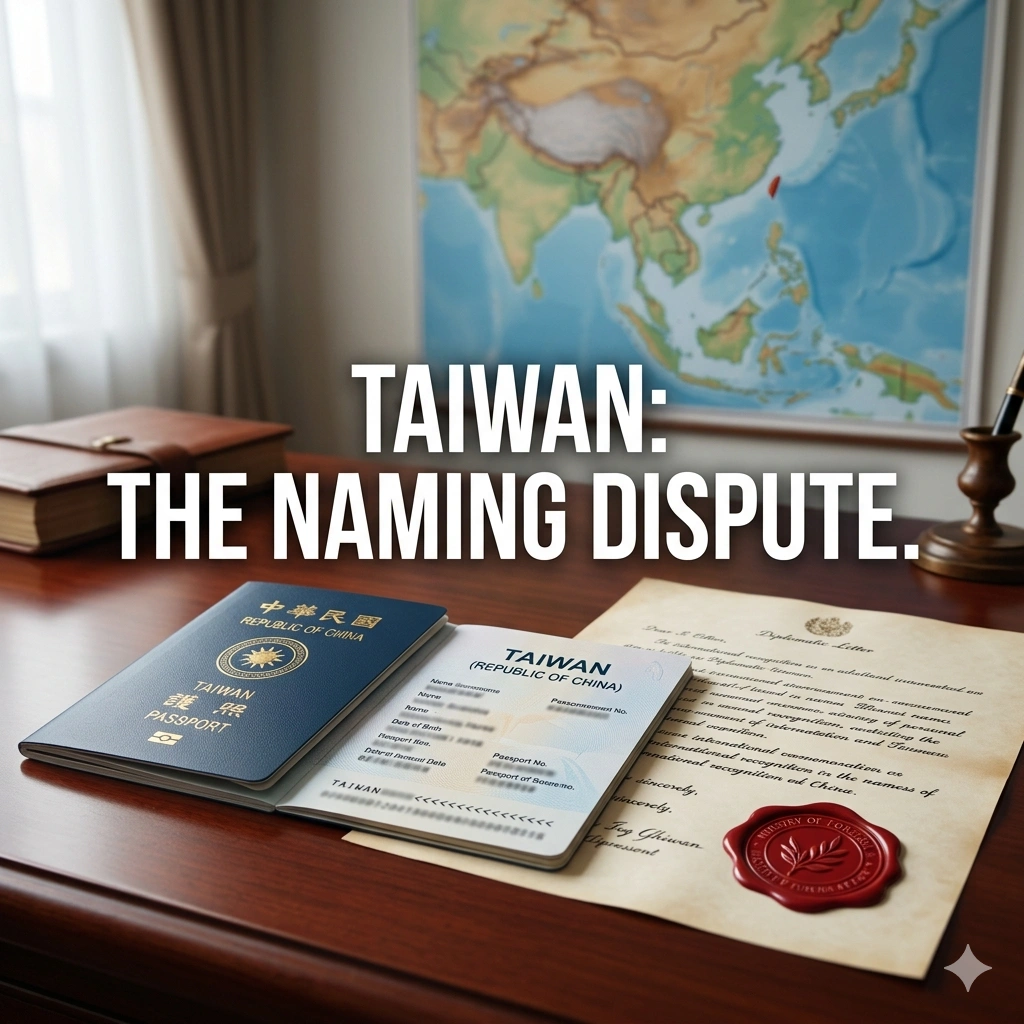
The Origins of the Taiwan Ultimatum to Seoul
The current diplomatic standoff was triggered by a recent update to South Korea’s digital arrival card system, which categorized Taiwanese travelers under a Chinese sub-heading. Taipei viewed this as a direct affront to its dignity and a violation of the unofficial but stable status quo that has governed Taiwan-South Korea relations for decades. Despite being major trading partners in the semiconductor industry, the situation shows that political identity currently outweighs economic synergy in Taipei’s strategic calculus.
Minister Lin Chia-lung has emphasized that the Taiwan ultimatum is a necessary response to prevent a “domino effect” among middle-tier powers. If South Korea, a close neighbor and fellow democracy, is allowed to change the island’s designation without consequence, other nations might follow suit to appease Beijing. Therefore, the current move serves as a high-stakes warning to the international community that administrative labeling carries real-world diplomatic costs, including the potential restriction of diplomatic privileges for foreign representative staff stationed in Taipei.
Retaliatory Measures: The Denmark and Cameroon Precedents
To understand the weight of the Taiwan ultimatum, one must look at how Taipei handled similar disputes earlier this year. In Denmark, after authorities began labeling residents as “born in China,” Taipei adjusted the privileges of Danish representative staff, creating significant bureaucratic hurdles for their operations. This precedent suggests that the demand to South Korea will likely result in similar “tit-for-tat” administrative restrictions that could complicate travel and business for South Korean citizens.
The push for recognition also follows a historic boycott of a World Trade Organization (WTO) ministerial meeting in Cameroon. When the host nation refused to recognize the official membership designation, the delegation staged an unprecedented walkout. These actions prove that the Taiwan ultimatum is not an isolated threat but part of a coordinated “counter-labeling” campaign designed to force foreign governments to reconsider their adherence to Beijing’s naming conventions in non-political, administrative contexts.
Impact on Global Travel Systems
The technical side of the Taiwan ultimatum centers on the Electronic Travel Authorization (ETA) systems used by modern border controls. Taipei argues that these systems are data-driven and should reflect the reality of travel documents, which are issued by the Republic of China and not the PRC. The government demands that South Korea revert to using “Taiwan” as a standalone entry in its drop-down menus to ensure the accuracy of traveler data and the respect of sovereign boundaries.
- Travel agencies in Seoul are reporting confusion among tourists.
- The diplomatic friction could lead to longer processing times for South Korean visas.
- Airlines are closely monitoring the situation for potential boarding requirement changes.
- Tech firms worry the dispute might disrupt short-term business exchanges.
If the Taiwan ultimatum leads to a full suspension of visa-waiver programs, the tourism sectors of both nations would suffer. South Korea is a top destination for travelers from the island, and vice versa. However, the government has stated that “identity is not for sale,” suggesting that they are willing to accept a temporary dip in tourism to ensure that their efforts result in a permanent change to how the nation is identified globally.
Diplomatic Lobbying and G7 Support
Beyond the immediate Taiwan ultimatum, Taipei is actively lobbying the G7 and European Union members to adopt a unified standard for referring to the island. The ministry’s goal is to ensure that European nations align with “standard international practices,” which typically treat the territory as a separate customs and administrative zone. The demand to South Korea is effectively a test case for this broader lobbying effort, showing that the island is willing to use “sticks” as well as “carrots” in its foreign policy.
Critics argue that this strategy puts middle-tier powers in an impossible position between Washington and Beijing. However, supporters in Taipei claim that the Taiwan ultimatum is the only way to prevent “administrative erasure.” By forcing a public confrontation over labels, the island ensures that its status remains a live political issue rather than a settled bureaucratic fact. The move has successfully elevated a niche administrative complaint into a major headline in the global “China Label” dispute.
Economic Stakes and the Semiconductor Link
The timing of the Taiwan ultimatum is particularly sensitive given the integration of the global semiconductor supply chain. Both nations are home to the world’s leading chipmakers, and any disruption caused by the dispute could have ripple effects throughout the global tech industry. Some analysts believe that Seoul will eventually find a “middle ground” solution to satisfy the demand without triggering a harsh reaction from Beijing, perhaps by using a more ambiguous designation in its systems.
However, the current diplomatic pressure is specifically designed to close these loopholes. Taipei is demanding an “exact match” for its preferred designation, leaving little room for the creative ambiguity that has characterized its unofficial diplomacy for decades. The Taiwan ultimatum reflects a more assertive foreign policy under the current administration, which believes that its indispensability in the global economy gives it the leverage to demand better treatment in the administrative sphere.
The Role of International Organizations in the Dispute
The conflict also touches upon the role of international organizations like the International Civil Aviation Organization (ICAO). These bodies often set the standards for country codes used in travel and trade. The exclusion from the ICAO has often been cited as a reason for the labeling issues that led to the Taiwan ultimatum. By targeting individual nations like South Korea, Taipei is attempting to create a “bottom-up” pressure campaign to change these global standards one country at a time.
- The government issues a deadline to a specific target nation.
- The target nation faces administrative or diplomatic sanctions if it fails to comply.
- Other nations observe the impact on trade and travel.
- Global standards gradually shift to avoid similar diplomatic escalations.
This strategy is not without risks. If a nation refuses to back down, the Taiwan ultimatum could lead to long-term diplomatic isolation. Yet, the current administration seems convinced that the risk is worth the potential reward of a more secure and recognized national identity. As the March 31 deadline passes, the world is waiting to see if South Korea will blink or if the situation will trigger a new phase of diplomatic “grey zone” conflict.
Public Sentiment and Domestic Support
In the local community, the Taiwan ultimatum has received significant support from the younger “natural independence” generation. These citizens view the “China Label” as a relic of the past and fully back the government’s use of administrative deadlines to demand respect. For them, the matter is one of basic fairness; they travel on their own passports and live in a democratic society, so they expect to be labeled as such when they visit neighboring countries like South Korea.
Conversely, some business leaders are concerned that the Taiwan ultimatum could lead to unnecessary friction with Seoul, which is a vital partner in regional security. They argue that while the demand is morally justified, its practical application could weaken the informal “democratic alliance” that serves as a bulwark against regional aggression. Despite these concerns, the government has proceeded with its demands, confident that its domestic mandate for “sovereign dignity” remains strong in 2026.
Future Outlook: Will the Strategy Pay Off?
The success of the Taiwan ultimatum will be measured by whether other nations follow South Korea’s lead if they choose to comply. If Seoul rectifies the labeling, the move will be seen as a masterclass in “asymmetric diplomacy.” If Seoul refuses, the dispute could mark the beginning of a messy and protracted administrative trade war that leaves both sides diminished. The administration has certainly drawn a line in the sand, but the shifting tides of geopolitics may yet blur the results.
As we look past the March 31 deadline, the Taiwan ultimatum remains the most significant challenge to the “One China” administrative consensus in recent years. Taipei has proven it has the resolve to issue such demands and the tools to follow through with consequences. Whether this leads to a more recognized status or a more isolated one depends on how the international community responds to this bold move. For now, the island stands firm in its refusal to be erased from the world’s digital maps.
Conclusion: A New Diplomatic Tool
The Taiwan ultimatum marks a new era in foreign policy, one where administrative labels are treated with the same seriousness as military threats. By centering its diplomacy on these sovereign designations, the government has found a way to engage with the world on its own terms, even without formal recognition. The pressure on South Korea is more than just a dispute over a drop-down menu; it is a fight for the right to exist as a distinct entity in the 21st-century global system.
The outcome of the Taiwan ultimatum will likely influence how the island interacts with other nations in the G7 and EU. If these results prove positive, expect to see similar deadlines issued to other countries currently using “China (Taiwan)” designations. The Taiwan ultimatum has shown that in the age of digital governance, the most important battles are sometimes fought in the code of an arrival card system. Taipei’s firm stance ensures that this moment will be remembered as a pivotal point in its ongoing struggle for international legitimacy.
For more details & sources visit: South China Morning Post (SCMP)
Read more on Taiwan news: 360 News Orbit – Taiwan.