
The Suez-style consortium has emerged as a groundbreaking diplomatic proposal aimed at resolving the maritime blockade in the Strait of Hormuz. This initiative, spearheaded by the foreign ministers of Türkiye, Egypt, Pakistan, and Saudi Arabia, seeks to establish an international management body to oversee oil flows. During high-level talks in Islamabad, the regional powers discussed implementing a structured fee system modeled after the Suez Canal to ensure the safe passage of commercial vessels through the volatile waterway.
By proposing the Suez-style consortium, these four key nations are attempting to bypass the current military deadlock between the United States and Iran. The plan positions the consortium as a neutral manager, providing essential “confidence-building measures” to global markets and opposing factions. Under this framework, revenue generated from transit fees would be utilized to fund maritime security operations, effectively turning a zone of conflict into a regulated international corridor for global energy trade.
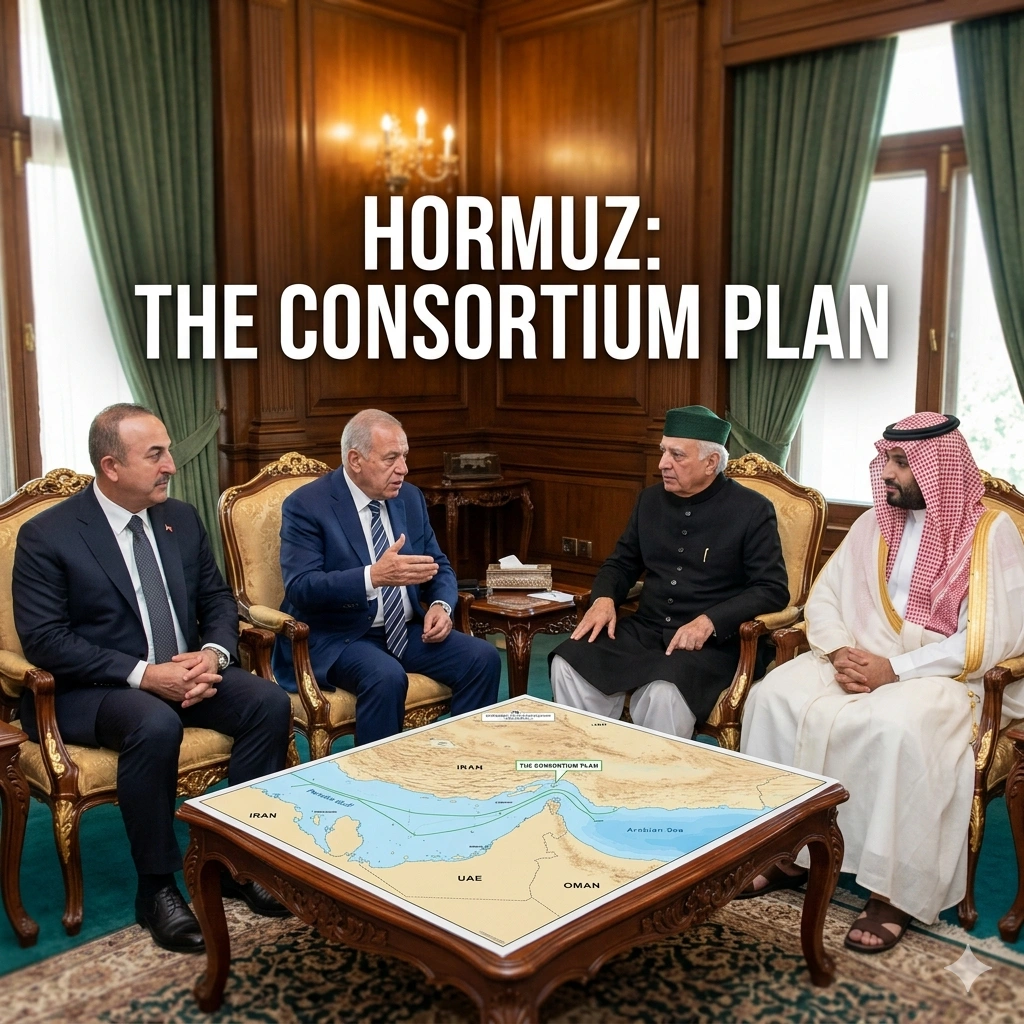
The Islamabad Summit and the Suez-style Consortium
The Islamabad summit featured Hakan Fidan of Türkiye, Muhammad Ishaq Dar of Pakistan, Faisal bin Farhan of Saudi Arabia, and Badr Abdelatty of Egypt. These leaders focused on the technical logistics of the Suez-style consortium, emphasizing that a regional solution is preferable to external military intervention. The proposal suggests that a non-aligned administrative body could provide the transparency needed to de-escalate tensions while maintaining the flow of crude oil to international refineries.
The urgency behind the Suez-style consortium is driven by the severe economic impact of the ongoing blockade. As energy prices fluctuate globally, the four nations recognize that a prolonged closure of the Strait of Hormuz could trigger a worldwide recession. By leveraging the successful administrative model of the Suez Canal, the group hopes to create a blueprint for maritime governance that satisfies both Tehran’s sovereignty concerns and Washington’s demands for freedom of navigation.
Technical Framework of the Proposed Management Body
The proposed Suez-style consortium would operate as a multilateral entity with a mandate to regulate traffic and ensure environmental safety. Much like the Suez Canal Authority, this body would be responsible for scheduling vessel convoys and managing pilotage through the narrowest points of the strait. This structured approach is central to the Suez-style consortium, as it replaces chaotic military posturing with predictable, rules-based commercial maritime procedures.
A key feature of the Suez-style consortium is the implementation of a “Security Transit Fee.” This fee would be paid by shipping companies in exchange for guaranteed safe passage and insurance coverage backed by the consortium members. The funds would be transparently managed to pay for naval patrols and mine-clearing operations, ensuring that the waterway remains open even during periods of high political friction between neighboring coastal states.
Pakistan’s Breakthrough and the Suez-style Consortium
Pakistan has already demonstrated the potential success of the Suez-style consortium through a small-scale diplomatic victory. Ahead of the Islamabad meetings, Iran agreed to allow 20 Pakistani-flagged vessels to pass through the strait without interference. This localized breakthrough serves as a “proof of concept” for the broader Suez-style consortium, proving that diplomatic engagement can yield practical results where military threats have failed.
- Pakistan secured passage for 20 vessels as a gesture of goodwill.
- The Suez-style consortium would expand this access to all global flags.
- Diplomatic channels in Islamabad remain open to both Iran and the U.S.
- Revenue from fees could potentially support regional economic development.
While this initial success is promising, the organizers of the Suez-style consortium realize that a comprehensive agreement requires broader international support. The Pakistani government has acted as a vital intermediary, using its unique relationship with Tehran to pitch the consortium as a way for Iran to de-escalate without appearing to succumb to Western military pressure. This “middle path” is the defining characteristic of the current proposal.
Türkiye’s Stance on Ceasefire and Global Security
Hakan Fidan, representing Türkiye, emphasized during the summit that the Suez-style consortium is a secondary measure to a comprehensive ceasefire. While the consortium addresses the symptoms of the conflict, Ankara maintains that lasting stability requires a political resolution to the underlying regional tensions. However, the Suez-style consortium provides an immediate “breathing room” for the global economy while those long-term negotiations continue behind closed doors.
Türkiye has also issued a stark warning regarding the failure of the Suez-style consortium. If this regional diplomatic effort does not gain traction, Ankara suggests that a broader international military coalition may become the only alternative to restore the freedom of navigation. The Suez-style consortium is therefore being presented as the “last best hope” for a peaceful resolution before the situation escalates into a full-scale maritime war involving major world powers.
Saudi Arabia and Egypt: Strategic Economic Interests
For Saudi Arabia and Egypt, the Suez-style consortium is a matter of profound national economic security. Saudi Arabia relies on the strait for the vast majority of its oil exports, while Egypt’s economy is deeply tied to the volume of traffic reaching the Suez Canal. Any disruption in the Gulf directly impacts the revenue Egypt generates from its own waterway, making the Suez-style consortium a logical extension of Cairo’s existing maritime expertise.
The involvement of Riyadh in the Suez-style consortium adds significant financial and political weight to the proposal. As a leader in the energy market, Saudi Arabia’s endorsement of a fee-based transit system could set a new global standard. The Suez-style consortium would essentially integrate the Strait of Hormuz into the same high-security logistics chain that currently governs the Red Sea and the Suez Canal, creating a “Blue Corridor” for energy products.
Challenges to Implementing the Suez-style Consortium
Despite the optimism in Islamabad, the Suez-style consortium faces significant hurdles, primarily regarding the participation of Iran. As a sovereign state with direct control over the northern coast of the strait, Iran may view the Suez-style consortium as an infringement on its territorial waters. The negotiators must convince Tehran that the consortium is a management tool rather than a foreign occupation force, which remains a delicate diplomatic balancing act.
- Negotiating the legal status of the “International Management Zone.”
- Gaining formal recognition from the United Nations Security Council.
- Defining the specific fee structure to avoid overcharging smaller nations.
- Ensuring that the United States accepts a neutral body over its own naval presence.
Furthermore, the Suez-style consortium must address the insurance industry’s concerns. Without a robust guarantee of safety, maritime insurers may continue to charge “war risk” premiums that make transit through the strait prohibitively expensive. The success of the Suez-style consortium hinges on its ability to lower these costs by demonstrating a consistent and verifiable reduction in maritime incidents through its regulated management.
Impact on Global Oil Prices and Market Stability
The announcement of the Suez-style consortium has already had a calming effect on the global energy markets. Traders view the proposal as a sign that regional powers are taking active steps to prevent a total shutdown of the world’s most important energy artery. If the Suez-style consortium is successfully established, experts predict a significant drop in oil price volatility, as the “fear premium” associated with the blockade begins to dissipate.
The Suez-style consortium represents a shift toward a “commercialized security” model. By placing a price on transit, the consortium creates a financial incentive for all parties to maintain the peace. If the Suez-style consortium becomes the permanent administrative reality for the Strait of Hormuz, it could lead to the most stable era for energy transport in the history of the Middle East, benefiting consumers from Europe to East Asia.
The Role of International Law in the Consortium
A major pillar of the Suez-style consortium is its foundation in the United Nations Convention on the Law of the Sea (UNCLOS). The proposal seeks to clarify the rights of transit passage, which have been a point of contention for decades. By codifying these rights under the Suez-style consortium, the regional powers hope to eliminate the legal ambiguities that currently allow for the seizure of tankers and the harassment of commercial shipping.
Legal experts in Egypt and Türkiye are currently drafting the “Hormuz Charter,” a document that would serve as the constitutional basis for the Suez-style consortium. This charter would outline the responsibilities of the management body and the rights of the participating shipping nations. The Suez-style consortium aims to be a model of international legal cooperation, proving that even the most contested waterways can be managed through consensus and shared economic interest.
Future Outlook: From Proposal to Reality
As the ministers depart Islamabad, the next step for the Suez-style consortium is a series of “proximity talks” with the United States and Iran. While neither country has officially signed on, the regional powers are hopeful that the sheer economic necessity of the Suez-style consortium will force both sides to the table. The goal is to have the first phase of the consortium—the pilot fee structure—in place by the end of the second quarter of 2026.
The Suez-style consortium is not just a temporary fix; it is envisioned as a permanent solution to a recurring global problem. By institutionalizing the management of the Strait of Hormuz, the group of four seeks to remove the waterway from the realm of geopolitical leverage. The Suez-style consortium stands as a testament to the power of regional diplomacy in an increasingly fragmented world, offering a path toward stability in a region that has known little of it.
Conclusion: A Strategic Turning Point for the Gulf
The Suez-style consortium marks a strategic turning point in the history of the Middle East. By moving away from purely military solutions, Türkiye, Egypt, Pakistan, and Saudi Arabia are offering a sophisticated, economically driven alternative to conflict. The Suez-style consortium is a bold experiment in maritime governance that, if successful, will secure the world’s energy future for decades to come.
As the international community watches the developments from the Islamabad summit, the pressure is on the major powers to support this regional initiative. The Suez-style consortium proves that those most affected by regional instability are often the ones best equipped to solve it. Whether through the Suez-style consortium or a broader coalition, the goal remains the same: a safe, open, and prosperous Strait of Hormuz for the benefit of all humanity.
For more details & sources visit: Türkiye Today
Read more on Turkey news: 360 News Orbit – Turkey