
Syrian President Ahmad Al-Sharaa Extends Full Solidarity to UAE Following Iranian Missile Attacks In a high-level diplomatic exchange, Syrian President Ahmad Al-Sharaa sent a written message to UAE President Sheikh Mohamed bin Zayed Al Nahyan, condemning recent Iranian missile strikes. Both nations reaffirmed their right to defend their sovereignty and pledged to strengthen fraternal ties amid rising regional instability.
UAE Minister of Foreign Affairs, Sheikh Abdullah bin Zayed Al Nahyan, received the formal message during a meeting with his Syrian counterpart, Assad Hassan Al-Shaibani. The discussions centered on the “unprovoked and terrorist” missile attacks launched by Iran against the UAE and other neighboring states. Both diplomats issued a joint condemnation, asserting that affected nations possess the absolute right under international law to take necessary measures to protect their citizens and territorial integrity.
Minister Al-Shaibani confirmed Syria’s total support for any security measures the UAE adopts to maintain its stability. This meeting marks a significant alignment between the new Syrian administration and the UAE, as they both prioritize dialogue and diplomatic solutions to the escalating regional crisis. Beyond security, the ministers discussed enhancing joint cooperation to achieve sustainable economic prosperity and addressed the ongoing humanitarian needs of the Syrian people.
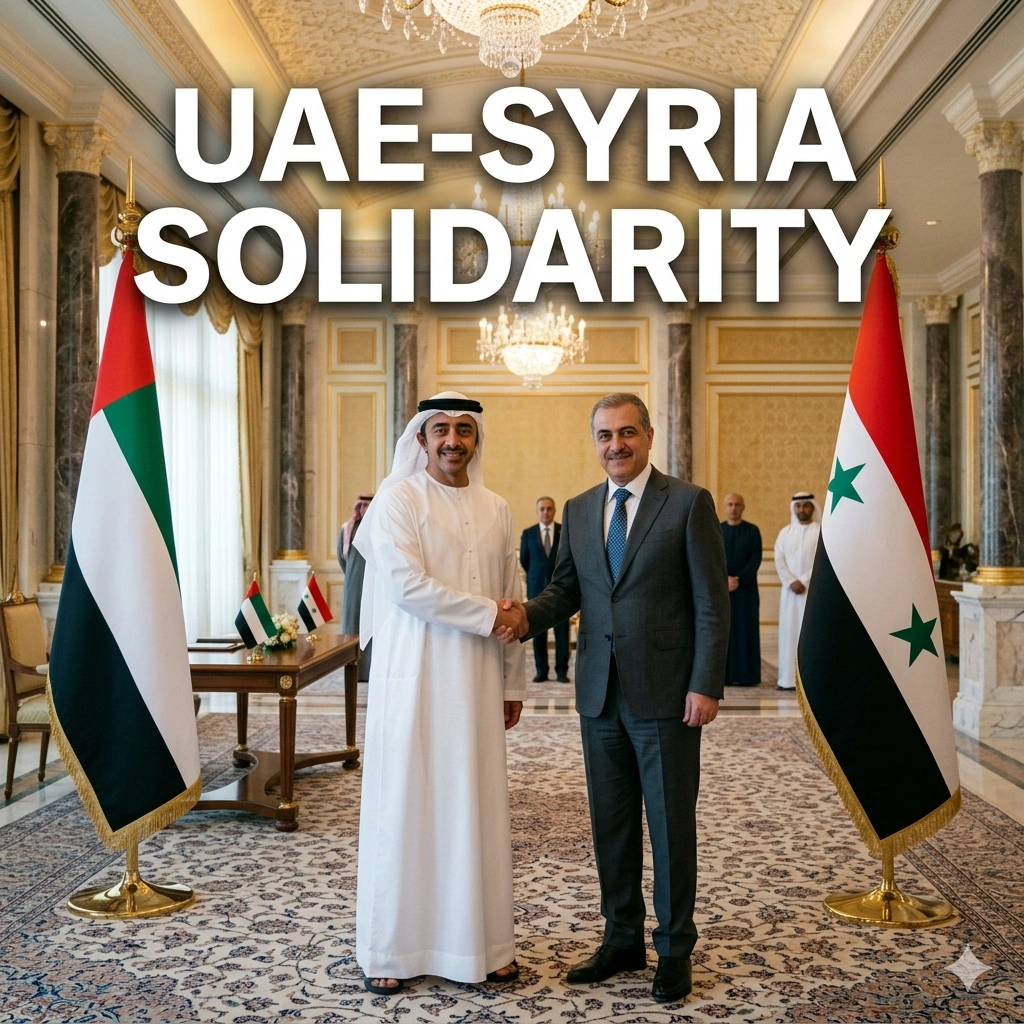
Syrian President Solidarity
Syrian President Solidarity was formally expressed today through a high-level diplomatic correspondence sent to the United Arab Emirates. President Ahmad Al-Sharaa emphasized that Syria stands firmly with its Emirati brothers during this period of heightened regional tension. This gesture signifies a massive shift in Middle Eastern geopolitics as the new Syrian administration seeks deeper integration with the Gulf Cooperation Council.
The written message delivered to Sheikh Mohamed bin Zayed Al Nahyan focused on the shared destiny of the two Arab nations. By prioritizing Syrian President Solidarity, the leadership in Damascus aims to foster a unified front against external threats and unprovoked aggression. Such diplomatic maneuvers are essential for maintaining the delicate balance of power in a volatile geographic landscape.
Observers note that this expression of Syrian President Solidarity comes at a time when the region is facing unprecedented security challenges. The formal delivery of this message via Minister Assad Hassan Al-Shaibani highlights the gravity of the current situation. Both countries are now working toward a collaborative framework that ensures long-term regional stability and mutual defense.
Iranian Missile Attacks Crisis
The recent Iranian missile attacks have sent shockwaves throughout the international community and triggered immediate defensive responses from neighboring states. These strikes targeted critical infrastructure within the United Arab Emirates, prompting an urgent review of regional air defense protocols. Consequently, the Syrian government has voiced its strong opposition to these disruptive and violent military actions.
During the meeting in Abu Dhabi, officials discussed the technical aspects of the Iranian missile attacks and their impact on civilian safety. The unprovoked nature of these strikes has been labeled as a violation of international sovereignty by both Syrian and Emirati representatives. This shared condemnation serves as a catalyst for a more robust security partnership between the two nations.
Responding to the Iranian missile attacks requires a multi-faceted approach involving both military readiness and sophisticated diplomatic pressure. Syria’s prompt reaction illustrates its commitment to preventing further escalation that could lead to a broader regional conflict. Both foreign ministers agreed that the right to self-defense is non-negotiable under the current circumstances.
Strengthening UAE-Syria Fraternal Ties
The development of stronger UAE-Syria fraternal ties is a cornerstone of President Ahmad Al-Sharaa’s foreign policy strategy. By aligning with the UAE, Syria is positioning itself as a reliable partner in the Arab world’s quest for peace and economic development. This partnership is built on decades of cultural exchange and a shared vision for a prosperous Middle East.
Minister Sheikh Abdullah bin Zayed Al Nahyan welcomed the renewed commitment to UAE-Syria fraternal ties during his extensive talks with Minister Al-Shaibani. They explored various avenues for cooperation, ranging from intelligence sharing to joint investment projects in the energy sector. These discussions reflect a deep mutual respect and a desire to move past historical grievances.
To ensure the longevity of UAE-Syria fraternal ties, both governments have proposed the establishment of a joint permanent committee. This body will oversee the implementation of security agreements and coordinate humanitarian aid efforts for the Syrian population. Such institutionalized cooperation is vital for navigating the complex political realities of 2026.
Regional Stability and Sovereignty Rights
Protecting regional stability remains the primary goal for the coalition of Arab nations responding to external threats. The Syrian administration believes that respecting national sovereignty is the only way to prevent the recurrence of Iranian missile attacks. Therefore, the message delivered to the UAE underscores the necessity of a unified Arab stance against foreign intervention.
International law provides a clear framework for nations to defend their borders and citizens when faced with clear aggression. During the diplomatic exchange, both parties reiterated that maintaining regional stability is a shared responsibility that requires constant vigilance. The “terrorist” nature of the recent attacks has only strengthened their resolve to protect their territories.
As they work toward regional stability, Syria and the UAE are also engaging with global powers to ensure support for their defensive measures. The alignment of these two nations sends a powerful signal to the international community about the resilience of Arab diplomacy. Future efforts will focus on de-escalating tensions while maintaining a high state of military preparedness.
Economic Cooperation and Humanitarian Aid
Beyond security concerns, the dialogue between Damascus and Abu Dhabi is heavily focused on achieving sustainable economic prosperity. The Syrian President Solidarity extends to the economic realm, where the UAE’s expertise in infrastructure and finance can aid Syria’s recovery. Rebuilding the war-torn nation requires significant capital and technical support from regional allies.
The ministers discussed the ongoing humanitarian needs of the Syrian people, highlighting the UAE’s role as a major donor. Collaborative efforts are being designed to improve healthcare systems and educational facilities within Syria to ensure a better future for its citizens. These initiatives are seen as essential components of the broader strategy to stabilize the country.
Economic cooperation is expected to flourish as trade barriers are reduced and new investment corridors are opened. By linking their economies, Syria and the UAE can create a more resilient financial block that is less susceptible to global market fluctuations. This economic pillar is just as important as the military alliance in fostering lasting peace.
Diplomatic Solutions to Escalating Crises
The focus on diplomatic solutions remains at the heart of the interaction between Sheikh Abdullah bin Zayed and Assad Hassan Al-Shaibani. While the right to self-defense is upheld, both nations prefer to resolve conflicts through dialogue rather than armed confrontation. This approach is consistent with the latest trends in Middle Eastern diplomacy.
Implementing effective diplomatic solutions involves engaging in honest communication about security threats and territorial concerns. The written message from President Al-Sharaa acts as a blueprint for how Syria intends to handle regional disputes in the coming years. It emphasizes the importance of multilateral forums and international mediation.
Even in the face of Iranian missile attacks, the UAE and Syria are searching for ways to de-pave the way for a grand bargain. They understand that a prolonged conflict would be detrimental to the entire region’s growth and development. Thus, their current strategy balances a hardline defensive posture with an open door for constructive negotiations.
The Future of Arab Unity
The current trajectory of relations suggests a bright future for Arab unity as nations coalesce around shared security interests. Syrian President Solidarity is not just a temporary reaction to a crisis but a long-term commitment to a collective Arab identity. This unity is perceived as the best defense against the “unprovoked and terrorist” actions of external actors.
As more countries join this emerging consensus, the influence of the Arab world on the global stage is likely to increase. The partnership between the UAE and Syria serves as a model for how divergent political systems can find common ground in the face of adversity. This evolution in statecraft marks a significant departure from the fragmented politics of the previous decade.
The march toward total Arab unity will require continued investment in diplomatic infrastructure and trust-building measures. Both President Al-Sharaa and President Al Nahyan are committed to this path, viewing it as the only viable route to regional dominance. Their actions today will define the geopolitical landscape of the Middle East for generations to come.
Advanced Defensive Strategies and Intelligence
The technical nature of modern warfare necessitates the adoption of advanced defensive strategies by the UAE and its allies. During the high-level meeting, both sides shared insights on intercepting sophisticated ballistic threats like those seen in the Iranian missile attacks. This exchange of technical data is crucial for upgrading existing air defense networks.
Syria has offered to share its ground-level intelligence regarding regional troop movements and launch sites to assist the UAE. This level of cooperation demonstrates the depth of the Syrian President Solidarity in practical, military terms. Such synergy between the two defense establishments creates a more comprehensive shield against future incursings.
By integrating their intelligence capabilities, the two nations can better predict and neutralize threats before they materialize. This proactive stance is a key element of their joint condemnation of Iranian actions. The goal is to move beyond reactive measures and establish a deterrent that discourages any further unprovoked strikes.
Impact on Global Energy Markets
The instability caused by recent missile strikes has had a direct impact on global energy markets and supply chains. As a major energy hub, the security of the UAE is paramount for maintaining stable oil and gas prices worldwide. Syria’s support helps reassure international investors that the regional powers are capable of managing the crisis effectively.
Syrian President Solidarity includes a commitment to securing energy corridors that pass through the Levant and the Gulf. Both nations recognize that energy security is intrinsically linked to their national security and economic survival. Protecting these assets from the Iranian missile attacks is a top priority for their joint task forces.
The international community is watching these developments closely, as any disruption in the UAE could lead to a global economic downturn. The proactive diplomatic and military steps being taken are designed to mitigate these risks and ensure the free flow of commerce. This global perspective adds another layer of importance to the bilateral talks held in Abu Dhabi.
Role of International Law in Conflict Resolution
Both Syria and the UAE have consistently invoked international law to justify their defensive posture against foreign aggression. They argue that the Iranian missile attacks are a clear violation of the United Nations charter regarding the territorial integrity of sovereign states. This legalistic approach provides a legitimate basis for their potential counter-measures.
During the delivery of the written message, the Syrian President Solidarity was framed within the context of global legal norms. By adhering to these standards, the coalition seeks to garner broader support from the UN and other international bodies. This strategy helps isolate the aggressor while building a legal case for intervention if necessary.
Legal experts suggest that the joint condemnation issued by the two ministers could lead to a formal complaint at the International Court of Justice. Such a move would be a significant escalation in the diplomatic war against the perpetrators of the missile strikes. It underscores the transition from purely military responses to a more sophisticated legal defense.
Enhancing Joint Military Cooperation
The need for enhancing joint military cooperation was a primary theme during the discussions between the Syrian and Emirati defense officials. Following the Iranian missile attacks, there is a renewed urgency to conduct joint military exercises and personnel exchange programs. These initiatives aim to standardize operational procedures across different branches of the armed forces.
The Syrian President Solidarity is best exemplified by the willingness of Damascus to provide strategic depth to the UAE’s defense plans. This military alignment is unprecedented in recent history and signifies a deep level of trust between the two leaderships. Both countries are investing heavily in new technologies to counter asymmetric threats.
Standardizing equipment and communication systems will allow for a more seamless integration of forces during a crisis. This level of preparedness is essential for deterring the Iranian missile attacks from recurring in the future. The joint military committee will meet quarterly to review progress and adjust strategies based on the evolving threat environment.
Countering Terrorist Rhetoric in the Region
A significant portion of the diplomatic exchange was dedicated to countering the “terrorist” rhetoric used by extremist groups and their state sponsors. The Syrian President Solidarity involves a commitment to promoting a moderate and inclusive version of Arab identity. This ideological battle is seen as just as important as the physical defense of the borders.
By labeling the recent missile strikes as terrorist acts, the UAE and Syria are framing the conflict in a way that appeals to the global community. This terminology highlights the indiscriminate nature of the attacks and their impact on innocent civilian populations. It is a strategic move to delegitimize the actions of the Iranian regime.
Education and media campaigns are being planned to broadcast this unified message to the wider Arab public. The goal is to build a popular mandate for the security measures being taken by the governments. This holistic approach ensures that the defense of the nation is supported by both the military and the citizenry.
Strategic Significance of the Syrian-Emirati Alliance
The strategic significance of the Syrian-Emirati alliance cannot be overstated in the current geopolitical climate. It represents a bridge between the Levant and the Gulf, creating a powerful axis of influence in the Middle East. This partnership is a direct response to the Iranian missile attacks and the perceived vacuum in regional leadership.
Syrian President Solidarity provides the UAE with a strategic partner that has extensive experience in unconventional warfare and regional intelligence. In return, the UAE offers Syria a path toward international rehabilitation and access to significant capital markets. This mutually beneficial relationship is expected to endure well beyond the current crisis.
As the alliance matures, it may attract other regional players who are looking for a stable and moderate alternative to the current power blocks. The success of this partnership will be measured by its ability to prevent further Iranian missile attacks and promote economic growth. The foundations laid today are robust and built for the long term.
Humanitarian Impact and Reconstruction Efforts
The humanitarian impact of the ongoing regional instability is a major concern for both President Al-Sharaa and Sheikh Mohamed bin Zayed. Syrian President Solidarity is deeply rooted in the desire to alleviate the suffering of the Syrian people after years of conflict. The UAE’s commitment to funding reconstruction projects is a vital part of this humanitarian mission.
Building new hospitals, schools, and housing units is essential for the return of displaced persons and the stabilization of the country. The Iranian missile attacks only serve to divert resources away from these critical development goals. Therefore, ending the cycle of violence is the first step toward a successful humanitarian intervention.
Joint teams are already on the ground in several Syrian provinces to assess the most urgent needs and coordinate the delivery of aid. This collaborative effort demonstrates the practical benefits of the UAE-Syria fraternal ties. It is a powerful example of how regional cooperation can lead to tangible improvements in the lives of millions.
Navigating the Complexities of 2026 Geopolitics
Navigating the complexities of 2026 geopolitics requires a high degree of adaptability and strategic foresight from Arab leaders. The Syrian President Solidarity is a testament to the fact that old alliances are being replaced by new, more pragmatic partnerships. These relationships are defined by shared threats and a mutual desire for economic prosperity.
The Iranian missile attacks have acted as a catalyst for these changes, forcing nations to reconsider their security priorities. In this environment, the ability to communicate effectively and build trust is the most valuable asset a diplomat can possess. The meeting in Abu Dhabi is a masterclass in this new form of proactive diplomacy.
Looking ahead, the region must remain vigilant as the global power balance continues to shift. The Syrian and Emirati leadership are prepared for various scenarios, including further escalations or potential breakthroughs in negotiations. Their unified front is the strongest defense against the uncertainties of the future.
Conclusion and Strategic Outlook
In conclusion, the Syrian President Solidarity expressed toward the UAE marks a new chapter in Middle Eastern relations. The joint condemnation of the Iranian missile attacks is a clear signal that the Arab world will no longer tolerate unprovoked aggression. Both nations are committed to defending their sovereignty through all necessary means.
The focus on economic cooperation, humanitarian aid, and advanced military strategies provides a comprehensive framework for the future. By strengthening their fraternal ties, Syria and the UAE are creating a more stable and prosperous region for their citizens. This partnership is a beacon of hope in a time of great regional upheaval.
As the situation evolves, the international community will likely follow the lead of these two nations in addressing the challenges posed by state-sponsored violence. The Syrian President Solidarity is more than just words; it is a call to action for all who value peace and stability. The road ahead is challenging, but the path is now clearly defined.
For more details & sources visit: UrduPoint
Read more about Syria news on 360 News Orbit – Syria.