
U.S.-Israeli Air Strikes Kill Five in Northern Iraq as Conflict Spills Across Borders. Recent air strikes targeting the Popular Mobilization Forces (PMF) in Kirkuk and Mosul have claimed the lives of three fighters and two Iraqi police officers. The attacks highlight Iraq’s increasingly fragile position as a battleground in the ongoing war between the U.S.-Israeli alliance and Iran. A double-bombing at the PMF headquarters near Kirkuk Airport on Saturday resulted in the deaths of three fighters and left several others wounded, including Iraqi soldiers. Simultaneously, a separate strike in Mosul killed two members of the Iraqi police force. The PMF, a coalition now integrated into Iraq’s regular army, has attributed the “treacherous” attacks to U.S. and Israeli forces.
These strikes are part of a broader escalation that began on February 28, with regional analysts warning that Iraq is becoming a primary front in the protracted conflict. The situation presents a significant challenge for the Iraqi government in Baghdad, which struggles to manage the various factions within the PMF. While the coalition officially takes orders from the state, several prominent factions maintain deep loyalties to Tehran and have claimed responsibility for previous attacks on U.S. interests. As foreign strikes continue to target these groups on Iraqi soil, the central government faces mounting pressure to maintain national sovereignty while preventing the country from being fully engulfed by the neighboring war.
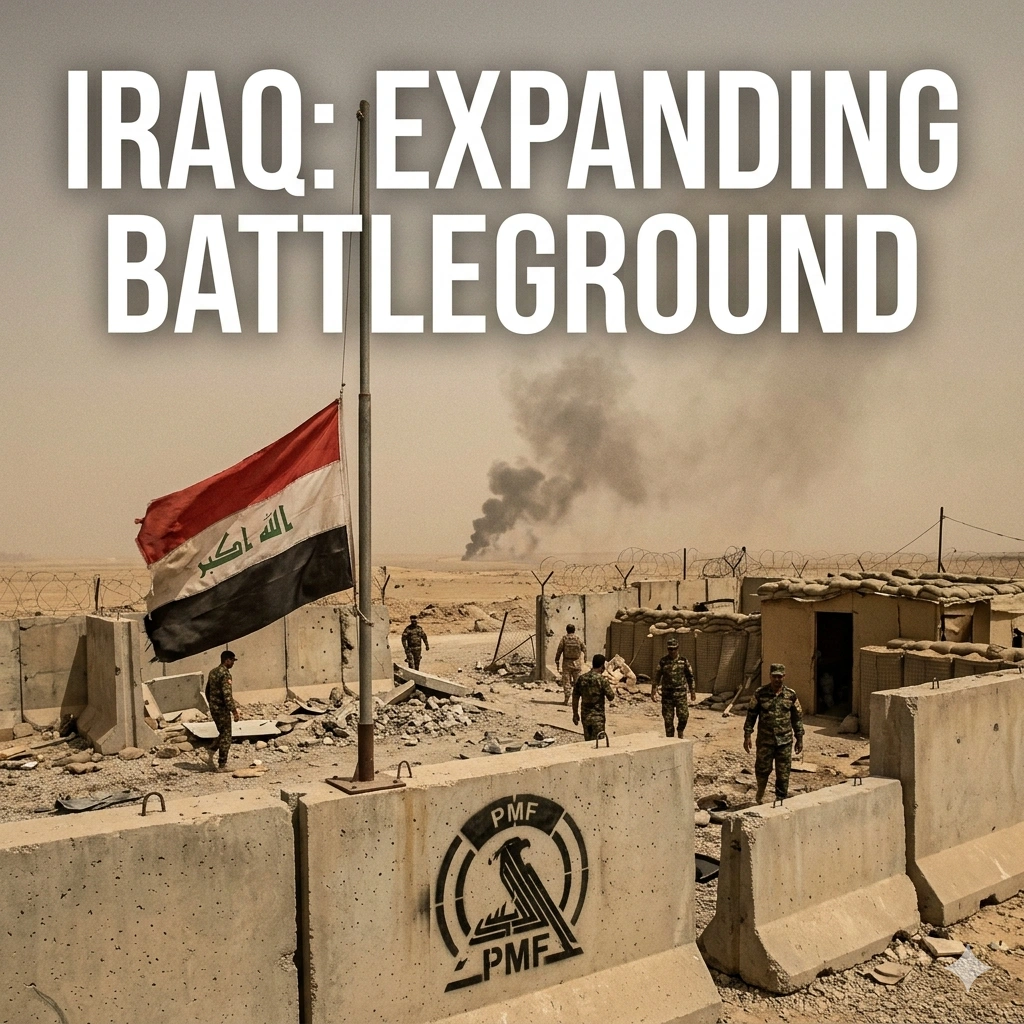
U.S.-Israeli Air Strikes
U.S.-Israeli Air Strikes have intensified across northern Iraq, specifically targeting infrastructure linked to the Popular Mobilization Forces (PMF). These kinetic operations represent a sharp escalation in the regional shadow war that has now spilled over into sovereign Iraqi territory. On March 29, 2026, the global community witnessed a significant uptick in aerial activity aimed at neutralizing what the alliance describes as Iranian-backed assets.
The strategic objective behind these U.S.-Israeli Air Strikes appears to be the disruption of logistics chains that facilitate the movement of advanced weaponry. By hitting command centers near Kirkuk and Mosul, the alliance is attempting to create a buffer zone against further provocations. However, the human cost of these operations has sparked outrage among local populations and the central government in Baghdad.
Military analysts suggest that the U.S.-Israeli Air Strikes are a direct response to intelligence indicating imminent threats against coalition personnel in the region. The precision of the hits indicates a high level of surveillance and real-time data sharing between American and Israeli intelligence agencies. As the smoke clears from the latest bombings, the geopolitical landscape of Iraq continues to shift toward a more confrontational reality.
Impact on Popular Mobilization Forces
The Popular Mobilization Forces (PMF) have found themselves at the epicenter of this latest round of violence. As an entity integrated into the Iraqi military structure, the PMF views these attacks as a direct assault on the state’s official defense apparatus. The loss of three fighters in the Kirkuk double-bombing has led to calls for immediate retaliation against foreign bases situated within Iraq.
Despite their formal integration, the Popular Mobilization Forces remain a complex mosaic of various factions with differing ideological leanings. Some groups within the coalition are fiercely nationalist, while others maintain a “resistance” posture heavily influenced by external actors. This internal diversity makes it difficult for the Iraqi government to present a unified response to the ongoing U.S.-Israeli Air Strikes.
The deaths of Iraqi police officers alongside the Popular Mobilization Forces in Mosul further complicates the narrative of these strikes. It blurs the line between targeting “militias” and attacking the legitimate security forces of a sovereign nation. This development has placed the PMF leadership in a position where they must balance military readiness with political restraint to avoid a full-scale civil conflict.
Fragile Sovereignty of Baghdad
The government in Baghdad is currently navigating an incredibly narrow path to maintain its fragile national sovereignty. Each of the U.S.-Israeli Air Strikes serves as a reminder of how little control the central authorities have over their own airspace. Prime Minister Al-Sudani’s administration is facing intense pressure from parliamentary blocs to expel foreign forces entirely following these latest casualties.
Maintaining sovereignty is not just about border control but also about managing the internal factions that comprise the Popular Mobilization Forces. If Baghdad cannot prevent its soil from being used as a launchpad for proxy attacks, it remains vulnerable to retaliatory U.S.-Israeli Air Strikes. This cycle of violence threatens to dismantle the years of progress made in stabilizing the Iraqi economy and civil society.
Diplomatic efforts are underway to engage with both Washington and Tehran to prevent Iraq from becoming a secondary theater of war. However, as the conflict between the U.S.-Israeli alliance and Iran intensifies, Baghdad’s pleas for neutrality are often ignored. The sovereignty of the nation is being tested daily by the sophisticated munitions falling on its northern provinces.
Regional Conflict Spillover 2026
The events of March 29, 2026, are a clear indication of the regional conflict spillover that analysts have feared for months. What began as localized skirmishes has evolved into a multi-front war involving state and non-state actors across several borders. Iraq’s geographic position makes it an unavoidable corridor for the escalating tensions between regional superpowers.
This regional conflict spillover is characterized by the use of advanced drone technology and long-range missile systems. The U.S.-Israeli Air Strikes are just one component of a broader strategy to contain influence that transcends traditional national boundaries. For the people of Kirkuk and Mosul, the war is no longer a distant threat but a daily reality occurring in their backyards.
Economically, the spillover is affecting trade routes and the stability of the energy sector in the Middle East. Investors are becoming increasingly wary of the volatility in Iraq, fearing that the U.S.-Israeli Air Strikes could eventually target oil infrastructure. The interconnectedness of modern geopolitics ensures that a strike in northern Iraq resonates in global markets within minutes.
Defensive Postures and Military Readiness
In response to the U.S.-Israeli Air Strikes, the Iraqi military has been placed on high alert to prevent further incursions. Defensive systems are being repositioned to protect sensitive military installations and civilian centers from future aerial bombardments. This heightened state of military readiness is a necessary but costly measure for a country still recovering from previous wars.
The Popular Mobilization Forces have also updated their defensive protocols, moving assets underground and into more urban environments to deter precision strikes. While this may offer some protection from U.S.-Israeli Air Strikes, it also increases the risk to civilian populations living in those areas. The tactical shift reflects a long-term commitment to asymmetrical warfare in the face of superior air power.
Furthermore, the coordination between the regular army and the PMF is being tested as they attempt to form a cohesive defensive front. If the U.S.-Israeli Air Strikes continue at this pace, the Iraqi government may be forced to seek advanced air defense systems from other global powers. This move could further complicate its relationship with the Western alliance and deepen the regional divide.
Humanitarian Concerns in Mosul and Kirkuk
The humanitarian situation in Mosul and Kirkuk is deteriorating as the frequency of U.S.-Israeli Air Strikes increases. Families living near military headquarters are being displaced once again, echoing the dark days of the conflict against ISIS. Local hospitals are struggling to provide care for the wounded fighters and civilians caught in the crossfire of the double-bombings.
Human rights organizations have raised alarms regarding the precision of the U.S.-Israeli Air Strikes and the potential for “collateral damage.” The death of police officers in Mosul is cited as a primary example of how these operations can go wrong, leading to the loss of innocent lives. The psychological toll on the residents of northern Iraq is immense, as the sounds of jets and explosions return to their skies.
International aid agencies are finding it difficult to operate in regions where U.S.-Israeli Air Strikes are frequent. Security concerns prevent the delivery of essential supplies and the maintenance of critical infrastructure like water and electricity. The focus on military objectives often leaves the needs of the local population as a secondary consideration in the grand strategy of the warring parties.
The Role of Iranian Influence
It is impossible to discuss the U.S.-Israeli Air Strikes without addressing the deep-seated Iranian influence within the Iraqi security apparatus. Many factions of the Popular Mobilization Forces receive training and funding from Tehran, serving as a vital link in the “Axis of Resistance.” This connection is the primary justification used by the alliance for conducting its lethal operations on Iraqi soil.
The tension between the PMF’s loyalty to the Iraqi state and its ideological ties to Iran is a central theme of the current crisis. When U.S.-Israeli Air Strikes hit these groups, they are targeting what they perceive as an extension of the Iranian military. Consequently, Iraq becomes the “passive” recipient of a war that is largely orchestrated by external powers looking to settle old scores.
Tehran’s response to the strikes has been one of condemnation, promising support for its allies in Baghdad. This further emboldens the PMF factions to take a harder line against the American presence in the country. As long as this influence remains a factor, the likelihood of continued U.S.-Israeli Air Strikes remains high, keeping Iraq in a perpetual state of instability.
Global Diplomatic Reactions
The international community has reacted with caution and concern to the news of the U.S.-Israeli Air Strikes on March 29. The United Nations has called for restraint from all parties to prevent a total collapse of the regional security framework. Several European nations have expressed worry that the escalation could lead to a new wave of migration and global energy shortages.
Diplomats in Baghdad are working overtime to convey the government’s displeasure to the U.S. State Department. They argue that the U.S.-Israeli Air Strikes undermine the partnership between the two nations and empower extremist elements. However, the rhetoric from Washington suggests that the alliance will continue to act unilaterally if it perceives a direct threat to its interests.
The lack of a unified global response has allowed the conflict to continue largely unchecked. Without a significant diplomatic breakthrough, the U.S.-Israeli Air Strikes are likely to become a routine feature of the regional landscape. This normalization of cross-border strikes sets a dangerous precedent for international law and the sanctity of national borders.
Intelligence Sharing and Target Acquisition
The success of the U.S.-Israeli Air Strikes depends heavily on a sophisticated network of intelligence sharing and satellite target acquisition. Reports indicate that high-altitude drones have been loitering over Kirkuk and Mosul for weeks, mapping out every movement of the Popular Mobilization Forces. This technological superiority allows for the “double-bombing” tactics seen at the PMF headquarters.
By integrating Israeli reconnaissance data with American strike capabilities, the alliance has created a highly efficient killing machine. The U.S.-Israeli Air Strikes are designed to be “surgical,” though the death of police officers suggests that the intelligence is not always perfect. The ability to strike deep into Iraqi territory with impunity is a major psychological blow to the PMF leadership.
In response, the PMF and its backers are reportedly attempting to upgrade their electronic warfare capabilities to jam or confuse incoming signals. This technological arms race is a sub-plot of the broader kinetic conflict, where the ability to hide is just as important as the ability to strike. The digital battlefield is now just as active as the physical one in the skies over northern Iraq.
Future of the U.S. Presence in Iraq
The continuation of U.S.-Israeli Air Strikes raises serious questions about the long-term viability of the American military presence in Iraq. Pro-Iranian politicians are using the deaths in Kirkuk and Mosul as leverage to pass legislation that would mandate a total troop withdrawal. This would effectively end the counter-terrorism partnership that has existed for years.
If the U.S.-Israeli Air Strikes lead to a forced exit of American troops, it could create a power vacuum that extremist groups like ISIS are eager to fill. The alliance is thus caught in a dilemma: continue the strikes to weaken Iran but risk losing its strategic foothold in Baghdad. This calculation is becoming increasingly difficult as the domestic political pressure in Iraq reaches a boiling point.
The U.S. administration maintains that its presence is vital for regional stability, but the U.S.-Israeli Air Strikes seem to suggest a different priority. For many Iraqis, the distinction between a “stabilizing force” and an “aggressor” has been erased by the latest explosions. The coming months will be critical in determining whether the diplomatic relationship can survive this military escalation.
Asymmetric Warfare and Retaliation Risks
The risk of asymmetric retaliation following the U.S.-Israeli Air Strikes is a major concern for security officials across the Middle East. The Popular Mobilization Forces have a long history of utilizing rocket and drone attacks against coalition bases and diplomatic missions. Following the “treacherous” attacks in Kirkuk, several factions have openly threatened to expand their target list.
Retaliation could take the form of cyber-attacks on critical infrastructure or strikes against commercial shipping in the region. The U.S.-Israeli Air Strikes have provided the PMF with the political cover they need to justify such actions under the guise of national defense. This creates a dangerous feedback loop where each strike necessitates a counter-strike, leading to an inevitable escalation.
Security at U.S. and Israeli embassies worldwide has been heightened in anticipation of “revenge” operations. The decentralized nature of some PMF factions means that a retaliatory strike could occur anywhere, not just within the borders of Iraq. This globalized threat environment is a direct consequence of the kinetic operations conducted in Mosul and Kirkuk.
Economic Stability and Oil Infrastructure
Iraq’s economic future is tied directly to the security of its oil fields in the north, many of which are located near Kirkuk. The U.S.-Israeli Air Strikes occurring so close to the Kirkuk Airport have naturally alarmed the global energy sector. Any damage to the pipelines or processing plants would have immediate effects on the nation’s revenue and global oil prices.
The government in Baghdad relies on oil exports to fund its social programs and pay the salaries of the Popular Mobilization Forces. If the U.S.-Israeli Air Strikes were to expand to economic targets, the state could face an internal collapse. This would lead to a level of chaos that would be impossible to contain within the country’s borders.
Investors are currently looking for signs of de-escalation before committing further capital to the region. The persistent threat of U.S.-Israeli Air Strikes makes long-term planning difficult for multinational corporations operating in Iraq. Economic prosperity is a prerequisite for peace, and currently, both are being threatened by the sound of falling bombs.
Political Fragmentation in the Iraqi Parliament
The Iraqi parliament is becoming increasingly fragmented as different blocs argue over the response to the U.S.-Israeli Air Strikes. The nationalist Sadrists and the pro-Iran Coordination Framework are finding common ground in their condemnation of the strikes, but they differ on the solution. This political deadlock prevents the government from taking a decisive stance on the international stage.
Some lawmakers argue that the U.S.-Israeli Air Strikes are a result of the PMF’s refusal to fully integrate and follow state orders. Others claim that the strikes are an act of unprovoked war that requires a military response. This debate is tearing at the fabric of the governing coalition, making it harder for Prime Minister Al-Sudani to govern effectively.
The lack of a unified political voice in Baghdad emboldens foreign powers to continue their operations within Iraqi territory. When a nation cannot agree on how to defend itself, it becomes an easy target for those looking to project power. The U.S.-Israeli Air Strikes have exposed the deep-seated divisions that still plague the Iraqi political system in 2026.
Tactical Lessons from the Mosul Strike
The tactical success of the Mosul strike, which targeted a mobile unit of the Iraqi police and PMF, offers several lessons for regional militaries. It demonstrated the alliance’s ability to hit moving targets in densely populated urban environments with minimal (though not zero) collateral damage. This capability is a cornerstone of the U.S.-Israeli Air Strikes strategy.
For the Iraqi security forces, the Mosul incident highlights the vulnerability of their communications and transport networks. The U.S.-Israeli Air Strikes were likely guided by signals intelligence (SIGINT) that identified the precise location of the targeted officials. Improving operational security (OPSEC) is now a top priority for all units operating in the northern provinces.
The use of “loitering munitions” or “suicide drones” in these operations is also being analyzed by defense experts. These weapons provide the attacker with the ability to wait for the perfect moment before striking, making them extremely effective for high-value target acquisition. The U.S.-Israeli Air Strikes are a showcase for the next generation of autonomous and semi-autonomous warfare.
Conclusion and the Path Forward
In conclusion, the U.S.-Israeli Air Strikes on March 29, 2026, have marked a dark turning point in the regional conflict. The loss of life in Kirkuk and Mosul has not only weakened the Popular Mobilization Forces but has also severely damaged the credibility of the Iraqi state. As the alliance continues its campaign against Iranian influence, Iraq remains the unfortunate battleground for this proxy war.
The path forward requires a massive diplomatic effort to separate the domestic security of Iraq from the broader regional ambitions of the U.S., Israel, and Iran. Without such a separation, the U.S.-Israeli Air Strikes will likely continue, further eroding the sovereignty and stability of the nation. The people of Iraq deserve a future free from the fear of foreign bombs falling from their skies.
Ultimate victory in this conflict will not be won through air power alone but through the restoration of a strong, independent, and unified Iraq. Until then, the U.S.-Israeli Air Strikes serve as a grim reminder of the costs of regional instability. The international community must act now to prevent Iraq from being fully engulfed by a war that it did not choose but is forced to fight.
For more details & sources visit: Al Jazeera
Read more about Iraq news on 360 News Orbit – Iraq.