
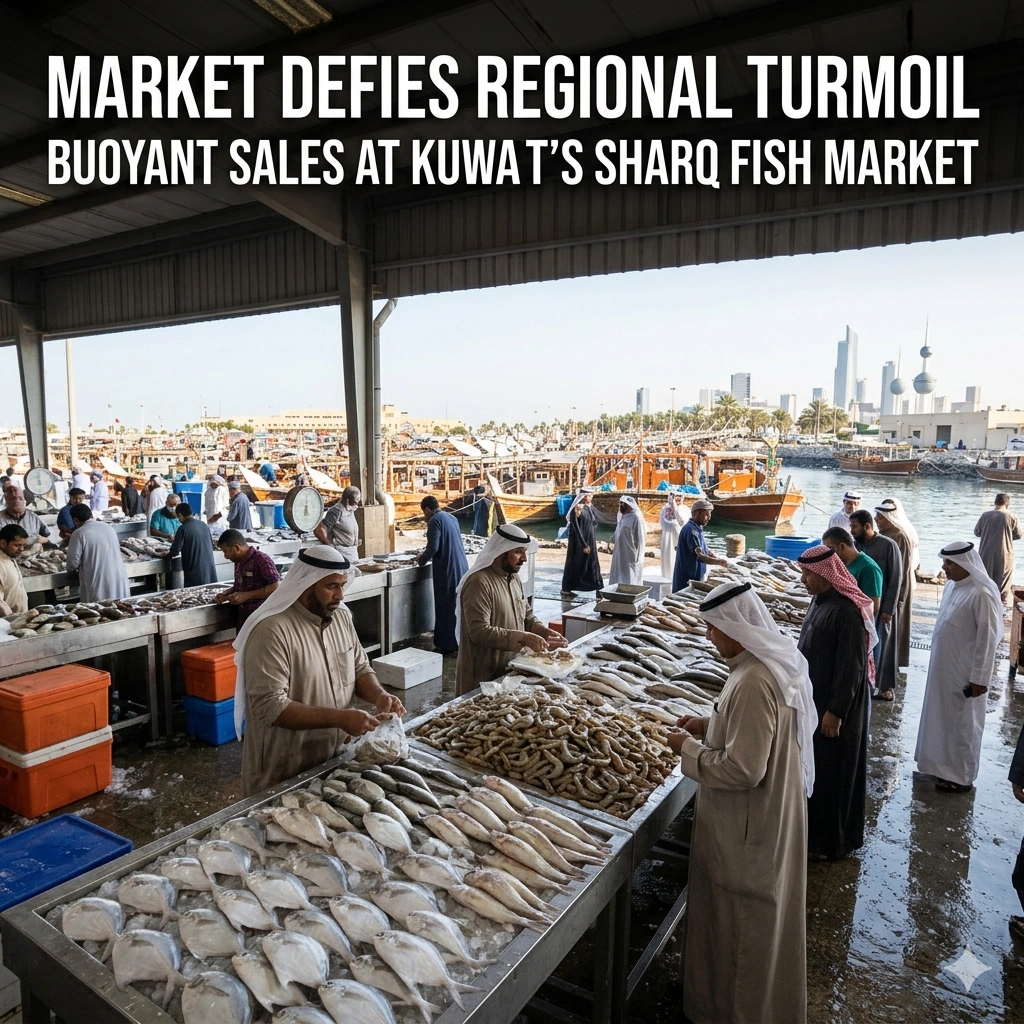
Sharq Fish Market Resilience has become a powerful symbol of national endurance as Kuwait navigates the complexities of a major regional conflict. Despite the blockade of the Strait of Hormuz and the suspension of traditional maritime routes, the heart of Kuwait City’s seafood trade remains incredibly active. Traders and local authorities have demonstrated remarkable agility by rerouting essential supply chains through overland corridors in Saudi Arabia and the United Arab Emirates.
This strategic shift ensures that fresh catch reaches the dinner tables of Kuwaiti residents within 24 hours of being harvested. The Sharq Fish Market Resilience is a testament to the country’s robust logistical infrastructure and its ability to adapt to extreme external pressures. Even as defense forces remain vigilant against aerial threats, the daily commerce of the fish market continues, providing a sense of normalcy and food security for the entire population during these trying times.
Adapting Logistics to the Naval Blockade
The Sharq Fish Market Resilience is primarily driven by a rapid transition from sea to land logistics. Since the outbreak of hostilities in late February, the usual shipping lanes have been deemed too risky for commercial traffic. In response, Kuwaiti importers have established a network of refrigerated trucks that bypass the Strait of Hormuz entirely. These vehicles transport fish from the productive waters of the southern Gulf, crossing through the UAE and Saudi Arabia to reach Kuwait City.
This overland bridge has mitigated the impact of suspended air traffic, which previously handled high-value seafood imports. The efficiency of this new system has surprised many market analysts, as it maintains the quality and freshness of the product despite the long distances involved. The Sharq Fish Market Resilience proves that regional cooperation is a vital tool for overcoming geographic blockades. By leveraging the highway systems of neighboring GCC states, Kuwait has successfully bypassed a naval chokehold that many feared would lead to severe food shortages.
The Vital Role of the Kuwaiti Fishermen’s Union
While international imports are crucial, the Sharq Fish Market Resilience is also supported by a determined local fishing industry. The Kuwaiti Fishermen’s Union, which manages a fleet of approximately 420 vessels, has continued to operate under strict security protocols. Working closely with the national coastguard, local fishermen are restricted to designated safe zones near the shoreline to avoid potential military encounters in deeper waters.
These local efforts bring tonnes of fresh fish to the market daily, ensuring that domestic demand for traditional staples is met. The bravery of these fishermen is a key component of the Sharq Fish Market Resilience, as they continue to head out to sea despite the sounds of intercepting drones and missiles nearby. Their commitment to the nation’s food supply is a point of pride for the local community. The presence of the coastguard provides the necessary security framework to allow this essential industry to function without interruption, even in a wartime environment.
Sharq Fish Market Resilience
The Sharq Fish Market Resilience is a documented phenomenon where commercial activity has thrived despite the surrounding geopolitical chaos. To maintain this stability, the Kuwaiti government has stepped in with targeted subsidies to offset the increased costs of land logistics. These measures have prevented runaway inflation in the seafood sector, which is a staple of the national diet. While some popular species like hamour have seen moderate price increases due to supply shifts, others like the prized zubaidi have actually seen a price decrease as regional markets stabilize.
The market itself remains a hub of social and economic life, with auctions taking place every afternoon as they have for decades. This continuity is a central pillar of the Sharq Fish Market Resilience, signaling to both residents and international observers that Kuwait remains open for business. The government’s ability to protect consumers from the full brunt of logistics costs has been instrumental in maintaining public morale. The Sharq Fish Market Resilience is therefore a multifaceted success story involving private enterprise, local labor, and proactive government intervention.
Market Price Fluctuations and Consumer Protection
A fascinating aspect of the Sharq Fish Market Resilience is the paradoxical movement of prices for different fish species. The redirection of supply from the UAE has led to a surplus of certain types of fish that were previously exported elsewhere, leading to localized price drops. For example, the availability of zubaidi has increased as regional traders seek safe ports for their goods. This has provided a rare financial silver lining for consumers who have been worried about the rising cost of living during the conflict.
However, the Sharq Fish Market Resilience does face challenges with species that are typically sourced from deeper, more contested waters. Hamour prices have remained high, reflecting the difficulty of harvesting in those specific regions. To counter this, the Ministry of Commerce and Industry has intensified its monitoring of market stalls to prevent price gouging. This regulatory oversight ensures that the benefits of the Sharq Fish Market Resilience are shared fairly across society and that the market remains an affordable resource for all.
Impact of National Defense on Commercial Stability
The Sharq Fish Market Resilience exists within the context of a highly sophisticated national defense operation. Kuwait’s military has been active in intercepting significant numbers of drones and missiles that target the nation’s infrastructure. The fact that the market can operate normally under such a threat is a testament to the effectiveness of these defense systems. Citizens have grown accustomed to the sights and sounds of the defense shield, allowing them to carry on with their daily routines at the Sharq fish market.
This security provides the psychological foundation for the Sharq Fish Market Resilience. Without the confidence that the city is protected, traders would be hesitant to invest in new stock and consumers would stay home. The coordination between the Ministry of Defense and the Ministry of Commerce is a perfect example of how a modern state maintains economic momentum during a crisis. The Sharq Fish Market Resilience is the visible result of this invisible shield of protection that blankets the capital.
Regional Cooperation as an Economic Lifeline
The Sharq Fish Market Resilience highlights the deep-seated interdependence of the Gulf Cooperation Council (GCC) nations. Saudi Arabia and the UAE have played a critical role in facilitating the overland transit of goods to Kuwait. This regional solidarity has proven to be an effective counter-measure to the blockade of the Strait of Hormuz. The success of these rerouted supply chains is likely to lead to permanent changes in how Kuwait sources its food, even after the current conflict ends.
The Sharq Fish Market Resilience has shown that a diversified logistics strategy is essential for national security. By not relying solely on maritime routes, Kuwait has built a more resilient economy. The lessons learned during this period of supply rerouting will inform future infrastructure projects, such as the expansion of regional rail networks. The Sharq Fish Market Resilience is thus not just a temporary fix but a precursor to a more integrated and resilient regional logistics framework.
Public Morale and the Symbolism of the Market
For many Kuwaitis, the Sharq Fish Market Resilience is a source of emotional strength. The market is one of the most traditional and culturally significant locations in the city. Seeing it full of life and fresh produce provides a sense of continuity that is often lost during times of war. The daily auctions, with their unique sounds and rhythms, act as a heartbeat for the city, proving that the local culture is stronger than any external threat.
The Sharq Fish Market Resilience is frequently featured in local media as a sign of the nation’s “buoyancy.” It serves as a reminder that life goes on and that the basic needs of the people will always be met. This symbolic value is just as important as the economic value of the fish being sold. The Sharq Fish Market Resilience helps to prevent panic and maintains social order, which is crucial for a country operating under a state of high alert.
Conclusion: A Model for Food Security
The Sharq Fish Market Resilience of 2026 provides a valuable model for other nations facing similar supply chain disruptions. Through a combination of logistical innovation, local industry support, and government protection, Kuwait has maintained its food security in the face of a naval blockade. The Sharq Fish Market Resilience is a victory for pragmatic governance and community spirit. As the regional conflict continues, the market stands as a beacon of stability and a testament to Kuwait’s enduring strength.
Ultimately, the Sharq Fish Market Resilience is about the ability of a society to protect its most basic and essential traditions. By ensuring that the fish market remains open and affordable, the government has protected a vital part of the national identity. The Sharq Fish Market Resilience will be remembered as a defining moment in the country’s history, showing that even in the most troubled waters, Kuwait knows how to stay afloat. The resilience shown today will form the foundation for a more secure and prosperous tomorrow.
For more details & sources visit: The National
Read more about Kuwait news on 360 News Orbit – Kuwait.