
Iran Intensifies Attacks as the conflict in the Middle East reaches a critical boiling point. In a dramatic tactical pivot, Tehran has shifted its primary military focus away from Israel to target members of the Gulf Cooperation Council, specifically the United Arab Emirates, to exert maximum pressure on Western allies.
The scale of this shift is staggering, with reports indicating that Iranian forces are now launching missiles and drones at their Arab neighbors at a rate nearly seven times higher than strikes directed at Israeli territory. This aggressive posture aims to destabilize the global energy market and force the United States into a ceasefire by making the regional cost of the war unsustainable for all parties.
As smoke rises near major international transit hubs like Dubai, the international community faces a terrifying reality where the “good neighbor” policy of the past decade has completely evaporated. The United Arab Emirates has responded with uncharacteristic military threats, signaling a total breakdown in diplomacy that could lead to a permanent closure of the strategic Strait of Hormuz.
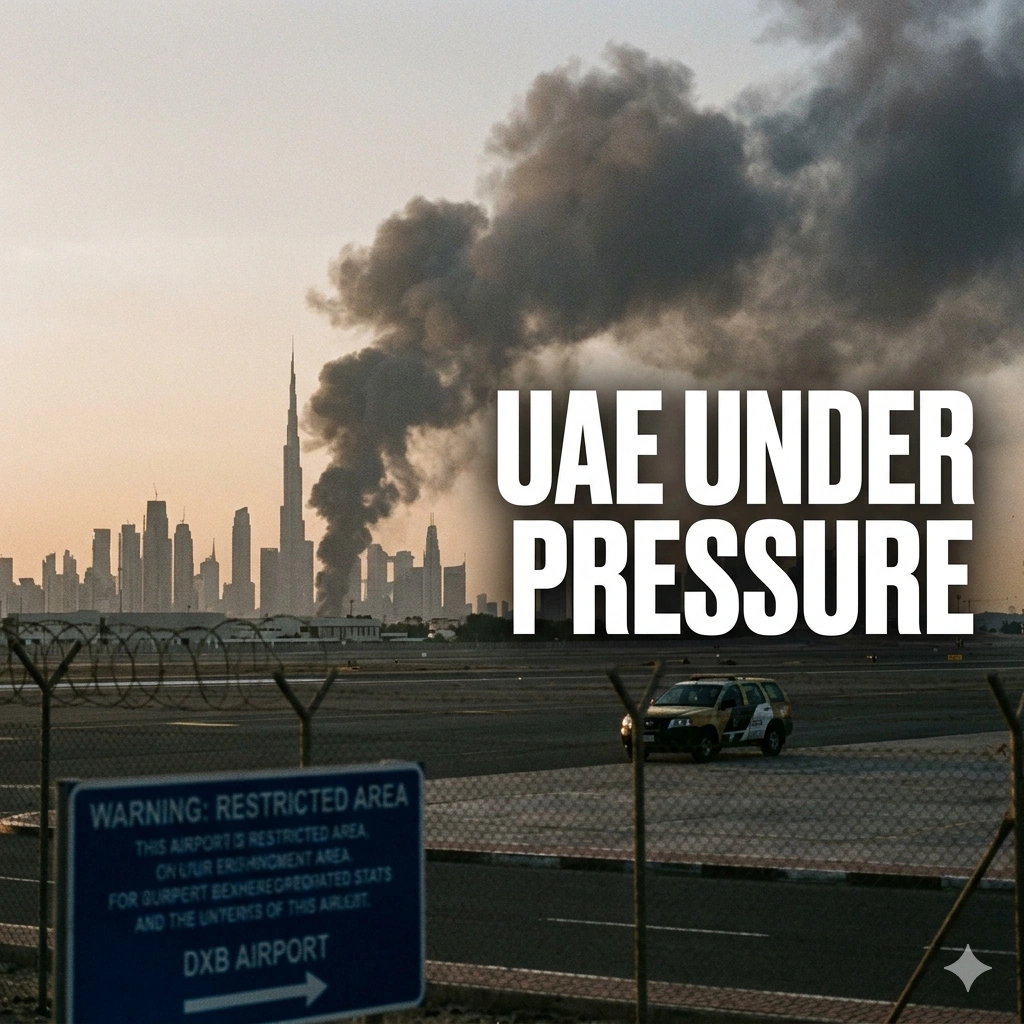
Iran Intensifies Attacks on UAE Infrastructure
The most visible sign of this strategic change is the frequent targeting of commercial and logistical hubs within the United Arab Emirates. Recent strikes near Dubai’s international airport have sent shockwaves through the global aviation industry, causing massive delays and raising insurance premiums for all flights operating in the Persian Gulf.
Iranian commanders appear to be selecting targets that provide the highest “visual impact” for international media while avoiding total civilian annihilation. By creating scenes of chaos in Dubai and Abu Dhabi, Tehran is demonstrating that no partner of the United States is safe from the reaching arm of its drone and missile divisions.
This pressure campaign is designed to turn the local populations of the GCC against the presence of American military assets. If the residents of these global cities feel that their safety is being sacrificed for a war between Washington and Tehran, the internal political pressure on Gulf monarchs to expel U.S. forces will continue to grow exponentially.
Statistical Breakdown of the New Conflict Phase
The sheer volume of fire directed at Arab nations is the most telling metric of this new phase of the war. During the first eleven days of the current escalation, data shows that GCC countries were hit by 3,100 individual attacks, while Israel was targeted only 433 times during that same period.
- Iran Intensifies Attacks using low-cost “Shahed” style loitering munitions against oil facilities.
- Ballistic missile salvos are being used to test the radar limits of the UAE’s defense systems.
- Cyber-attacks are being coordinated with physical strikes to disable emergency response grids.
- Maritime drones are increasingly harassing commercial shipping near the Emirati coastline.
This data suggests that Iran views the Arab states as the “soft underbelly” of the U.S.-Israeli alliance. By focusing its limited high-precision munitions on these targets, Tehran can achieve greater political leverage than it could by attempting to penetrate the heavily fortified “Iron Dome” and “Arrow” systems protecting Israeli cities.
Iran Intensifies Attacks
The realization that Iran Intensifies Attacks across the southern Gulf has forced a complete re-evaluation of regional security protocols. Military analysts note that the previous assumption—that Iran would avoid direct conflict with fellow Muslim nations—has been proven entirely false in the face of existential threats to the Iranian regime.
The strategy is clear: Iran is holding the global economy hostage by threatening the stability of the world’s most vital energy producers. Every drone that lands near a Saudi or Emirati refinery sends crude oil prices higher, creating a “tax” on every nation that supports the U.S. military presence in the Middle East.
This shift in targets is not a sign of Iranian weakness, but rather a cold, calculated move to broaden the battlefield. By spreading the conflict thin, Iran forces the United States to distribute its defensive assets across a much larger geographic area, potentially leaving gaps that Tehran’s proxy forces in Lebanon and Yemen can later exploit.
The UAE Response and the Strait of Hormuz
In a departure from years of cautious diplomacy, Abu Dhabi has adopted a surprisingly hawkish tone toward the Islamic Republic. The UAE government has officially threatened to join U.S.-led naval task forces to secure the Strait of Hormuz, a move that Tehran has warned would be considered an act of open war.
This diplomatic hardening comes as the Emirati leadership realizes that “de-escalation” has failed to protect their sovereign territory. The sight of smoke over their landmark infrastructure has shifted the internal debate from “how do we talk to Iran” to “how do we deter Iran” through collective military action.
If the UAE follows through on its threat to militarize its maritime border in conjunction with the U.S. Navy, the risk of a miscalculation in the narrow shipping lanes becomes almost certain. A single skirmish in the Strait could lead to a total naval blockade, cutting off 20% of the world’s daily oil supply and triggering a global economic catastrophe.
Impact on Global Aviation and Tourism
The United Arab Emirates has spent decades building itself into a global hub for tourism and finance, a reputation that is now under direct threat. As Iran Intensifies Attacks near Dubai, the “safe haven” status of the region is rapidly dissolving, leading to a mass exodus of foreign expatriates and a halt in luxury travel.
Airlines like Emirates and Etihad are being forced to navigate increasingly complex flight paths to avoid the “active fire zones” created by Iranian missile corridors. The increased fuel costs and the psychological fear of passengers have led to a 40% drop in bookings for the upcoming season, further straining the UAE’s diversified economy.
Tehran is fully aware that the UAE’s greatest strength—its openness to the world—is also its greatest vulnerability. By targeting the symbols of Emirati prosperity, Iran is attempting to break the economic will of the GCC states before a single ground troop even crosses a land border.
The Role of U.S. Missile Defense Systems
As the threat from the north grows, the United States has rushed additional Patriot and THAAD missile defense batteries to the UAE and Saudi Arabia. However, these systems are facing “saturation attacks” where hundreds of cheap drones are used to exhaust the supply of million-dollar interceptor missiles.
- Integrated air defense layers are being pushed to their operational limits daily.
- U.S. technicians are working on-site to upgrade software to detect low-flying Iranian drones.
- The cost of defending against these attacks is currently ten times higher than the cost of the drones.
The financial burden of this defense is becoming a point of contention in the U.S. Congress. As Iran Intensifies Attacks, the demand for more American equipment grows, leading to questions about how long the U.S. can sustain a high-intensity defensive mission for its partners without a clear offensive end-goal.
Iran’s Goal of a Forced Ceasefire
The ultimate objective of this regional escalation is not the conquest of the UAE, but the achievement of a favorable ceasefire in the broader war with Israel. Tehran believes that if the Arab states suffer enough, they will eventually demand that Washington “reign in” Israel and accept Iran’s terms for a cessation of hostilities.
By making the war “everyone’s problem,” Iran hopes to isolate the United States and Israel from their regional partners. This “divide and conquer” strategy relies on the assumption that the GCC states prioritize their own domestic stability and economic growth over the strategic goals of the Western powers.
So far, this strategy has had the opposite effect, driving the UAE and Saudi Arabia into a tighter security embrace with the U.S. military. However, as the conflict enters its second month, the “breaking point” for these nations remains an unknown variable that keeps military planners in Washington awake at night.
Humanitarian Concerns in the Persian Gulf
While the headlines focus on missiles and oil, the humanitarian toll of the conflict is starting to mount in the coastal cities of the Gulf. Frequent air-raid sirens and the destruction of civilian utility infrastructure have created a climate of fear among the millions of migrant workers who sustain the region’s economy.
The psychological impact of knowing that Iran Intensifies Attacks on a daily basis cannot be measured in simple statistics. There is a growing sense of unease that the “Gold Coast” of the Middle East is being transformed into a permanent war zone, similar to the borders of Northern Israel or Southern Lebanon.
Emergency services in the UAE are being trained for mass casualty events involving chemical or biological agents, as there are fears that Iran could further escalate the lethality of its warheads. This level of preparedness, while necessary, further reinforces the idea that the era of peace in the Gulf has come to a definitive end.
The Collapse of the “Good Neighborly” Policy
For the past several years, the UAE and Iran had engaged in a series of quiet diplomatic meetings aimed at reducing friction and increasing trade. This “de-escalation” era was seen as a model for the rest of the Middle East, proving that even bitter rivals could find a pragmatic way to coexist.
That entire framework has been burned to the ground as Iran Intensifies Attacks against its former dialogue partners. The betrayal felt in Abu Dhabi is deep, as they feel their efforts to engage Tehran were met with ballistic missiles and drone swarms the moment a larger regional crisis emerged.
This collapse of trust will likely take generations to repair. Even if a ceasefire is reached tomorrow, the GCC states will likely view Iran as an existential threat that must be contained through military strength rather than engaged through diplomatic channels.
Strategic Significance of Dubai’s Airport
Dubai International Airport is more than just a transit point; it is the physical heart of the UAE’s global economic identity. When Iran Intensifies Attacks in its vicinity, they are striking at the very concept of the “Global City” that the Emirates has spent half a century perfecting.
The disruption of cargo flights also has a ripple effect on global supply chains for electronics and medical supplies that are frequently transshipped through the UAE. By causing even minor disruptions at the airport, Iran can exert pressure on the international business community to lobby for an end to the sanctions and military actions against Tehran.
Security at the airport has been moved to its highest possible level, with specialized anti-drone units patrolling the perimeter 24/7. However, the proximity of the facility to the coast makes it an incredibly difficult target to defend against sea-launched or low-altitude threats coming across the Persian Gulf.
Iran Intensifies Attacks
The recurring theme of this month has been the unpredictability of Iranian strikes. One day the focus is on oil tankers, the next it is on telecommunications towers, and the day after that, Iran Intensifies Attacks on localized power grids in the northern emirates.
This “chaos strategy” keeps the defense forces of the GCC in a constant state of reactive stress. By never settling on a single type of target, Iran prevents the coalition from developing a static defense plan, forcing them to remain mobile and alert across thousands of miles of desert and coastline.
It also serves to demonstrate that the Iranian military has a deep “playbook” of targets that they can cycle through at will. This creates a sense of helplessness among the civilian population, as they never know which part of their daily life will be the next one to be disrupted by an incoming drone.
The Role of Proxy Groups in the Escalation
While many of the strikes are launched from Iranian soil, a significant portion of the attacks are being carried out by “proxy” groups located in Iraq and Yemen. This provides Tehran with a layer of “plausible deniability,” even as the evidence of Iranian technology and coordination remains overwhelming.
- Houthi rebels are providing “diversionary” strikes from the south.
- Militias in Iraq are launching shorter-range drones into Kuwait and Saudi Arabia.
- Hezbollah is maintaining a high state of readiness to prevent Israel from intervening in the Gulf.
As Iran Intensifies Attacks, these proxy groups act as force multipliers, allowing Tehran to strike from multiple directions simultaneously. This multi-front war is the nightmare scenario that the U.S. Central Command has been preparing for, yet the sheer volume of the current escalation is testing those plans to their absolute limit.
Escalation in the Maritime Domain
The naval component of the conflict is perhaps the most dangerous, as the Persian Gulf is a confined space where dozens of warships from different nations are operating in close proximity. Iran has deployed its “mosquito fleet” of fast-attack boats to harass commercial shipping and provoke U.S. Navy vessels.
If Iran Intensifies Attacks on naval targets, the “rules of engagement” will likely shift to a more aggressive posture. Currently, the U.S. and its allies are in a defensive mode, but there is growing pressure to take out the launch sites and command centers within Iran that are directing these maritime strikes.
The threat to the global economy from a naval war in the Gulf is far greater than the threat from land-based missile strikes. If the flow of energy through the Strait of Hormuz is halted, the subsequent economic shock could lead to social unrest in both developed and developing nations around the world.
Diplomatic Isolation of the Iranian Regime
The decision to target fellow Arab nations has led to a significant diplomatic backlash against Tehran within the Islamic world. The Arab League has held several emergency sessions to condemn the strikes and coordinate a collective response to the aggression.
Even nations that traditionally tried to stay neutral, such as Qatar and Oman, are being forced to take a side as the conflict spills over their borders. As Iran Intensifies Attacks, it finds itself with fewer and fewer friends in its own backyard, relying solely on its military might and its alliance with other “pariah” states to survive.
This isolation may embolden the hardliners in Tehran, who feel that they have nothing left to lose. When a regime feels it is surrounded by enemies on all sides, it often chooses the path of maximum escalation rather than the path of compromise, making the coming weeks the most dangerous in modern Middle Eastern history.
The Future of GCC-Iran Relations
Looking beyond the current kinetic conflict, the relationship between the GCC and Iran is likely forever altered. The “Sunni-Shia” divide, which had seen some cooling in recent years, is being reignited by the fires of ballistic missile impacts and drone swarms.
The trust that was painstakingly built through back-channel communications has been incinerated. Future generations of leaders in the UAE and Saudi Arabia will likely view Iran as an expansionist power that must be met with overwhelming force and permanent containment.
As Iran Intensifies Attacks, it is writing the script for the next fifty years of regional history—a script that features a deeply divided Middle East characterized by high-tech arms races and constant low-level warfare. The dream of a unified, prosperous “New Middle East” has been replaced by the grim reality of a landscape scarred by the tools of modern destruction.
Conclusion: A Region at a Crossroads
The escalation of March 28, 2026, will be remembered as the moment the conflict truly became a regional war. By targeting the UAE and other GCC states, Tehran has crossed a rubicon that makes a return to the status quo impossible for both Washington and its Arab partners.
As Iran Intensifies Attacks, the world must prepare for a prolonged period of instability and high energy costs. The resilience of the global system is being tested, and the outcome remains uncertain as the missiles continue to fly across the darkened skies of the Persian Gulf.
The only certainty is that the cost of this war will be measured not just in destroyed infrastructure, but in the shattered lives of those living in the crosshairs of a conflict they did not choose. The path to peace is now buried under the rubble of a decade’s worth of failed diplomacy and the smoldering remains of once-great cities.
For more details & sources visit: BBC News Pidgin
Read more about UAE news: 360 News Orbit – UAE.