
15 U.S. Troops Wounded as Iranian ballistic missiles and drones targeted the Prince Sultan Air Base in Saudi Arabia. This massive strike represents a terrifying escalation in the ongoing regional conflict that has now entered its second month of high-intensity warfare between Tehran and the U.S.-led coalition.
The assault on the strategic installation located near Riyadh involved a sophisticated swarm of twenty-nine drones and six heavy ballistic missiles launched from Iranian soil. Military officials confirmed that 15 U.S. troops wounded during the barrage are receiving emergency medical care, with five currently listed in critical condition after their living quarters sustained a direct hit.
This retaliatory strike follows a series of joint U.S.-Israeli operations targeting Iranian nuclear infrastructure, including the Bushehr power plant. As the cycle of violence accelerates, the international community watches with growing dread while the Middle East teeters on the brink of an all-out hemispheric war that threatens global energy security and diplomatic stability.
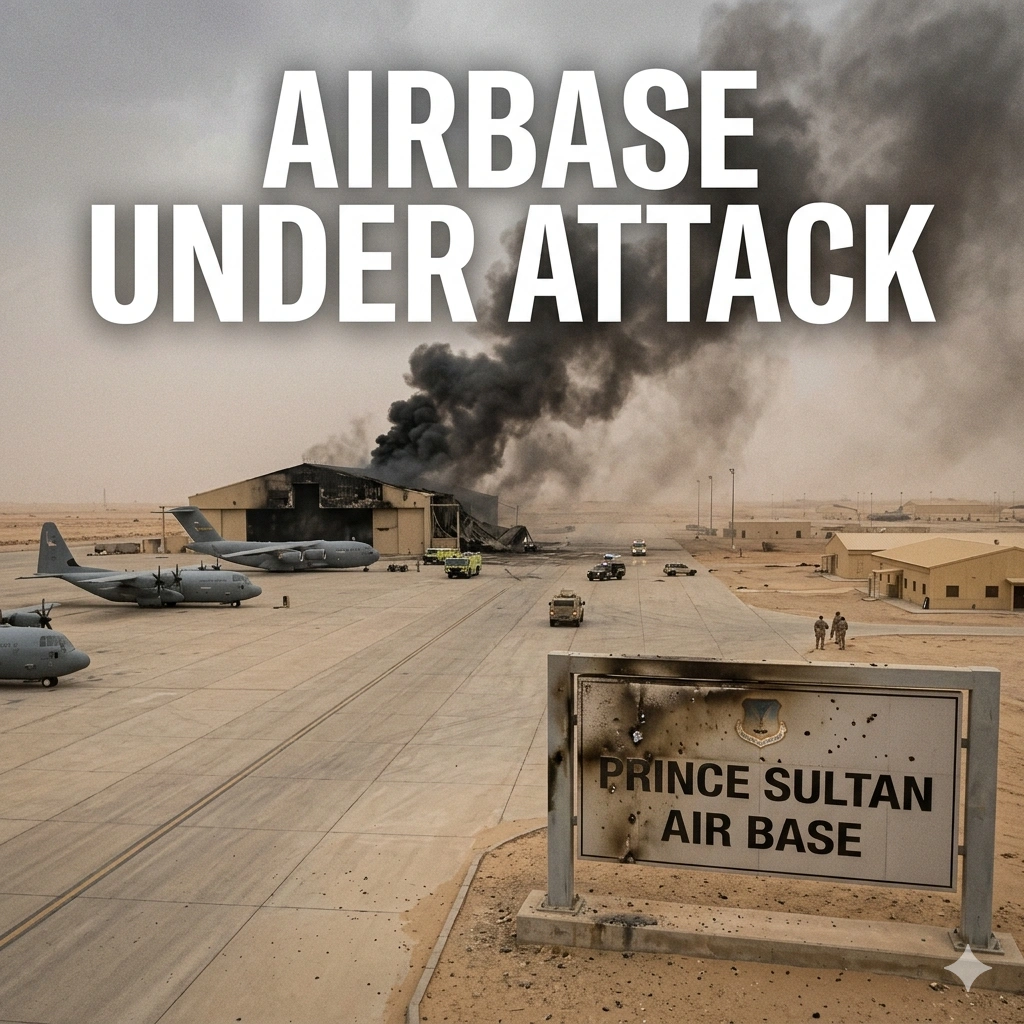
Rising Casualties as 15 U.S. Troops Wounded in Base Attack
The sheer scale of the Friday night assault caught many defensive systems off guard despite the high state of alert maintained across the Persian Gulf. Emerging reports from the Department of Defense indicate that the majority of the 15 U.S. troops wounded were stationed in a localized barracks area that bore the brunt of a missile impact.
Medical evacuation teams worked under the constant threat of secondary strikes to transport the injured to advanced surgical centers within the region. The psychological toll on the remaining personnel is significant, as this marks the third time in a single week that the Prince Sultan Air Base has been targeted by Iranian aerospace forces.
Commanders on the ground are currently assessing the structural integrity of the base facilities while prioritizing the stabilization of those five soldiers who remain in serious condition. This event has forced a immediate tactical review of how American assets are distributed across Saudi Arabian soil during this period of heightened kinetic activity.
Strategic Impact of the Prince Sultan Air Base Strike
Iranian military spokespersons were quick to claim a tactical victory, asserting that the operation successfully neutralized key logistical capabilities of the United States Air Force. Beyond the tragedy of the 15 U.S. troops wounded, state media in Tehran released satellite imagery purportedly showing the destruction of a refueling aircraft.
The loss of specialized refueling tankers could severely hamper the ability of coalition jets to maintain long-range combat air patrols over the Gulf. If the Iranian claims regarding the three additional disabled aircraft are verified, it would represent the most significant blow to U.S. air power in the region since the conflict began.
Military analysts suggest that Iran is specifically targeting the “bottleneck” assets of the U.S. military to force a withdrawal or a reduction in offensive sorties. By focusing on airbases within Saudi Arabia, Tehran is also sending a clear message to Gulf monarchies about the high cost of hosting Western military infrastructure on their sovereign territory.
15 U.S. Troops Wounded
The confirmation that 15 U.S. troops wounded in this specific engagement has shifted the political discourse in Washington toward a more aggressive stance. Lawmakers from both sides of the aisle are calling for a decisive response to ensure that such a high number of American casualties does not become a recurring theme in this war.
Defense Secretary Lloyd Austin has briefed the President on the available kinetic options to restore deterrence without triggering a total regional collapse. However, the complexity of the battlefield makes any retaliatory action a gamble, as Iran has demonstrated its ability to strike back with precision and significant volume.
While the physical injuries are the primary concern, the strategic ripple effect of having 15 U.S. troops wounded in a single night cannot be understated. It demonstrates a gap in the layered missile defense systems that were previously thought to be nearly impenetrable by regional adversaries using conventional drone technology.
Retaliation for Strikes on the Bushehr Nuclear Plant
This latest escalation is widely viewed as a direct response to the joint U.S.-Israeli operation that targeted the Bushehr nuclear power plant late last week. Although the Atomic Energy Organization of Iran claimed no technical disruptions occurred, the symbolic nature of striking a nuclear site was a “red line” for the Islamic Republic.
Tehran has long maintained that its nuclear facilities are sovereign assets that, if touched, would trigger a “thousand-fold” response against the aggressors. The incident where 15 U.S. troops wounded at Prince Sultan Air Base appears to be the first major installment of that promised retaliation, focusing on American personnel rather than infrastructure alone.
The back-and-forth nature of these strikes suggests that both sides are trapped in a classic security dilemma where every defensive or preemptive move is seen as an escalation. As the Bushehr facility remains a high-priority target for Israeli intelligence, the likelihood of further Iranian strikes on U.S. bases in the region remains exceptionally high.
Saudi Arabia’s Role in the Expanding Conflict
The Saudi government finds itself in a precarious position as its territory becomes the primary theater for the exchange of fire between Washington and Tehran. The strike that left 15 U.S. troops wounded occurred just 60 miles from the capital of Riyadh, highlighting the vulnerability of the Kingdom’s heartland.
Saudi officials have issued warnings that continued strikes on their soil could lead to a total cessation of oil exports to stabilize domestic security. This threat looms large over the global economy, as any prolonged disruption in the Gulf would send energy prices to unprecedented levels, potentially triggering a global recession.
Despite the risks, Riyadh continues to provide essential logistical support to the U.S. mission, though the political pressure from within the Arab world is mounting. The sight of 15 U.S. troops wounded on Saudi soil serves as a grim reminder that the Kingdom is now a front-line state in a war that shows no signs of slowing down.
Technological Evolution of Iranian Drone Warfare
The use of 29 drones in coordination with ballistic missiles shows a sophisticated understanding of “saturation tactics” designed to overwhelm Aegis and Patriot defense systems. During the event where 15 U.S. troops wounded, the sheer volume of incoming projectiles meant that even a 90% interception rate allowed several warheads to find their mark.
- Kamikaze drones were used to distract radar arrays before the arrival of faster ballistic missiles.
- Low-altitude flight paths allowed the drones to maneuver through terrain that masked their heat signatures.
- The coordination between drone swarms and missile batteries suggests a highly integrated command and control structure.
- Cheap, mass-produced drones are being used to deplete expensive interceptor stockpiles.
The success of these tactics in leaving 15 U.S. troops wounded will likely encourage Iran to export these methods to its proxies in Lebanon and Yemen. This proliferation of high-tech, low-cost warfare is changing the math of modern conflict, making even the most advanced military bases vulnerable to persistent harassment and high-casualty events.
Medical Response and Treatment of the Injured
The medical teams at the Prince Sultan Air Base have been working around the clock to manage the influx of casualties from the Friday strike. Treating 15 U.S. troops wounded in a high-explosive environment requires specialized trauma care focused on blast injuries, shrapnel wounds, and severe concussions.
The five soldiers in serious condition are reportedly suffering from internal organ damage and complex limb fractures caused by the collapse of the barracks structure. Advanced robotic surgery and tele-medicine links to the Landstuhl Regional Medical Center in Germany are being utilized to provide the best possible outcomes for the survivors.
Logistics experts are also rushing additional blood supplies and surgical equipment to the base to prepare for the possibility of another wave of attacks. The resilience of the medical corps is the only thing standing between the current casualty count and a much higher death toll as the 15 U.S. troops wounded fight for recovery.
International Diplomatic Reactions to the Escalation
Global leaders have reacted with alarm to the news of the 15 U.S. troops wounded, with many calling for an immediate ceasefire to prevent a wider catastrophe. The United Nations Security Council is scheduled to meet in an emergency session to discuss the deteriorating security situation in the Persian Gulf.
Russia and China have issued statements urging “maximum restraint” while pointing to the U.S.-Israeli strikes on Iranian nuclear sites as the catalyst for the current violence. Meanwhile, European allies have expressed unwavering support for the United States while privately urging Washington to find a diplomatic off-ramp before the situation becomes irreversible.
The presence of 15 U.S. troops wounded significantly complicates the diplomatic landscape, as no American administration can easily negotiate while its personnel are under direct fire. This domestic political pressure often forces a military response, which in turn fuels the next cycle of Iranian aggression in a seemingly endless loop.
Impact on Global Energy Markets and Shipping
The immediate aftermath of the attack that left 15 U.S. troops wounded saw a sharp spike in crude oil prices on the London and New York exchanges. Traders fear that the conflict is moving from a localized shadow war to a direct confrontation that could close the Strait of Hormuz.
- Insurance premiums for tankers operating in the Persian Gulf have tripled in the last 48 hours.
- Major shipping lines are considering rerouting vessels around the Cape of Good Hope.
- Global supply chains for liquid natural gas (LNG) are facing extreme delays.
If the conflict continues to see events like the 15 U.S. troops wounded, the economic cost will be felt in every household across the globe. The interconnection of Middle Eastern stability and global economic health has never been more apparent than in this current moment of crisis.
Future Outlook for the U.S.-Iran Conflict
As the war enters its second month, the probability of a peaceful resolution appears to be fading into the distance. The incident where 15 U.S. troops wounded has hardened hearts on both sides, making the prospect of compromise seem like a form of surrender.
The U.S. military is likely to increase its troop presence in the region to bolster defenses, even though more boots on the ground provide more targets for Iranian missiles. This paradox of presence is the central challenge facing Pentagon planners as they attempt to protect their assets while projecting power.
We should expect to see an increase in cyber warfare and covert operations alongside the kinetic exchanges that left 15 U.S. troops wounded. The battle for the Middle East has moved into a multi-domain phase where the lines between “peace” and “war” are permanently blurred, and the cost of miscalculation is measured in human lives.
Summary of Military Asset Losses
While the human cost is the most tragic aspect, the material losses at Prince Sultan Air Base are also deeply concerning for coalition leadership. The reported destruction of a refueling aircraft is a specific blow to the operational reach of the U.S. Air Force in the southern theater.
Iranian drones managed to penetrate the perimeter and strike parked aircraft, which are often the most vulnerable assets during a surprise raid. The 15 U.S. troops wounded were likely part of the support and maintenance crews working to keep these jets flight-ready amidst the chaos of the week’s previous attacks.
Intelligence agencies are currently analyzing the wreckage of the Iranian missiles to determine if any new guidance technologies were utilized in the strike. The accuracy of the hits that resulted in 15 U.S. troops wounded suggests a level of precision that was not seen in previous decades of Iranian military development.
The Humanitarian Crisis Looming in the Region
Beyond the military bases and the 15 U.S. troops wounded, the civilian populations of the Gulf and Iran are starting to feel the heavy hand of war. Sanctions are tightening, and the threat of air strikes hanging over major cities has led to mass internal displacement in several provinces.
Medical facilities in Iran are struggling to cope with the casualties from the strikes on their infrastructure, while Saudi civil defense teams are on high alert for “stray” missiles that could hit urban centers. The humanitarian dimension of this conflict is often overshadowed by the geopolitical maneuvering of the great powers.
Addressing the needs of those caught in the crossfire is essential to preventing a total societal collapse in the region. However, as long as events like the 15 U.S. troops wounded continue to dominate the headlines, the focus remains firmly on military parity and retaliatory strikes rather than humanitarian relief.
Strengthening Base Defenses After Recent Failures
In light of the 15 U.S. troops wounded, the Pentagon has announced an emergency deployment of additional “C-RAM” (Counter Rocket, Artillery, and Mortar) systems to all major bases in the Middle East. These systems are designed to provide a last line of defense against low-flying drones and incoming shells.
There is also a push to move more personnel into underground bunkers or reinforced “hardened” shelters during periods of high tension. The fact that a barracks was hit, leading to 15 U.S. troops wounded, suggests that the current housing arrangements are insufficient for a high-intensity missile environment.
Engineers are also working to create “dummy” targets and electronic decoys to confuse the seeker heads of Iranian missiles. These passive defense measures are just as important as the active interceptors in ensuring that we don’t see another day where 15 U.S. troops wounded becomes the leading news story.
Historical Context of U.S.-Iran Hostilities
To understand why we have 15 U.S. troops wounded today, one must look back at decades of escalating tensions and broken agreements. The collapse of previous diplomatic frameworks left a vacuum that has been filled by hawks on both sides who see military force as the only viable language.
The current conflict is the culmination of years of “maximum pressure” and proxy battles in Yemen, Syria, and Iraq. Each side feels it has been pushed into a corner, and the strike on the Prince Sultan Air Base is just the latest manifestation of a deep-seated structural enmity.
While the 15 U.S. troops wounded are the current victims, the history of this rivalry suggests that there will be many more unless a fundamental shift in regional security architecture is achieved. For now, the focus remains on the immediate battlefield and the recovery of those brave individuals who were caught in the line of fire.
Global Response to the 15 U.S. Troops Wounded
The reaction from the American public has been one of shock and growing anger as the details of the attack emerge. Online platforms are flooded with messages of support for the 15 U.S. troops wounded, while others demand a swift exit from what they see as an “endless war” in the Middle East.
- Vigils are being held in hometowns across the United States for the injured soldiers.
- Veteran organizations are calling for increased funding for long-term blast injury research.
- Congressional hearings are expected to investigate why base defenses failed to intercept the drones.
- Social media campaigns are raising awareness for the families of the five soldiers in critical condition.
The unity of the public in supporting the 15 U.S. troops wounded is a rare moment of cohesion in a divided political landscape. However, the debate over the “why” and the “what next” will likely remain a point of intense contention as the 2026 election cycle approaches.
Concluding Thoughts on the Regional Escalation
The incident involving 15 U.S. troops wounded at the Prince Sultan Air Base is a watershed moment in the 2026 Middle East conflict. It marks the transition from symbolic skirmishes to a high-stakes war of attrition that is claiming American lives and destroying vital military infrastructure.
As the smoke clears over the Saudi desert, the path forward remains obscured by the fog of war and the heat of mutual resentment. The immediate priority is the care of the 15 U.S. troops wounded, but the long-term challenge is preventing this regional fire from consuming the entire world.
The resilience of the international system is being tested like never before. Whether through renewed diplomacy or a decisive military conclusion, the cycle of violence that left 15 U.S. troops wounded must eventually find an end, though that end currently seems further away than ever.
For more details & sources visit: Al Jazeera
Read more on Iran news: 360 News Orbit – Iran.