
The Hong Kong Mexico Trade Link has officially entered a golden era in 2026, serving as a sophisticated bridge between Latin American ambition and Asian market depth. This partnership is redefining traditional commerce by positioning Hong Kong as the primary “super-connector” for Mexican enterprises. Unlike the standard North American focus, Mexican firms are now aggressively pursuing the “one country, two systems” framework to gain a competitive edge in Mainland China.
This strategic pivot is backed by a massive surge in bilateral trade, with figures showing a 46% increase in exports over the last two years. The relationship is built on a foundation of legal certainty, simplified taxation, and high-speed logistics that cater to both electronics and perishables. As the global economy shifts its weight toward the Greater Bay Area, the Hong Kong Mexico Trade Link stands as a beacon of cross-continental cooperation.
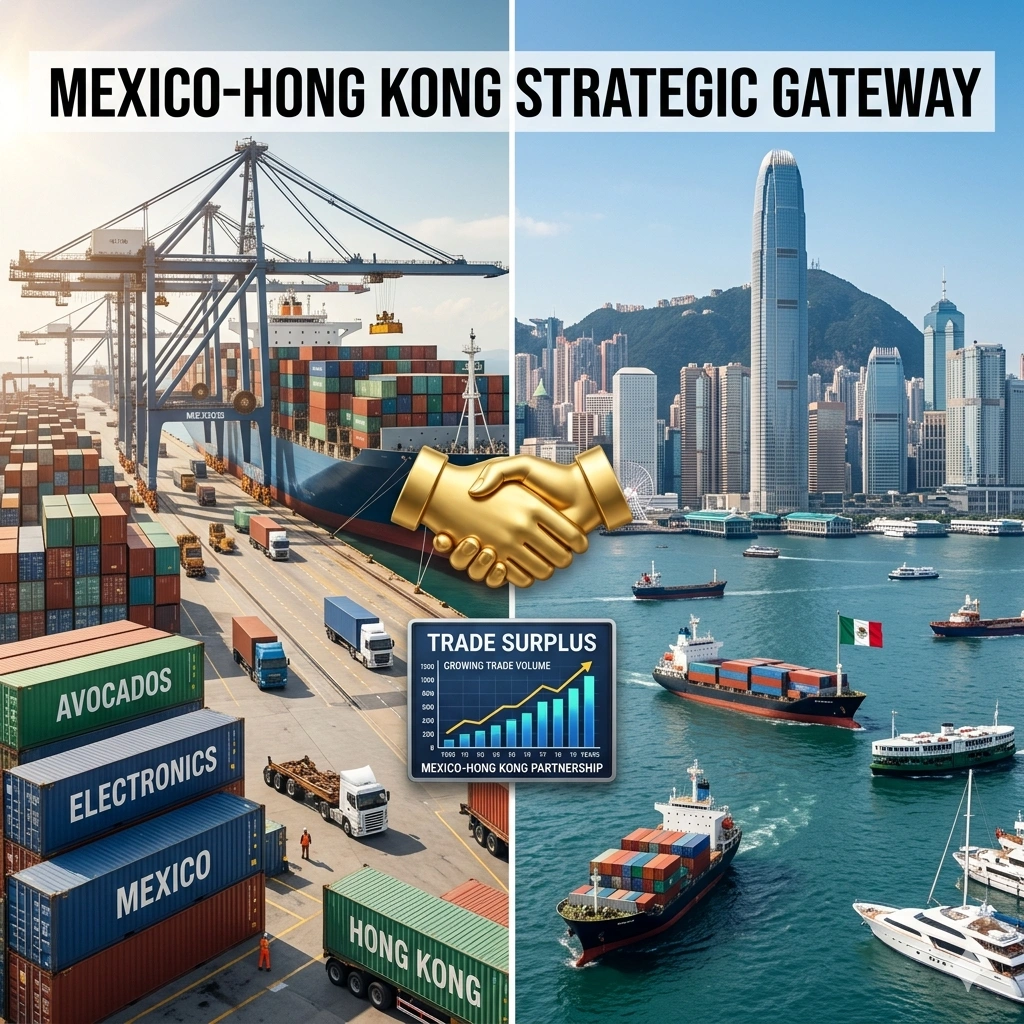
5 Reasons for the Hong Kong Mexico Trade Link Success
The success of the Hong Kong Mexico Trade Link is rooted in the territory’s unique status as a global entrepot. Mexican businesses are increasingly drawn to the city’s Western-style legal protections, which offer a familiar environment for contract enforcement and intellectual property rights. This legal stability is a rarity in the broader Asian market and serves as a major draw for North American firms.
Additionally, the absence of Value Added Tax (VAT) in Hong Kong significantly lowers the operational costs for Mexican exporters. This fiscal advantage allows companies to reinvest their savings into scaling their operations within the Greater Bay Area. The simplified tax system is particularly beneficial for small and medium-sized enterprises looking to break into international markets without heavy overhead.
Furthermore, the strategic geographic location of Hong Kong provides a logistical gateway to over 86 million consumers in Southern China. Mexican agricultural products, which once struggled to reach Asian tables, now benefit from direct cargo flights that ensure freshness. This logistical efficiency has turned Hong Kong into a vital hub for the export of Mexican avocados, berries, and high-quality seafood.
Record Trade Surpluses and Export Growth
A remarkable feature of the Hong Kong Mexico Trade Link is the rare trade surplus that Mexico maintains with the territory. In late 2025, Mexico recorded a monthly surplus of US$10.9 million, a testament to the high demand for Mexican goods in Asia. This growth is not limited to traditional sectors but spans across electronics, machinery, and specialty food items.
The 46% surge in exports between 2024 and 2025 highlights the rapid pace of this economic integration. Mexican firms have successfully identified niche markets within Hong Kong’s 7.5 million residents and the broader regional population. This success has encouraged even more Mexican states, such as Veracruz and Michoacán, to align their local industries with Asian demand.
- Agricultural products now account for a significant portion of Hong Kong’s food supply.
- Mexican electronics are finding a high-end market among Hong Kong’s tech-savvy consumers.
- Industrial machinery exports are supporting the growth of Hong Kong’s domestic manufacturing niche.
- The surplus provides Mexico with a critical source of foreign currency outside the US dollar zone.
Hong Kong Mexico Trade Link
The Hong Kong Mexico Trade Link is currently facilitating approximately 5.3% of all trade between Mexico and Mainland China. This statistic underscores the territory’s role as a “super-connector” that adds value through logistics, finance, and re-export services. By using Hong Kong as a middleman, Mexican companies can navigate the complexities of the Chinese market with greater ease.
The city’s incubation hubs, such as the Hong Kong Science and Technology Park, are becoming popular destinations for Mexican fintech and green-tech startups. These facilities provide the infrastructure and networking opportunities necessary to attract Asian venture capital. This technological exchange is a relatively new but rapidly expanding dimension of the bilateral relationship.
The Investment Promotion and Protection Agreement (IPPA), which has been in effect since 2021, remains the legal backbone of the alliance. This treaty ensures that the US$1.7 billion in cumulative FDI from Hong Kong into Mexico is protected from arbitrary regulatory changes. It provides the “legal certainty” that modern investors demand before committing significant capital to cross-border projects.
Leveraging the “One Country, Two Systems” Framework
The Hong Kong Mexico Trade Link thrives because of the unique “one country, two systems” constitutional arrangement. This framework allows Hong Kong to maintain its own currency, the HKD, which is pegged to the US dollar, providing a stable financial environment. Mexican firms find this financial predictability essential for managing their international accounts and hedging against currency volatility.
Furthermore, the city’s independent judiciary and common law system are highly compatible with Mexican commercial law. This makes the resolution of trade disputes much simpler than in jurisdictions with less transparent legal structures. The “super-connector” role is essentially a promise of safety and efficiency for Mexican capital entering the Asian theater.
- Mexican companies can use Hong Kong as a regional treasury center for their Asian operations.
- The city offers world-class arbitration services that are recognized globally.
- Business visas for Mexican entrepreneurs are processed with high efficiency and speed.
- No restrictions on the movement of capital allow for the seamless repatriation of profits.
Agricultural Expansion and Perishable Logistics
One of the most dynamic sectors of the Hong Kong Mexico Trade Link is the trade in perishable agricultural goods. Hong Kong imports 90-95% of its food supply, making it a lucrative and consistent market for Mexican farmers. The establishment of direct cargo flights has been a game-changer, reducing transit times and preserving the quality of premium exports.
Mexican avocados, berries, and beef are now common sights in high-end Hong Kong supermarkets. These products are often re-exported from Hong Kong into the Mainland, taking advantage of the city’s sophisticated cold-chain logistics. This ensures that the “Made in Mexico” brand is synonymous with quality and freshness in the eyes of Asian consumers.
The growth in this sector has prompted the Mexican government to invest more in export-oriented agricultural infrastructure in states like Michoacán. Farmers are being trained in international food safety standards to meet the strict requirements of the Hong Kong market. This vertical integration is a direct result of the opportunities provided by the “super-connector” city.
Fintech and Green Tech: The New Frontier
Beyond traditional trade, the Hong Kong Mexico Trade Link is increasingly focused on the digital and sustainable economies. Mexican fintech firms are looking to Hong Kong’s sophisticated financial ecosystem to pilot new payment solutions and digital banking tools. The city’s regulatory “sandboxes” allow these companies to test their products in a controlled environment before a wider rollout.
Green technology is another area of intense cooperation, with Mexican solar and wind firms seeking Asian investment through Hong Kong’s green bond market. Hong Kong is positioning itself as the regional hub for sustainable finance, and Mexican projects are prime candidates for this capital. This alignment of green goals is a key feature of the 2026 economic agenda.
- Mexican startups are joining incubation programs at Cyberport and HKSTP.
- Joint research initiatives are focusing on urban sustainability and waste management.
- Hong Kong investors are providing seed funding for Mexican agricultural technology.
- Digital payment bridges are being built to facilitate easier B2B transactions.
Strategic Investments in Veracruz and Michoacán
The flow of FDI through the Hong Kong Mexico Trade Link has had a tangible impact on the ground in Mexico. Significant investments have been directed toward the port of Veracruz and the industrial zones of Michoacán. These funds are being used to modernize port facilities, improve rail links, and build new manufacturing hubs.
Hong Kong-based firms, particularly those in logistics and automotive components, see Mexico as a vital nearshoring destination. By producing goods in Mexico, these companies can more easily serve the North American market while maintaining their Asian headquarters. This “reverse-connector” effect is a unique benefit of the partnership.
- Investment in Veracruz ports has increased the capacity for containerized shipping to Asia.
- Michoacán has seen a rise in automotive parts factories funded by Hong Kong capital.
- These projects have created thousands of high-skilled jobs for Mexican workers.
- The IPPA ensures that these multi-million dollar investments are protected by international law.
The Role of InvestHK and Mexico Business News
Organizations like InvestHK have been instrumental in promoting the Hong Kong Mexico Trade Link to a wider audience. By providing tailored support and market intelligence, they help Mexican companies navigate the initial hurdles of entering the Asian market. Their seminars and trade missions have become essential networking events for the bilateral business community.
Media outlets like Mexico Business News also play a role by highlighting the success stories within the partnership. Their reporting provides the data and analysis that CEOs need to make informed decisions about expanding into the Greater Bay Area. The visibility provided by these platforms has helped normalize the idea of Hong Kong as a primary trade partner for Mexico.
- InvestHK offers “one-stop” services for Mexican companies setting up in the territory.
- Mexican trade associations are collaborating with Hong Kong’s chambers of commerce.
- Regular webinars are held to update businesses on changes to the IPPA and tax laws.
- Successful Mexican entrepreneurs in Hong Kong act as mentors for new arrivals.
Navigating the Greater Bay Area Through Hong Kong
The Hong Kong Mexico Trade Link is the most effective way for Mexican firms to tap into the Greater Bay Area (GBA) initiative. The GBA is a massive economic cluster that includes Shenzhen, Guangzhou, and Macau, representing one of the most productive regions in the world. Hong Kong acts as the international interface for this powerhouse, providing the necessary legal and financial bridges.
Mexican businesses can set up their regional headquarters in Hong Kong to manage their factories and suppliers across the GBA border. This allows them to benefit from Mainland China’s manufacturing might while keeping their administrative functions under Hong Kong’s common law system. This “best of both worlds” approach is the secret to the alliance’s longevity.
- GBA integration allows Mexican firms to access a talent pool of millions of engineers.
- Hong Kong’s specialized visas for GBA travel make cross-border management easy.
- The city’s financial markets provide a gateway to the Mainland’s capital pools.
- Collaborative marketing efforts are promoting Mexican brands to the entire GBA region.
High-Tech Logistics and Cold-Chain Efficiency
The Hong Kong Mexico Trade Link relies heavily on the world-class logistics infrastructure of the Hong Kong International Airport (HKIA). As the world’s busiest cargo hub, HKIA offers specialized handling for high-value electronics and temperature-sensitive perishables. This ensures that Mexican exports arrive in top condition, regardless of the distance traveled.
Recent investments in automated warehouses and 5G-enabled logistics have further improved the speed of the “super-connector.” Mexican exporters can now track their shipments in real-time, providing greater transparency for their Asian customers. This high-tech approach reduces waste and increases the overall profitability of the trade route.
- Automated cold-storage facilities prevent spoilage of Mexican fruits and vegetables.
- High-speed customs clearance processes mean goods reach shelves faster.
- Intermodal transport links allow for seamless transfers from air to sea and rail.
- Specialized handling for Mexican electronics minimizes damage during transit.
Future Outlook for the Bilateral Relationship
Looking toward the end of 2026 and into 2027, the Hong Kong Mexico Trade Link is expected to continue its upward trajectory. The planned expansion of the IPPA to include more service sectors will open up new opportunities for Mexican professionals in Asia. Additionally, the growing “Halal” market in the region provides a new niche for Mexican food exporters.
As Mexico continues to diversify its global partnerships, Hong Kong will remain its most strategic ally in the East. The combination of historical ties, legal certainty, and logistical excellence is too powerful to ignore. The relationship is a model for how medium-sized economies can leverage global hubs to achieve outsized growth.
- New bilateral agreements on sustainable energy are expected to be signed soon.
- Education exchanges between Mexican and Hong Kong universities are increasing.
- Tourism between the two regions is growing, driven by improved flight connections.
- The “super-connector” model is being studied by other Latin American nations.
Conclusion: A “Super-Connector” for the Modern Age
The Hong Kong Mexico Trade Link has successfully transformed from a niche connection into a vital economic artery. By leveraging the “one country, two systems” framework, Mexican firms have found a safe and efficient path to the world’s most dynamic markets. The rare trade surplus and record growth in exports are clear indicators of the alliance’s health.
Whether it is through high-tech logistics, sustainable finance, or the export of premium agricultural goods, the partnership is delivering tangible results. As the “super-connector,” Hong Kong provides the bridge that Mexico needs to reach its full potential on the global stage. The future of this relationship is bright, driven by mutual respect and a shared vision of prosperity.
The story of the Hong Kong Mexico Trade Link is one of innovation and resilience. It proves that with the right partner, even the most distant markets can be brought within reach. As we move further into 2026, this strategic gateway will only become more essential for the Mexican economy.
For more details & sources visit: Mexico Business News / InvestHK
Read more on Mexico news: 360 News Orbit – Mexico