
Windsor Economy Faces Fresh Uncertainty as the trilateral trade landscape shifts under significant international pressure. The manufacturing hub of Windsor, Ontario, is currently grappling with economic contraction and cautious consumer behavior as the United States-Mexico-Canada Agreement enters a critical review year. While new industrial projects provide some relief, local businesses remain on high alert over potential policy shifts that could disrupt the flow of goods across the border.
The city of Windsor occupies a unique position as a gateway between two major economic powers. Because the region is uniquely dependent on the U.S. automotive industry, the recent contraction of 0.6 percent in the fourth quarter serves as a warning sign. Trade uncertainty has begun to stifle investment as stakeholders wait for clearer signals regarding the future of cross-border commerce and integrated supply chains.
Local business owners report that customers are now demanding longer payment terms and smaller orders to mitigate risks. This trend reflects a broader unease over the upcoming review of the trade agreement which governs the majority of local exports. Although Mexico has begun formal negotiations, Canada’s current approach involves informal talks, leading to concerns about future tariffs on essential materials like steel and aluminum.
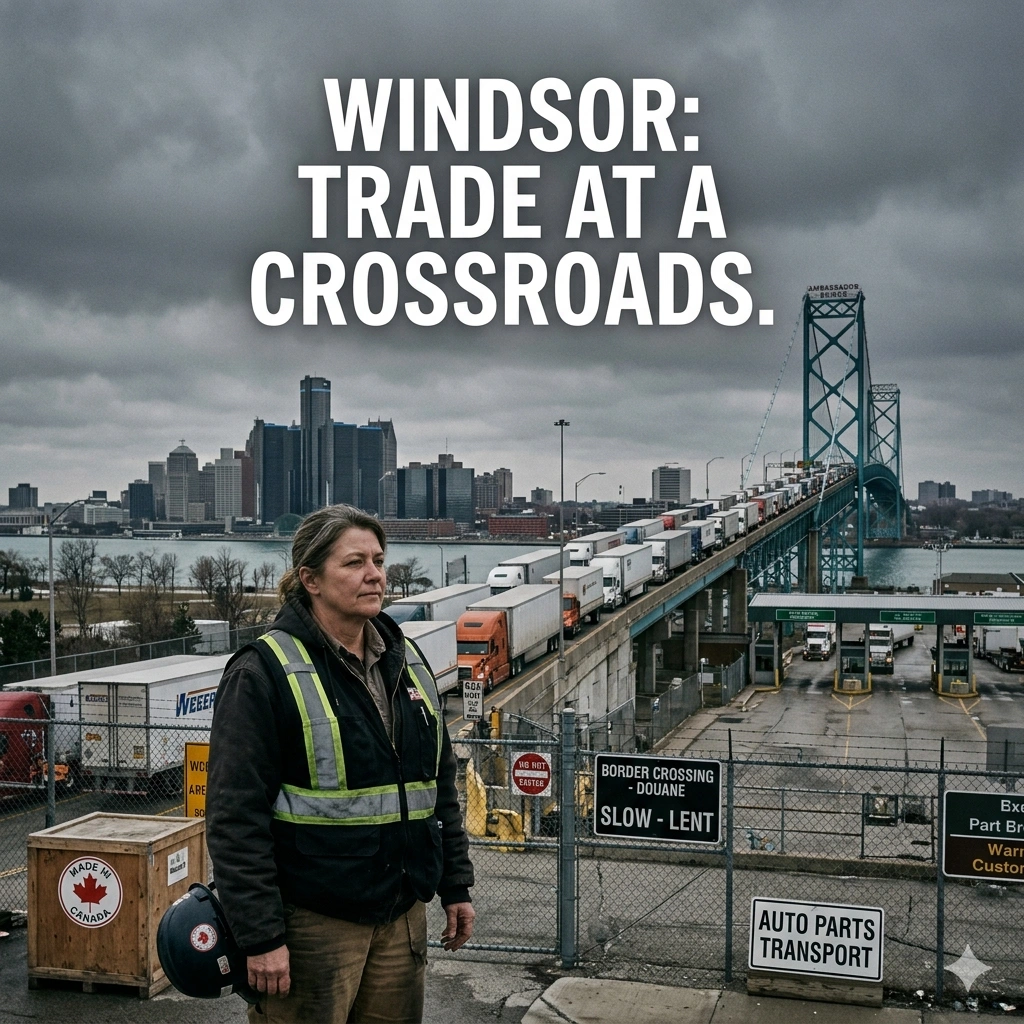
Impact of Automotive Integration on Windsor Economy
The automotive sector remains the lifeblood of the Windsor region, connecting thousands of specialized part makers to the global market. Because 90 percent of local exports cross the Detroit River, any change in trade protocols directly impacts the bottom line of small and medium enterprises. Consequently, the Windsor Economy Faces Fresh Uncertainty as manufacturers try to predict whether the existing rules of origin will remain intact through the next year.
Investment in the electric vehicle sector was supposed to provide a long-term cushion against market volatility. However, the high cost of transitioning assembly lines combined with fluctuating consumer demand for EVs has created a complex environment. Many factory owners are hesitating to commit to large-scale capital expenditures until the outcome of the USMCA review is finalized by the participating nations.
Furthermore, the integration of the Windsor-Detroit corridor means that labor disruptions or policy changes on one side of the border are immediately felt on the other. Workers in Windsor often find that their job security is tied to legislative decisions made in Washington rather than Ottawa. This external dependency ensures that the Windsor Economy Faces Fresh Uncertainty whenever trade agreements are reopened for negotiation or critique.
Windsor Economy Faces Fresh Uncertainty
This specific phrase encapsulates the current mood among financial analysts and local policymakers who monitor the city’s performance. The manufacturing core is currently seeing a divergence between large-scale corporate investments and the struggles of smaller tier-two and tier-three suppliers. While the massive battery plant offers hope for the future, the immediate reality for many local shops is a reduction in backlog orders and tightening credit conditions.
Economic indicators suggest that the local real estate market is also reflecting this period of hesitation. Potential homebuyers are increasingly cautious, leading to a stabilization of prices that were once skyrocketing. When the Windsor Economy Faces Fresh Uncertainty, the ripple effects move quickly from the factory floor to the service industry and the housing sector, creating a localized slowdown.
To combat these trends, local advocacy groups are calling for more aggressive representation of Canadian interests in trade talks. They argue that the integrated nature of the North American auto industry makes tariffs counterproductive for all parties involved. Nevertheless, the political climate remains unpredictable, ensuring that the Windsor Economy Faces Fresh Uncertainty remains a headline for the foreseeable future as trade discussions progress.
Labor Market Shifts and Manufacturing Resilience
The labor market in Windsor is currently a study in contrasts, featuring both record-high investment and persistent anxiety. The addition of new shifts at major plants has absorbed some of the unemployed workforce, yet the specialized skills required for new technologies are in short supply. This talent gap adds another layer of complexity as the Windsor Economy Faces Fresh Uncertainty regarding its long-term industrial competitiveness.
Training programs have been launched to bridge this gap, but these initiatives take time to produce a meaningful impact on the regional economy. In the meantime, the threat of renewed tariffs on automotive parts looms over every contract negotiation. If the Windsor Economy Faces Fresh Uncertainty due to external trade barriers, the incentive for young professionals to remain in the region may diminish over time.
Resilience has always been a hallmark of the Windsor spirit, yet even the most optimistic leaders acknowledge the difficulty of the current path. The city has survived economic downturns before, but the current geopolitical environment is uniquely focused on reshoring and protectionism. As these global forces collide, the Windsor Economy Faces Fresh Uncertainty that requires strategic planning and diverse industrial partnerships to overcome.
Comparing International Trade Strategies and Local Responses
While Canada has preferred a quiet diplomacy approach, Mexico has been more vocal about its expectations for the trade review. This difference in strategy has left some Windsor business leaders feeling that their interests might be sidelined in the broader trilateral discussion. As a result, the Windsor Economy Faces Fresh Uncertainty because the timeline for reaching a consensus remains unclear to the public.
Local chambers of commerce are hosting frequent seminars to help businesses navigate the potential changes in customs regulations and tax implications. These resources are vital for smaller companies that do not have the legal departments necessary to interpret complex international law. Because information is power, the current lack of transparency ensures the Windsor Economy Faces Fresh Uncertainty will persist through the summer months.
Strategically, Windsor is looking to diversify its economic base by attracting tech firms and logistics hubs that are less sensitive to specific automotive tariffs. This transition is a multi-year process that cannot provide an immediate solution to the current trade-related stress. Consequently, the Windsor Economy Faces Fresh Uncertainty as it balances its historic manufacturing identity with a needed push toward modernization.
Infrastructure Development Amidst Trade Volatility
The completion of the Gordie Howe International Bridge is expected to streamline trade, but its opening coincides with a period of high tension. While the physical infrastructure for trade is improving, the legal framework remains under threat of revision. This paradox means the Windsor Economy Faces Fresh Uncertainty even as the physical capacity to move goods across the border reaches an all-time high.
Investment in local infrastructure, such as road improvements and utility upgrades, continues despite the gloomy trade forecasts. These projects provide some local employment and signal a commitment to the region’s long-term viability as an industrial powerhouse. However, the return on these investments is heavily dependent on a stable trade environment where the Windsor Economy Faces Fresh Uncertainty is the exception rather than the rule.
Public transit and housing developments are also being scrutinized as the city prepares for a potential influx of workers for the new battery plant. If trade barriers are erected, the projected population growth might not materialize as quickly as expected. This uncertainty makes it difficult for urban planners to commit to large-scale municipal projects, further illustrating how the Windsor Economy Faces Fresh Uncertainty.
Future Outlook for the Windsor Industrial Sector
Looking ahead to the final quarter of the year, analysts expect a period of high volatility as the USMCA review reaches its peak. The Windsor Economy Faces Fresh Uncertainty that will likely affect holiday spending and year-end corporate reporting for many local firms. Maintaining a steady course during this period will require cooperation between all levels of government and the private sector.
One potential bright spot is the increasing demand for sustainable technology, which Windsor is well-positioned to supply. If the trade review results in favorable terms for green energy components, the region could see a significant rebound. Until those terms are set in stone, however, the Windsor Economy Faces Fresh Uncertainty that keeps investors on the sidelines and consumers in a defensive posture.
In conclusion, the path forward for Ontario’s manufacturing heartland is paved with both opportunity and significant risk. The integration with the U.S. market is a double-edged sword that provides wealth during stable times but creates vulnerability during political shifts. As the community watches the negotiations unfold, the Windsor Economy Faces Fresh Uncertainty, awaiting a resolution that will define its economic trajectory for the next decade.
The community remains hopeful that the deep-rooted ties between Detroit and Windsor will serve as a buffer against radical policy changes. Both cities rely on a seamless flow of parts and people to maintain their status as the automotive capital of the world. Even with these ties, the Windsor Economy Faces Fresh Uncertainty as the global landscape moves toward a more fragmented and transactional trade model.
Effective communication from federal officials will be crucial in the coming months to reassure the markets. Without clear guidance on the progress of the USMCA talks, the Windsor Economy Faces Fresh Uncertainty will continue to dampen growth and innovation. The goal must be to secure a deal that recognizes the unique contributions of border cities to the continental economy.
Ultimately, the strength of the local workforce and the innovation of its entrepreneurs will be the deciding factors. While the Windsor Economy Faces Fresh Uncertainty today, the foundational assets of the region remain strong and capable of adapting to new realities. Adapting to these changes is not a new challenge for Windsor, but it is one that requires immediate and focused attention from all stakeholders involved.
As we monitor the data from the first half of the year, it is clear that the manufacturing sector is bracing for impact. The Windsor Economy Faces Fresh Uncertainty that reflects a global trend of re-evaluating long-standing trade relationships. By staying informed and remaining agile, Windsor can navigate these turbulent waters and emerge as a more resilient economic hub.
Wait and see is the current motto for many, but active preparation is what will save the most vulnerable businesses. The Windsor Economy Faces Fresh Uncertainty, yet the spirit of the city remains undeterred by the challenges of the modern trade era. Every effort must be made to ensure that the transition into the next phase of the USMCA is as smooth as possible for the workers of Windsor.
For more details & sources visit: Business Recorder
Read more on Canada news: 360 News Orbit – Canada