
Raphinha muscle injury remains a major concern for Barcelona as the Brazilian winger returns to Spain following a setback during international duty. The news broke late Sunday evening after the Brazilian Football Confederation confirmed that the star attacker would be heading back to his club for further medical evaluation. This development comes at a critical juncture for the Catalan giants who are currently locked in a fierce battle for domestic silverware.
The medical team at Barcelona is reportedly on high alert as they prepare to assess the extent of the damage sustained by their key forward. Early reports from the Brazilian camp suggest that the player felt a sharp pain during a training session which forced an immediate halt to his participation. Fans are now anxiously waiting for an official statement regarding the recovery timeline for the talented winger.
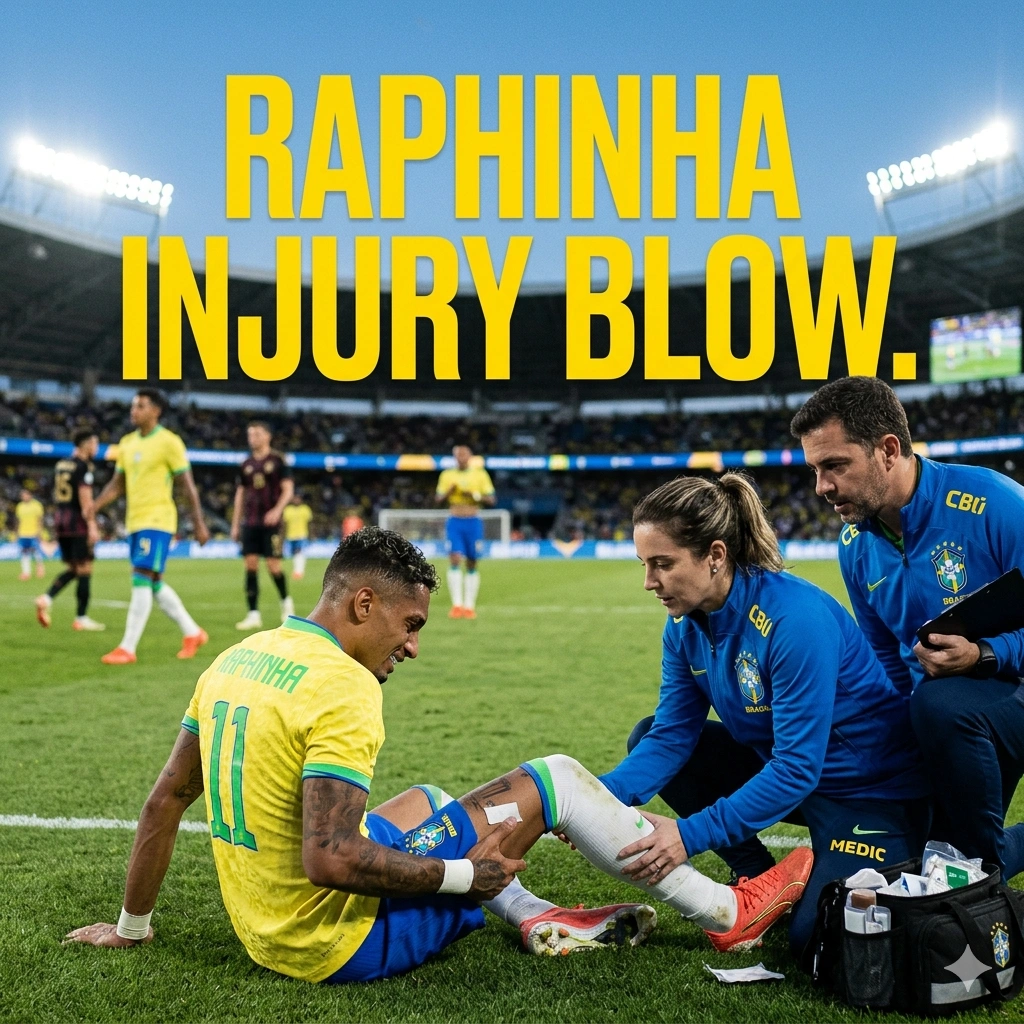
Raphinha muscle injury impacts Barcelona title race
The timing of this injury could not be worse for the Blaugrana as they prepare for a grueling run of fixtures in April. With the league title still within reach, every point is vital and losing a starting winger creates a significant void in the starting eleven. The coaching staff must now look toward the bench to see who can step up and fill the shoes of the Brazilian international.
Tactically, the absence of a natural right-sided attacker limits the ways in which Barcelona can stretch opposing defenses. The team has relied heavily on the pace and crossing ability of the former Leeds United star to create chances for their central strikers. Without his presence on the flank, the play might become too centralized and predictable for savvy defensive units in La Liga.
The medical department is working around the clock to ensure that the initial scans are processed with the highest level of accuracy. Barcelona has faced a string of fitness issues this season, and this latest blow adds further pressure to an already stretched squad. Rotation will be key in the coming weeks to prevent further casualties among the remaining healthy players in the first-team squad.
Raphinha muscle injury
The official confirmation of the Raphinha muscle injury came after Brazil’s medical staff conducted preliminary tests at their training base. It was determined that continuing with the national team would only risk further aggravating the site of the strain. Consequently, the decision was made to release him early to ensure he receives the best possible care under the supervision of club doctors.
Barcelona’s medical staff is known for their conservative approach when dealing with soft tissue issues to avoid long-term complications. They will likely implement a specialized rehabilitation program that focuses on gradual strengthening and mobility work before he returns to the grass. The initial phase of recovery will involve rest and physiotherapy to reduce inflammation in the affected area of the thigh.
While the player is understandably frustrated by this turn of events, he remains optimistic about a swift return to action. He has a history of bouncing back quickly from minor physical setbacks, which gives the supporters some hope during this uncertain period. The club is expected to release a formal medical report within the next forty-eight hours to provide more clarity.
Brazilian medical staff confirms Raphinha muscle injury status
According to the head doctor of the Brazilian national team, the player reported discomfort during a high-intensity drill on Friday afternoon. After a brief physical examination, it became clear that the winger was not fit to compete in the upcoming friendly matches. The technical staff decided that his health was the priority and facilitated his immediate travel back to Barcelona.
The communication between the national team and the club has been seamless throughout this process to ensure the player’s welfare. Barcelona’s sporting director has been in constant contact with the CBF to stay updated on the situation as it unfolded. This collaborative effort is essential for managing the workloads of high-profile players who represent both club and country at the highest level.
Impacted by the Raphinha muscle injury, the Brazilian squad will have to adjust their offensive strategy for the remainder of the international break. While they have depth in attacking positions, the specific profile offered by the Barcelona man is difficult to replicate exactly. His teammates have expressed their support, wishing him a speedy recovery so he can rejoin them for future qualifiers.
Tactical changes following the Raphinha muscle injury news
Xavi Hernandez is now tasked with reconfiguring his offensive line to compensate for the loss of his most reliable winger. This might mean a change in formation or giving an extended run of games to one of the club’s rising young talents. The versatility of the squad will be tested as they navigate this challenging period without one of their primary creative outlets.
One option for the manager is to shift another forward into a wider role, although this may disrupt the chemistry established in recent months. Another possibility involves utilizing attacking full-backs to provide the width that is lost when the Brazilian is sidelined. Regardless of the choice, the tactical flexibility of the coaching staff will be under the microscope during the next few matches.
The Raphinha muscle injury also opens the door for fringe players to prove their worth to the manager and the fans. This is a common occurrence in top-level football where one player’s misfortune becomes another player’s opportunity to shine. The performance of these backup options will be crucial in determining whether Barcelona can maintain their momentum in the league.
History of the Raphinha muscle injury issues this season
This is not the first time this season that the Brazilian has faced physical challenges related to his muscular health. Earlier in the campaign, he missed several weeks due to a similar issue which hindered his ability to find a consistent rhythm. The recurring nature of these problems is a point of concern for both the player and the club’s performance analysts.
- First incident occurred during the early stages of the league in September.
- The second setback happened just before the winter break in December.
- This latest injury in March represents the third significant muscular concern this term.
The sports science department is looking into potential underlying causes for these frequent disruptions to his playing time. Factors such as nutrition, sleep patterns, and training loads are all being scrutinized to find a long-term solution. Preventing future occurrences of the Raphinha muscle injury is a top priority to ensure the longevity of his career at the highest level.
Impact on Barcelona’s offensive statistics and performance
Statistically, the team performs at a significantly higher level when the Brazilian international is on the pitch. His ability to beat defenders one-on-one and deliver precise crosses into the box has resulted in numerous goals this season. Without him, the team’s expected goals metric often sees a noticeable dip in high-stakes matches.
- Goal contributions per ninety minutes drop by nearly twenty percent without him.
- The number of successful dribbles in the final third decreases significantly.
- Cross completion rates are typically lower when alternative wingers are utilized.
- Defensive work rate from the front is also affected by his absence on the wing.
Analyzing the data shows that the Raphinha muscle injury truly affects the overall balance of the team’s attacking play. His willingness to track back and support the full-back is another underrated aspect of his game that will be missed. The coaching staff will need to emphasize collective defensive responsibility to cover for this loss in work ethic.
Fan reactions to the Raphinha muscle injury update
Social media has been flooded with messages of support for the player as news of his withdrawal spread across the globe. Barcelona fans are known for their passion, and many have expressed their fears about what this means for the club’s trophy aspirations. The consensus among the supporters is that he is an indispensable part of the current project under Xavi.
Many fans have also criticized the congested international calendar, arguing that it places too much strain on elite athletes. The debate over “club versus country” always intensifies when a major player returns from international duty with a physical problem. Supporters are calling for better protection of players to ensure that the quality of club football does not suffer.
Despite the concern, there is also a sense of resilience within the fan base, with many pointing to the depth of the current squad. They believe that the team has enough character to overcome the Raphinha muscle injury and stay competitive in all competitions. The upcoming home match at the Estadi Olímpic Lluís Companys will likely feature chants of support for the sidelined star.
Medical experts weigh in on the Raphinha muscle injury
Independent sports physicians have commented on the typical recovery times for the type of strain described in the initial reports. Most agree that a Grade 1 muscle tear usually requires two to three weeks of rest and rehabilitation before returning to full training. However, if the imaging reveals a Grade 2 tear, the timeline could extend to six weeks or more.
- Grade 1: Mild stretching of the fibers with minimal recovery time needed.
- Grade 2: Partial tear of the muscle fibers requiring more intensive physical therapy.
- Grade 3: Complete rupture of the muscle, which is rare but requires surgery.
The Raphinha muscle injury appears to fall into the first or second category based on the fact that he was able to walk off the pitch. A more definitive assessment will be available once the Barcelona doctors conduct their own high-resolution MRI scans. Precision in diagnosis is vital to avoid a premature return that could lead to a more severe and lasting injury.
Future outlook for Barcelona after the Raphinha muscle injury
Looking ahead, the club must manage their squad with extreme care to navigate the final months of the season successfully. The Raphinha muscle injury serves as a reminder of the fragility of a football team’s plans and the importance of having a robust squad. Strategic rotation and the integration of youth players will be more important than ever in the coming weeks.
If the winger is sidelined for an extended period, the club might reconsider their tactical approach for the big matches remaining on the calendar. This could involve playing with more midfielders to control the tempo of the game rather than relying on explosive wing play. The flexibility of the manager will be the deciding factor in how the team copes with this significant loss.
The long-term goal remains to have a fully fit squad for the most decisive moments of the campaign. While the Raphinha muscle injury is a setback, it is not an insurmountable obstacle for a club of Barcelona’s stature. The focus now shifts entirely to the rehabilitation process and ensuring that the player returns stronger than before to help his team cross the finish line.
Training adjustments during the Raphinha muscle injury period
With one of the primary speedsters out of the mix, the training sessions at the Ciutat Esportiva Joan Gamper will look slightly different. Xavi will likely focus on different patterns of play that do not rely so heavily on the specific traits of the injured winger. The emphasis will shift toward collective movement and quicker ball circulation in the final third of the field.
Players who have seen limited minutes recently will be pushed harder in training to ensure they are match-ready when called upon. The intensity of these sessions is crucial for maintaining the high standards required at a club like Barcelona. The Raphinha muscle injury creates a void that must be filled with collective effort and increased focus from every member of the squad.
The coaching staff will also use this time to analyze video footage of upcoming opponents to find new weaknesses to exploit. Without their usual threat on the right, they may find that attacking through the middle or the left flank becomes more effective. Adaptation is the hallmark of a great team, and this period will be a true test of Barcelona’s tactical evolution.
Comparing Raphinha muscle injury to previous squad setbacks
Throughout the 2025-2026 season, Barcelona has had to deal with various injuries to key personnel in different departments. Comparing the current Raphinha muscle injury to these previous incidents helps put the situation into a broader perspective. The team has shown an ability to stay competitive despite missing influential figures like their starting goalkeeper or captain at times.
- Pedri missed four weeks in November with a similar muscular concern in his thigh.
- The starting center-back was out for a month following an ankle sprain in January.
- Gavi has been managed carefully after returning from a long-term ligament issue.
Each of these challenges was met with a “next man up” mentality that has kept the club in the hunt for titles. The Raphinha muscle injury is just the latest hurdle in what has been a physically demanding season for the entire roster. The resilience built through these earlier setbacks will be invaluable as they face the current situation with confidence and a clear plan.
The role of the medical staff in managing Raphinha muscle injury
The doctors and physiotherapists at FC Barcelona are considered some of the best in the world for treating elite athletes. Their role in managing the Raphinha muscle injury goes beyond just physical treatment; it also involves psychological support. Keeping a player motivated and focused during a period of forced absence is essential for a successful and lasting recovery.
State-of-the-art facilities allow the medical team to use advanced techniques such as hydrotherapy and cryotherapy to accelerate healing. Every aspect of the player’s day is monitored to ensure that he is following the prescribed recovery protocol to the letter. This level of detail is what separates top-tier clubs from the rest when it comes to player availability and performance.
The head of medical services will be providing regular updates to Xavi and the board regarding the progress of the Raphinha muscle injury. This information is critical for planning the lineup for future matches and determining if any emergency signings or youth promotions are necessary. Clear communication is the foundation of the club’s strategy for dealing with physical setbacks of this nature.
What Raphinha muscle injury means for the Brazilian National Team
Brazil is also feeling the impact of losing one of their most dynamic attacking options during this international window. The Raphinha muscle injury has forced the national team coach to rethink his strategy for the upcoming matches against other top-tier nations. While they have a wealth of talent to choose from, his specific style of play is highly valued by the Seleção.
The national team has a busy schedule ahead, and they will be hoping that their star winger is fit in time for the summer tournaments. His contributions to the national side have been vital in recent qualifiers, and he is seen as a leader within the locker room. The Raphinha muscle injury is a reminder of the risks involved in high-stakes international football and the need for careful player management.
Other players in the Brazilian squad will now have to take on more responsibility in the absence of their teammate. This is an opportunity for some of the younger Brazilian forwards to make a name for themselves on the international stage. The competition for places in the starting eleven is always fierce, and this situation only intensifies the battle for a permanent spot.
Analyzing the mechanics of the Raphinha muscle injury
Understanding how the Raphinha muscle injury occurred can help the training staff prevent similar incidents in the future. Muscular strains often happen during explosive movements like sprinting or sudden changes in direction, which are frequent in the winger’s game. The sheer volume of matches played by elite footballers today is a significant contributing factor to these types of physical failures.
Biomechanical analysis might reveal that certain movements are putting excessive stress on specific muscle groups. By identifying these patterns, the performance team can design corrective exercises to balance the load more effectively across the body. The Raphinha muscle injury is being used as a case study to refine the individual training programs for all high-intensity players at the club.
The goal is to move from a reactive approach to a proactive one where injuries are anticipated and prevented before they happen. While it is impossible to eliminate risk entirely in a contact sport, the use of data and technology can significantly reduce the frequency of muscle issues. The lessons learned from the Raphinha muscle injury will be integrated into the club’s long-term athletic development strategy.
Summary of the Raphinha muscle injury situation
In conclusion, the Raphinha muscle injury is a significant blow to both FC Barcelona and the Brazilian national team. The coming days will be crucial as the player undergoes extensive testing to determine the full extent of the damage to his right thigh. Fans and teammates alike are hoping for the best possible outcome to ensure he can return to the pitch as soon as possible.
The club has the resources and the depth to manage his absence in the short term, but his long-term availability is vital for their success. The Raphinha muscle injury highlights the constant pressure on modern footballers and the importance of professional medical care. As the season enters its most exciting phase, all eyes will be on the medical reports coming out of the Catalan capital.
Ultimately, the strength of a team is measured by how it responds to adversity, and this is a major test for the current Barcelona squad. The Raphinha muscle injury may be a setback, but it also provides a platform for other players to emerge as heroes. The road to recovery begins now for the Brazilian star, and the football world will be watching his progress closely.
Final thoughts on Raphinha muscle injury and recovery
Every athlete faces challenges, and the Raphinha muscle injury is just another chapter in the career of a determined professional. His commitment to his craft and his desire to help his team will be the driving forces behind his rehabilitation process. We can expect to see him back on the field, terrorizing defenses once again, before the season reaches its dramatic conclusion.
The support from the club, the fans, and his family will be instrumental in helping him navigate the frustrations of being sidelined. Dealing with a Raphinha muscle injury requires patience and discipline, two qualities that the winger has shown throughout his rise to the top of world football. The story of his season is far from over, and this recovery could be the catalyst for a strong finish.
As we await further news, the focus remains on the health and well-being of the player above all else. The Raphinha muscle injury is a reminder that even the most elite performers are human and prone to the physical demands of the beautiful game. We wish him a swift and complete recovery as he works his way back to the historic turf of the Nou Camp.
For more details & sources visit: Geo Super
Read more about Brazil news on 360 News Orbit – Brazil.