
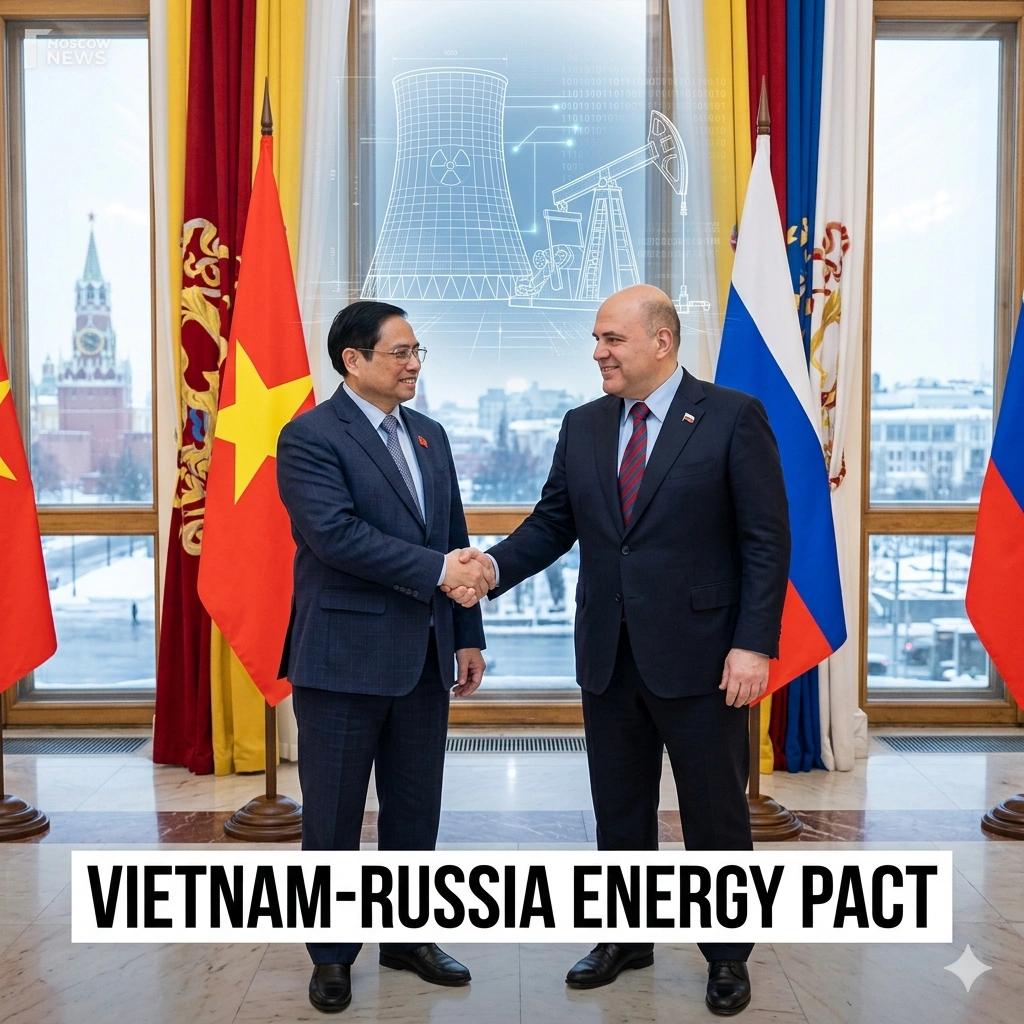
Vietnam Russia Energy cooperation has reached a critical turning point as Prime Minister Pham Minh Chinh arrived in Moscow for a high-stakes four-day diplomatic mission. This visit is specifically designed to secure Vietnam’s long-term energy future amid a suffocating global fuel crisis that has seen domestic petrol prices spike by 70%. The primary focus of the discussions involves formalizing contracts for nuclear power infrastructure and expanding oil exploration rights within the South China Sea region.
The Vietnam Russia Energy partnership is more than just a bilateral trade agreement; it is a survival strategy for Hanoi’s manufacturing-heavy economy. With the US-Israel conflict against Iran disrupting traditional Middle Eastern supply chains, Vietnam has turned toward its historic ally to stabilize national fuel reserves. The Prime Minister is expected to meet with Russian Prime Minister Mikhail Mishustin to finalize several multi-billion dollar deals throughout this week.
Escalating Fuel Prices in Southeast Asia
The Vietnam Russia Energy deals are being signed at a moment of extreme economic pressure for the Vietnamese population. Following the outbreak of the war in the Middle East, the cost of transporting goods has tripled, leading to record-high inflation across the country. Citizens are looking to the government for immediate relief, and these energy contracts are seen as the most viable solution to lower costs.
Securing a reliable Vietnam Russia Energy supply chain will allow the government to subsidize local fuel costs and protect the purchasing power of the middle class. The Prime Minister’s visit highlights the desperation of the current situation, as previous attempts to diversify energy sources have proven insufficient. Russia’s vast natural reserves offer the volume and pricing consistency that Vietnam requires to maintain its competitive edge in global manufacturing.
The Vietnam Russia Energy talks also include provisions for human resource training to help Vietnamese engineers manage complex oil extraction projects. This knowledge transfer is vital for the long-term independence of Vietnam’s domestic energy sector, reducing reliance on foreign consultants. By investing in local talent, Hanoi is ensuring that the benefits of these Russian deals last for decades rather than just a few years.
Vietnam Russia Energy
The most ambitious component of the Vietnam Russia Energy initiative is the construction of the nation’s first nuclear power plant. Following preliminary agreements reached in early 2025, the two nations are now ready to sign formal construction contracts that could see a functional facility within five years. This transition to nuclear power is seen as a necessary step to meet the growing electricity demands of Vietnam’s expanding urban centers.
Russia’s Rosatom will play a leading role in the Vietnam Russia Energy nuclear project, providing both the technology and the initial uranium fuel rods. This collaboration marks a significant return to nuclear ambitions for Vietnam after several projects were shelved in the previous decade due to safety and funding concerns. The current global fuel crisis has effectively forced a re-evaluation of nuclear energy as a safe and stable alternative to fossil fuels.
Under the Vietnam Russia Energy framework, the new nuclear facility will be built according to the highest international safety standards to reassure the public. Prime Minister Pham Minh Chinh emphasized that nuclear energy is the only way to achieve carbon neutrality while supporting industrial growth. The partnership ensures that Vietnam will have access to the most advanced Generation III+ reactor designs currently available on the global market.
Joint Oil and Gas Ventures in the South China Sea
A significant portion of the Vietnam Russia Energy discussions will focus on expanding joint ventures in the contested waters of the South China Sea. Russian energy firms like Zarubezhneft have long been active in Vietnamese waters, and the new deals aim to deepen this presence. These projects are crucial for Vietnam as it seeks to tap into its own offshore reserves to reduce the need for expensive fuel imports.
The Vietnam Russia Energy collaboration in offshore drilling provides a layer of geopolitical protection for Vietnam’s maritime interests. Having a major global power like Russia invested in these waters discourages aggressive maneuvers by other regional claimants. This strategic alignment benefits both parties, as Russia gains a secure market for its technology and Vietnam gains the resources it needs for economic stability.
Furthermore, the Vietnam Russia Energy agreements include the modernization of existing refineries in Vietnam to handle different grades of Russian crude oil. This technical upgrade will allow for more efficient processing and lower production costs for local petrol and diesel. By improving the entire value chain, from extraction to refining, the two countries are building a comprehensive energy corridor that spans thousands of miles.
Tackling the Middle East Conflict Fallout
The Vietnam Russia Energy deals are a direct response to the catastrophic impact of the US-Israel war against Iran. This conflict has effectively closed off several major shipping lanes in the Persian Gulf, leading to a worldwide scramble for non-Middle Eastern oil. Vietnam, which relies heavily on energy imports, was one of the first nations to feel the economic shockwaves of this regional war.
During the Vietnam Russia Energy summit, officials noted that traditional energy markets are no longer reliable in a multipolar world. The shift toward Russia is a pragmatic decision based on the immediate need for fuel and the long-term goal of energy sovereignty. Even with international pressure to isolate Moscow, Hanoi has determined that its national interest requires a strong partnership with the Kremlin.
The Vietnam Russia Energy strategy also includes the creation of a joint strategic petroleum reserve located on Vietnamese soil. This reserve would hold enough Russian oil to power the country for several months in the event of a total global supply chain collapse. Such forward-thinking measures are essential for any nation wishing to survive the unpredictable nature of 21st-century global conflicts and energy wars.
Economic Impact on Vietnamese Manufacturing
The success of the Vietnam Russia Energy negotiations is vital for the thousands of factories that produce electronics and textiles for the global market. High energy prices have already led to some factory closures and thousands of layoffs in the southern industrial zones. Reclaiming affordable energy through these Russian deals will allow these businesses to restart production and fulfill international orders.
- Stability in electricity pricing for heavy industrial manufacturing plants.
- Reduction in the cost of logistics and inland transportation for exported goods.
- Increased investor confidence from multinational corporations operating in Vietnam.
- Lowering of the overall trade deficit caused by high-priced fuel imports.
The Vietnam Russia Energy partnership is therefore seen as a lifeline for the “Made in Vietnam” brand. Without these deals, the country risks losing its position as a top-tier manufacturing hub to regional competitors with better energy security. The Prime Minister is well aware that his political standing depends on his ability to bring home a deal that lowers the cost of living for the average worker.
Environmental and Nuclear Safety Standards
Critics have raised concerns about the environmental impact of the Vietnam Russia Energy nuclear plans, but the government has been quick to address them. Vietnam is working closely with the International Atomic Energy Agency (IAEA) to ensure that the Russian-built plants meet all modern safeguards. The plan includes a comprehensive waste management strategy that will be funded as part of the initial Vietnam Russia Energy investment package.
- Implementation of “passive safety” systems in all new nuclear reactor designs.
- Long-term storage solutions for spent nuclear fuel in collaboration with Russian experts.
- Regular environmental impact assessments of offshore oil and gas drilling sites.
By adhering to these strict guidelines, the Vietnam Russia Energy initiative aims to prove that economic growth and environmental responsibility can go hand in hand. The transition to nuclear power will actually help Vietnam meet its climate goals by reducing the total amount of coal burned for electricity. This makes the partnership a win for both the economy and the local environment in the long run.
Strengthening Human Capital and Training
A less-discussed but equally important part of the Vietnam Russia Energy agreement is the educational exchange program. Thousands of Vietnamese students will be sent to Russian universities to study nuclear physics, petroleum engineering, and energy management. This ensures that the next generation of Vietnamese leaders has the technical expertise to manage the nation’s complex energy infrastructure.
The Vietnam Russia Energy educational pipeline has a long history, dating back to the Cold War era, but the new deals significantly expand its scope. Russia has committed to building a state-of-the-art nuclear science and technology center in Vietnam to facilitate local research. This center will serve as a hub for innovation, helping Vietnam develop its own patented technologies in the energy sector over the coming decades.
Participants in these programs will return to Vietnam to work on the projects finalized during this Moscow visit. This cycle of learning and application is what will ultimately make the Vietnam Russia Energy deals a success for the entire nation. It transforms a simple purchase of fuel into a comprehensive upgrade of the country’s intellectual and industrial capacity, moving Vietnam further up the global value chain.
Geopolitical Implications for the Asia-Pacific
The deepening of Vietnam Russia Energy ties has sent a strong message to other global powers about Vietnam’s independent foreign policy. Hanoi continues to follow its “Four Nos” defense policy, but its economic actions show a clear willingness to engage with Russia despite Western disapproval. This balance allows Vietnam to maintain its sovereignty while securing the resources necessary for its 100 million citizens to prosper.
Analysts believe the Vietnam Russia Energy alliance could encourage other Southeast Asian nations to seek similar arrangements with Moscow. As the fuel crisis continues to bite, the allure of stable and affordable Russian energy may outweigh the risks of secondary sanctions. This could lead to a significant realignment of energy markets across the entire Asia-Pacific region by the end of 2026.
Russia, for its part, views the Vietnam Russia Energy partnership as a gateway to the broader ASEAN market. By establishing a strong foothold in Vietnam, Moscow can demonstrate the reliability of its energy technology to other developing economies. This mutual benefit is the driving force behind the warmth and productivity of the current diplomatic meetings taking place in the Russian capital.
Future Outlook: Toward a Nuclear-Powered Vietnam
As the Vietnam Russia Energy contracts are signed, the clock begins to tick on the five-year goal for nuclear power. The government must now prepare the national grid for a massive influx of baseload power that nuclear plants provide. This will require additional investments in smart grid technology and high-voltage transmission lines, many of which may also involve Russian technical assistance and financing.
- Upgrading the national power grid to handle 24/7 nuclear energy output.
- Integrating renewable energy sources with the stable nuclear baseload.
- Developing a domestic supply chain for nuclear plant maintenance and parts.
- Establishing a regulatory body to oversee the safe operation of the facilities.
The Vietnam Russia Energy deals are just the first step in a long-term transformation of the country’s energy landscape. If successful, Vietnam will become one of the first nations in Southeast Asia to successfully integrate nuclear power into its national energy mix. This would provide a massive competitive advantage in an era where energy costs are the primary driver of economic success or failure.
Stability Amidst Global Uncertainty
The Vietnam Russia Energy negotiations offer a rare moment of stability in an otherwise chaotic global economy. While other nations struggle with blackouts and soaring costs, Vietnam is taking proactive steps to insulate itself from external shocks. The partnership reflects a high degree of trust between Hanoi and Moscow, built over decades of cooperation and shared history.
The Vietnamese public is cautiously optimistic that the Vietnam Russia Energy deals will result in a noticeable drop in fuel prices by the end of the year. While the nuclear plants are a long-term project, the immediate increases in oil and gas shipments should provide relief much sooner. The government’s ability to navigate these complex geopolitical waters will be remembered as a defining moment in Vietnam’s modern history.
In conclusion, the Vietnam Russia Energy summit in March 2026 represents a bold and necessary move for a nation on the rise. By securing the fuels of today and the power of tomorrow, Prime Minister Pham Minh Chinh is laying the foundation for a resilient and prosperous Vietnam. The world will be watching closely as these two nations work together to turn an energy crisis into a catalyst for technological and economic advancement.
The Prime Minister’s return to Hanoi later this week will likely be marked by the announcement of finalized contracts that secure the nation’s energy path for the next fifty years. The Vietnam Russia Energy partnership has proven to be the most effective tool in Vietnam’s diplomatic arsenal. As the “Meeting of Waters” in the Amazon symbolizes nature’s balance, these energy deals symbolize the balance of power and pragmatism in a rapidly changing world.
Vietnam’s journey toward energy independence is far from over, but the Vietnam Russia Energy deals provide a solid starting point. The lessons learned from this crisis will inform future policy decisions, ensuring that the country is never again so vulnerable to foreign conflicts. With Russian support, the lights of Vietnam will stay on, and its factories will keep humming, regardless of the chaos beyond its borders.
For more details & sources visit: RFI (Radio France Internationale)
Read more about Russia news on 360 News Orbit – Russia