
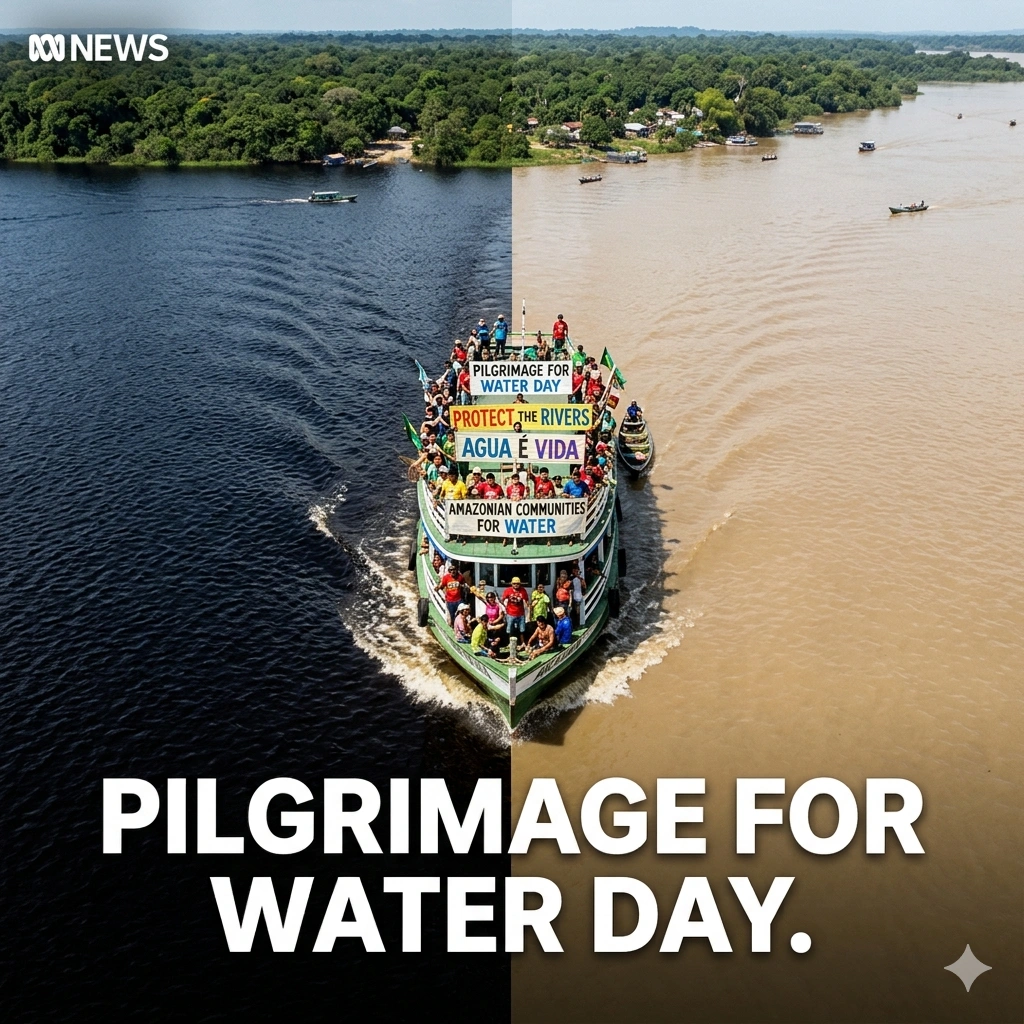
Amazon Water Pilgrimage participants gathered today to honor the sacred confluence of the Rio Negro and Solimões River in Brazil. This symbolic journey, organized by the Forum da Água, serves as a vital reminder of our collective responsibility toward the planet’s most significant freshwater resources. As the world observes World Water Day on March 23, 2026, the sight of hundreds of advocates navigating the “Meeting of Waters” provides a visual testament to environmental resilience. The event successfully combined traditional cultural values with urgent modern scientific warnings about the health of the Amazon basin.
The primary objective of the Amazon Water Pilgrimage was to illuminate the ecological fragility of the Rio Negro and its sandy counterpart, the Solimões. By traversing the six-kilometer stretch where these two distinct currents flow side-by-side without mixing, the pilgrimage highlighted the unique biodiversity of the region. Local communities joined international activists to demand stronger protections against deforestation and water pollution. This gathering signifies a growing global movement that views water not just as a resource, but as a fundamental human right.
Historical Context of the Meeting of Waters
The Amazon Water Pilgrimage takes place at one of the most geographically significant locations on the planet. For centuries, the “Encontro das Águas” near Manaus has fascinated explorers and scientists alike due to the stark contrast between the dark acidic waters and the light silt-laden flows. This natural phenomenon occurs because of differences in temperature, speed, and water density between the two massive river systems. Understanding this history helps us appreciate why the pilgrimage remains a cornerstone of local environmental advocacy efforts.
Navigating this liquid border during the Amazon Water Pilgrimage allows observers to see how different environments coexist within a single basin. The Rio Negro carries organic matter from the forest floor, while the Solimões brings minerals from the Andes Mountains. This intersection creates a nutrient-rich environment that supports thousands of species of fish and aquatic plants. Protecting this delicate intersection is a primary goal for the environmentalists who organized the Sunday boat procession.
As we reflect on the Amazon Water Pilgrimage, it is important to recognize the cultural heritage of the indigenous people living along these banks. To many local tribes, the confluence represents a spiritual meeting point where different energies of the earth converge. By incorporating these traditional beliefs into the World Water Day celebrations, the Forum da Água ensures that conservation efforts are culturally sensitive. This holistic approach is essential for long-term ecological success in the South American rainforest.
Amazon Water Pilgrimage
The specific route of the Amazon Water Pilgrimage was designed to maximize visibility and impact during the 2026 celebrations. Starting from the port of Manaus, the fleet moved steadily toward the point where the dark and light waters finally merge into the mighty Amazon River. Each vessel carried banners calling for the preservation of the “Lungs of the Earth” and the protection of its arterial waterways. This methodical journey symbolizes the long road ahead for global water security and climate stability.
During the Amazon Water Pilgrimage, speakers emphasized that the health of the Amazon is directly linked to global weather patterns. When these rivers are healthy, they regulate the moisture levels that influence rainfall as far away as the United Kingdom and North America. The pilgrimage serves as a global siren, calling for immediate action to stop the degradation of these vital water systems. It reminds us that every drop of water in the Solimões contributes to the balance of our global climate.
Participants in the Amazon Water Pilgrimage also focused on the socio-economic importance of the rivers for the city of Manaus. These waterways are the lifeblood of regional commerce, providing transportation, food, and energy to millions of Brazilian citizens. Without the clean flow of the Rio Negro, the local economy would face a catastrophic decline. The event therefore united commercial interests with environmental protection to create a unified front for sustainable regional development.
Scientific Importance of the Confluence
Scientific data gathered during the Amazon Water Pilgrimage provides insights into the current state of river health. Researchers accompanied the boat procession to take water samples and measure the oxygen levels at varying depths across the confluence. These real-time assessments help scientists track the impact of upstream industrial activities on the downstream ecosystem. The pilgrimage thus serves a dual purpose of public demonstration and active environmental monitoring.
The results discussed during the Amazon Water Pilgrimage suggest that while the rivers remain resilient, they are under increasing pressure. Factors such as illegal mining and urban runoff are beginning to alter the chemical composition of the Solimões River. By bringing these issues to the forefront during World Water Day, the organizers hope to influence government policy regarding water management. Scientific transparency is a key pillar of the Forum da Água’s mission to save the Amazon.
Furthermore, the Amazon Water Pilgrimage highlighted the role of the river as a carbon sink. The dense vegetation along the banks of the Rio Negro absorbs significant amounts of carbon dioxide, helping to mitigate the effects of global warming. When the pilgrimage fleet passed these forested areas, participants were reminded of the symbiotic relationship between water and air. Protecting the water naturally leads to the protection of the trees, creating a comprehensive shield for the planet.
Challenges Facing the Amazon River System
The Amazon Water Pilgrimage does not ignore the harsh realities facing the region today. Despite the beauty of the event, the underlying message is one of urgent concern for the future of the river basin. Increased agricultural expansion has led to higher levels of sediment in the Solimões, which can disrupt the natural flow at the “Meeting of Waters.” The pilgrimage aims to highlight these challenges so that they can be addressed through international cooperation and strict local enforcement.
- Reduction in biodiversity due to rising water temperatures in the basin.
- Increased levels of mercury contamination from illicit gold mining activities.
- Disruption of traditional fishing grounds for local ribeirinho communities.
- Loss of riparian forests that provide critical habitat for endangered species.
Addressing these issues requires the kind of collective action demonstrated during the Amazon Water Pilgrimage. By bringing together diverse groups of people, the event fosters a sense of shared responsibility that transcends national borders. The pilgrimage proves that when people unite for a common cause, they can influence the global discourse on environmental ethics. This unity is the most powerful tool we have in the fight against ecological destruction.
Sustainable Solutions for the Future
The leaders of the Amazon Water Pilgrimage proposed several innovative solutions to protect the region’s water quality. One primary recommendation is the establishment of more protected aquatic corridors where industrial activity is strictly prohibited. Additionally, the pilgrimage organizers advocated for the implementation of advanced satellite monitoring to track pollution levels in real-time. These technological advancements, combined with grassroots activism, offer a roadmap for the survival of the Amazon.
- Investment in sustainable sewage treatment plants for the city of Manaus.
- Expansion of community-led conservation projects along the Solimões River.
- Promotion of eco-tourism as a viable alternative to extractive industries.
Educational programs were also a major focus of the Amazon Water Pilgrimage discussions. By teaching the younger generation about the importance of the Rio Negro, we ensure that the spirit of conservation continues. The pilgrimage included many students who were eager to learn about the hydrological wonders of their homeland. Empowering youth with knowledge is the best way to guarantee that the “Meeting of Waters” remains a pristine natural landmark.
Global Impact of the Pilgrimage
The news of the Amazon Water Pilgrimage has reached audiences far beyond the borders of Brazil. International media outlets captured the stunning aerial views of the boat procession, bringing the beauty of the Amazon to millions of screens worldwide. This global visibility is essential for raising the funds necessary to support large-scale conservation projects. The pilgrimage acts as a bridge between the remote reaches of the rainforest and the global community of environmental supporters.
As the Amazon Water Pilgrimage concluded, organizers issued a final call to action for world leaders. They demanded that water protection be placed at the top of the international climate agenda during upcoming summits. The success of this pilgrimage in 2026 shows that the public demand for environmental justice is stronger than ever. We must now translate this momentum into concrete legislative changes that safeguard our most precious liquid assets.
Ultimately, the Amazon Water Pilgrimage is a story of hope and determination. It shows that even in the face of daunting environmental challenges, people are willing to stand up for the natural world. The confluence of the Rio Negro and Solimões remains a symbol of the world’s natural diversity and the need for harmony. As long as the pilgrimage continues, the voice of the Amazon will be heard across the globe.
Community Engagement and Local Wisdom
A significant aspect of the Amazon Water Pilgrimage is the involvement of local riverside residents, known as ribeirinhos. These individuals possess a deep, ancestral knowledge of the river’s moods and cycles that modern science is only beginning to understand. During the pilgrimage, these community members shared stories of how the river has changed over the decades. Their insights provide a qualitative balance to the quantitative data gathered by the researchers on board the boats.
The Amazon Water Pilgrimage also serves as a platform for local artisans and musicians to celebrate their connection to the water. The boat procession was accompanied by traditional songs that have been passed down through generations of forest dwellers. This cultural celebration reinforces the idea that the river is not just a biological entity, but a cultural one as well. By honoring these traditions, the pilgrimage strengthens the social fabric of the Amazon region.
Involving the community in the Amazon Water Pilgrimage ensures that conservation efforts have local “buy-in.” When the people who live on the river are the ones leading the charge for its protection, the results are much more likely to be permanent. The Forum da Água has been instrumental in organizing these local groups into a cohesive political force. This grassroots power was on full display during the Sunday event near Manaus.
The Role of Technology in Conservation
While the Amazon Water Pilgrimage is rooted in tradition, it also embraces modern technology to spread its message. Drones were used to capture high-definition footage of the pilgrimage, allowing people around the world to experience the “Meeting of Waters” in 360 degrees. This immersive technology helps to create an emotional connection between the viewer and the environment. It is this emotional bond that often drives individuals to make lifestyle changes or donate to conservation causes.
During the Amazon Water Pilgrimage, digital maps were shared that showed the specific areas of the river most at risk from deforestation. These maps are updated regularly using satellite data to provide an accurate picture of the environmental landscape. By making this information publicly accessible, the pilgrimage organizers are promoting a culture of transparency and accountability. Technology thus serves as an equalizer, giving everyone the tools they need to protect the Amazon.
Furthermore, the Amazon Water Pilgrimage utilized social media to engage a younger, tech-savvy audience. Hashtags related to World Water Day and the Amazon rivers trended globally, sparking conversations about water scarcity and pollution. This digital outreach is a vital component of modern environmental movements. It allows the message of the pilgrimage to resonate long after the boats have returned to the harbor.
Future Outlook for the Rio Negro
The legacy of the Amazon Water Pilgrimage will be measured by the actions taken in its wake. In the coming months, the Forum da Água plans to follow up with government officials to ensure that the promises made during World Water Day are kept. This involves monitoring new legislation regarding mining permits and land use in the Amazon basin. The pilgrimage was the beginning of a new phase of intensified advocacy for the region.
- Monitoring the implementation of new water quality standards.
- Advocating for the rights of indigenous territories along the Solimões.
- Tracking the migration patterns of aquatic species in the Rio Negro.
- Reporting on the progress of reforestation efforts near the confluence.
As we look toward the future, the Amazon Water Pilgrimage remains a beacon of light for the global environmental movement. It reminds us that the struggle to protect our planet is a continuous journey that requires patience and persistence. The “Meeting of Waters” will continue to flow, and so too will the efforts of those dedicated to its survival. With each passing year, the pilgrimage grows in strength and significance.
Ecological Resilience of the Amazon
Despite the threats mentioned during the Amazon Water Pilgrimage, the Amazon river system remains incredibly resilient. The sheer volume of water flowing through the Rio Negro and Solimões provides a buffer against many environmental shocks. This natural resilience gives us a window of opportunity to implement the changes needed to ensure long-term stability. The pilgrimage celebrates this strength while acknowledging the limits of what the ecosystem can endure.
The Amazon Water Pilgrimage highlighted the fact that nature can recover if given the chance. In areas where deforestation has been halted, the forest is slowly reclaiming the riverbanks, and water clarity is improving. These success stories were shared during the pilgrimage to inspire hope among the participants. It is important to focus on what is working just as much as what is failing.
In conclusion, the Amazon Water Pilgrimage is a vital annual event that bridges the gap between science, culture, and activism. By focusing on the unique beauty of the “Meeting of Waters,” it reminds us of what is at stake in the fight for our planet’s future. The 2026 pilgrimage has set a new standard for environmental demonstration, combining scale with deep local significance. Let us carry the spirit of the pilgrimage with us throughout the year as we work to protect all of the earth’s precious water resources.
The Amazon Water Pilgrimage participants returned to Manaus with a renewed sense of purpose and a commitment to action. They have seen firsthand the beauty of the confluence and the threats it faces from modern industrialization. This experience will fuel their advocacy work for years to come, ensuring that the voice of the Amazon is never silenced. The pilgrimage is more than just an event; it is a movement that continues to flow like the great rivers themselves.
As the sun set over the Rio Negro on World Water Day, the final boats of the Amazon Water Pilgrimage docked quietly. The echoes of the day’s chants and songs remained in the air, a haunting reminder of the collective will to survive. We are all connected by water, and the fate of the Amazon is the fate of us all. The pilgrimage reminds us that we must act now, before the distinct lines of our natural wonders fade into the muddy waters of neglect.
For more details & sources visit: Reuters
Read more about Brazil news on 360 News Orbit – Brazil.