
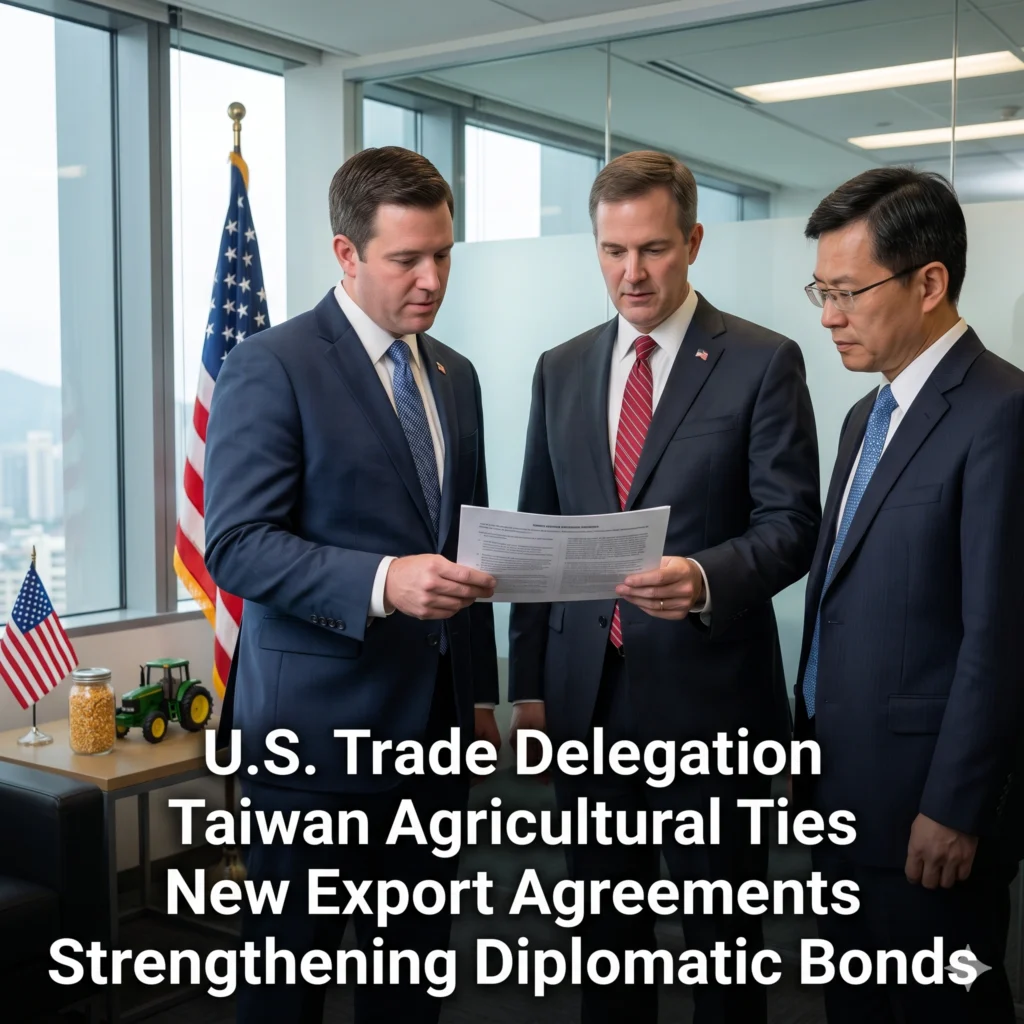
Taiwan trade agreement initiatives recently took center stage as U.S. Representative Zach Nunn spearheaded a high-profile congressional delegation to Taipei. This strategic mission aimed to solidify economic bonds and ensure that American farmers receive preferential access to one of Asia’s most vibrant marketplaces. By fostering a direct dialogue with Taiwanese leadership, the delegation sought to finalize frameworks that lower financial barriers for Heartland exports.
The timing of this visit remains crucial as global markets face increasing volatility and geopolitical shifts. Representative Nunn emphasized that the Taiwan trade agreement is not merely a commercial contract but a cornerstone of democratic solidarity. As agricultural producers in states like Iowa look for stability, these diplomatic efforts provide a necessary roadmap for long-term fiscal growth and international cooperation.
Throughout the multi-day summit, officials focused on the technical nuances of the Taiwan trade agreement to ensure maximum benefit for domestic producers. The discussions spanned various sectors, ranging from traditional crop exports to the high-tech integration of supply chains. This comprehensive approach reflects a modern understanding of how trade policy must evolve to address both food security and technological sovereignty in the Pacific region.
The Strategic Importance of the Taiwan Trade Agreement for Iowa Farmers
The Taiwan trade agreement represents a massive win for the Iowa agricultural sector which has long sought more competitive access to Pacific markets. By eliminating restrictive quotas and lowering entry costs, the deal allows local producers to compete on a level playing field with international rivals. Iowa’s economy relies heavily on these export pipelines to maintain the high valuation of its rural land and processing facilities.
Legislators highlighted that the Taiwan trade agreement specifically targets commodities that define the American Midwest’s output. Corn, soybeans, and specialized livestock products are poised to see a significant uptick in volume as these new protocols take effect. This surge in demand is expected to revitalize local communities that have been struggling with fluctuating global commodity prices over the last several years.
Furthermore, the Taiwan trade agreement serves as a stabilizing force for the $225 million trade relationship that already exists between the state and the island. By locking in these favorable terms, the agreement protects farmers from sudden policy shifts or retaliatory tariffs often seen in larger trade wars. This predictability is essential for farm managers making multi-year investments in equipment and sustainable technology.
The delegation also noted that the Taiwan trade agreement facilitates a smoother logistics chain by standardizing sanitary and phytosanitary requirements. These technical alignments reduce the time goods spend in transit and minimize the risk of shipments being rejected at the border for minor clerical errors. Consequently, the freshness and quality of American perishables are maintained, commanding higher prices in Taiwanese supermarkets.
Major Tariff Reductions for Beef and Dairy Exports
One of the most celebrated aspects of the Taiwan trade agreement is the drastic reduction in tariffs for premium American beef and dairy. Previously, high import duties made these products luxury items for many Taiwanese consumers, limiting the overall market penetration for U.S. ranchers. The new agreement slashes these rates, making high-quality protein more affordable for the average household in Taipei.
Under the provisions of the Taiwan trade agreement, specific tariffs that reached as high as 26% are being phased out or significantly reduced. This shift is expected to trigger a 15% increase in export volume within the first eighteen months of implementation. Dairy producers, in particular, see this as an opportunity to introduce specialized cheeses and powdered milk products to a growing middle class.
The Taiwan trade agreement also addresses the regulatory hurdles that often delayed the entry of processed meat products. By streamlining the certification process, the U.S. Department of Agriculture can more efficiently verify the safety of exports destined for the island. This creates a more responsive supply chain that can react quickly to shifts in Taiwanese consumer preferences and seasonal demand.
Ranchers have praised the Taiwan trade agreement for its role in promoting the “U.S. Grade” brand as a symbol of safety and excellence. As tariffs drop, marketing campaigns are being prepared to showcase the superior nutritional profile of American grain-fed beef. This collaborative effort between the government and private industry illustrates the holistic benefits of well-negotiated international trade treaties.
Taiwan Trade Agreement
The Taiwan trade agreement stands as a testament to the power of bipartisan diplomacy in securing the economic future of the American workforce. By focusing on the removal of 99% of tariff barriers, this document ensures that American ingenuity is not hindered by protectionist policies abroad. It reflects a shared commitment to open markets and the rule of law in an increasingly complex global environment.
Negotiators worked tirelessly to ensure the Taiwan trade agreement included protections for intellectual property and fair labor practices. These additions are vital for modern trade, ensuring that the benefits of globalization are shared equitably among workers in both nations. This focus on ethical commerce distinguishes the current agreement from previous iterations of regional trade pacts.
The Taiwan trade agreement also provides a framework for future cooperation in emerging sectors such as green energy and biotechnology. As both nations transition toward sustainable economies, the ability to exchange expertise and hardware without excessive taxation will be paramount. This forward-looking perspective ensures that the partnership remains relevant for decades to come, not just the current fiscal year.
Ultimately, the Taiwan trade agreement reinforces the idea that economic security is a form of national security. By deepening ties with a democratic ally, the United States strengthens its position in the Indo-Pacific while providing a direct boost to its own domestic industries. This synergy is the primary driver behind Representative Nunn’s persistent advocacy for the mission’s success and full ratification.
Strengthening the Global Semiconductor Supply Chain
A pivotal component of the discussions surrounding the Taiwan trade agreement involved the protection of the semiconductor industry. Taiwan currently produces 92% of the world’s most advanced microchips, which are the lifeblood of American manufacturing and artificial intelligence. Ensuring a steady flow of these components is a top priority for the congressional delegation and the administration alike.
The Taiwan trade agreement facilitates deeper collaboration between tech firms in Silicon Valley and their manufacturing counterparts in Hsinchu Science Park. By reducing the costs associated with the cross-border movement of specialized equipment, the agreement helps prevent bottlenecks in the production of cars, medical devices, and consumer electronics. This resilience is crucial for maintaining American technological leadership on the global stage.
Beyond just trade, the Taiwan trade agreement encourages reciprocal investment in research and development. The delegation discussed potential joint ventures that would see Taiwanese firms opening more satellite facilities within the United States. Such investments are often contingent on the stable regulatory environment provided by a formal trade agreement, making this mission doubly important for domestic job creation.
The focus on semiconductors within the Taiwan trade agreement also serves as a deterrent against supply chain coercion from hostile actors. By diversifying where components are sourced and processed, the U.S. lessens its vulnerability to external political pressure. This strategic move ensures that the digital economy remains robust even during times of heightened international tension or regional instability.
Countering Chinese Influence Through Economic Solidarity
The Taiwan trade agreement is a clear signal to Beijing that the United States remains fully committed to the sovereignty and economic independence of Taiwan. As the Chinese government ramps up pressure on the island, a formal trade pact provides the necessary support for Taiwan’s international standing. This mission serves as a diplomatic counterweight to the alternative economic models being proposed by the mainland.
Lawmakers argued that the Taiwan trade agreement is essential for preventing the type of political and economic integration seen in Hong Kong. By providing Taiwan with a viable alternative to the Chinese market, the U.S. helps preserve the island’s democratic institutions. This geopolitical reality was a major factor in the urgency displayed by Representative Nunn’s bipartisan delegation during their visit.
Interestingly, while the delegation was discussing the Taiwan trade agreement, opposition leaders from Taiwan were meeting with President Xi Jinping. This contrast highlights the internal political struggle within the region and the importance of American presence. The U.S. remains the primary guarantor of a free and open Indo-Pacific, a role supported by these economic treaties.
The Taiwan trade agreement also encourages other democratic nations to pursue similar bilateral deals with Taipei. When the United States takes the lead, it creates a “domino effect” of legitimacy that helps Taiwan break out of its diplomatic isolation. This collective economic front is the most effective way to ensure regional stability without resorting to military escalation.
Impact on Pork Exports and the Iowa Economy
Pork production is a cornerstone of the Iowa economy, and the Taiwan trade agreement offers significant relief for this vital industry. The reduction of tariffs to 10% is expected to open up massive opportunities for local processors who have faced stiff competition from European suppliers. This change directly translates to higher profit margins for family-owned farms across the state.
- Tariff rates for pork will drop from nearly 30% to a more manageable 10% under the new rules.
- Increased demand in Taiwan is projected to create over 1,000 new jobs in the Midwestern meat-packing industry.
- The agreement includes provisions for faster customs clearance for refrigerated and frozen pork shipments.
- Collaborative marketing efforts will focus on the high safety standards of U.S. pork products to win over local consumers.
The Taiwan trade agreement also addresses the specific technical barriers that have previously hampered pork exports. By aligning food safety standards, the agreement removes the “gray areas” that often led to trade disputes in the past. This clarity allows Iowa producers to plan their production cycles with greater confidence and invest in long-term expansion projects.
Furthermore, the Taiwan trade agreement provides a platform for discussing animal welfare and sustainability standards. As Taiwanese consumers become more conscious of how their food is produced, American farmers can leverage their leadership in sustainable agriculture to capture market share. This alignment of values further strengthens the bond between the two trading partners.
Workforce Training and Technological Expansion
The mission led by Representative Nunn did not stop at agricultural goods; it also looked toward the future of the workforce under the Taiwan trade agreement. Discussions included the creation of exchange programs that would allow Taiwanese engineers to train American workers in high-tech manufacturing. This knowledge transfer is vital for the success of new chip-making facilities being built in the United States.
By integrating the labor markets through the Taiwan trade agreement, both nations can address their respective talent shortages. Taiwan benefits from American expertise in software development, while the U.S. learns from Taiwan’s unparalleled mastery of hardware precision. This symbiotic relationship creates a more versatile and resilient workforce capable of tackling the challenges of the 21st century.
The Taiwan trade agreement also paves the way for American universities to partner with Taiwanese tech firms on cutting-edge research. These partnerships are often funded by the savings generated from reduced trade barriers and lower operational costs. As a result, the agreement fosters an ecosystem of innovation that extends far beyond the shipping docks.
Ultimately, the workforce provisions within the Taiwan trade agreement ensure that the economic benefits are felt by everyday citizens. Training programs and job placement initiatives help translate high-level trade policy into tangible career opportunities. This focus on human capital is what makes the delegation’s work so impactful for the constituents back home in Iowa.
Future Prospects for the Taiwan Trade Agreement
As the Taiwan trade agreement moves toward full implementation, all eyes are on the Taiwanese Parliament for final ratification. The momentum generated by the U.S. delegation has created a favorable atmosphere for the deal’s passage, despite domestic political complexities. Once fully active, the agreement will serve as a template for other bilateral partnerships in the region.
The long-term success of the Taiwan trade agreement will depend on the continued engagement of leaders like Representative Nunn. Ongoing reviews and adjustments will be necessary to account for changing market conditions and technological advancements. This proactive approach ensures that the trade relationship remains dynamic and mutually beneficial for years to come.
Observers believe the Taiwan trade agreement will also encourage a more diverse range of small and medium-sized enterprises to enter the international market. By simplifying the rules of engagement, the agreement lowers the barrier to entry for entrepreneurs who lack the resources of large corporations. This democratization of trade is a key goal of the current administration’s economic agenda.
- Periodic reviews will be held every two years to assess the effectiveness of the tariff reductions.
- A joint commission will be established to resolve any trade disputes that arise under the new framework.
- New digital trade chapters are expected to be added to the agreement by the end of 2027.
- Environmental impact assessments will be integrated into the logistical planning of future trade routes.
In conclusion, the mission to Taipei has set the stage for a new era of cooperation. The Taiwan trade agreement is a multi-faceted tool that addresses economic growth, national security, and diplomatic solidarity. For the people of Iowa and the United States at large, it represents a commitment to a prosperous and free future in the Pacific.
Enhancing National Security Through Economic Ties
The link between the Taiwan trade agreement and national security cannot be overstated. When two nations are deeply integrated economically, the cost of conflict becomes prohibitively high for any aggressor. By strengthening the financial ties between Washington and Taipei, the U.S. effectively raises the stakes for any military or political interference in the region.
The delegation emphasized that the Taiwan trade agreement helps secure the “silicon shield” that protects the island. As American companies become more dependent on stable trade with Taiwan, the U.S. government has a greater mandate to protect those interests. This economic interdependence is a sophisticated form of deterrence that complements traditional military alliances.
Furthermore, the Taiwan trade agreement includes protocols for sharing data on supply chain vulnerabilities. This transparency allows both nations to identify and mitigate risks before they become crises. In an era where economic coercion is a common tool of statecraft, such cooperation is essential for maintaining the integrity of democratic systems.
Representative Nunn’s leadership on this issue demonstrates a clear-eyed understanding of the modern geopolitical landscape. The Taiwan trade agreement is not just about selling corn or pork; it is about building a wall of economic resilience that protects the values of freedom and self-determination. The success of this mission is a victory for all who value a stable and rules-based international order.
Finalizing the Deal: What Comes Next?
The final stages of the Taiwan trade agreement involve detailed technical audits and the harmonization of legal codes. Both governments are working closely to ensure that the transition is seamless for businesses and consumers alike. This meticulous work is what transforms a political vision into a functional reality that changes lives.
As the implementation date nears, the Taiwan trade agreement will be monitored closely by trade experts around the world. Its success will likely influence how the U.S. approaches other critical partnerships in Southeast Asia and beyond. The lessons learned in Taipei will inform the next generation of American trade policy, prioritizing resilience and strategic alignment.
The delegation’s return to the United States marks the beginning of a new chapter in Pacific relations. With the Taiwan trade agreement as a foundation, the potential for growth and collaboration is virtually limitless. Farmers in Iowa and tech workers in Taiwan can look forward to a future defined by opportunity rather than uncertainty.
For more details & sources visit: Iowa Capital Dispatch
Read more on Taiwan news: 360 News Orbit – Taiwan.