
Spain Population Growth is currently the primary driver of the nation’s economic and social trajectory as new demographic reports emerge. The latest data reveals that Spain’s population reached approximately 47.91 million by the middle of 2023, showing a resilient upward trend despite significant internal challenges. This expansion is not coming from traditional sources, but rather from a complex interplay of international movement and shifting urban dynamics. Understanding the nuances of the situation requires a deep dive into how the country manages to grow while its natural birth rates continue to decline.
The current demographic landscape in the Iberian Peninsula is characterized by a fascinating paradox that defines the regional landscape for analysts. While the gap between births and deaths has widened, the total number of residents continues to climb to historic heights. This phenomenon suggests that the country remains a highly attractive destination for global talent and families looking for high standards of living. As we examine the specific data points, it becomes clear that the current trend is a testament to the country’s enduring appeal on the global stage.
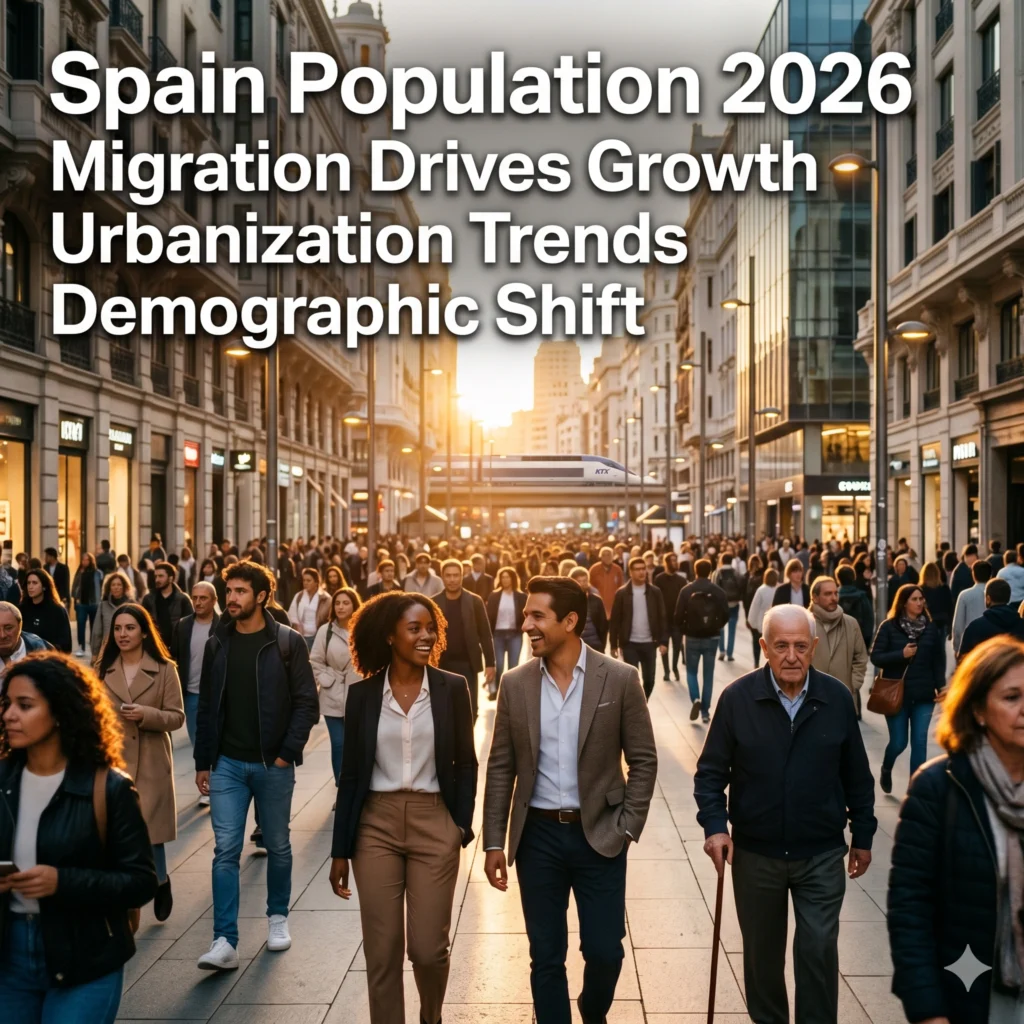
The Impact of Migration on National Stability
Recent statistics indicate that net migration is the single most important factor sustaining the resident count during this decade. In 2023 alone, a net migration of 119,099 individuals entered the country, effectively neutralizing the natural population deficit. Without this steady influx of new residents, the national headcount would have faced a sharp contraction. Consequently, the government has focused on integration policies to ensure that these new arrivals contribute effectively to long-term demographic objectives.
The influx of people from Latin America and other European nations has created a vibrant, multicultural atmosphere that fuels regional vitality. These individuals often fill critical gaps in the labor market, particularly in the service, healthcare, and technology sectors. Furthermore, the demographic profile of migrants tends to be younger, which provides a necessary counterbalance to the aging domestic population. Because of this, the narrative of success is inextricably linked to the success of its immigration and residency programs.
Spain Population Growth
The reality of Spain Population Growth is best understood by looking at the raw numbers provided by the UN and Our World in Data. With 337,000 births compared to 447,000 deaths, the natural decrease is substantial, yet the total population still hit 47.91 million. This 110,000-person gap between vital events highlights why migration is the heartbeat of the modern era. If the current trends of Spain Population Growth persist, the reliance on external sources will only increase over the next several years.
Strategic planning for infrastructure and housing must now account for the unique pace of current expansion. Cities like Madrid, Barcelona, and Valencia are seeing the highest concentrations of these new residents, leading to a surge in urban development. However, the uneven distribution of newcomers across provinces remains a challenge for regional administrators. To maintain the momentum of Spain Population Growth, the government is exploring ways to encourage settlement in less populated interior regions to balance the national density.
Rising Urbanization and Its Effect on Regional Density
Urbanization is a critical pillar of the modern story, with over 51% of the people now living in major cities. This movement toward metropolitan hubs has increased the national population density to approximately 95.37 people per square kilometer. While cities thrive, rural areas are experiencing a different side of the demographic phenomenon. The concentration of wealth and services in urban centers continues to draw the youth away from the countryside, reshaping the map.
- Major cities are seeing a 1.5% annual increase in residency due to better job prospects.
- Coastal regions are benefiting from the “digital nomad” trend, supporting national expansion.
- The Madrid metropolitan area remains the fastest-growing zone in the entire country.
- Public transportation investments are being doubled to keep up with the rising urban density.
Despite the heavy tilt toward cities, about 21.4% of the population still resides in rural areas, according to recent data. These rural communities are vital for the agricultural sector, yet they struggle to match the growth seen in the capital. To ensure that Spain Population Growth is inclusive, there are now tax incentives for businesses that relocate to “Empty Spain.” Balancing the scales is essential for the long-term sustainability of the broader territorial trend.
Fertility Rates and the Future of the Spanish Family
The total fertility rate in Spain has fallen to 1.21 births per woman, a figure that presents a challenge for long-term stability. This rate is among the lowest in the European Union, reflecting a shift in social priorities and economic realities for young couples. While the Spain Population Growth total remains positive, the lack of natural replacement creates a “top-heavy” age pyramid. Addressing the root causes of low fertility is now a priority for those tracking national health.
Many experts point to the high cost of living and precarious employment as barriers to expanding the residency through natural means. Young adults are staying in the education system longer and entering the housing market much later than previous generations. This delay in family formation has a direct impact on the long-term projections for Spain Population Growth. Unless significant family support policies are enacted, the natural component of the demographic shift will likely remain in negative territory.
Record High Life Expectancy and Aging Demographics
One of the most positive aspects of the current era is the incredible life expectancy, which averages 83.7 years. This longevity is a testament to the country’s robust healthcare system and the Mediterranean lifestyle that promotes well-being. However, an aging population means that the healthcare demands within the national framework are evolving. The elderly now represent a larger slice of the demographic pie, requiring specialized services and pension reforms.
Maintaining a high quality of life for seniors is a cornerstone of the modern administrative strategy. The government is investing heavily in “silver economy” initiatives to cater to the needs of residents over the age of 65. As life expectancy continues to climb, the contributions of the older generation to Spain Population Growth are being reconsidered. Their participation in the volunteer sector and as consumers is a vital part of the economic engine supporting the country.
Analyzing the 2023 Vital Statistics and Birth Imbalance
The data from 2023 serves as the foundation for our current understanding of the national trajectory. With 447,000 deaths recorded, the mortality rate reflects an aging society, but also the stability of a nation with advanced medical care. Meanwhile, the 337,000 births highlight the urgent need for migration to sustain Spain Population Growth levels. This specific imbalance is the “new normal” for many developed nations, but it is particularly pronounced in the region.
- The natural population decrease of 110,000 is the largest in recent national history.
- Technological advancements in prenatal care have kept child mortality at a low 0.3%.
- Immigrant families are currently responsible for a higher percentage of the total births.
- Public health campaigns are focusing on longevity and chronic disease management.
Understanding these vital statistics is crucial for anyone following the trajectory of Spain Population Growth. The government uses this data to allocate resources for schools, hospitals, and social security. As the gap between births and deaths continues to exist, the role of international residents in the expansion becomes even more central. Every data point confirms that the future of Spain Population Growth depends on a proactive approach to global migration.
Economic Implications of the National Expansion
A growing population typically correlates with a growing GDP, and the current trend is no exception to this rule. The increase in consumers and taxpayers helps the government manage its national debt and fund public infrastructure. For businesses, Spain Population Growth represents a larger market and a more diverse pool of potential employees. The economic vitality of the nation is currently hitched to the success of these demographic shifts.
However, the rapid pace of expansion in certain sectors can lead to inflation and housing shortages. In cities like Malaga and Palma, the demand for residential property has outpaced supply, driven by the Spain Population Growth trends. Policy makers are now tasked with ensuring that the benefits of growth are shared across all socioeconomic levels. If managed correctly, the current influx will provide the human capital necessary for the country to remain a leading European economy.
Comparison With European Demographic Trends
When comparing local data to neighbors like Italy or Greece, the Spanish model appears more resilient. While many Mediterranean countries are facing absolute population declines, Spain Population Growth remains positive due to its openness to migration. This demographic “soft power” allows the country to maintain a more youthful workforce than its peers. The strategic positioning of the nation makes it a case study for aging societies worldwide.
- Spain’s migration policy is seen as more flexible than that of several Northern European states.
- The cultural ties with South America provide a steady stream of Spanish-speaking migrants.
- Integration rates in the territory are among the highest in the Eurozone, aiding stability.
The success of the current model is often attributed to the country’s high quality of life and relatively affordable cost of living compared to Paris or London. This attracts not just labor, but also retirees and remote workers who contribute to Spain Population Growth. As the 2020s progress, the competitive advantage provided by these numbers will likely become more evident. The nation is effectively transforming its demographic challenge into a catalyst for modern renewal.
Technological Integration in Demographic Tracking
Modern demography relies on big data, and the tracking of residency has become more precise than ever. Using satellite imagery and digital residency records, officials can monitor the shifts in Spain Population Growth in real-time. This allows for more responsive governance and better urban planning to accommodate the 47.91 million residents. Technology ensures that the data is not just a number, but a mapped and understood reality.
Furthermore, digital platforms are helping new migrants integrate faster, which in turn stabilizes the national headcount. From language apps to online residency renewals, the digital ecosystem supports the administrative side of population expansion. As we look toward the end of the decade, the intersection of tech and Spain Population Growth will be a major theme. Precision demography will allow the state to handle its growth with surgical efficiency, minimizing the growing pains of a changing nation.
Sustainability and the Environmental Impact of Growth
With the rise of the resident count, the question of environmental sustainability becomes paramount for the ministry. More people means a higher demand for water, energy, and waste management, particularly in arid regions. Spain Population Growth must be balanced with the country’s ambitious “Green Deal” goals to reduce carbon emissions. Sustainable urban development is the only way to ensure that growth doesn’t come at the cost of the environment.
- New housing projects are required to have high energy efficiency ratings to offset demand.
- Water desalination plants are being expanded to support the population in coastal cities.
- Public parks and “green belts” are being integrated into urban expansion plans.
- Electric vehicle infrastructure is being prioritized in high-growth corridors.
Green initiatives are being woven into the very fabric of the Spain Population Growth narrative. By prioritizing renewable energy, the state is showing that a growing population can still achieve climate targets. The goal is to create a model where expansion and ecological health go hand in hand. This forward-thinking approach ensures that the nation of tomorrow is both populated and pristine.
Challenges to Social Cohesion Amid Rapid Changes
Rapid demographic shifts, such as those seen today, can sometimes lead to social friction. Ensuring that long-term residents and newcomers coexist harmoniously is a major task for local governments. Education and community outreach programs are essential to maintain the social fabric during this period of Spain Population Growth. Fortunately, Spanish society has historically shown a high degree of tolerance and hospitality.
The key to successful social cohesion within the national framework is the shared prosperity of its people. When economic opportunities are available to all, the tensions often associated with migration tend to dissipate. Investment in education and language training helps bridge the gap for those contributing to Spain Population Growth. By fostering a sense of shared national identity, the country is building a foundation that can support even more growth in the future.
Conclusion and Future Projections for 2030
As we look beyond the present year, the projections suggest a continued but stabilizing growth pattern. If migration remains at current levels, the population could easily surpass the 48 million mark before 2030. The lessons learned from Spain Population Growth will be instrumental in navigating the next decade of European history. The nation has proven that even with a low birth rate, a state can thrive through openness and strategic planning.
The story of the current era is one of transformation and adaptation in a rapidly changing world. By embracing global migration and investing in its urban future, the country is securing its place as a vibrant and stable nation. While challenges remain, the data clearly shows that Spain Population Growth is a positive force for the country’s long-term health. The eyes of the world will continue to watch as the region navigates its unique demographic journey with confidence.
For more details & sources visit: Our World in Data
Read more on Spain news: 360 News Orbit – Spain.