
The Northern Borders region is witnessing an extraordinary environmental transformation as the Saudi Arabia Wildflower Blooms carpet the desert in vibrant hues this spring. This natural phenomenon represents more than just a visual spectacle; it is a profound signal of ecological revival following years of dedicated conservation. The resurgence of native flora across the sands of Rafha has captured the attention of environmentalists and citizens alike during this 2026 season.
Local authorities have noted that the return of these delicate ecosystems is a direct result of strict land management and the reduction of overgrazing. The desert, once thought to be increasingly arid, has responded with a burst of life that supports a wide variety of local wildlife. This greening of the north is a testament to the success of the Kingdom’s broader environmental initiatives aimed at restoring the natural heritage of the land.
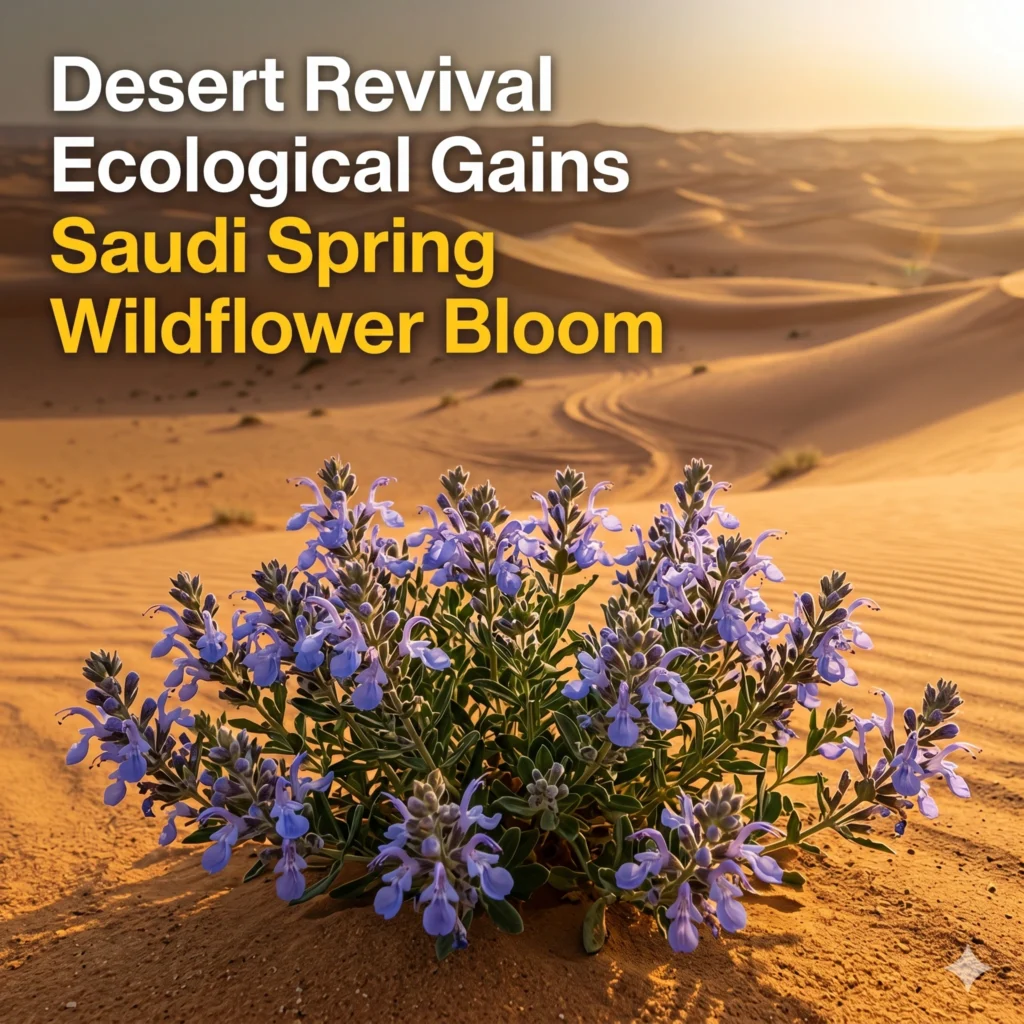
Teucrium Oliverianum Transforms the Landscape
A primary highlight of the current Saudi Arabia Wildflower Blooms is the proliferation of the Teucrium oliverianum, known locally as Al-Aihlan. This hardy perennial has painted the desert with striking blue-violet flowers, creating a stark and beautiful contrast against the golden dunes. Reaching heights of up to 70 centimeters, these plants are now a dominant feature of the Northern Borders’ botanical profile.
Botanists describe the Teucrium oliverianum as a member of the mint family, perfectly engineered for the challenging climate of the Arabian Peninsula. Its presence is considered a “bio-indicator,” meaning its successful growth suggests that the underlying soil moisture and nutrient levels are improving. The sheer scale of the bloom this year indicates a level of soil health not seen in the region for several decades.
Saudi Arabia Wildflower Blooms
The current Saudi Arabia Wildflower Blooms serve as a living laboratory for ecologists studying the effects of national conservation programs. These blooms are not accidental; they are the fruit of long-term strategies to curb desertification and protect the Kingdom’s unique biodiversity. By restricting certain areas from industrial and agricultural interference, the government has allowed the seed bank within the sand to finally flourish.
Every hectare covered by these wild blossoms represents a victory against the encroaching desert and soil degradation. The Saudi Arabia Wildflower Blooms are also helping to cool the local micro-climate, as the vegetation provides ground cover that reduces surface temperatures. This cycle of growth and protection is essential for the long-term sustainability of the northern desert regions and their human inhabitants.
Adaptation Strategies of Desert Flora
The species making up the Saudi Arabia Wildflower Blooms have developed fascinating survival mechanisms to thrive in one of the world’s harshest environments. For instance, the Al-Aihlan plant features fine bristles on its leaves that act as a barrier against the drying desert winds. These tiny structures are crucial for reducing water loss, allowing the plant to remain vibrant even as temperatures begin to rise.
This adaptation allows the flowers to stay in bloom for longer periods, providing a consistent resource for the local ecosystem. The deep root systems of these perennials also help to stabilize the soil, preventing wind erosion which is a major cause of habitat loss. Observing these plants in their natural state provides invaluable data for future reforestation and land reclamation projects across the Middle East.
Impact on Local Pollinators and Wildlife
The Saudi Arabia Wildflower Blooms are currently acting as a massive fueling station for essential desert insects and birds. Bees, in particular, have been seen in record numbers, drawn to the nectar of the Teucrium oliverianum and other emerging desert species. This surge in pollinator activity is vital for the reproduction of other plants and the overall health of the desert food web.
- Bees and butterflies are the primary beneficiaries of the increased nectar supply.
- Small desert rodents use the dense floral cover to hide from predatory birds.
- Lizards and other reptiles find cooler micro-habitats beneath the shade of the tall stalks.
- Migratory birds are utilizing the northern regions as a rest stop due to the abundance of insects.
Economic and Social Benefits for the Region
Beyond the ecological impact, the Saudi Arabia Wildflower Blooms are providing a boost to the local economy in the Northern Borders. Beekeepers in the Rafha area are reporting a significant increase in honey production as their hives feast on the organic desert blossoms. This “wildflower honey” is highly prized for its unique flavor profile and perceived medicinal properties in local markets.
The aesthetic beauty of the region has also encouraged a surge in domestic eco-tourism, with families traveling to witness the purple sands. This movement of people supports local small businesses and increases awareness about the importance of preserving natural habitats. The blooms have effectively turned the desert into a seasonal destination that celebrates the intersection of culture and environmental stewardship.
Success of the Saudi Green Initiative
The Saudi Arabia Wildflower Blooms are a clear milestone for the Saudi Green Initiative, which seeks to plant billions of trees and restore vast tracts of land. By focusing on native species that require minimal intervention once established, the program is creating self-sustaining ecosystems. The northern revival is being used as a successful case study to be replicated in other provinces like Al-Jouf and Tabuk.
Government officials have expressed that the visual evidence of these blooms helps to garner public support for environmental regulations. When people see the desert “coming back to life,” they are more likely to follow guidelines regarding grazing and off-road driving. The success in the north proves that even the most degraded landscapes can recover if given the proper protection and time.
Role of Perennials in Soil Stabilization
One of the less visible but most important aspects of the Saudi Arabia Wildflower Blooms is the role of perennials in soil structure. Unlike annuals that die off quickly, plants like the Al-Aihlan maintain a presence that keeps the soil tied together year-round. This is critical in the Northern Borders, where high-velocity winds can otherwise strip away the fertile topsoil in a matter of days.
As these plants grow and eventually decompose, they add organic matter back into the sand, creating a richer environment for the next generation of seeds. This slow process of soil building is the only way to permanently reverse the effects of desertification. The 2026 bloom is a peak in this cycle, showing that the “foundation” of the desert is becoming stronger and more resilient to climate shifts.
Ecological Management and Future Protection
Maintaining the momentum of the Saudi Arabia Wildflower Blooms requires a sophisticated approach to ecological management and constant monitoring. Remote sensing and satellite imagery are being used to track the spread of the vegetation and identify areas that need more protection. This data-driven approach ensures that conservation resources are deployed exactly where they are needed most to support the flora.
Rangers and environmental inspectors have also increased their patrols in the Rafha region to prevent the destruction of these sensitive areas. The goal is to ensure that the Saudi Arabia Wildflower Blooms can complete their natural lifecycle and drop their seeds for the following year. This protective bubble is what allows the desert to heal and remain a productive part of the Kingdom’s natural landscape.
Resilience of the Arabian Desert
The Saudi Arabia Wildflower Blooms are a powerful reminder of the hidden resilience contained within the Arabian desert. For years, these seeds lay dormant, waiting for the right combination of rainfall and environmental protection to emerge. Their sudden and widespread appearance suggests that the desert is not a wasteland, but a sleeping garden ready to wake up when cared for.
This resilience gives hope to other arid regions around the world facing similar challenges of land degradation. If the Northern Borders of Saudi Arabia can achieve such a transformation, it sets a global precedent for arid-land restoration. The blooms are a symbol of hope and a call to action for continued investment in the planet’s most fragile environments.
Concluding the Spring Season in the North
As the spring season progresses, the Saudi Arabia Wildflower Blooms will eventually fade, leaving behind millions of new seeds in the sand. This natural conclusion to the blooming phase is just as important as the flowering itself, as it secures the future of the species. The 2026 season will be remembered as a landmark year when the desert truly began its journey toward a full ecological recovery.
The lessons learned during this period of growth will inform the Kingdom’s environmental policies for years to come. For now, the people of the Northern Borders continue to enjoy the cool breeze and the sweet scent of the mint-family blossoms. The Saudi Arabia Wildflower Blooms have truly redefined what it means to be a desert in the modern era of conservation.
For more details & sources visit: Arab News
Read more about Saudi Arabia news on 360 News Orbit – Saudi Arabia.