
The Christian Association of Nigeria (CAN) has officially sparked a major national debate by challenging the military claims of hostage rescue following a recent violent encounter in the northern region. This public dispute between religious leaders and the Nigerian Army highlights a deep-seated crisis of trust within the country’s security architecture. While the military announced a successful operation, local leaders insist the victims are still suffering in captivity. Consequently, the military claims of hostage rescue are being subjected to intense scrutiny by both domestic observers and the international community.
The controversy began when the Nigerian Army released a statement detailing a fierce firefight with gunmen that supposedly led to the liberation of several civilians. According to the official narrative, five attackers were neutralized during the engagement, and the hostages were brought to safety. However, Reverend John Joseph Hayab, Chairman of CAN for Northern Nigeria, quickly moved to refute these assertions, labeling them as misleading. This direct contradiction regarding the military claims of hostage rescue has created a climate of confusion and anger among the families of those missing.
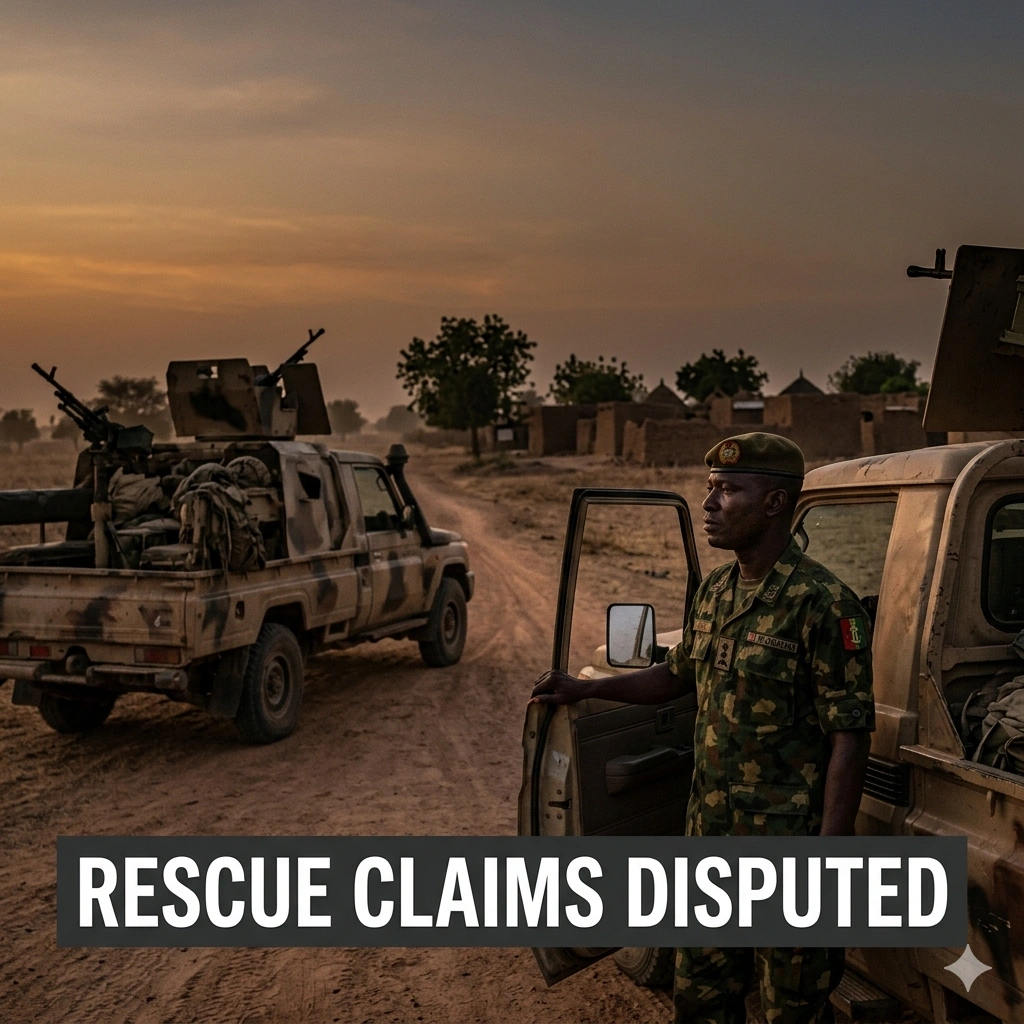
Analyzing the Discrepancy in Military Claims of Hostage Rescue
Reverend Hayab emphasized that it is fundamentally unfair for the military to claim successes that have not yet materialized on the ground. For the families involved, hearing news of a rescue that never happened is a form of psychological torture that erodes public confidence. Furthermore, the Christian Association of Nigeria has suggested that such reports might be motivated by a desire to project competence during a time of extreme insecurity. As a result, the validity of the military claims of hostage rescue is now the central focus of a growing national outcry.
Local reports from the affected communities further complicate the military’s version of events, with witnesses suggesting that gunmen operated with impunity for hours. According to these accounts, security forces only arrived after the attackers had already moved their victims to deeper, more remote hideouts. This timeline directly challenges the “fierce firefight” narrative presented by army spokespeople in their initial press briefings. Therefore, the discrepancy in the military claims of hostage rescue points to a potential failure in both operational response and communication.
Military Claims of Hostage Rescue
The pressure on the Nigerian security forces to produce results against banditry and terrorism has reached a breaking point in 2026. Frequent kidnappings for ransom have devastated the northern states, leaving civilian populations in a constant state of fear and vulnerability. In this high-stakes environment, the military claims of hostage rescue serve as a primary metric for measuring the effectiveness of government interventions. However, when these claims are disputed by credible religious organizations like CAN, the entire security strategy is called into question.
Security analysts argue that the rush to announce victories can sometimes lead to the dissemination of unverified or premature information. In the case of the Northern Nigeria operation, the military may have engaged the enemy but failed to secure the actual victims before making a public announcement. This lack of verification turns the military claims of hostage rescue into a liability rather than a morale booster for the nation. Moving forward, the government must address these communication gaps to restore its damaged reputation among the populace.
Impact of Disinformation on Counter-Terrorism Efforts
The dispute over the military claims of hostage rescue has broader implications for the fight against insurgency in West Africa. When the public perceives military reports as propaganda, they are less likely to cooperate with security forces or provide critical intelligence. Trust is a vital component of counter-terrorism, and the current friction with the Christian Association of Nigeria undermines that foundation. Consequently, the “false” success stories could inadvertently embolden criminal elements who see a divided front between the people and the state.
Religious leaders in Nigeria often serve as the most reliable bridge between the government and local communities, especially in rural areas. By questioning the military claims of hostage rescue, Reverend Hayab is fulfilling a watchdog role that many feel is necessary given the history of transparency issues. The Nigerian Army, however, maintains that its reports are based on field intelligence and operational debriefs from the commanders on the scene. This standoff highlights the need for independent oversight in reporting security outcomes to ensure that the truth is prioritized.
Humanitarian Concerns Amidst Conflicting Reports
Behind the headlines of the military claims of hostage rescue are real human lives caught in a terrifying cycle of violence. If the victims are indeed still in captivity, as CAN suggests, their safety may be further jeopardized by the false reports of their liberation. Kidnappers often react violently to news of military interference, and premature rescue claims could trigger retaliatory actions against the hostages. This makes the accuracy of the military claims of hostage rescue a matter of life and death for the innocent civilians involved.
- Families are demanding a physical verification of the rescued individuals to confirm the military’s story.
- Human rights groups have called for an investigation into the military’s communication protocols.
- The Christian Association of Nigeria has offered to coordinate a search party to locate the actual hideout of the gunmen.
Regional Security Challenges in Northern Nigeria
The northern region of Nigeria continues to be the epicenter of a complex security crisis involving bandits, terrorists, and communal militias. The Nigerian Army has deployed thousands of troops to these areas, yet the frequency of mass abductions remains alarmingly high. This persistent insecurity is what makes the military claims of hostage rescue so significant to the national narrative of progress. If the government cannot prove these rescues are occurring, the narrative of a “winning” war against terror begins to collapse.
- The rise of kidnapping for ransom as a primary revenue source for criminal gangs in the North.
- The tactical evolution of gunmen who now use advanced weaponry and coordinated maneuvers.
- The strain on military resources as they attempt to cover vast, rugged terrains with limited aerial support.
The Role of the Christian Association of Nigeria
CAN has historically been vocal about the protection of its members, who are often targeted in these regional conflicts. Their refusal to accept the military claims of hostage rescue at face value is a reflection of years of perceived neglect and failed promises. Reverend Hayab’s leadership has focused on demanding accountability and ensuring that the plight of the persecuted is not silenced by official rhetoric. This latest challenge to the military claims of hostage rescue is their most direct confrontation with the state in recent months.
- CAN’s role in providing aid to displaced persons and families of kidnapping victims.
- The organization’s influence in shaping international perception of Nigeria’s internal security.
- The demand for a more inclusive security council that involves religious and traditional leaders.
Professional Standards in Military Communication
For the Nigerian Army to maintain its professional standing, its public relations wing must adhere to the highest standards of accuracy. The controversy surrounding the military claims of hostage rescue suggests a need for a shift in how operational successes are announced to the media. Instead of immediate press releases during ongoing operations, a more measured approach involving evidence-based reporting could prevent such public embarrassments. This would ensure that the military claims of hostage rescue are backed by undeniable proof, such as the safe return of individuals to their families.
- Implementation of body cameras and drone footage to document rescue operations in real-time.
- Creation of a multi-agency verification board to confirm rescue outcomes before public release.
- Improved liaison with local community leaders to synchronize information before it reaches the press.
Public Perception and the Crisis of Faith
The average Nigerian citizen is often caught between the optimistic reports of the state and the grim reality of daily life. When the military claims of hostage rescue are debunked by local leaders, it creates a “crisis of faith” in all government institutions. People start to wonder what else might be exaggerated or misrepresented in official briefings regarding the economy or social welfare. This skepticism is a dangerous trend that can lead to social unrest and a breakdown of the social contract between the ruler and the ruled.
The viral nature of social media means that the dispute over the military claims of hostage rescue has already spread far beyond the borders of Nigeria. International observers are now questioning if the Nigerian government is truly capable of protecting its citizens or if it is merely managing perceptions. This international scrutiny can affect foreign aid, military cooperation, and investment, making the stakes of this controversy much higher than a simple local dispute. The government must act quickly to provide clarity and resolve the discrepancy.
Future Outlook for Security in the North
As we look toward the middle of 2026, the resolution of the conflict over the military claims of hostage rescue will be a litmus test for the administration. If the army can produce the rescued hostages and prove CAN wrong, they will regain a significant amount of lost ground. However, if the victims remain missing and the gunmen continue their activities, the military claims of hostage rescue will go down in history as a major strategic blunder. The coming weeks will be critical for determining the true state of security in Northern Nigeria.
Ultimately, the goal of both the military and religious organizations should be the safe return of every citizen held against their will. The bickering over the military claims of hostage rescue serves no one except the criminals who profit from the chaos. It is time for a unified approach where the army’s tactical strength is combined with the local knowledge and moral authority of groups like CAN. Only then can Nigeria hope to overcome the persistent shadow of kidnapping and restore peace to its northern territories.
The Nigerian government must take these allegations seriously and launch a transparent inquiry into the events of April 7. Denying the concerns of the Christian Association of Nigeria will only deepen the divide and further alienate the very people the military is sworn to protect. By acknowledging any potential errors in the military claims of hostage rescue, the army can show a level of maturity and honesty that would actually build more trust than a dozen unverified success stories ever could. The truth must be the priority in the fight for Nigeria’s future.
For more details & sources visit: The Express Tribune
Read more on Nigeria news: 360 News Orbit – Nigeria.