
Iran’s Foreign Minister Abbas Araghchi has officially introduced a groundbreaking 10-point peace plan as conditional ceasefire begins today, marking a potential turning point in the six-week regional conflict. This diplomatic initiative comes alongside a strategic two-week suspension of military operations, offering a rare window for high-level negotiations. The world is watching closely as Tehran sets the terms for a de-escalation that could reshape Middle Eastern security dynamics. Consequently, this 10-point peace plan has become the most discussed diplomatic document in current international relations.
The announcement was made via social media, where Araghchi confirmed that Iran’s armed forces are prepared to halt all defensive maneuvers. This suspension is strictly contingent on the cessation of strikes from external forces, specifically naming the United States and Israel. By providing this “off-ramp,” Tehran aims to shift the conflict from the battlefield to the negotiating table in Islamabad. Furthermore, the 10-point peace plan includes a temporary reopening of the Strait of Hormuz to ensure global energy stability.
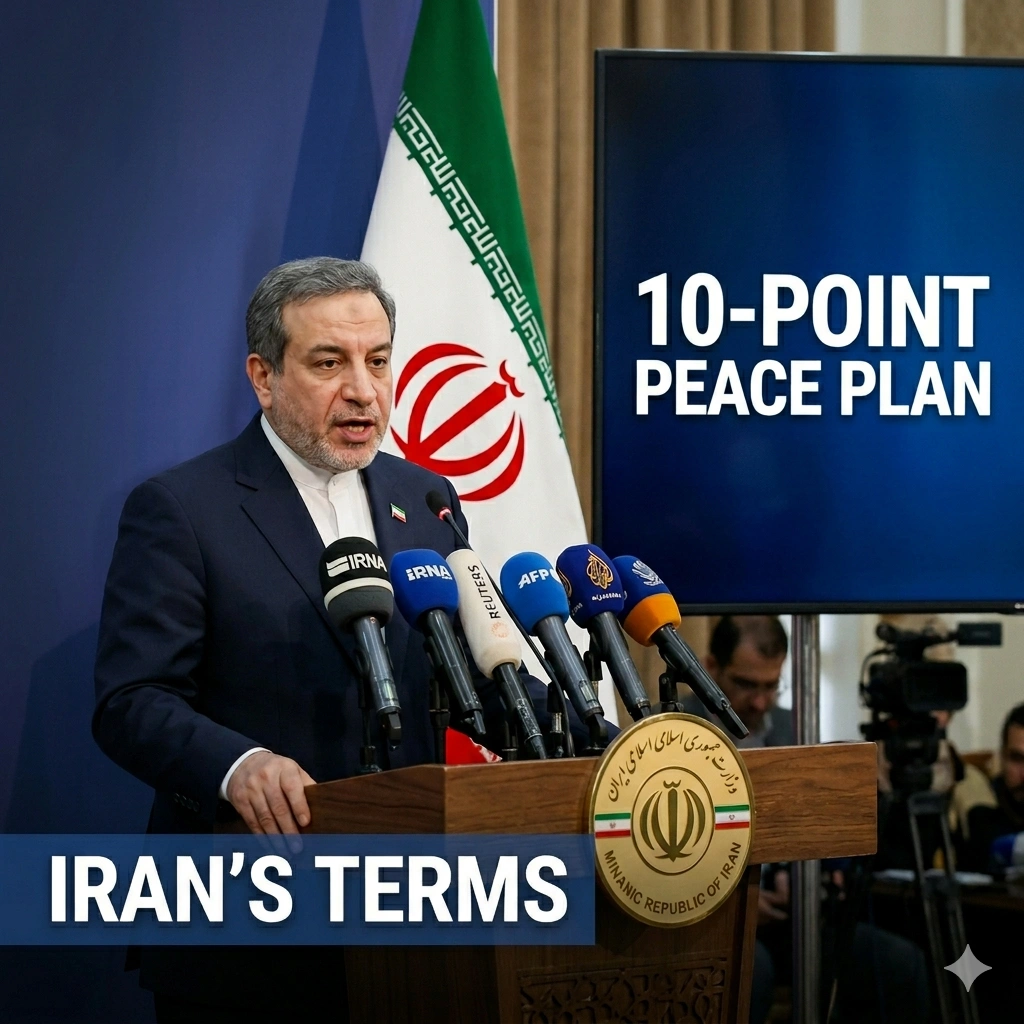
The Strategic Pillars of the 10-Point Peace Plan
The proposal drafted by Tehran is comprehensive and addresses several long-standing grievances that have fueled regional instability for decades. At its core, the document demands a total withdrawal of United States combat forces from the Middle East, arguing that foreign presence is the primary driver of tension. Additionally, the plan insists on the immediate lifting of all primary and secondary sanctions that have crippled the Iranian economy. This bold 10-point peace plan represents Iran’s most ambitious attempt to reset its global standing.
Another critical component involves the formal recognition of Iran’s right to uranium enrichment for peaceful energy purposes. This has been a central point of contention in previous nuclear agreements and remains a non-negotiable item for the current administration in Tehran. By including this in the framework, Araghchi is signaling that any long-term peace must respect Iran’s technological sovereignty. As the 10-point peace plan takes center stage, international inspectors are already weighing the technical implications of these demands.
Regional Security and the Strait of Hormuz Reopening
The decision to grant safe passage through the Strait of Hormuz for a 14-day window is a significant concession intended to lower global oil prices. This strategic waterway is vital for the global economy, and its closure during the height of the conflict caused massive market volatility. The Iranian military will coordinate the safe transit of vessels to ensure that no provocations occur during this sensitive period. This move adds a layer of economic incentive to the 10-point peace plan framework.
- Global oil markets responded with a 4% drop in crude prices following the news of the 14-day window.
- International shipping companies are cautiously rerouting vessels to take advantage of the safe passage.
- Regional neighbors, including Saudi Arabia and the UAE, have expressed cautious optimism regarding the de-escalation.
Financial Compensation and War Damages
Tehran’s proposal also includes a controversial demand for financial compensation for damages sustained during the recent weeks of military engagement. The Iranian government argues that the strikes against its infrastructure were illegal under international law and require reparations. While this point is expected to be a major hurdle in Islamabad, it remains a pillar of the 10-point peace plan for a sustainable future. Negotiators will need to find a middle ground on this issue to move toward a lasting agreement.
The termination of standing United Nations and IAEA resolutions against the Islamic Republic is another high-stakes requirement of the plan. Tehran seeks a “clean slate” that would allow it to reintegrate into the global financial system without the shadow of past sanctions. This would involve a complex legal process that requires the consensus of the UN Security Council. However, as the 10-point peace plan gains momentum, the urgency of stopping the war may override traditional diplomatic hurdles.
10-point peace plan
The timing of this announcement is critical, as it coincides with a significant shift in U.S. foreign policy rhetoric. President Trump has characterized the Iranian proposal as a “workable basis” for future talks, a statement that has surprised many hawks in Washington. This suggests that there may be a genuine appetite for a deal that avoids a full-scale regional war. Therefore, the implementation of the 10-point peace plan is the first real test of this new diplomatic appetite.
Skeptics, however, warn that the two-week window is too short to address decades of mutual distrust and complex security issues. They argue that Tehran might be using the pause to regroup and refortify its defensive positions. Despite these concerns, the Iranian foreign ministry maintains that its intentions are purely focused on achieving a sustainable and honorable peace. The 10-point peace plan provides the necessary framework to verify these intentions through active dialogue.
Diplomatic Framework in Islamabad
The choice of Islamabad as the host for these negotiations is a nod to Pakistan’s long-standing role as a mediator in the region. Both Iranian and Western officials are expected to arrive in the city within the next 48 hours to begin the grueling process of line-by-line review. The success of the 10-point peace plan depends heavily on the ability of mediators to bridge the gap between Tehran’s demands and Western security requirements.
Initial meetings will focus on the technicalities of the ceasefire verification to prevent accidental skirmishes. Secondary discussions will tackle the timeline for sanctions relief and the withdrawal of military assets. The role of the IAEA in monitoring Iran’s enrichment levels remains a pivotal subject for the final days of the talks.
Visualizing the 10-point peace plan
The visual representation of the Strait of Hormuz reopening has become a symbol of hope for a conflict-weary world. Images of tankers moving freely under the protection of the 10-point peace plan are circulating across global news agencies. These visuals serve as a reminder of what is at stake if the negotiations in Islamabad fail. Both sides are under immense pressure to ensure that this ceasefire does not become a mere footnote in a larger tragedy.
Impact on Global Diplomacy and Trade
The ripples of this peace plan are being felt far beyond the Middle East, affecting trade routes from Asia to Europe. If the 10-point peace plan leads to a permanent solution, it could trigger a new era of regional cooperation. Many nations that have remained neutral are now stepping forward to offer logistical support for the peace process. This internationalization of the effort adds a layer of accountability that was missing in previous rounds of talks.
- Increased diplomatic traffic in Islamabad as observers from the EU and China arrive to monitor the situation.
- Potential for a “Goldman Sachs” effect where investors look toward rebuilding projects in the affected zones.
- A shift in focus toward long-term non-aggression pacts that include all major regional powers.
Challenges to the Implementation of the Plan
One of the primary challenges to the 10-point peace plan is the presence of non-state actors who may not feel bound by Tehran’s orders. Ensuring that all allied militias and regional proxies adhere to the suspension of operations is a logistical nightmare. Any rogue attack during the 14-day window could immediately collapse the negotiations and lead to an even more violent escalation. Araghchi has personally guaranteed that Iran’s allies are on board.
Furthermore, domestic political pressure in both Tehran and Washington could derail the process. Hardliners on both sides view any compromise as a sign of weakness or betrayal of national interests. For the 10-point peace plan to succeed, leadership must show incredible resolve against internal critics. The stakes are too high for partisan politics to interfere with the possibility of preventing a wider global conflict.
Future Outlook for the Islamabad Summit
As the clock ticks on the two-week ceasefire, the intensity of the diplomatic exchanges is expected to reach a fever pitch. The 10-point peace plan has set a high bar for what a final agreement must look like. Whether the world will celebrate a historic breakthrough or mourn another failed opportunity remains to be seen. However, the very existence of a detailed roadmap provides a glimmer of hope where none existed just days ago.
The coming 14 days will test the limits of modern diplomacy and the patience of the global community. With the 10-point peace plan, the focus remains on tangible results that can be measured in lives saved and markets stabilized. Everyone from oil traders to humanitarian workers is rooting for a positive outcome in Islamabad. Tehran has made its move; the world now waits for the response that will determine the course of 2026.
Conclusion of the Peace Initiative
The Iranian foreign minister’s proposal is a bold gamble that could either lead to a lasting peace or a deeper chasm of distrust. By linking military de-escalation to specific political and economic goals, Araghchi has created a leverage-heavy negotiation environment. As the 10-point peace plan is debated, the underlying tensions of the Middle East are laid bare for the world to see. It is a moment of extreme peril, but also one of extraordinary potential.
In the final analysis, the success of this plan will depend on whether both sides are truly ready to end the cycle of violence. The 10-point peace plan offers the first realistic exit ramp from a conflict that threatened to engulf the entire region. The diplomatic community must now work tirelessly to ensure that this 14-day window becomes the foundation for a new era of security. The eyes of history are firmly fixed on the unfolding events in Tehran and Islamabad.
For more details & sources visit: Anadolu Agency.
Read more on Iran news: 360 News Orbit – Iran.