
The recent boat tragedy off the coast of Italy has sent shockwaves through the international community as investigations reveal how missing Pakistani migrants were exploited. These individuals often used legitimate travel documents like pilgrimage and visit visas to mask their initial departure before falling into the hands of ruthless human trafficking networks. This tragic incident highlights the dangerous loopholes in global travel systems that are currently being exploited by criminal syndicates operating across multiple continents.
Authorities are now focusing their efforts on the Gujranwala and Gujrat regions, where the majority of the missing Pakistani migrants originated. Reports indicate that these travelers were lured by the promise of a better life in Europe, only to find themselves trapped in the perilous transit camps of Libya. The use of Umrah visas as a cover for migration is a particularly disturbing trend that has complicated the monitoring efforts of border security agencies in both Pakistan and the Middle East.
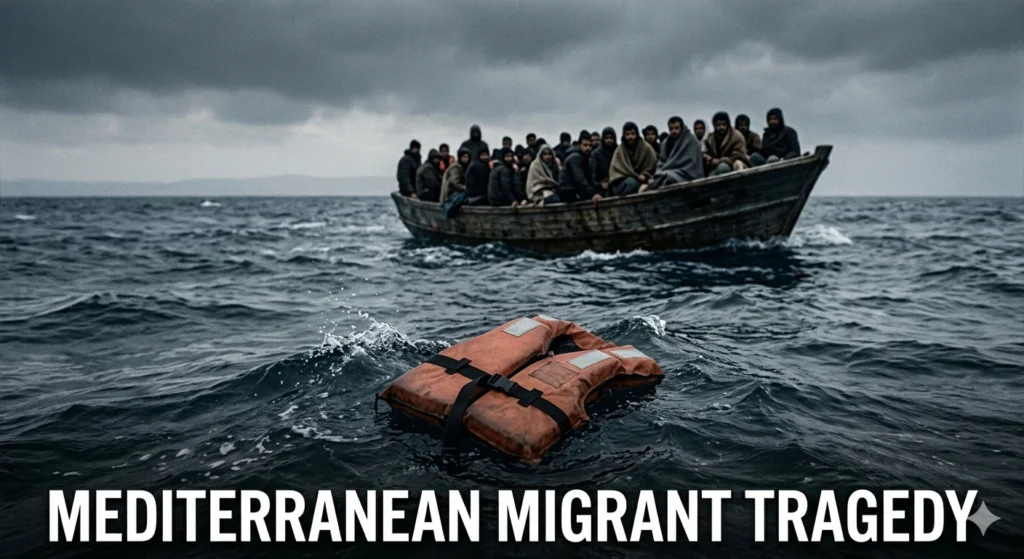
Missing Pakistani Migrants
The scale of the missing Pakistani migrants crisis is becoming clearer as more families come forward with stories of loved ones who never reached their destination. Investigating officers have found that at least 20 individuals from specific districts are currently unaccounted for following the Mediterranean capsize. These people represent a fraction of the larger group of over 120 passengers who were packed onto an unseaworthy vessel that departed from Tajoura, Libya.
For the families of the missing Pakistani migrants, the wait for news is agonizing and filled with uncertainty. Many of these families invested their life savings to pay traffickers, believing the journey would be conducted through safe and legal channels. The discovery that their relatives were funneled through dangerous transit points in Azerbaijan and Egypt before reaching Libya has added a layer of betrayal to their profound grief and loss.
The Federal Investigation Agency has identified several key suspects in Mandi Bahauddin and Sialkot who are believed to be the masterminds behind these operations. These agents specialized in providing “visit visa packages” that were specifically designed to facilitate the transit of missing Pakistani migrants toward European shores. Despite the evidence, the reluctance of some families to name these traffickers publicly is hindering the legal process and allowing some criminals to remain at large.
The Role of Umrah and Visit Visas
A significant portion of the missing Pakistani migrants utilized Umrah visas to leave Pakistan under the guise of performing a religious pilgrimage. This tactic allowed them to travel to Saudi Arabia without raising suspicion from local immigration officials who are accustomed to large volumes of religious travelers. Once in the region, the migrants were moved by land or secondary flights toward Libya, where the final and most dangerous leg of their journey began.
Other missing Pakistani migrants opted for tourist visas to countries like Azerbaijan and Egypt, which are often easier to obtain for Pakistani passport holders. These destinations served as “transit hubs” where traffickers could organize the logistics of the Mediterranean crossing. The misuse of these travel documents has prompted calls for stricter verification processes and better coordination between international law enforcement agencies to prevent similar tragedies in the future.
The shift toward using legal visas for illegal purposes shows the adaptive nature of human smuggling networks in response to increased border security. By blending in with legitimate tourists and pilgrims, the missing Pakistani migrants were able to bypass the initial layers of scrutiny that usually catch illegal travelers. This level of planning suggests a highly organized criminal enterprise that operates with professional precision across several different national jurisdictions.
Challenges in Human Trafficking Investigations
One of the biggest obstacles in the search for the missing Pakistani migrants is the lack of cooperation from the affected communities. Many families fear retaliation from the powerful smuggling syndicates that operate in their villages, or they hold out hope that their relatives are simply in hiding. This silence creates a protective shield around the traffickers, making it difficult for the FIA to gather the testimony needed for successful prosecutions in court.
Despite these hurdles, the FIA has managed to identify six major agents who are central to the case of the missing Pakistani migrants. These individuals are known to have deep connections in Gujrat and Sialkot, where they have built reputations as “travel experts.” The agency is now using digital forensics and financial tracking to build a case against them, even in the absence of direct complaints from the grieving families who lost their sons.
The international nature of the crime means that the missing Pakistani migrants were handled by different “handlers” in every country they crossed. Coordinating with Libyan authorities is particularly difficult due to the ongoing political instability in that region. Without a stable government in Tripoli, the transit camps where migrants are held remain largely outside the reach of international law, allowing smugglers to operate with near-total impunity.
The Mediterranean Crossing and Libya Transit
Libya has become the ultimate bottleneck for missing Pakistani migrants who are attempting to reach the shores of Italy or Greece. The coastal town of Tajoura is notorious for being a launching point for overcrowded wooden boats and inflatable dinghies. Migrants are often held in cramped warehouses for months, waiting for the right sea conditions, while their families are extorted for additional “boarding fees” by the local militias.
The vessel that carried the missing Pakistani migrants was reportedly carrying over 120 people, far exceeding its safe capacity. When the boat capsized in the Central Mediterranean, the lack of life jackets and safety equipment turned the incident into a mass casualty event. To date, only 32 survivors have been rescued by the Italian coast guard and non-governmental organizations, leaving the fate of many others in the balance.
The treacherous conditions of the Mediterranean have claimed thousands of lives over the last decade, yet the flow of missing Pakistani migrants shows no sign of stopping. The combination of economic desperation at home and the predatory tactics of traffickers creates a constant supply of willing travelers. Addressing this issue requires not just law enforcement action, but also a concerted effort to provide legitimate economic alternatives for the youth in rural Pakistan.
Regional Impact on Gujranwala and Gujrat
The loss of so many young men has left a void in the social and economic fabric of Gujranwala and Gujrat. These districts have historically been the heartland of overseas migration, with many families relying on remittances sent from abroad. However, the rise of the missing Pakistani migrants phenomenon has turned this tradition into a source of tragedy and debt for many households who borrowed money to fund the illegal journey.
Local community leaders are now speaking out against the traffickers who prey on the missing Pakistani migrants and their families. They are urging young people to pursue legal avenues for work and study abroad rather than risking their lives on the high seas. Educational workshops and awareness campaigns are being organized to inform citizens about the realities of human smuggling and the high probability of ending up as a statistic in the Mediterranean.
- High concentration of missing individuals from the Gujranwala and Gujrat regions.
- Widespread use of Umrah and visit visas to Azerbaijan and Egypt as cover.
- Existence of sophisticated smuggling hubs in Tajoura and other parts of Libya.
- Reluctance of local families to cooperate with the Federal Investigation Agency.
The economic impact is also significant, as the money paid to traffickers is often drained from the local economy and sent into the shadow banking systems of international criminal cartels. If the funds spent on these illegal journeys were instead invested in local businesses, the root causes driving the missing Pakistani migrants to leave might be partially addressed. This realization is slowly taking hold, but it faces a steep climb against the lure of European currency.
Identifying the Key Smuggling Agents
The FIA’s investigation into the missing Pakistani migrants has pointed toward a network of agents who utilize social media to recruit victims. These agents often post deceptive videos showing successful migrants in Europe, while hiding the brutal reality of the journey through Libya. By creating a false sense of security, they manage to convince parents to send their children on what is essentially a suicide mission.
In Sialkot and Mandi Bahauddin, the agents responsible for the missing Pakistani migrants are often well-known figures in their communities. They maintain a veneer of respectability while running a multi-million dollar illegal enterprise from behind closed doors. The task of the FIA is to pierce this veil and bring these individuals to justice, ensuring that they can no longer profit from the deaths of innocent people.
- Agents use social media platforms to lure unsuspecting youth with false promises.
- Smuggling networks operate across Pakistan, Saudi Arabia, Egypt, and Libya.
- Financial transactions are often hidden through informal hawala/hundi channels.
Legal experts believe that the prosecution of these six major agents will be a landmark case for Pakistan’s anti-trafficking efforts. If the state can prove the connection between the visit visas and the eventual deaths of the missing Pakistani migrants, it will set a powerful precedent. This would send a clear message to other traffickers that using legal covers for criminal activities will no longer be tolerated by the judicial system.
International Cooperation for Border Security
The case of the missing Pakistani migrants has highlighted the need for better information sharing between Pakistan and transit countries like Egypt and Saudi Arabia. If border officials in these nations were alerted to the patterns of suspicious travel, they might be able to intercept potential victims before they reach Libya. This requires a level of diplomatic coordination that is currently being strengthened in the wake of the Italy boat tragedy.
Italy and other European nations are also under pressure to improve their search and rescue operations to prevent more missing Pakistani migrants from drowning. While the political debate over migration continues in Europe, the human cost remains the most pressing issue. Strengthening the capacity of the coast guard and providing more safe, legal pathways for migration could help reduce the demand for the services of human traffickers.
The global community must also address the situation in Libya, which remains the primary staging ground for the tragedy involving the missing Pakistani migrants. Without a stable and unified Libyan government, the Mediterranean will continue to be a graveyard for those seeking a better life. International support for Libyan border management and the closure of illegal detention centers are essential steps in ending this cycle of human suffering.
The Psychological Toll on Families
The trauma experienced by the relatives of the missing Pakistani migrants is a silent crisis that receives little attention in the media. Mothers and fathers are left in a state of “ambiguous loss,” where they cannot mourn because there is no physical proof of death. This psychological burden can lead to long-term mental health issues and the breakdown of family structures in the affected villages.
Local non-governmental organizations are beginning to provide counseling for those whose relatives are among the missing Pakistani migrants. These services are vital for helping families process their grief and navigate the complex legal and administrative systems required to seek information. However, the scale of the need far exceeds the available resources, leaving many families to suffer in isolation and poverty.
- Families suffer from “ambiguous loss” due to the lack of recovered bodies.
- Deep financial debt resulting from high payments made to human traffickers.
- Social stigma associated with failed migration attempts and illegal travel.
The stories of the missing Pakistani migrants should serve as a cautionary tale for the next generation. By humanizing the statistics and sharing the pain of the survivors, advocates hope to break the cycle of illegal migration. It is a long and difficult road, but the memory of those lost in the Mediterranean demands a commitment to change and a renewed focus on protecting the vulnerable from the predations of traffickers.
Long-term Solutions and Economic Reform
To truly honor the memory of the missing Pakistani migrants, the government must address the underlying economic drivers of illegal migration. This involves creating jobs, improving the quality of education, and providing vocational training that matches global market demands. When young people have a viable future at home, they are less likely to risk everything on a dangerous journey across the sea.
Expanding legal migration channels is another critical piece of the puzzle to prevent more cases of missing Pakistani migrants. If there were more opportunities for seasonal work or skilled labor visas in Europe and the Middle East, the incentive to use traffickers would be greatly reduced. This requires bilateral agreements that benefit both the sending and receiving countries, creating a win-win scenario for global labor mobility.
The tragedy of the missing Pakistani migrants is a call to action for every level of society. From the local village elders to the halls of international power, there must be a unified front against human trafficking. Only by working together can we ensure that no more lives are lost in the pursuit of a dream that too often turns into a nightmare on the shores of the Mediterranean.
Conclusion
The investigation into the missing Pakistani migrants has revealed a dark web of deception and exploitation that spans several countries. The use of Umrah and visit visas as a cover for illegal migration is a sophisticated tactic that requires a sophisticated response. As the FIA continues its work to arrest the traffickers, the nation must reflect on the social and economic conditions that drive its youth into such danger.
For the missing Pakistani migrants who were lost at sea, the journey ended in a cold and unforgiving ocean. For their families, the journey of grief and seeking justice is just beginning. Let this tragedy be the catalyst for real change, leading to stronger laws, better enforcement, and a more compassionate approach to those seeking a better life. The safety of the next generation depends on the actions we take today to dismantle these criminal networks once and for all.
For more details & sources visit: Dawn
Read more about Italy news on 360 News Orbit – Italy.