
The recent announcement of a temporary ceasefire involving Iran has sent ripples through the international community, sparking significant hope for a shift in global energy markets and a boost for the American economy. As geopolitical tensions begin to subside, analysts are closely monitoring how this de-escalation might directly lower costs at the gas pump for everyday citizens while simultaneously boosting domestic consumer confidence across the nation. This sudden change in the Middle Eastern political climate serves as a potential turning point for market stability.
For many American households, the primary impact of the Iran ceasefire offers a much-needed reprieve from the volatile pricing that has characterized the energy sector over the last few years. According to leading market analysts, a reduction in regional tension often leads to a swift decrease in the “geopolitical risk premium” that is typically added to the price of crude oil. This premium acts as a buffer for uncertainty, but as peace talks progress, that extra cost begins to evaporate, leading to lower wholesale prices.
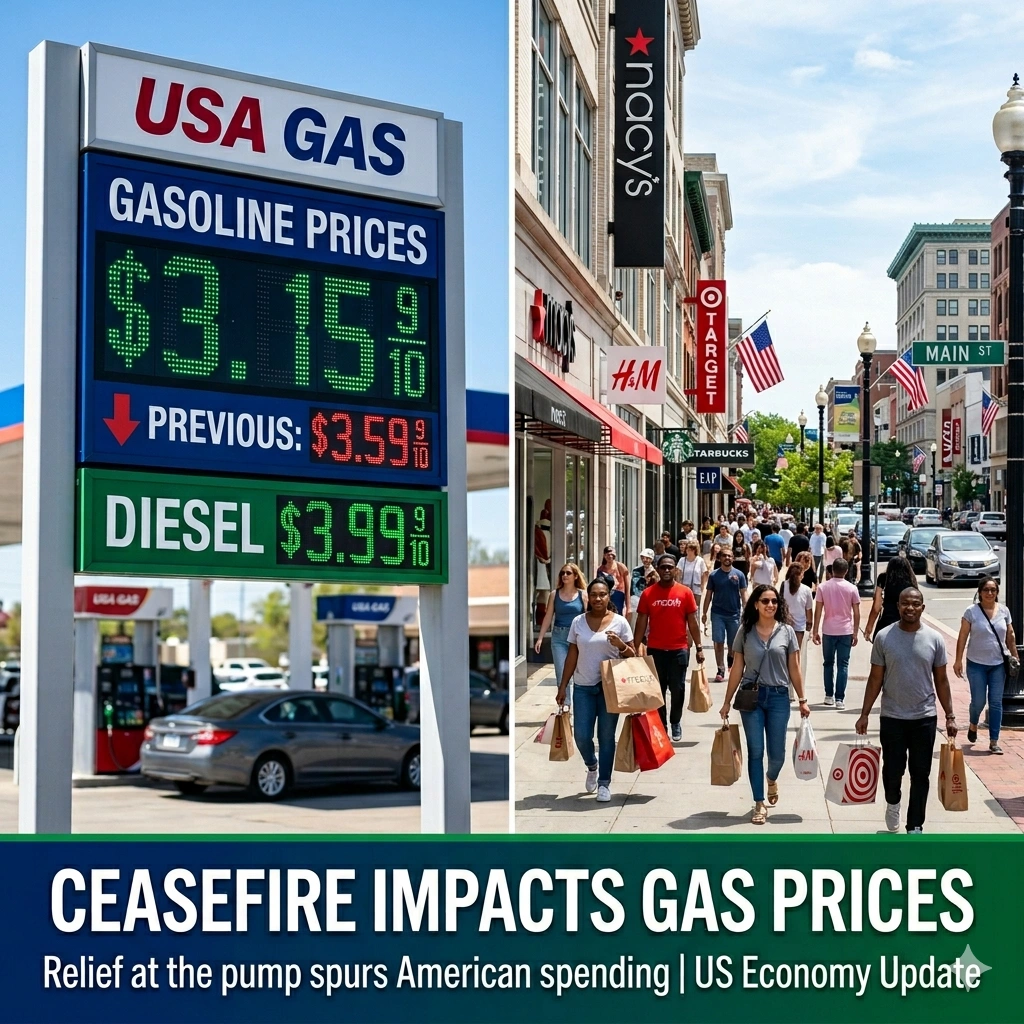
Iran Ceasefire Offers New Market Stability
The immediate reaction to the diplomatic breakthrough suggests that the Iran ceasefire offers a unique window of opportunity for the global oil trade to recalibrate. When major oil-producing regions move away from the brink of conflict, the supply chain becomes less susceptible to sudden disruptions, which historically cause price spikes. Traders on Wall Street are already adjusting their forecasts to reflect a more dovish outlook on energy commodities as the threat of maritime blockades or infrastructure damage recedes.
Beyond the numbers on a trading screen, the Iran ceasefire offers a psychological boost to the American public. Consumer confidence is often tied directly to the cost of living, and since transportation costs influence the price of everything from groceries to online deliveries, a dip in oil prices has a magnifying effect. If the ceasefire holds, we could see a significant uptick in discretionary spending as families find themselves with more disposable income at the end of each month.
Investment firms are also noting that the Iran ceasefire offers a clearer path for the Federal Reserve to manage interest rates. If energy-driven inflation cools down, the central bank may feel less pressure to maintain high-interest rates to stifle demand. This could lead to a more favorable environment for mortgage seekers and small business owners looking to expand, creating a secondary wave of economic growth triggered by the de-escalation of foreign conflicts.
Relieving Pressure at the American Gas Pump
The most visible sign that the Iran ceasefire offers relief will be found at local gas stations across the United States. Energy experts predict that if crude oil continues its downward trajectory, the average price per gallon could drop significantly within the next few weeks. This is particularly important as the country approaches the peak travel season, where fuel demand traditionally reaches its highest levels and puts the most strain on the average worker’s wallet.
Domestic logistics companies are also finding that the Iran ceasefire offers a chance to reduce operational overhead. Shipping and trucking industries are heavily dependent on diesel and gasoline prices; when these costs fall, the savings are often passed down to the consumer or used to hire more personnel. This creates a virtuous cycle of employment and affordability that strengthens the backbone of the domestic supply chain during a period of global economic recovery.
In addition to the immediate price drops, the Iran ceasefire offers a strategic advantage for the U.S. Strategic Petroleum Reserve. With lower market prices, the government can more affordably replenish national stockpiles that were drawn down during previous periods of high volatility. Having a full reserve provides a safety net for the future, ensuring that the American economy remains resilient even if geopolitical tensions were to rise again in the distant future.
Iran Ceasefire Offers Potential Relief
The prospect of the Iran ceasefire offers potential relief for various sectors beyond just energy and transportation. For example, the manufacturing sector, which requires massive amounts of power to operate, will see a decrease in production costs. When the cost of power goes down, American-made goods become more competitive on the global stage, potentially narrowing trade deficits and supporting domestic manufacturing jobs in key industrial states.
International diplomats are also emphasizing that the Iran ceasefire offers a blueprint for future conflict resolution in the region. By demonstrating that economic benefits follow peace, there is a greater incentive for all parties involved to move toward a permanent resolution rather than a temporary pause. This long-term stability is what the global markets crave most, as it removes the “fear factor” that often drives speculative trading and artificial price inflation in the commodity sectors.
Environmental analysts have observed that the Iran ceasefire offers a temporary reprieve for conservation efforts as well. During times of high energy prices, there is often a rush to approve high-impact drilling projects to increase supply quickly. With prices stabilizing, there is less of an “emergency” mindset, allowing for a more measured and sustainable approach to domestic energy production that balances economic needs with environmental stewardship and long-term climate goals.
Shifting Focus to Consumer Spending Habits
As the Iran ceasefire offers a more stable financial outlook, retail experts are predicting a shift in how Americans utilize their savings. Instead of budgeting for high utility bills and fuel, consumers are likely to redirect those funds toward travel, leisure, and durable goods. This shift is vital for the service economy, which relies on consistent consumer participation to maintain growth and prevent stagnant economic cycles.
The tech sector might also find that the Iran ceasefire offers a boost in investor interest. When energy costs are low, capital that was previously hedged in commodities often flows back into growth stocks and innovative ventures. This influx of capital can accelerate the development of new technologies, including green energy alternatives that will eventually reduce the world’s total reliance on the very oil markets currently affected by the ceasefire.
Furthermore, the Iran ceasefire offers a stabilizing force for the global banking system. Many emerging markets are heavily burdened by the cost of energy imports; when these costs drop, the risk of sovereign debt defaults decreases. A more stable global financial system benefits American investors who have diversified portfolios, as it reduces the likelihood of a “contention effect” where trouble in one market spills over into the U.S. domestic exchanges.
Domestic Policy and the Energy Market
Politically, the Iran ceasefire offers a significant talking point for the current administration as they navigate the complexities of foreign policy and domestic economics. Success in lowering energy prices through diplomacy is often viewed favorably by the electorate, as it demonstrates an ability to manage global crises without resorting to direct conflict. This diplomatic win can provide the political capital needed to push through other domestic infrastructure or economic reforms.
Energy independent advocates argue that the Iran ceasefire offers a reminder of the importance of diverse energy sources. While the ceasefire provides temporary relief, it highlights how sensitive the American economy remains to overseas events. This may lead to renewed calls for an “all-of-the-above” energy strategy that includes nuclear, solar, and wind, alongside traditional fossil fuels, to ensure that the U.S. is never again at the mercy of a singular geopolitical event.
- Reduction in the “geopolitical risk premium” added to global crude oil prices.
- Lowering of transportation and logistics costs for American small businesses.
- Increased household discretionary income leading to higher retail and service spending.
- Decreased inflationary pressure, allowing for more flexible Federal Reserve interest rate policies.
The real-world application of the Iran ceasefire offers a glimpse into a more cooperative global future. If the terms of the agreement are respected by all parties, the resulting economic boom could be substantial. It proves that in the modern interconnected world, the benefits of peace are not just moral or ethical, but deeply financial and practical for every citizen who drives a car or buys goods at a store.
Analyzing the Long-Term Market Sentiment
While critics argue that the Iran ceasefire offers only a short-term fix, the ripple effects in the futures markets suggest a deeper change in sentiment. Traders are now looking at the possibility of expanded trade agreements and the reintegration of various markets that were previously sidelined by sanctions or conflict. This optimism, even if cautious, helps to lower the baseline volatility of the S&P 500 and other major indices that track the health of the broader economy.
Economists also point out that the Iran ceasefire offers a chance for the U.S. to focus on internal economic issues without the distraction of a looming energy crisis. Whether it is addressing the housing market or improving the national healthcare system, a period of energy stability provides the “breathing room” necessary for complex policy discussions. It is much easier to fix a roof when the sun is shining, and this ceasefire is the closest thing to economic sunshine the market has seen in months.
The Iran ceasefire offers a unique case study in how modern diplomacy intersects with the digital economy. News of the deal spread instantly, causing an immediate reaction in algorithmic trading systems. This rapid adjustment shows how integrated our financial systems have become with global news cycles. For the average person, this means that the benefits of international peace deals reach their wallets faster than ever before in human history.
Impact on Global Supply Chains
The logistics of global shipping mean that the Iran ceasefire offers relief for maritime insurance rates as well. Vessels traveling through high-risk corridors like the Strait of Hormuz often face astronomical insurance premiums during times of conflict. As the ceasefire takes hold, these costs plummet, making the transport of goods from East to West more affordable and reducing the “hidden” costs that are often baked into the final price of imported electronics and clothing.
Even the tourism industry finds that the Iran ceasefire offers a reason to celebrate. Cruise lines and international airlines that operate in the broader Middle East and Mediterranean regions see a surge in bookings as travelers feel safer exploring these areas. This increase in international movement supports the global hospitality sector, which is a major employer of both skilled and unskilled labor, providing a boost to the worldwide labor market.
- Immediate drop in maritime insurance premiums for cargo vessels in the Persian Gulf.
- Increased safety and lower costs for international air travel corridors.
- Stabilization of the global labor market within the hospitality and tourism sectors.
Ultimately, the Iran ceasefire offers a testament to the power of negotiation over confrontation. By choosing a path of de-escalation, the nations involved have inadvertently provided a stimulus package to the global economy. For the United States, this translates into a stronger dollar, a more confident consumer base, and a pathway toward a more sustainable and predictable economic future as we move deeper into 2026.
Federal Reserve and Interest Rate Outlook
The way the Iran ceasefire offers a cushion for the Federal Reserve cannot be overstated. High energy prices are a primary driver of “cost-push” inflation, which is notoriously difficult to manage through interest rates alone. With energy prices falling, the Fed can take a more measured approach, potentially pausing rate hikes or even considering cuts if other sectors of the economy begin to slow down.
This flexibility means that the Iran ceasefire offers a “soft landing” scenario for the U.S. economy. Instead of a sharp recession triggered by high costs and high rates, we may see a period of moderated growth and cooling inflation. This is the ideal outcome for the stock market, as it allows companies to maintain healthy profit margins without having to resort to massive layoffs or significant price increases for their customers.
- Monitor crude oil futures to gauge the longevity of the price drop.
- Watch for shifts in the Consumer Price Index (CPI) over the next two quarters.
- Evaluate retail sales data to see if the “gas pump savings” are being spent elsewhere.
As we analyze the situation, it becomes clear that the Iran ceasefire offers a multi-layered benefit system. It is not just about the price of a gallon of gas; it is about the entire fabric of the global economy. From the interest rates on a new home to the price of a loaf of bread, the echoes of this ceasefire will be felt for months to come, proving that peace is the most valuable commodity of all.
Conclusion: A Bright Outlook for 2026
The Iran ceasefire offers a rare moment of clarity in a complex world. By lowering energy costs and boosting confidence, it has provided a much-needed lift to the American spirit and the American wallet. While there are always risks that a ceasefire could fail, the current trajectory suggests that the economic benefits are already being baked into the system, creating a more resilient and prosperous environment for everyone.
Investors and consumers alike should remain vigilant, but the Iran ceasefire offers plenty of reasons for optimism as we look toward the second half of 2026. The shift in energy dynamics, the cooling of inflation, and the surge in consumer spending all point toward a year of growth. If diplomacy continues to lead the way, the relief felt today could become the foundation for a much more stable and affordable tomorrow for the entire nation.
For more details & sources visit: CBS News
For the latest updates from the United States, visit our U.S. news page.