
The Liamine Zeroual legacy remains a cornerstone of modern Algerian political history following the news of his passing at the age of 84. As the sixth president of the North African nation, Zeroual is uniquely remembered for his voluntary relinquishment of power at a time when regional leaders rarely stepped aside. His death at a military hospital in Algiers has triggered a profound national wave of mourning across the country he once led through its darkest hours.
Born in the rugged Aurès Mountains, his life was defined by an unwavering commitment to the sovereign integrity of the Algerian state. From his early days as a teenage freedom fighter in the liberation struggle to his eventual ascent to the presidency in 1994, he embodied the stoic values of the revolutionary generation. The Liamine Zeroual legacy is intrinsically linked to the “Black Decade,” a period of intense civil conflict where his leadership was tested by unprecedented internal violence.
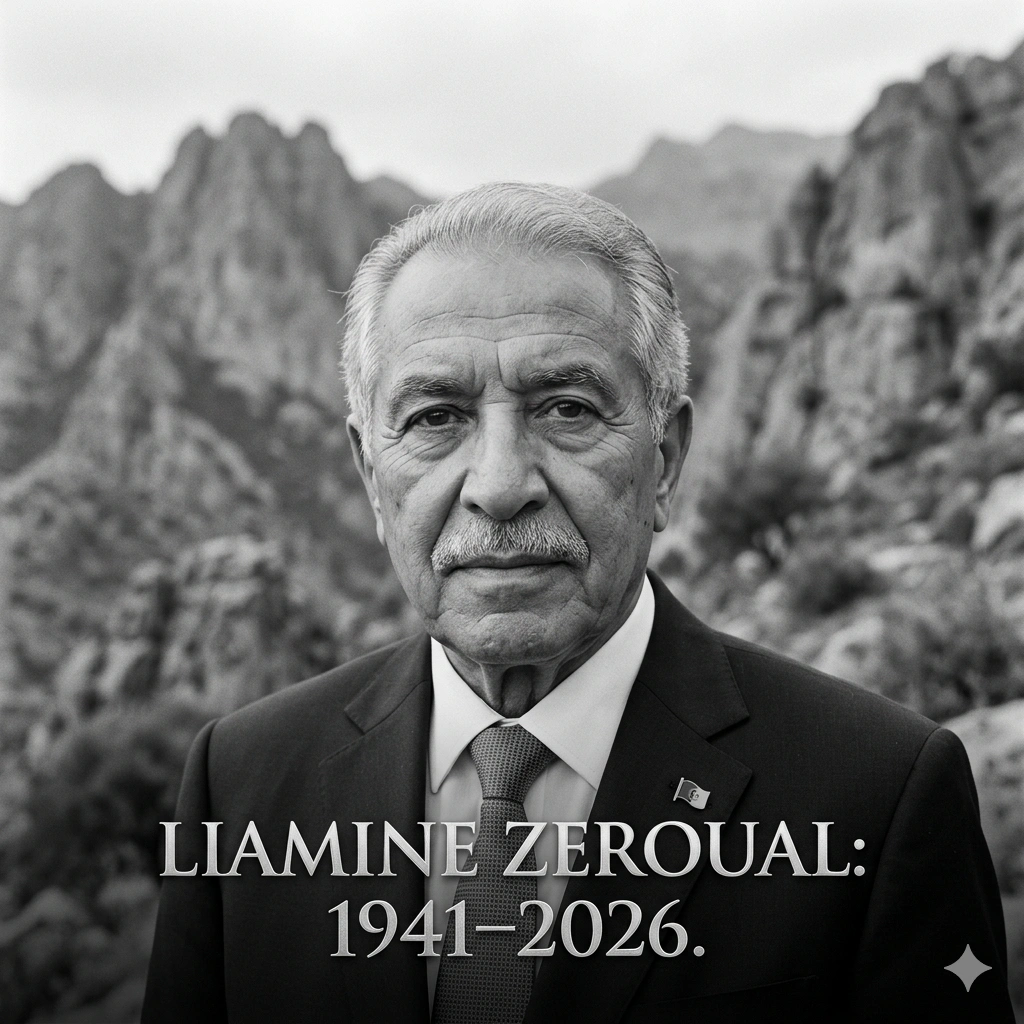
Liamine Zeroual legacy defined by the policy of Rahma
One of the most significant pillars of the Liamine Zeroual legacy was his introduction of the “Rahma” (mercy) policy during the height of the civil war. This initiative was designed to offer a path of reintegration for those who chose to lay down their arms and return to civil society. It was a bold move that prioritized national reconciliation over perpetual retribution, setting the stage for future peace agreements in the region.
The policy faced significant criticism from various political factions at the time, yet Zeroual remained steadfast in his belief that the nation could not heal without forgiveness. This strategic approach to conflict resolution is a vital part of the Liamine Zeroual legacy, demonstrating his ability to think beyond the immediate military requirements of the era. His vision for a unified Algeria was built on the foundation of shared sacrifice and mutual respect among all citizens.
Historians often point to this period as the turning point that allowed Algeria to begin its slow journey toward stability. By providing a legal framework for surrender and amnesty, he effectively weakened the resolve of extremist groups while strengthening the hand of the state. The Liamine Zeroual legacy continues to be studied by scholars as a successful example of domestic diplomacy under extreme duress.
Liamine Zeroual legacy
The Liamine Zeroual legacy is perhaps most famously characterized by his decision to cut his presidential mandate short in 1999. In a continent where many leaders sought to extend their terms indefinitely, his voluntary departure was a shocking act of democratic humility. He organized the 1995 pluralist elections, won them with a significant majority, and then chose to step down early to facilitate a new political era.
This act of “giving back the keys” to the nation is the defining moment of the Liamine Zeroual legacy for many Algerians. It proved that his primary motivation was the welfare of the country rather than the pursuit of personal power or wealth. By stepping away from the presidency, he set a precedent for leadership that emphasized duty and transition over stagnation and autocracy.
Since his retirement, he has lived a life of “golden silence,” rarely intervening in the daily political squabbles of the nation. He famously declined numerous requests to return to the political arena, even during the historic Hirak uprising of 2019. This commitment to staying out of the limelight further solidified the Liamine Zeroual legacy as a symbol of genuine, selfless statesmanship.
Military career and the roots of the Liamine Zeroual legacy
To understand the full scope of the Liamine Zeroual legacy, one must examine his distinguished career within the Algerian military. Joining the struggle for independence at the age of sixteen, he quickly rose through the ranks due to his strategic mind and disciplinary focus. His time in the military shaped his worldview, instilling a deep sense of patriotism and a rigorous work ethic that he later brought to the presidency.
He served in various high-level positions, including as the commander of the land forces, before being called upon to lead the nation during a time of crisis. The Liamine Zeroual legacy is built on this foundation of military service, where he earned the respect of his peers and the fear of his enemies. Despite his high rank, he was known for his approachable nature and his concern for the well-being of the common soldier.
His military background provided him with the necessary authority to navigate the complex security landscape of the 1990s. However, he was always careful to balance his military instincts with a broader political vision for the country’s future. This duality is a key component of the Liamine Zeroual legacy, illustrating how a soldier can transition into a transformative civilian leader.
Impact of the Liamine Zeroual legacy on North African politics
The regional impact of the Liamine Zeroual legacy cannot be overstated, as his leadership style influenced neighboring nations facing similar challenges. His commitment to constitutional processes during a time of emergency provided a roadmap for other North African states struggling with internal transitions. He was a leader who believed in the power of institutions over the influence of individuals.
Throughout his tenure, he maintained a firm stance on national sovereignty, refusing to allow foreign interference in Algeria’s internal affairs. This fierce independence is a recurring theme in the Liamine Zeroual legacy, resonating with a population that had fought so hard for its freedom. He navigated international relations with a quiet but firm hand, ensuring that Algeria’s voice was heard on the global stage.
Even after leaving office, his influence persisted as a moral authority in the region. Other leaders often looked to the Liamine Zeroual legacy as a benchmark for integrity in public office. His life story serves as a reminder that political power is a temporary trust granted by the people, a lesson that remains highly relevant in today’s changing political landscape.
Remembering the Liamine Zeroual legacy in the Aurès Mountains
In his hometown of Batna, the Liamine Zeroual legacy is felt most personally by those who knew him as a neighbor and a friend. After retiring from the presidency, he returned to his roots, living a modest life that stood in stark contrast to the typical retirement of a former head of state. He was often seen walking the streets of his neighborhood, engaging in simple conversations with local residents.
- He frequently visited local markets without a large security detail.
- His home remained a modest villa, reflecting his lifelong commitment to frugality.
- The local community viewed the Liamine Zeroual legacy as a source of immense regional pride.
- He consistently prioritized local development projects during his time in office.
This connection to the people of the Aurès Mountains is a vital part of the Liamine Zeroual legacy. It demonstrated that he never lost sight of his origins or the people he represented. For the residents of Batna, he was not just a former president; he was a symbol of the enduring spirit of the Algerian revolution.
The Liamine Zeroual legacy during the 1995 elections
The 1995 presidential elections were a pivotal moment that cemented the Liamine Zeroual legacy in the annals of democratic history. Despite the ongoing conflict, Zeroual insisted on holding the vote to provide the government with a clear mandate from the people. The high turnout was a testament to the public’s desire for stability and their trust in his leadership.
His victory in these elections was seen as a validation of his “Rahma” policy and his efforts to stabilize the nation’s economy. The Liamine Zeroual legacy was further enhanced by the transparency with which the elections were conducted under such difficult circumstances. He used his mandate not to tighten his grip on power, but to begin the process of institutional reform that would eventually lead to his own departure.
By choosing the ballot box over the bullet, he provided a glimmer of hope to a nation that had become weary of violence. The success of the 1995 elections is a high point in the Liamine Zeroual legacy, proving that democratic processes can function even in the most challenging environments. His leadership during this period remains a study in political courage and strategic foresight.
Challenges faced by the Liamine Zeroual legacy in the 1990s
Navigating the 1990s was no easy feat, and the Liamine Zeroual legacy was forged in the heat of a brutal and complex civil war. He had to manage a collapsing economy, a divided military, and a persistent insurgency that threatened the very existence of the state. These immense pressures would have broken a lesser leader, yet Zeroual remained a calm and steady presence at the helm.
One of the greatest challenges was maintaining the unity of the armed forces while pursuing a policy of reconciliation. The Liamine Zeroual legacy involves the delicate balancing act he performed between hardliners and moderates within his own administration. His ability to build consensus among these groups was essential for the implementation of his broader national vision.
Despite the heavy criticism from international human rights organizations regarding the conduct of the war, he remained focused on the primary goal of state survival. This pragmatic approach is a controversial but undeniable aspect of the Liamine Zeroual legacy. He believed that without a strong state, no rights could be guaranteed, and he acted accordingly to protect the foundations of the republic.
Cultural impact of the Liamine Zeroual legacy on Algeria
Beyond the halls of power, the Liamine Zeroual legacy has left a lasting mark on the cultural and social consciousness of the Algerian people. He is often cited in literature and art as the “President of the People,” a figure who transcended the usual cynicism associated with high office. His image as a stern but fair patriarch has become a recurring motif in the national narrative.
The values he championed—integrity, service, and modesty—have become aspirational goals for a new generation of Algerian youth. The Liamine Zeroual legacy provides a counter-narrative to the stories of corruption that often dominate the political discourse. By living a life that matched his words, he earned a level of respect that is rarely seen in modern politics.
His passing has sparked a resurgence of interest in the history of the 1990s and the role he played in shaping it. Educational programs and documentaries are expected to further explore the Liamine Zeroual legacy in the coming years. He has become a historical anchor for a nation that is still coming to terms with its recent past and looking toward a more stable future.
Economic policies and the Liamine Zeroual legacy
While primarily known for his security and political achievements, the Liamine Zeroual legacy also includes important economic reforms. During his presidency, Algeria faced a severe debt crisis and falling oil prices, which required painful but necessary structural adjustments. He worked closely with international financial institutions to stabilize the economy and prevent a total default.
- He implemented strict austerity measures to reduce the national deficit.
- His administration began the process of diversifying the economy away from hydrocarbons.
- The Liamine Zeroual legacy includes a focus on food security and rural development.
- He sought to improve the infrastructure of the interior provinces to reduce regional inequality.
These economic measures were often unpopular in the short term, but they laid the groundwork for the more prosperous years that followed. His disciplined approach to the national budget is a significant part of the Liamine Zeroual legacy, reflecting his personal commitment to financial integrity. He was a leader who believed in living within the nation’s means, regardless of the political cost.
The Liamine Zeroual legacy and the Hirak movement
The 2019 Hirak movement brought the Liamine Zeroual legacy back into the national spotlight in a significant way. As millions of Algerians took to the streets to demand political change, many looked to the former president as a potential mediator or a transitional leader. His name was frequently chanted by protesters who remembered his honesty and his willingness to step down from power.
Despite the immense pressure to return to the political stage, Zeroual maintained his “golden silence,” a move that was seen as a final act of respect for the democratic process. This refusal to interfere is a profound part of the Liamine Zeroual legacy, showing his belief that the future of Algeria belonged to its youth. He did not want to become a figurehead for a movement that he believed should find its own path.
His stance during the Hirak further solidified his reputation as a man of principle who stayed true to his word. By not seeking to capitalize on the popular movement for personal gain, he proved once again that the Liamine Zeroual legacy was built on a genuine love for his country. His life remains a bridge between the revolutionary past and the democratic aspirations of the future.
Analyzing the Liamine Zeroual legacy as a symbol of integrity
Integrity is the word most commonly associated with the Liamine Zeroual legacy when discussing his impact on Algerian society. In a world where political scandals are commonplace, his clean record stands as a remarkable achievement. He never used his office to enrich himself or his family, a fact that has earned him the nickname of the “Incorruptible.”
This reputation for honesty allowed him to make difficult decisions that the public would have otherwise rejected. People trusted that his actions were motivated by the national interest rather than personal gain. The Liamine Zeroual legacy is a testament to the power of character in leadership, proving that a leader’s personal values can have a transformative effect on a nation’s destiny.
His funeral in Algiers was attended by a vast cross-section of society, from top military officials to ordinary citizens from the furthest corners of the country. This diverse gathering is a final tribute to the Liamine Zeroual legacy and the broad respect he commanded across the nation. He was a leader who belonged to all Algerians, regardless of their political or social background.
Global tributes to the Liamine Zeroual legacy
As news of his death spread, tributes to the Liamine Zeroual legacy poured in from leaders around the world. International organizations praised his commitment to peace and his role in stabilizing the North African region during a period of intense volatility. His life was celebrated as a model of dedicated public service and principled leadership on the global stage.
Diplomats who worked with him remembered a man of few words but great resolve, a leader who was always prepared and always focused on the mission at hand. The Liamine Zeroual legacy is recognized internationally as a rare example of a leader who prioritized the stability of his state over his own political survival. His contributions to regional security continue to be appreciated by Algeria’s international partners.
The global recognition of his achievements further enhances the Liamine Zeroual legacy back home, providing Algerians with a sense of pride in their former leader. He showed the world that Algeria could produce statesmen of the highest caliber who could navigate complex crises with dignity and grace. His memory will continue to be honored in diplomatic circles for years to come.
Summary of the Liamine Zeroual legacy and its future
In summary, the Liamine Zeroual legacy is a multifaceted and enduring part of Algeria’s national identity. From his role in the liberation struggle to his presidency during the “Black Decade,” he was a figure of strength, integrity, and humility. His decision to voluntarily step down from power remains one of the most significant democratic acts in North African history.
As the nation mourns his passing, the Liamine Zeroual legacy serves as a reminder of the values that are necessary for a stable and prosperous society. His life’s work provides a foundation upon which future generations can build a more democratic and unified Algeria. The “Incorruptible” may have passed away, but his influence on the nation will be felt for generations.
The coming months will likely see the naming of schools, hospitals, and parks after the former leader as a way to honor the Liamine Zeroual legacy. These physical tributes will serve as permanent reminders of a man who gave everything to his country and asked for nothing in return. His story is a powerful example of what it means to be a true servant of the people.
Final reflections on the Liamine Zeroual legacy of service
As we reflect on the life of Liamine Zeroual, it is clear that his greatest achievement was the sense of dignity he restored to the Algerian presidency. He proved that it is possible to lead with a firm hand while maintaining a deep respect for the people and the law. The Liamine Zeroual legacy is a beacon of hope for all those who believe in the possibility of principled leadership.
The lessons of his life—patience, reconciliation, and self-sacrifice—are more important today than ever before. By studying the Liamine Zeroual legacy, current and future leaders can find the inspiration they need to navigate the challenges of the modern world. He was a man of his time who built a bridge to the future, and for that, he will always be remembered.
The story of the Liamine Zeroual legacy is the story of Algeria itself—resilient, proud, and always striving for a better tomorrow. We salute the memory of a great leader and a selfless patriot who has finally found peace in the land he loved so much. His name will forever be etched in the hearts of his fellow citizens as a symbol of the very best that Algeria has to offer.
For more details & sources visit: CounterCurrents
Read more about Algeria news on 360 News Orbit – Algeria.