
The Kuwaiti Interior Ministry has officially announced a landmark decision to ease current Maritime Restrictions following a period of intense regional instability. Starting this Friday morning, fishing and recreational boats will be permitted to resume daytime operations across the nation’s territorial waters. This strategic shift comes as a direct result of a stabilized maritime environment, solidified by the extension of a ceasefire between the United States and Iran. Authorities have confirmed that the new regulations are designed to restore a sense of normalcy for local citizens while maintaining a vigilant security posture. Consequently, seagoers are being encouraged to return to the water while strictly adhering to the updated safety protocols provided by the Coast Guard.
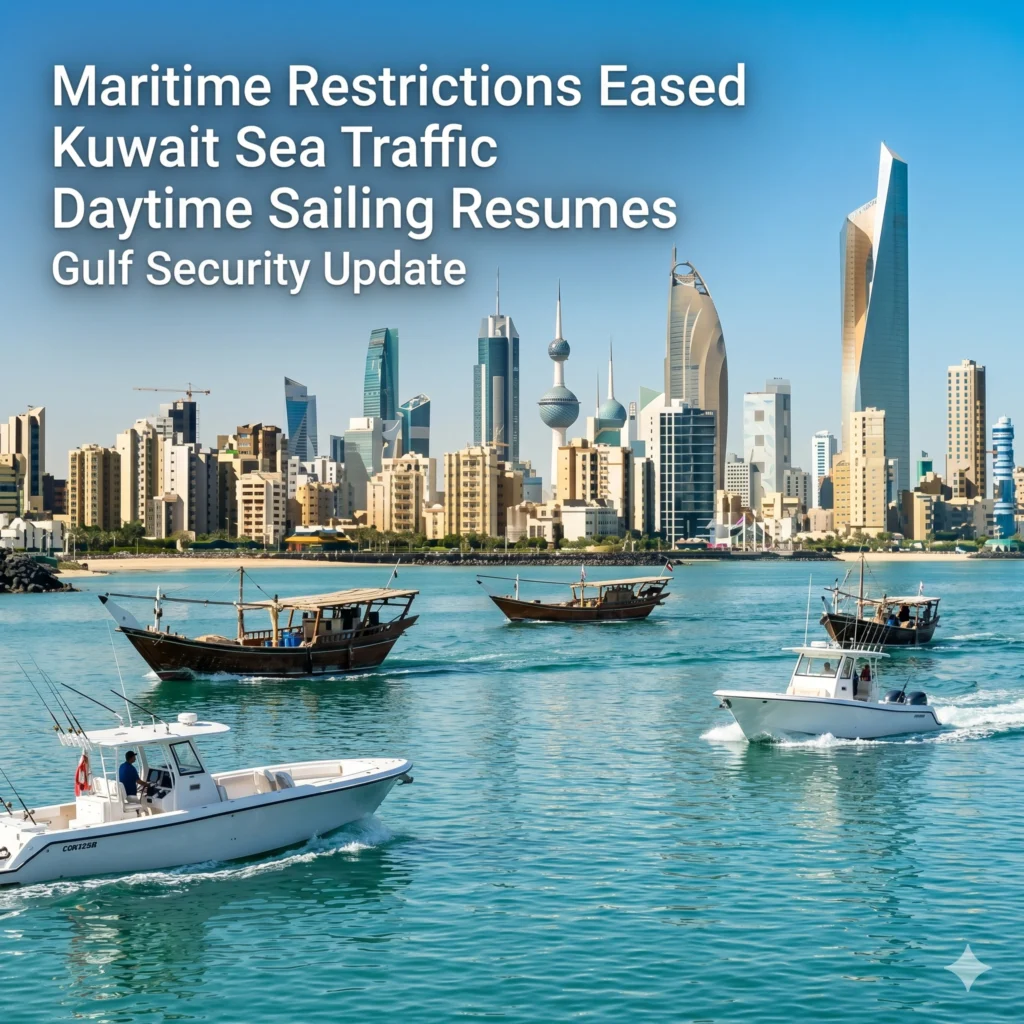
Implementing the New Daylight Navigation Schedule in Kuwait
Kuwait officially announced on Wednesday that it will ease existing Maritime Restrictions for various types of civilian vessels. The new regulations allow fishing and recreational boats to operate during daylight hours beginning this Friday, April 24. Specifically, vessels will be permitted to sail between the hours of 6:00 a.m. and 6:00 p.m. to ensure maximum visibility and safety. This twelve-hour window is a significant expansion compared to the total bans that were in place during the height of the military crisis. The Interior Ministry stated that the decision was made after a formal and thorough evaluation of the current security situation.
Director General of the Coast Guard, Sheikh Mubarak Ali Al-Yousef, emphasized the importance of following specific navigation routes during these designated hours. While the Maritime Restrictions are being lifted for daytime travel, the Coast Guard will maintain a heavy presence to monitor all vessel movements. Seagoers must ensure their communication equipment is fully functional and that they stay within the authorized maritime zones at all times. This phased reopening is intended to balance the needs of the local fishing industry with the ongoing necessity of national defense. Any vessel found operating outside the 6:00 p.m. cutoff will be subject to immediate inspection and potential legal penalties.
Critical Infrastructure Protection and Prohibited Zones
Despite the general easing of Maritime Restrictions, seagoers are strictly prohibited from approaching oil facilities and other vital national installations. These locations remain under high-alert status due to their strategic importance to Kuwait’s economy and energy security. The Coast Guard has established a mandatory buffer zone around all offshore platforms and desalination plants to prevent unauthorized access. Maintaining these exclusion zones is a non-negotiable aspect of the updated maritime security framework for 2026. Authorities have warned that any breach of these perimeters will be treated as a potential security threat, regardless of the vessel’s intent.
Security measures had been tightened previously due to a series of military strikes between the United States, Israel, and Iran. These regional tensions escalated significantly following the commencement of military actions on February 28, leading to widespread Maritime Restrictions across the Gulf. Kuwaiti officials had increased surveillance to protect national interests during the period of retaliatory actions that disrupted global shipping lanes. As the situation stabilizes, the focus has shifted from total lockdowns to targeted protection of high-value assets. This targeted approach allows for the resumption of civilian life without compromising the kingdom’s core industrial safety.
Maritime Restrictions
The Easing of Maritime Restrictions is a direct response to the ceasefire between the United States and Iran that has been in effect since April 8. After weeks of intense combat, the truce has provided a much-needed window of opportunity for regional governments to de-escalate their own domestic security measures. U.S. President Donald Trump indicated on Tuesday that the current two-week truce would be extended further, providing more confidence to Kuwaiti authorities. This international development is the primary driver behind the decision to allow boats back into the water this weekend. Without this geopolitical cooling period, the current Maritime Restrictions would likely have remained in place indefinitely.
The transition toward normalizing civilian maritime traffic is viewed as a significant step for the Kuwaiti economy and social life. Fishing is not just a commercial activity in Kuwait; it is a cultural cornerstone that supports thousands of families. The previous Maritime Restrictions had placed a heavy financial burden on the local maritime community, making this reopening a highly anticipated event. By aligning domestic policy with regional peace efforts, the government is demonstrating its commitment to both safety and prosperity. As the ceasefire holds, officials hope to further expand the hours of operation and eventually remove all remaining barriers to maritime travel.
Regional Geopolitical Impact on Kuwaiti Naval Policy
- Regional tensions reached a peak in early March, forcing the total suspension of all non-military maritime activities in the Northern Gulf.
- The April 8 ceasefire acted as a catalyst for Kuwait to begin a formal reassessment of its domestic Maritime Restrictions.
- President Trump’s announcement of a truce extension provided the necessary diplomatic cover for the Interior Ministry to act this week.
- Cooperation between the Kuwaiti Coast Guard and international naval task forces has remained high to ensure the safety of shipping lanes.
The reduction of Maritime Restrictions serves as a bellwether for the overall security health of the Arabian Gulf. As Kuwait reopens its waters, it sends a positive signal to neighboring states that the immediate threat of large-scale conflict has subsided. This collective de-escalation is vital for the recovery of regional trade and the stabilization of global energy markets. However, officials remain cautious, noting that the Maritime Restrictions can be reinstated instantly if the regional ceasefire is violated. The current period is seen as a “test phase” for a more permanent return to regional maritime stability and open communication.
Safety Guidelines for Recreational and Fishing Vessels
Sheikh Mubarak Ali Al-Yousef has reiterated that the easing of Maritime Restrictions does not mean a return to pre-crisis indifference. Seagoers are required to carry updated identification and vessel registration documents at all times while at sea. The Coast Guard will be conducting random spot checks to ensure that all participants in the daytime reopening are legitimate recreational or commercial entities. These checks are a necessary part of the new security normal, intended to prevent the exploitation of eased Maritime Restrictions by hostile actors. Providing clear documentation is the fastest way to assist the authorities in maintaining a safe environment for everyone.
Furthermore, all boat owners are encouraged to install or update their Automatic Identification System (AIS) transponders. This technology allows the Coast Guard to monitor vessel traffic in real-time and quickly distinguish between authorized civilian craft and potential intruders. In the context of the recent conflict, digital transparency is a key tool in avoiding the need for more restrictive Maritime Restrictions in the future. Educating the public on the importance of these tracking systems is a major focus of the Interior Ministry’s current awareness campaign. Safety at sea is now a collaborative effort between the government and the maritime community.
Economic Recovery for the Kuwaiti Fishing Industry
The fishing sector has been one of the hardest hit by the recent Maritime Restrictions, with many boats sitting idle for nearly two months. The resumption of daytime operations will allow local markets to once again stock fresh catches, potentially lowering food prices for residents. This economic boost is a primary motivation for the Friday reopening, as the government seeks to alleviate the financial stress caused by the regional war. While the 6:00 p.m. curfew still limits deep-sea expeditions, it provides enough time for coastal fishing activities to thrive. The end of the current Maritime Restrictions is a welcome relief for hundreds of small-scale entrepreneurs across the coast.
In addition to the direct economic benefits, the reopening of the seas helps restore the social fabric of Kuwait’s coastal towns. For many, the ability to go out on a boat is an essential part of weekend leisure and family life. The removal of the most stringent Maritime Restrictions allows for a return to these cherished traditions just as the summer season begins to approach. The psychological impact of seeing recreational boats back on the horizon cannot be overstated in terms of national morale. It serves as a visual confirmation that the period of highest danger has passed and that the kingdom is moving toward a brighter future.
Monitoring the Ceasefire and Future Policy Shifts
The Interior Ministry has confirmed that the status of the Maritime Restrictions will be reviewed on a weekly basis in coordination with regional allies. If the extension of the truce between the U.S. and Iran leads to a more permanent peace treaty, further easing is expected. This could include the resumption of nighttime fishing and the reopening of currently restricted zones far offshore. However, the government remains prepared to pivot back to strict Maritime Restrictions if there is any indication of renewed hostilities. This “escalator” policy ensures that Kuwaiti interests are protected regardless of the direction the regional conflict takes.
International maritime analysts are closely watching Kuwait’s decision as a potential model for other Gulf nations. The structured and transparent way in which the Maritime Restrictions are being lifted provides a clear framework for balancing civilian needs with military realities. By setting firm hours and clear exclusion zones, Kuwait is minimizing the risk of accidental confrontations between civilian boats and naval patrols. This disciplined approach to reopening is essential for maintaining the integrity of the regional ceasefire. The eyes of the world remain on the Gulf as it navigates this delicate path toward a post-conflict maritime order.
Required Protocols for Approaching Kuwaiti Ports
- All vessels must contact the port authority via VHF radio at least 30 minutes before arrival to confirm their identity and intent.
- Daytime operators must stick to the pre-approved corridors to avoid being flagged as a security risk by automated surveillance systems.
- Any mechanical failure or emergency must be reported immediately to the Coast Guard to prevent misunderstandings during the Maritime Restrictions easing.
- Passengers on recreational boats are limited to the capacity listed on the vessel’s official registration to ensure safety and order.
Following these protocols is the best way for citizens to support the permanent removal of Maritime Restrictions. When the public demonstrates a high level of compliance, it gives the security forces the confidence to suggest further de-escalations to the Ministry. Every safe and orderly trip made this Friday adds to the argument for a full return to maritime freedom. The Coast Guard is not looking to hinder the public but to facilitate a safe transition out of a period of high-alert. Respecting the 6:00 p.m. deadline is particularly crucial for the success of this first phase of the reopening plan.
Final Summary of the Kuwaiti Maritime Reopening 2026
The easing of Maritime Restrictions in Kuwait represents a significant victory for regional diplomacy and local resilience. After weeks of uncertainty and military strikes, the return of civilian vessels to the water is a powerful symbol of stability. By setting clear boundaries and operating hours, the government is ensuring that this transition is as safe as it is beneficial. The link between the regional ceasefire and domestic maritime policy highlights the interconnected nature of security in the modern Gulf. Kuwaiti seagoers can look forward to a busy and safe Friday as they reclaim their right to the sea.
As the kingdom moves forward, the lessons learned during the period of strict Maritime Restrictions will inform future contingency planning. The enhancement of surveillance and the strengthening of communication between the Coast Guard and civilians will leave the nation better prepared for any future challenges. For now, the focus is on enjoying the restored freedoms and supporting the national economy through responsible maritime activity. The extension of the truce provides a hopeful backdrop for what everyone hopes will be a long and peaceful summer on the water. Kuwait remains a leader in balancing the complex demands of security, economy, and community in an ever-changing region.
For more details & sources visit: Xinhua
Read more about Kuwait news on 360 News Orbit – Kuwait.