
Food security expert Dr. Fadel Al-Zoubi has warned that escalating Fertilizer Production Costs are currently destabilizing the global agricultural market due to intense regional conflicts. The closure of the Strait of Hormuz and ongoing warfare in the Gulf have severely disrupted the supply chains essential for manufacturing chemical nutrients. Because natural gas is a primary feedstock for these products, the cessation of energy supplies has caused urea and ammonia prices to surge by over 40 percent. This massive spike is directly impacting agricultural overheads and causing a record increase in international food prices. Consequently, nations are being forced to re-evaluate their reliance on imported chemicals to maintain their national food security levels during this crisis.
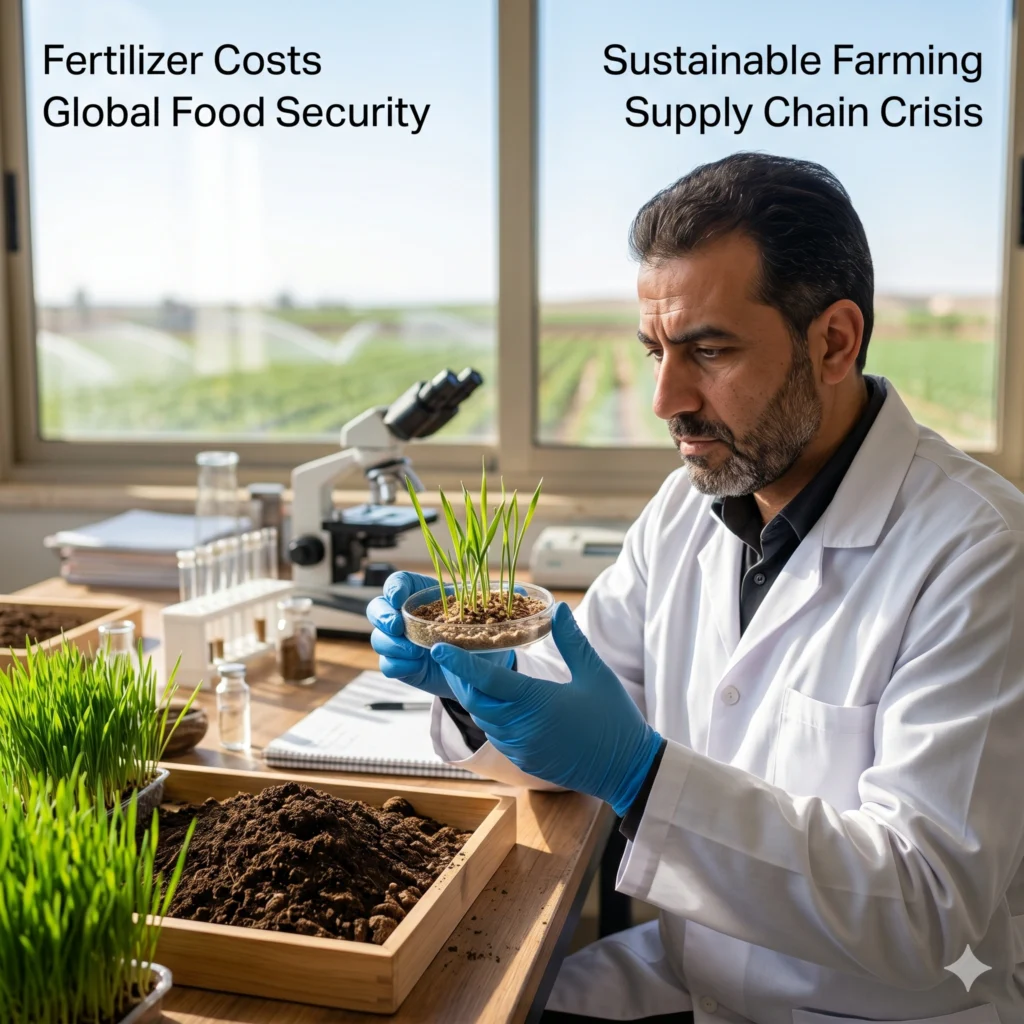
The Role of Natural Gas in Rising Fertilizer Production Costs
Dr. Fadel Al-Zoubi confirmed that regional warfare and trade route closures are the primary drivers behind the current instability in the global fertilizer industry. Natural gas constitutes approximately 70 percent of the inputs required for the Haber-Bosch process, which is the standard for producing nitrogen-based fertilizers. When gas supplies are throttled or redirected due to conflict, Fertilizer Production Costs rise almost instantaneously across the globe. The resulting energy shortage has already led to the temporary closure of several major factories in Europe and the Middle East. These shutdowns further restrict the global supply, creating a dangerous cycle of scarcity and extreme price volatility.
The logistical hurdles in the Gulf have made it nearly impossible for manufacturers to maintain their previous output levels without passing costs to farmers. As Fertilizer Production Costs climb, the financial burden is reflected in the international prices of essential commodities like wheat and corn. Farmers who cannot afford the higher prices are often forced to reduce their application rates, which leads to lower crop yields at harvest time. This reduction in yield threatens the overall stability of the agricultural sector and puts increased pressure on national budgets worldwide. Expert analysis suggests that without a resolution to the energy crisis, the food security of vulnerable nations will continue to deteriorate.
Impact of High Fertilizer Production Costs on Jordanian Agriculture
Jordanian food security is particularly vulnerable to these market fluctuations due to the nation’s heavy reliance on imported agricultural inputs. As Fertilizer Production Costs rise globally, local farmers in Jordan find it increasingly difficult to compete and maintain profitable operations. Dr. Al-Zoubi noted that the rising expenses are being felt most acutely by small-scale producers who lack the capital to absorb sudden price hikes. The government is now facing a critical challenge in subsidizing these inputs to prevent a total collapse of domestic food production. This economic pressure highlights the dangers of being overly dependent on a volatile international chemical market for basic survival needs.
Higher production costs are putting a significant strain on the national economy as the price of bread and other staples begins to climb. The Fertilizer Production Costs are not just a line item for farmers; they represent a fundamental threat to the affordability of food for the average citizen. Experts are now urging a rapid transition toward more localized and sustainable agricultural models to decouple food production from global energy markets. Jordan’s strategic location near the conflict zone makes the need for this transition even more urgent than for nations further removed from the crisis. Strengthening the independence of the agricultural sector is now viewed as a primary national security objective for 2026.
Fertilizer Production Costs
The current crisis involving Fertilizer Production Costs is forcing a global conversation about the long-term viability of industrial chemical farming. Many experts believe that the extreme sensitivity of chemical fertilizers to natural gas prices makes them an unreliable foundation for global nutrition. By diversifying the types of nutrients used in soil management, farmers can mitigate the risks associated with sudden Fertilizer Production Costs spikes. This shift involves integrating traditional knowledge with modern science to create a more resilient food system that can withstand geopolitical shocks. The goal is to ensure that a disruption in a single energy corridor does not lead to a global hunger crisis.
Alternative methods include the use of organic fertilizers such as manure and compost to significantly reduce the total dependence on foreign imports. While organic solutions may require different management techniques, they are largely immune to the fluctuations of the global gas market that drive Fertilizer Production Costs. Furthermore, these natural inputs improve soil health and water retention over time, providing a secondary benefit to farmers facing climate change. Transitioning to organic matter can help stabilize the cost of food production by utilizing locally available waste products. This move toward circular agricultural economies is gaining traction among policymakers looking for sustainable ways to protect their citizens.
Adopting Sustainable Practices to Lower Fertilizer Production Costs
- Implement agricultural rotation with nitrogen-fixing crops like legumes to naturally enrich the soil without using expensive chemicals.
- Utilize precision farming technology to ensure that any applied fertilizer is used with maximum efficiency, reducing total waste and cost.
- Develop local composting facilities to convert urban organic waste into high-quality fertilizer for nearby rural farming communities.
- Transition to intercropping techniques that mimic natural ecosystems and reduce the need for external chemical intervention.
Environmentally smart farming techniques are being proposed as viable long-term solutions to the problem of rising Fertilizer Production Costs. By using agricultural rotation, farmers can break pest cycles and naturally replenish soil nutrients that are otherwise depleted by monocropping. Intercropping, or growing two or more crops in the same field, can also maximize the use of available sunlight and water. These methods reduce the total volume of chemicals needed, thereby lowering the total Fertilizer Production Costs for the individual grower. While the transition requires education and initial investment, the long-term savings and security benefits are considered substantial by modern agricultural scientists.
Expanding Nitrogen-Fixing Plants to Enhance Biodiversity
Expanding the cultivation of nitrogen-fixing plants could further enhance biodiversity and improve the overall quality of food production in the region. These plants have a unique symbiotic relationship with bacteria that allows them to convert atmospheric nitrogen into a form that plants can use. By incorporating these crops into a standard farming cycle, the need for synthetic urea is greatly diminished, effectively bypassing high Fertilizer Production Costs. This biological solution is both cost-effective and environmentally friendly, as it prevents the chemical runoff associated with traditional fertilizers. Enhancing soil biodiversity through these means leads to a more robust and self-sustaining agricultural environment.
These strategic shifts aim to support the independence of the agricultural sector while addressing the immediate economic challenges posed by the Gulf conflict. Reducing the Fertilizer Production Costs through biological means allows farmers to maintain their margins even when energy prices are high. Dr. Al-Zoubi emphasizes that the transition to sustainable practices is no longer just an environmental preference but a survival necessity. As global trade routes remain under threat, the ability to produce food using local resources becomes a country’s greatest asset. Nitrogen-fixing plants are a key pillar in this new strategy for a more secure and autonomous food future.
Global Price Trends of Urea and Ammonia in 2026
The significant spike in the cost of agricultural chemicals has left many international markets in a state of shock. Global prices for urea and ammonia have increased by more than 40 percent, marking one of the fastest growth rates in recent history. This trend is a direct consequence of the logistical hurdles in the Strait of Hormuz, which is a critical artery for the world’s energy and chemical trade. As Fertilizer Production Costs soar, the ripple effect is felt at every level of the global supply chain, from the factory floor to the grocery store shelf. Analysts predict that these high prices will persist as long as the regional conflict continues to threaten natural gas exports.
Furthermore, the high Fertilizer Production Costs have led to a decrease in the global stockpile of essential food nutrients. This “just-in-time” delivery model for agricultural inputs has proven to be highly vulnerable to the realities of modern warfare. Countries that did not have significant domestic production or large reserves are now struggling to find affordable supplies on the open market. The current situation serves as a stark reminder of the interconnected nature of energy, chemicals, and food security. Maintaining a stable food supply in 2026 requires a deep understanding of the energy inputs that drive Fertilizer Production Costs and a plan to mitigate their impact.
Long-Term Solutions for a Resilient Agricultural Sector
Addressing the immediate economic challenges of high Fertilizer Production Costs requires both short-term aid and long-term structural reform. Short-term measures may include government subsidies or the opening of strategic fertilizer reserves to help farmers through the current planting season. However, the only way to permanently lower Fertilizer Production Costs is to reduce the sector’s total reliance on fossil-fuel-based inputs. This includes investing in “green ammonia” produced using renewable energy sources such as wind and solar power. While still in the early stages of development, these technologies offer a way to produce fertilizer without the volatility of the natural gas market.
Investment in research and development for bio-fertilizers is also crucial for long-term stability and lower Fertilizer Production Costs. These products use beneficial microbes to help plants absorb nutrients more effectively from the soil and the air. By enhancing the natural processes of the earth, scientists can help farmers achieve high yields without the massive carbon footprint of chemical alternatives. Dr. Al-Zoubi and other experts believe that the current crisis could be the catalyst for a “Green Revolution 2.0.” This new era of farming would prioritize local resource management and ecological health as the primary means of ensuring global food security.
Challenges of Transitioning Away from Chemical Fertilizers
- Cultural resistance among farmers who have relied on synthetic chemicals for generations and are skeptical of organic alternatives.
- The lack of large-scale infrastructure for the collection and processing of organic waste into usable agricultural compost.
- Initial yield drops that can occur during the transition period as soil biology recovers from years of chemical saturation.
- The higher labor costs often associated with intensive organic management compared to simple chemical application.
Despite the clear benefits of lowering Fertilizer Production Costs through sustainable means, the transition is not without its hurdles. Many farmers require extensive training to master the complexities of crop rotation and bio-fertilizer management. Additionally, the supply chain for organic inputs is currently much less developed than the global network for chemical urea. Overcoming these challenges will require a coordinated effort between governments, researchers, and the private sector. However, the alternative—remaining trapped in a cycle of high Fertilizer Production Costs and food insecurity—is far more dangerous for the global population in the long run.
Final Summary of the 2026 Global Fertilizer Crisis
The rising Fertilizer Production Costs driven by regional conflict represent one of the most significant threats to global stability in 2026. As Dr. Fadel Al-Zoubi has clearly illustrated, the link between natural gas supplies and food prices is a vulnerability that can no longer be ignored. The 40 percent surge in chemical costs is a wake-up call for every nation to begin diversifying its agricultural inputs immediately. By adopting more sustainable practices and investing in local resources, the world can build a food system that is truly secure. The future of global nutrition depends on our ability to innovate away from the volatile energy markets that currently dictate the price of our daily bread.
The road ahead will require a fundamental shift in how we value and manage our soil and energy resources. Reducing Fertilizer Production Costs through the use of organic matter, nitrogen-fixing plants, and green technology is the only sustainable path forward. As we navigate the complexities of the current geopolitical landscape, the priority must remain on the independence and resilience of the agricultural sector. Through collaboration and a commitment to sustainable growth, we can overcome the challenges of the present and secure a bountiful future for all. The lessons learned from this crisis will shape the agricultural policies of nations for generations to come.
For more details & sources visit: Al-Rai
Read more about Jordan news on 360 News Orbit – Jordan.