
Kuwait and Japan youth cooperation initiatives have reached a new milestone as both nations look to integrate their expertise in athletics and youth development. Minister of State for Youth Affairs and Sports, Dr. Tareq Al-Jalahma, recently welcomed Japanese Ambassador Mukai Kenichiro to discuss a strategic roadmap for the future. This high-level diplomatic engagement focuses on creating sustainable pathways for young athletes to excel on the international stage. With Japan preparing for major events, the timing of this partnership is essential for Kuwait’s long-term sporting goals.
The meeting emphasized that the relationship between these two nations is entering a transformative phase. By focusing on the younger generation, both governments aim to build a legacy of mutual respect and competitive excellence. This Kuwait and Japan youth cooperation strategy is designed to move beyond traditional diplomacy and into the realm of practical, hands-on training and infrastructure development. The collaboration is expected to yield significant results for professional sports management in the Gulf region over the next few years.
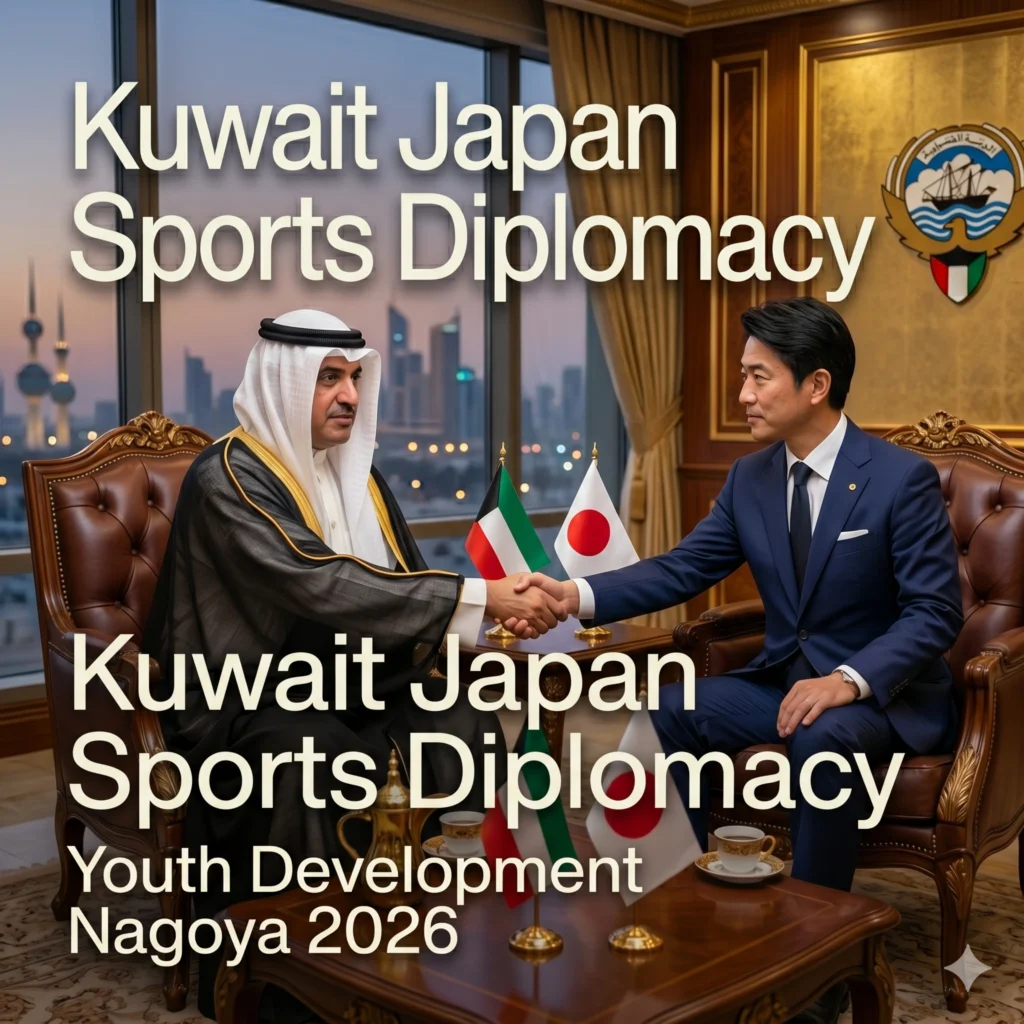
Strategic Vision for Kuwait and Japan Youth Cooperation
The strategic vision behind the Kuwait and Japan youth cooperation involves a comprehensive exchange of technical knowledge and administrative expertise. Kuwait is particularly interested in how Japan manages its world-class sports facilities and integrates technology into athlete training. By adopting these Japanese models, Kuwait hopes to modernize its own domestic sports ecosystem. Dr. Tareq Al-Jalahma noted that Japan’s global leadership in professional athletics provides a perfect blueprint for Kuwaiti development.
Ambassador Kenichiro highlighted that Japan is equally eager to share its successes in youth engagement. The collaboration will likely see Japanese experts visiting Kuwait to lead seminars on sports science and facility maintenance. This Kuwait and Japan youth cooperation is not just about competition, but about building the foundation of a healthy and active society. Both leaders agree that a strong sports sector is a key indicator of a nation’s overall youth empowerment and social progress.
Kuwait and Japan youth cooperation
The formalization of the Kuwait and Japan youth cooperation will prioritize the creation of joint workshops and specialized training programs. These initiatives are specifically designed to target young participants who show potential in Olympic disciplines. By providing access to Japanese training methodologies, Kuwaiti athletes can gain a competitive edge in regional tournaments. This partnership acts as a bridge, allowing local talent to experience international standards of coaching and discipline early in their careers.
The program also includes a strong focus on the psychological and nutritional aspects of professional sports. Japanese specialists are renowned for their holistic approach to athlete development, an area Kuwait is keen to explore further. The Kuwait and Japan youth cooperation will ensure that trainers in Kuwait are equipped with the latest pedagogical tools to inspire the next generation. These workshops are expected to begin in the final quarter of 2026, marking a significant step in the bilateral agreement.
Preparing for the 2026 Asian Games in Nagoya
A significant portion of the diplomatic discussion centered on the upcoming Asian Games scheduled to take place in Nagoya, Japan. As the host nation, Japan offers a wealth of knowledge regarding the logistics and management of large-scale international sporting events. Kuwait intends to leverage this proximity to the host to prepare its delegation more effectively. The Kuwait and Japan youth cooperation will facilitate pre-tournament camps for Kuwaiti athletes in various Japanese cities to help them acclimate.
These training camps are vital for athletes to adjust to the climate and the specific competitive environment of East Asia. Furthermore, Kuwaiti sports administrators will have the opportunity to observe Japan’s “behind-the-scenes” operations during the games. This aspect of the Kuwait and Japan youth cooperation is focused on capacity building for future event hosting in the Middle East. Learning from Nagoya’s organizational success will help Kuwait refine its own ambitions for hosting international championships.
Cultural Exchange Through Youth Delegations
Beyond the physical aspects of sports, the Kuwait and Japan youth cooperation places a heavy emphasis on cultural diplomacy. Both officials proposed a regular exchange of youth delegations to foster a deeper understanding of each other’s traditions and values. These exchanges are intended to broaden the horizons of young people, teaching them the importance of international cooperation. By living and training together, the youth of both nations can build lasting friendships that transcend borders.
- Delegations will participate in community service and cultural festivals.
- Athletes will share traditional sporting techniques unique to their regions.
- The program aims to build leadership skills through collaborative projects.
- Language exchange components will be integrated into the youth visits.
This cultural pillar ensures that the Kuwait and Japan youth cooperation is a well-rounded initiative. It recognizes that sports are a powerful tool for peace and communication. When young Kuwaitis visit Japan, they bring back more than just medals; they bring back a global perspective that is essential for modern leadership. This vision of “soft power” is a key component of the Ministry’s broader strategy for national youth empowerment.
Modernizing Sports Infrastructure in Kuwait
Kuwait is currently undergoing a massive renovation of its sports facilities, and the Kuwait and Japan youth cooperation is central to this effort. Japan’s experience in building sustainable and technologically advanced stadiums is world-renowned. Through this partnership, Kuwaiti engineers and architects will consult with Japanese firms to implement smart technology in local sports complexes. This includes energy-efficient lighting, advanced turf management, and high-tech recovery centers for athletes.
The integration of technology is not limited to buildings but extends to the equipment used by young players. Japan has pioneered the use of data analytics in scouting and performance tracking, a field Kuwait is eager to adopt. The Kuwait and Japan youth cooperation will allow for the procurement of Japanese sports tech and the training of local staff to operate it. These improvements will make Kuwaiti facilities a hub for regional sports, attracting more international events to the country.
Promoting Professionalism in Athletic Management
One of the long-term goals of the Kuwait and Japan youth cooperation is to elevate the level of professionalism within sports federations. Japanese management styles emphasize long-term planning, discipline, and fiscal responsibility. Dr. Al-Jalahma believes that adopting these administrative traits will help Kuwaiti sports organizations function more effectively. This transition is crucial for ensuring that funding reaches the grassroots level where it can have the most impact on young talent.
Training sessions for sports executives will be organized as part of the bilateral agreement. These sessions will cover topics such as marketing, athlete welfare, and international legal standards in sports. The Kuwait and Japan youth cooperation seeks to create a professional environment that mirrors the world’s most successful athletic programs. By professionalizing the management layer, the entire ecosystem becomes more resilient and better prepared to support elite athletes through every stage of their career.
Empowerment Through International Collaboration
The Ministry of State for Youth Affairs views the Kuwait and Japan youth cooperation as a cornerstone of its “Youth 2035” vision. This vision aims to position Kuwaiti youth as active contributors to the global community. Collaboration with a technologically advanced and disciplined nation like Japan provides the ideal environment for this growth. The Minister emphasized that the government is committed to removing barriers that prevent young people from accessing international opportunities.
- International partnerships provide exposure to global best practices.
- Collaborative projects encourage innovation in sports and technology.
- Youth participants gain certificates and recognitions from foreign agencies.
- The strategy builds a talent pipeline for international diplomatic roles.
By investing in the Kuwait and Japan youth cooperation, the government is essentially investing in the future leaders of the country. Whether in the boardroom or on the track, the skills learned through this partnership will be invaluable. The commitment shown by both Dr. Al-Jalahma and Ambassador Kenichiro ensures that these programs will have the necessary political and financial backing to succeed. This is a clear signal that Kuwait sees internationalism as the key to its domestic progress.
Advancing Shared Interests and Strategic Partnership
A press statement following the meeting confirmed that the Kuwait and Japan youth cooperation is rooted in shared interests. Both nations value stability, excellence, and the development of human capital. This strategic partnership is expected to deepen in the coming months, with more specific agreements being signed regarding individual sports. The commitment to a long-term relationship ensures that these are not just temporary programs, but a fundamental shift in how both countries interact.
The diplomatic success of this meeting also paves the way for deeper economic ties. As sports and youth programs flourish, they often lead to increased tourism and commercial activity. The Kuwait and Japan youth cooperation is seen as a catalyst for broader bilateral cooperation in various other sectors. Both officials expressed their satisfaction with the progress made and look forward to the first official delegation exchange later this year. The message is one of optimism and mutual growth.
Impact on Local Sports Clubs and Grassroots Talent
The ripples of the Kuwait and Japan youth cooperation will be felt most strongly at the local club level. Grassroots coaches will be the first to receive training from Japanese experts, ensuring that the latest techniques are taught to children from a young age. This “train the trainer” model is the most effective way to ensure that the partnership’s benefits reach every corner of the country. Local clubs are already preparing for the influx of new methodologies and training equipment.
- Grassroots programs will focus on discipline and basic athletic skills.
- Coaches will receive specialized certification from Japanese institutions.
- Local tournaments will be organized to scout talent for the exchange programs.
- Clubs will be encouraged to adopt Japanese standards of facility hygiene.
This ground-up approach ensures that the Kuwait and Japan youth cooperation is not just a high-level diplomatic exercise. It is a practical initiative that changes how a young child in Kuwait learns to play football, swim, or run. By instilling the Japanese values of hard work and precision early on, Kuwait is building a more competitive and resilient generation of athletes. The impact of these changes will be visible in the medal counts of the next decade.
The Role of Sports in Strengthening Diplomatic Ties
Finally, the Kuwait and Japan youth cooperation serves as a reminder of the power of “sporting diplomacy.” In an increasingly complex world, sports provide a common language that brings people together. The friendship between Kuwait and Japan is strengthened every time their athletes compete or train alongside each other. This relationship is a model for how nations can use shared passions to build a more peaceful and collaborative international community.
As the meeting concluded, both leaders reaffirmed their dedication to this path. The Kuwait and Japan youth cooperation is more than a policy; it is a vision for a future where youth are at the center of national development. With the 2026 Asian Games on the horizon, the world will soon see the fruits of this partnership. The commitment to excellence and the spirit of cooperation will undoubtedly lead both nations to new heights in the global sporting arena.
The Ministry continues to monitor the implementation of these initiatives to ensure they meet the high standards set during the meeting. The Kuwait and Japan youth cooperation remains a top priority for Dr. Tareq Al-Jalahma, who sees it as a defining project of his tenure. As the partnership evolves, it will continue to adapt to the changing needs of the youth, ensuring that Kuwait remains a leader in regional athletic development. The future of Kuwaiti sports has never looked brighter, thanks to this strategic alliance with the “Land of the Rising Sun.”
For more details & sources visit: Kuwait Times
Read more about Kuwait news on 360 News Orbit – Kuwait.