
Iran espionage network activities have faced a massive setback as local authorities dismantled a sophisticated cell operating in the northwestern border region this week. Security forces identified four individuals involved in the clandestine operation, which allegedly facilitated the smuggling of restricted communication hardware into the country. This crackdown reflects the government’s aggressive stance against unauthorized data networks that bypass national regulations during sensitive periods. Officials emphasize that neutralizing the Iran espionage network was essential for maintaining the integrity of the nation’s digital borders against external actors.
The investigation revealed that the group was utilizing advanced satellite terminals to establish a covert data bridge with foreign intelligence agencies located overseas. By operating this Iran espionage network, the suspects were able to transmit encrypted information while avoiding the standard internet gateways monitored by the state. This technological subversion is viewed as a significant threat to sovereign security, prompting a rapid response from the highest levels of the judiciary. The removal of this Iran espionage network serves as a clear warning to those attempting to facilitate illegal communication channels.
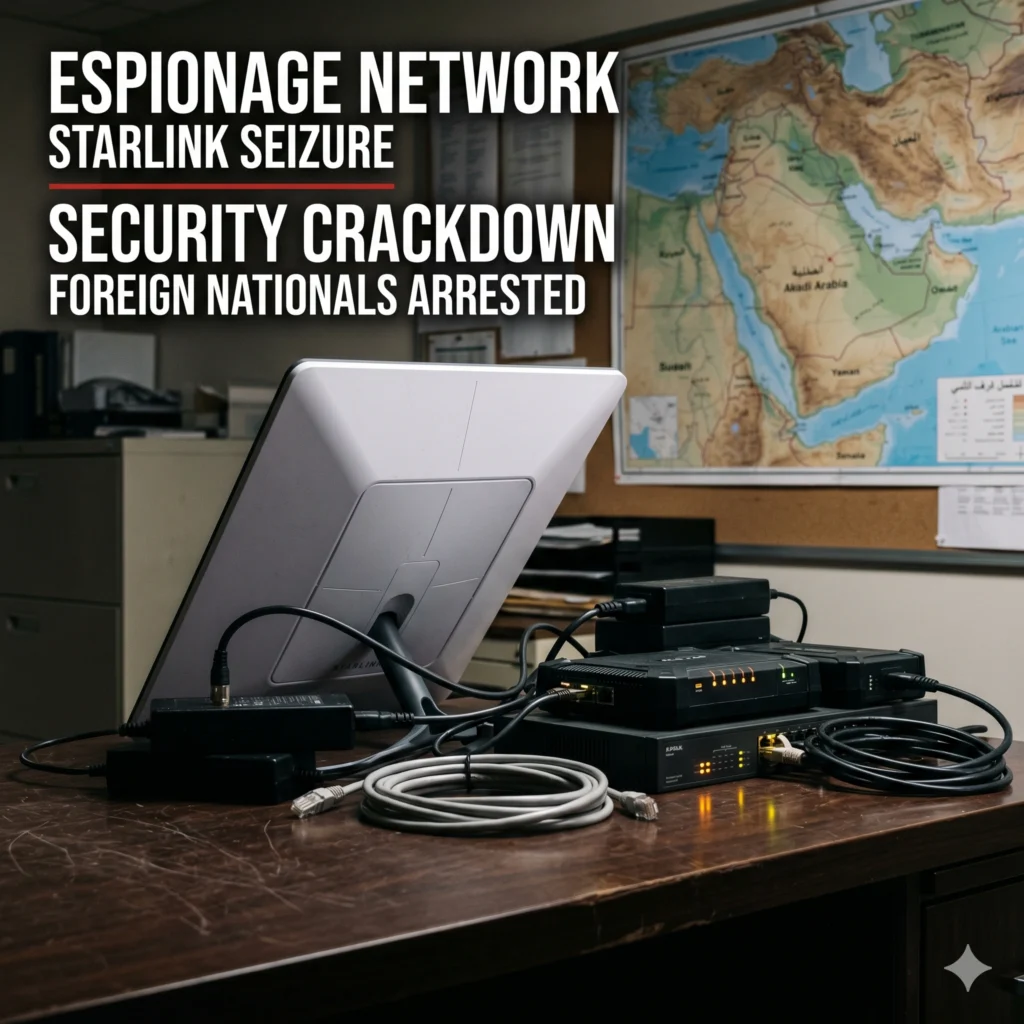
4 Suspects Detained in Massive Intelligence Operation
The tactical raid was carried out with precision after weeks of surveillance focused on the suspicious electronic signals emitted from a remote facility. Personnel involved in the strike confirmed that the primary goal was to disable the Iran espionage network before it could expand its reach into other provinces. The suspects offered little resistance when confronted with the evidence of their specialized smuggling activities. Currently, the members of the Iran espionage network are undergoing intensive interrogation to uncover the full scope of their collaborative efforts.
Evidence recovered at the scene points toward a well-funded operation that had access to modern encryption tools and logistics. It appears the Iran espionage network was part of a broader strategy to create a shadow communication infrastructure within the country. By seizing these assets, the government has effectively blinded the external handlers who relied on this specific Iran espionage network for local data. The judiciary has promised a transparent trial to expose the methods used by such clandestine groups to the general public.
Iran Espionage Network
The formal charges against the four detainees include sabotage and the operation of an illegal Iran espionage network designed to undermine national stability. According to the prosecution, the group’s activities were not merely commercial but were intended to facilitate foreign interference in domestic affairs. This classification of the Iran espionage network allows for the application of the strictest legal penalties available under current security statutes. The state remains vigilant in its effort to identify any remaining participants who provided logistical aid to the cell.
Satellite Technology and Global Intelligence Links
The reliance on Starlink terminals allowed the group to bypass the localized internet blackouts that have been in effect for several weeks. This specific technical capability made the Iran espionage network a high-value asset for intelligence agencies in the United States and Israel. By utilizing high-altitude data transfers, the cell managed to maintain a consistent link with their handlers despite the lack of traditional connectivity. The discovery of this Iran espionage network has forced a re-evaluation of how electronic hardware is screened at the nation’s entry points.
Modern signal-tracking units played a crucial role in locating the hidden transmitters used by the suspects during their nightly broadcasts. Analysts were able to isolate the unique frequencies associated with the hardware of the Iran espionage network, leading them directly to the safe house. This level of technical mastery by the state highlights the difficulty a decentralized Iran espionage network faces when operating against a prepared defense. The hardware has been sent to a specialized lab to determine if any sensitive data remains stored on the internal drives.
- Authorities confiscated several high-gain antennas used for satellite uplinks.
- Encrypted communication logs were recovered from hidden storage compartments.
- Specialized software designed for frequency hopping was found on the group’s laptops.
- Large amounts of foreign currency were seized during the final sweep of the building.
Regional Security Implications of the Crackdown
The collapse of the Iran espionage network has significant implications for the intelligence gathering capabilities of Western powers in the region. Military analysts suggest that the data provided by this cell was instrumental in monitoring local troop movements near the border. Without the real-time reporting from the Iran espionage network, external agencies will find it much harder to predict the defensive posture of the provincial guards. This strategic victory reinforces the idea that the country is capable of defending its information space against hybrid threats.
International monitors are paying close attention to the judicial process to see how the foreign nationals are treated under the law. The government maintains that the Iran espionage network was a direct violation of international norms regarding sovereignty and non-interference. As the trial proceeds, more details regarding the specific targets of the Iran espionage network are expected to be made public. This transparency aims to justify the rigorous security measures that have been implemented across the northwestern provinces recently.
Future Projections for National Counter-Intelligence
In the wake of this operation, the government is expected to roll out new regulations regarding the possession of satellite communication equipment. The goal is to make it impossible for another Iran espionage network to establish a foothold using similar hardware in the future. Increased funding for electronic warfare units will allow for better monitoring of the spectrum in remote border areas where smuggling is most common. Every successful disruption of an Iran espionage network provides valuable data that helps the state refine its defensive protocols.
Intelligence agencies are also working with local community leaders to identify the signs of foreign infiltration before they become a threat. By educating the public on the tactics used by the Iran espionage network, the state hopes to create a more resilient social environment. Collaboration between different branches of the security services has reached a record high as they work to close any remaining loopholes. The persistence of the Iran espionage network threat requires a constant evolution of counter-intelligence tactics and technology.
- Regular patrols will now include specialized equipment for detecting illegal radio emissions.
- The legal definition of digital sabotage is being expanded to cover satellite misuse.
- Enhanced vetting for individuals working in the telecommunications sector is being introduced.
- A national registry for all high-end electronic communication tools is currently under consideration.
Legal Framework for Handling Foreign Spies
The suspects involved in the Iran espionage network are facing a complex legal battle that involves both civil and military courts. Because the actions of the Iran espionage network directly impacted national security, the prosecution is seeking the maximum possible sentences. Legal experts suggest that the foreign nationals may be used as leverage in broader diplomatic discussions, though the state has not confirmed this. The priority remains the complete dismantling of the Iran espionage network and the prosecution of its core members.
The evidence presented in court will include detailed logs of the communication between the suspects and their foreign controllers. These documents are expected to prove that the Iran espionage network was receiving direct orders from agencies linked to hostile governments. By showing the level of coordination involved, the state aims to delegitimize any claims that the group was merely interested in internet freedom. The trial of the Iran espionage network is set to begin in the coming month under heavy security.
Conclusion and National Stability
In conclusion, the successful operation to shut down the Iran espionage network highlights the effectiveness of the nation’s intelligence apparatus. While foreign entities continue to look for ways to infiltrate the domestic sphere, the state remains one step ahead. The dismantling of the Iran espionage network is a testament to the dedication of the men and women working to protect the country’s sovereignty. As long as external threats persist, the fight against the Iran espionage network and similar organizations will remain a top priority for the administration.
Public confidence in the security forces has seen a significant boost following the news of these arrests and the seizure of the equipment. People understand that an Iran espionage network is not just a political issue but a direct threat to the safety of every citizen. By working together, the community and the government can ensure that no Iran espionage network can ever truly succeed in destabilizing the nation. The future of national security depends on this continued vigilance and the ability to adapt to a rapidly changing technological landscape.
For more details & sources visit: Reuters
Read more on Iran news: 360 News Orbit – Iran.