
China Virtual Character Rules are reshaping the digital landscape as Beijing launches a massive regulatory offensive to protect the nation’s youth. The newly introduced legal framework establishes a strict set of standards for the creation, deployment, and interaction of digital avatars within the metaverse. By targeting the psychological development of minors, the government aims to curb the influence of inappropriate virtual content across all social media and gaming platforms.
As the technology sector continues to evolve, China Virtual Character Rules provide a necessary boundary for developers who utilize artificial intelligence. These regulations are not merely suggestions but are legally binding mandates that prioritize child safety over corporate profit. The initiative reflects a broader national strategy to ensure that the rapid expansion of virtual symbols does not lead to the exploitation of vulnerable demographics.
The announcement of the China Virtual Character Rules has sent ripples through the global tech community, as companies scramble to audit their existing digital catalogs. Beijing has made it clear that any platform hosting characters that incite violence or promote negative social behaviors will face immediate consequences. This proactive stance positions China as an early mover in the complex field of digital ethics and AI governance for the year 2026.
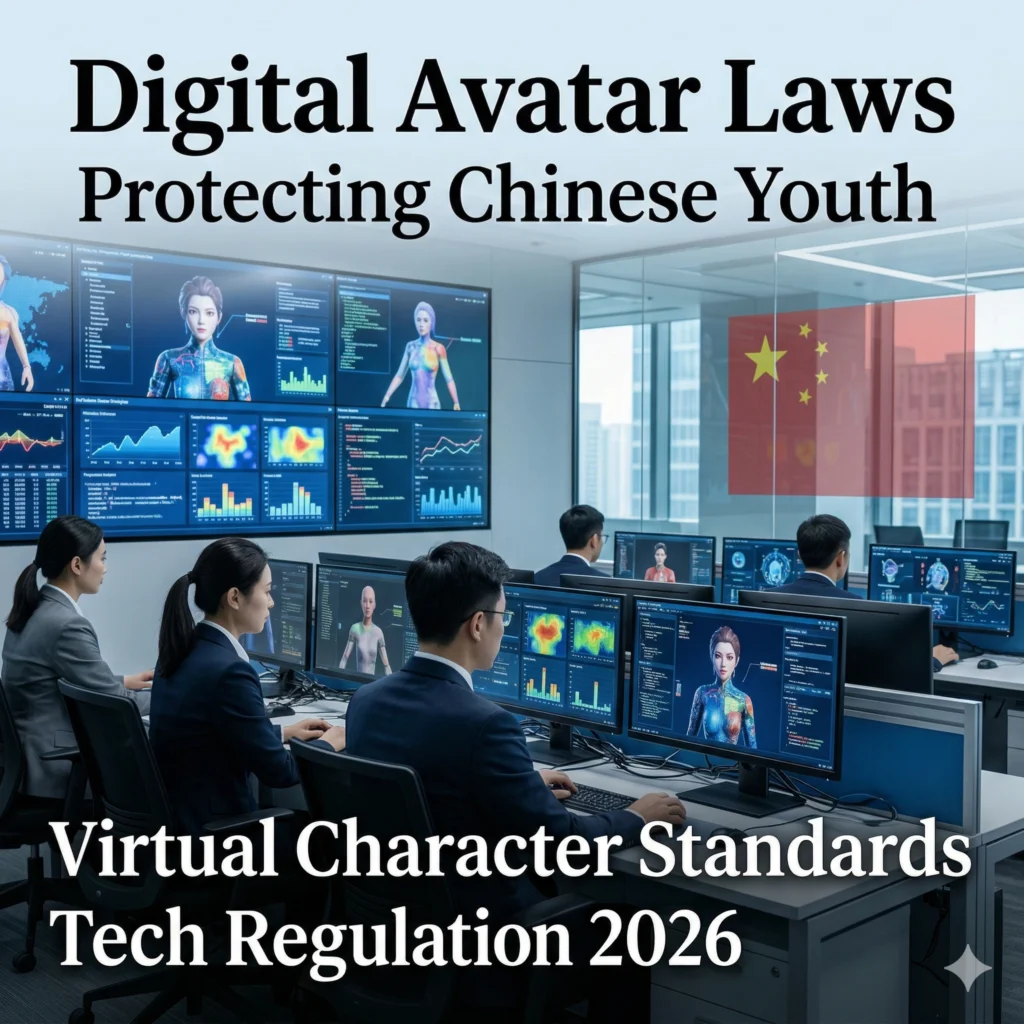
China Virtual Character Rules
The China Virtual Character Rules mandate that all digital personas must align with established national laws and traditional cultural values. This means that avatars used in education, entertainment, and advertising must undergo a rigorous vetting process before they are accessible to children. The government is particularly concerned with “virtual influencers” that may lead youth toward unhealthy lifestyle choices or psychological distress.
Implementation of the China Virtual Character Rules requires digital platform operators to take full legal responsibility for the content they host. Companies are now obligated to perform regular audits and provide detailed reports on how their virtual characters interact with minor users. This level of oversight is designed to catch potential violations in real-time before they can cause lasting harm to the social fabric.
Under the China Virtual Character Rules, the Cyberspace Administration of China will utilize high-precision monitoring tools to track compliance. These AI-driven tools are capable of scanning millions of digital assets to identify non-compliant designs or behaviors. The goal is to create a “purified” digital environment where children can explore the metaverse without being exposed to predatory or harmful elements.
Protecting Minors in the Digital Age
The core objective of the China Virtual Character Rules is the safeguarding of the psychological health of the next generation. Authorities have observed that virtual environments can sometimes become breeding grounds for bullying or the promotion of unrealistic beauty standards. By regulating the appearance and speech of digital characters, the state hopes to foster a more positive and constructive online experience for students.
The China Virtual Character Rules also address the issue of “addiction” by limiting the ways virtual characters can encourage prolonged engagement. Features that use psychological triggers to keep children glued to their screens are being strictly scrutinized by the Ministry of Industry and Information Technology. This holistic approach ensures that digital symbols are used as tools for learning rather than mechanisms for exploitation.
Experts believe that the China Virtual Character Rules will set a precedent for other nations struggling with the same issues. As digital characters become more lifelike and interactive, the line between reality and the virtual world begins to blur for younger minds. Setting clear boundaries now is seen as a vital step in preventing a future social crisis driven by unregulated artificial intelligence.
Impact on Tech Giants and Developers
For technology companies, the China Virtual Character Rules represent a significant operational challenge and a shift in business strategy. Developers must now incorporate “safety by design” into their workflows, ensuring that every pixel and line of code meets the new national requirements. This shift may slow down the release of some products, but it is expected to improve the overall quality of the digital ecosystem.
The China Virtual Character Rules stipulate that any entity found in violation will face severe financial and administrative sanctions. This includes the potential for massive fines and the revocation of operating licenses for repeat offenders. Such high stakes have forced major tech firms to invest heavily in specialized compliance teams and content moderation software to avoid the wrath of Beijing.
Despite the strict nature of the China Virtual Character Rules, some industry leaders see it as an opportunity for innovation. By focusing on “wholesome” and educational digital characters, developers can tap into a market that is highly valued by parents and educators. This pivot could lead to a new wave of high-quality, ethically designed virtual experiences that prioritize the user’s well-being.
Key Regulatory Requirements
- All digital characters must feature age-appropriate designs and clothing that reflect cultural norms.
- Virtual symbols are prohibited from displaying or inciting any form of self-harm, violence, or criminal activity.
- Companies must implement transparent verification systems to distinguish between human users and AI avatars.
- Regular third-party audits are required for platforms with a significant number of minor users to ensure ongoing compliance.
Cultural Values and National Identity
The China Virtual Character Rules are deeply rooted in the preservation of national identity within the digital realm. Officials have noted that foreign-designed avatars often carry values that may conflict with the socialist core values promoted by the state. By regulating these characters, China is effectively protecting its cultural sovereignty in an increasingly borderless internet.
Integrating the China Virtual Character Rules into the broader legal system ensures that virtual symbols do not become tools for subversion. The government emphasizes that the “metaverse” should not be a lawless space where traditional ethics are ignored. Instead, it should be an extension of the physical world where the same rules of conduct and respect apply to all participants.
This aspect of the China Virtual Character Rules is particularly important for the educational sector. Digital avatars used in online classrooms must be designed to inspire curiosity and respect for history. This ensures that even in a high-tech future, the fundamental pillars of the national culture remain intact and respected by the younger generation.
Monitoring and Enforcement Mechanisms
The enforcement of the China Virtual Character Rules relies on a sophisticated network of human moderators and automated systems. Regulatory bodies are working with private tech firms to develop algorithms that can detect subtle infractions in character behavior. This collaboration is essential for managing the vast amount of data generated by China’s massive online population.
Under the China Virtual Character Rules, the public is also encouraged to report non-compliant content through dedicated hotlines and digital portals. This “crowd-sourced” monitoring helps authorities stay ahead of emerging trends that might not yet be captured by automated filters. Community involvement is seen as a key component of maintaining a healthy and safe cyberspace for children.
Sanctions for failing to adhere to the China Virtual Character Rules are designed to be a deterrent for even the largest corporations. Beyond financial penalties, the government can order the public “shaming” of companies that fail to protect minors. This reputational risk is often more effective than fines in a market where brand loyalty and government favor are paramount to success.
Future of the Metaverse in China
While some fear the China Virtual Character Rules might stifle creativity, others argue they provide the necessary stability for the metaverse to thrive. By removing the “darker” elements of virtual interaction, the government is creating a more predictable market for investors. This regulated growth model is a hallmark of the Chinese approach to technological development.
The China Virtual Character Rules will likely lead to the development of a unique “Chinese Metaverse” that looks and feels different from Western versions. This digital space will be characterized by a high degree of order, safety, and cultural alignment. As other countries watch this experiment, the Chinese model may become a blueprint for how to manage the risks of the digital frontier.
Looking ahead to the rest of 2026, the China Virtual Character Rules will continue to be refined as new technologies emerge. The government has indicated that it is open to adjusting the laws based on feedback from the tech industry and the public. However, the core mission of protecting minors will remain the non-negotiable anchor of all future digital regulations.
Strategic Global Positioning
By implementing the China Virtual Character Rules, Beijing is positioning itself as a leader in digital ethics. While much of the world is still debating how to handle AI, China has moved into the implementation phase. This proactive regulation allows the country to set international standards that other nations might eventually adopt to protect their own citizens.
The China Virtual Character Rules are a reflection of a government that is not afraid to intervene in the market for the greater good. This “rectification” of the tech sector is part of a larger trend that began with the regulation of the tutoring and gaming industries. It shows a consistent commitment to social stability over unbridled technological expansion.
- High-precision monitoring tools now scan for “uncivilized” behaviors in virtual personas across all social apps.
- Developers are encouraged to create avatars that promote traditional arts, history, and scientific achievement.
- Digital “guardianship” modes have become mandatory for all virtual environments frequented by those under eighteen.
- Interactive AI characters must now clearly state their non-human nature to prevent emotional manipulation of children.
Conclusion and Summary of Controls
The China Virtual Character Rules mark a turning point in how society interacts with digital beings. By focusing on the design and usage of avatars, the government is addressing the root causes of potential digital harm. This legislation ensures that the virtual world remains a place of growth and discovery rather than one of danger and exploitation for the youth.
Moving forward, the China Virtual Character Rules will serve as a constant reminder to the tech industry that innovation must be tempered with responsibility. The balance between the metaverse and societal ethics is delicate, but with clear guidelines, it can be maintained. China’s commitment to this balance will likely define the next decade of digital interaction within the country.
Ultimately, the success of the China Virtual Character Rules will be measured by the well-being of the nation’s children. As they navigate the complex virtual landscapes of 2026 and beyond, they will do so with the protection of a robust legal framework. The purified digital environment envisioned by Beijing is now closer to reality, thanks to these comprehensive and forward-thinking regulations.
For more details & sources visit: Voice of Emirates
Read more about China news on 360 News Orbit – China.