
The African Development Bank recently released a comprehensive report highlighting the promising future of the Algerian Economic Growth Trends through 2027. According to the latest data, the nation is successfully navigating global financial pressures by leveraging its massive natural resource wealth. Analysts are particularly impressed by the strategic shift toward modernization and the welcoming of foreign investment.
The report suggests that the Algerian Economic Growth Trends are supported by a solid foundation laid during the 2025 fiscal year. During that period, the country managed to secure a growth rate of 3.3 percent, outperforming many of its regional neighbors. This momentum is expected to build as the government continues to implement structural reforms across several key industrial sectors.
Investment in the energy sector remains the primary engine behind the Algerian Economic Growth Trends observed today. By partnering with international corporations, the state has been able to revitalize its oil and gas infrastructure, ensuring long-term export stability. These improvements are crucial for maintaining the fiscal space needed to fund large-scale social programs and public infrastructure.
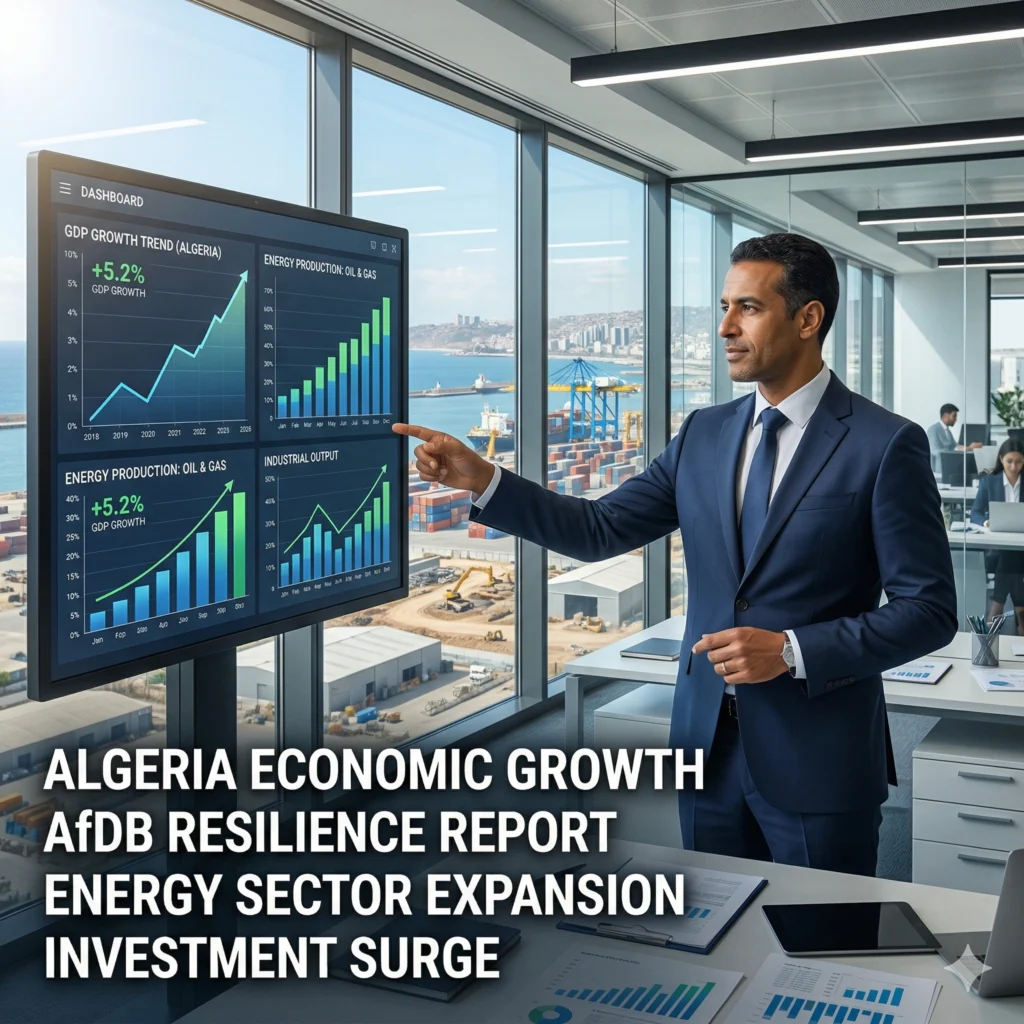
Algerian Economic Growth Trends
The Algerian Economic Growth Trends indicate a clear upward trajectory for the North African powerhouse over the next three years. The African Development Bank (AfDB) projects that the expansion will hit 3.9 percent in 2026 before reaching a steady 4.0 percent in 2027. This consistent rise is a testament to the nation’s proactive economic management and successful diversification efforts.
A major component of the Algerian Economic Growth Trends is the significant increase in foreign direct investment (FDI). International firms are increasingly drawn to Algeria’s stable political climate and its strategic position as a bridge between Africa and Europe. These partnerships are not only bringing in capital but also introducing advanced technologies to the local workforce.
Furthermore, the Algerian Economic Growth Trends are bolstered by a surge in household consumption. As the labor market stabilizes and inflation remains under control, Algerian citizens are spending more on goods and services. This internal demand provides a necessary cushion against external shocks and fluctuations in the global energy market prices.
Energy Sector Modernization and Resilience
The backbone of the Algerian Economic Growth Trends is undoubtedly the modernization of the national energy grid. The government has prioritized the upgrading of refineries and the exploration of new gas fields to meet rising global demand. These efforts have positioned Algeria as a reliable alternative supplier for European nations seeking energy security.
Strategic initiatives under the Algerian Economic Growth Trends include the expansion of pipeline networks and liquefied natural gas (LNG) facilities. These projects are often high-capital endeavors funded through a mix of state revenue and international loans. The efficiency gains from these upgrades are already reflecting positively in the nation’s quarterly trade balance reports.
The African Development Bank notes that the energy sector’s success is feeding into other areas of the economy. Revenue from gas exports is being recycled into the manufacturing and agricultural sectors to reduce the country’s overall import bill. This integrated approach is a hallmark of the current Algerian Economic Growth Trends and long-term sustainability.
Social Infrastructure and Public Expenditure
High levels of public spending are a critical driver for the Algerian Economic Growth Trends reported this year. The government has allocated billions of dollars toward the construction of new housing, hospitals, and educational facilities. These investments are designed to improve the quality of life for all citizens while creating thousands of construction jobs.
The Algerian Economic Growth Trends are also influenced by the state’s commitment to maintaining essential subsidies. By keeping the cost of bread, fuel, and electricity affordable, the government has managed to avoid the social unrest seen in other parts of the world. This stability is highly valued by international investors looking for a secure environment for their capital.
Experts believe that the focus on social infrastructure within the Algerian Economic Growth Trends will yield long-term demographic dividends. A healthier and better-educated population is more productive and capable of participating in a modern, diversified economy. This human capital development is essential for moving beyond a reliance on raw material exports.
Factors Driving the National Economy
- A surge in foreign direct investment from both European and Asian manufacturing corporations.
- Massive upgrades to the national oil and gas infrastructure in partnership with global energy giants.
- Record-high foreign exchange reserves that provide a significant buffer against global market volatility.
- Implementation of business-friendly regulations that simplify the process for starting and expanding small enterprises.
Inflation Control and Financial Stability
The African Development Bank has praised Algeria for maintaining some of the most favorable inflation rates on the continent. In an era where many nations are struggling with runaway prices, the Algerian Economic Growth Trends show a remarkable level of monetary discipline. This achievement is attributed to the central bank’s prudent management of the local currency.
Stable prices are a cornerstone of the Algerian Economic Growth Trends because they protect the purchasing power of the middle class. When people are confident that their money will hold its value, they are more likely to make long-term investments in housing or business. This cycle of confidence is vital for maintaining the 4.0 percent growth target for 2027.
The secure level of foreign exchange reserves further cements the Algerian Economic Growth Trends. These reserves act as a financial shield, allowing the country to meet its international obligations even if oil prices temporarily dip. This financial strength has earned Algeria high marks from global credit rating agencies and developmental institutions.
Future Projections and Market Resilience
Looking toward the end of the decade, the Algerian Economic Growth Trends suggest a period of sustained prosperity. The AfDB report highlights that the nation has established itself as one of the most resilient economies in Africa. This resilience is tested and proven by the country’s ability to maintain growth despite global supply chain disruptions.
The Algerian Economic Growth Trends are expected to be influenced by the growing digital economy and renewable energy projects. Algeria is uniquely positioned to become a leader in solar energy production, given its vast desert landscape. Transitioning toward “green” energy exports will likely be the next phase of the nation’s economic evolution.
Analysts predict that the diversification efforts inherent in the Algerian Economic Growth Trends will continue to bear fruit. By fostering a vibrant private sector, the government is reducing the historical dominance of the state in economic affairs. This transition toward a more market-oriented model is key to achieving the ambitious 2027 growth milestones.
Comparative Regional Economic Performance
When compared to its North African peers, the Algerian Economic Growth Trends stand out as particularly robust. While neighboring countries have faced steep inflation and currency devaluation, Algeria has maintained a steady course. This regional leadership is helping to attract a larger share of pan-African trade and investment.
The Algerian Economic Growth Trends are also benefiting from the country’s active participation in the African Continental Free Trade Area (AfCFTA). By lowering trade barriers with other African nations, Algeria is opening up new markets for its non-oil products. This regional integration is a strategic priority for the Ministry of Commerce and Export Promotion.
Ultimately, the Algerian Economic Growth Trends demonstrate the power of combining resource wealth with smart policy. The nation’s ability to reinvest energy profits into a diversified portfolio of industries is a model for other commodity-dependent countries. This balanced approach ensures that growth is not just rapid, but also inclusive and sustainable.
Infrastructure Development and Connectivity
The Algerian Economic Growth Trends are heavily supported by massive transportation projects, including the expansion of the East-West Highway. Better roads and rail networks reduce the cost of moving goods across the country’s vast territory. This improved connectivity is vital for the growth of small and medium-sized enterprises (SMEs).
Under the Algerian Economic Growth Trends, port modernization is also a top priority to facilitate international trade. New container terminals and automated logistics systems are making Algerian ports more competitive on the global stage. These upgrades are essential for supporting the projected 3.9 percent growth rate in 2026.
- The Great Mosque of Algiers and other cultural landmarks have boosted the domestic tourism sector.
- New industrial zones are being established to provide subsidized land and utilities to emerging manufacturers.
- Expansion of the fiber optic network is bringing high-speed internet to rural areas, supporting digital entrepreneurship.
- Massive desalination projects are being built to ensure water security for both citizens and the agricultural industry.
The Role of Foreign Partnerships
Foreign corporations are playing a pivotal role in the Algerian Economic Growth Trends by providing technical expertise. Joint ventures in the automotive and pharmaceutical sectors have led to the local production of goods that were previously imported. This “made in Algeria” initiative is a core pillar of the government’s economic strategy.
The African Development Bank highlights that the Algerian Economic Growth Trends are strengthened by these long-term commitments. Unlike “hot money” that can flee during a crisis, industrial investment represents a deep integration into the local economy. These factories provide stable employment and contribute significantly to the national tax base.
As the Algerian Economic Growth Trends continue to evolve, the government is looking to diversify its list of partners. While Europe remains a primary trade ally, there is a growing focus on building ties with Brazil, India, and China. This multi-polar approach to trade helps insulate the economy from regional downturns in any single market.
Summary of the AfDB Economic Forecast
- Algeria’s growth is expected to rise from 3.3 percent in 2025 to 4.0 percent by the end of 2027.
- Modernization of the energy sector is the primary driver of national revenue and industrial stability.
- The country maintains one of the lowest inflation rates in Africa, protecting consumer purchasing power.
- Public spending on social infrastructure and household consumption are key internal growth factors.
Conclusion and Strategic Outlook
The Algerian Economic Growth Trends paint a picture of a nation on the rise, characterized by stability and strategic foresight. The 4.0 percent growth target for 2027 is not just a number; it represents a tangible improvement in the lives of millions. By staying the course on modernization, Algeria is securing its place as an economic leader in the Mediterranean.
Challenges remain, but the foundations of the Algerian Economic Growth Trends are stronger than ever. The nation’s ability to balance state-led investment with private sector growth will be the deciding factor in its future success. With secure reserves and a clear vision, the road ahead looks promising for the people of Algeria.
Finally, the African Development Bank’s report serves as a global endorsement of the Algerian Economic Growth Trends. Investors around the world are taking notice of the nation’s resilience and its potential for high returns. As 2027 approaches, Algeria is well-positioned to achieve its goals and set a new standard for economic development in the region.
For more details & sources visit: Radio Algérie
Read more about Algeria news on 360 News Orbit – Algeria.