
Australia Trade Deficit Data has sent shockwaves through the financial markets, after the Australian Bureau of Statistics (ABS) revealed a staggering $1.84 billion shortfall. This unexpected turn of events marks a dramatic departure from the multi-billion dollar surpluses that the nation has consistently enjoyed over the past several years. As analysts digest the figures, the focus has shifted toward the underlying causes of this fiscal pivot and what it means for the broader Australian economic landscape. The sudden transition from a $5.02 billion surplus to a significant deficit caught institutional investors completely off guard.
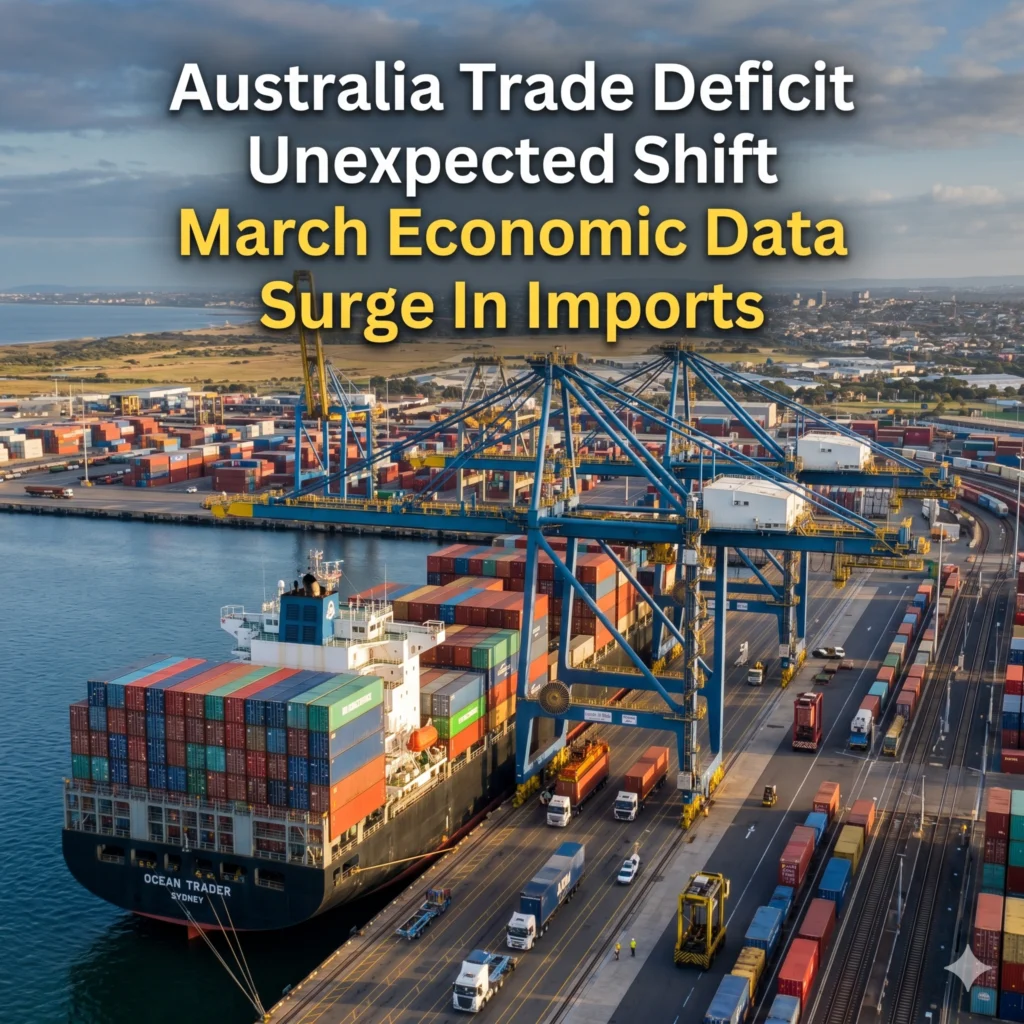
Australia Trade Deficit Data and Market Surprises
The announcement of the Australia Trade Deficit Data resulted in an immediate re-evaluation of the country’s short-term growth prospects. Financial markets were originally positioned for a surplus of roughly $4.25 billion, making the actual result a massive miss of nearly $6 billion compared to consensus estimates. Such a wide variance between expectations and reality often leads to increased volatility in currency and equity markets as traders adjust their models. This specific report is being viewed as one of the most surprising economic releases for the Australian economy in recent memory.
Economists are pointing toward a unique combination of soaring domestic demand for foreign goods and a cooling international appetite for Australian raw materials. While a single month of data does not always establish a permanent trend, the magnitude of this shift suggests deeper structural changes in trade flows. The sharp reversal has prompted immediate questions regarding the sustainability of Australia’s recent economic outperformance relative to its G7 peers. For a nation heavily dependent on the balance of its international accounts, this deficit serves as a stern warning.
Australia Trade Deficit Data
The primary engine behind the Australia Trade Deficit Data was a massive 14.1 percent spike in national import activity during March. This surge indicates that domestic consumption remains remarkably robust, even in the face of fluctuating global conditions. Australians are importing everything from consumer electronics to heavy industrial machinery at rates that outpaced the nation’s earning capacity from overseas sales. This appetite for foreign products effectively drained the capital that usually builds up during periods of high commodity exports.
On the other side of the ledger, exports faced a contraction of 2.7 percent, which compounded the impact of the import spike. The decline in export revenue is particularly concerning given Australia’s role as a major provider of energy and mineral resources to the global market. A dip in demand from major trading partners, or a decrease in the prices of key commodities like iron ore and coal, can quickly erode the trade balance. This dual pressure of rising costs for imports and falling revenue from exports created the “perfect storm” for the March reporting period.
The Resilience of the Australian Dollar
Despite the alarming Australia Trade Deficit Data, the Australian Dollar (AUD) showed surprising resilience in early daily trading sessions. Usually, a surprise trade deficit would lead to an immediate sell-off of the local currency as it signals a lower demand for the AUD. However, the AUD/USD pair actually found some ground, gaining strength amid a broader sense of global optimism. This suggests that investors are currently weighing geopolitical stability and interest rate differentials more heavily than individual trade data points.
Market analysts have identified key resistance levels for the Australian Dollar near the 0.7277 mark, which will be the next major test for the currency. The fact that the AUD did not plummet suggests that the market may view the March deficit as a temporary anomaly rather than a permanent decline. Nevertheless, the currency remains sensitive to any further negative surprises that might emerge from future ABS releases. The interplay between trade fundamentals and speculative currency flows continues to define the AUD’s current trajectory in the global forex market.
Volatility in Global Commodity Markets
The Australia Trade Deficit Data highlights the extreme volatility currently inherent in global commodity markets. As a major commodity exporter, Australia’s trade balance is essentially a mirror of global industrial health and energy transitions. Shifts in the procurement strategies of major Asian economies can lead to rapid fluctuations in the volume and value of Australian shipments. The March decline in exports may be an early indicator of a cooling industrial sector in key markets that traditionally rely on Australian iron ore.
Furthermore, the domestic consumption of high-end imports reflects a confident Australian consumer base, which adds a layer of complexity to the economic outlook. If the central bank views this import surge as a sign of an overheating domestic economy, it could influence future decisions on interest rates. Balancing the need to support export-oriented industries while managing the inflationary pressures of high import demand is a delicate task. This trade report provides the raw data that will fuel these policy debates for the remainder of the quarter.
Shifting Domestic Consumption Patterns
A closer look at the Australia Trade Deficit Data reveals significant shifts in how the Australian population is spending its money. The 14.1 percent increase in imports is not just a statistical fluke but represents a genuine change in purchasing behavior. There is a notable trend toward high-value technology and renewable energy infrastructure being sourced from abroad. As the nation transitions toward a greener economy, the initial phase often involves importing specialized equipment, which can temporarily weigh down the trade balance.
This surge in imports also suggests that the Australian logistics and supply chain networks have fully recovered from previous disruptions, allowing for a faster flow of goods. However, when this efficiency is matched with a decline in export volumes, the resulting deficit can become a drag on the quarterly GDP calculation. Policy makers will need to determine if this consumption is productive investment that will lead to future growth or simply a drain on national savings. The composition of these imports will be a key area of study for economic researchers.
Impact on National Growth Outlook
The unexpected Australia Trade Deficit Data is widely expected to impact the overall growth outlook for the current quarter. Net exports are a major component of the Gross Domestic Product (GDP) formula, and a move from surplus to deficit subtracts directly from the headline growth figure. If this trend persists through April and May, Australia could see its growth rate trimmed significantly compared to earlier optimistic forecasts. This possibility has led to a more cautious tone among domestic financial commentators and economic advisors.
- GDP growth could be revised downward by as much as 0.5 percent if deficits continue.
- Business investment strategies may be paused as companies wait for trade stability.
- Government revenue from mining royalties could see a decline if export prices stay low.
- The Reserve Bank of Australia (RBA) may need to adjust its inflation targets accordingly.
Analyzing the Role of the ABS
The Australian Bureau of Statistics remains the gold standard for providing the Australia Trade Deficit Data that drives these market movements. Their reporting for March was meticulous, detailing the specific sectors where import growth was most aggressive. The ABS noted that while the previous month had seen a decline in imports, the March rebound was powerful enough to erase the gains of the entire first quarter. This level of transparency allows analysts to pinpoint exactly where the economic leakage is occurring.
The bureau’s data also suggested that some of the import surge was due to the delivery of large-scale capital items, such as aircraft or major maritime equipment. These “one-off” large purchases can often skew a single month’s data, which provides a glimmer of hope for those looking for a return to surplus in April. However, even when adjusting for these items, the underlying trade balance showed clear signs of narrowing. The ABS will be under intense scrutiny when the next set of preliminary figures is released in a few weeks.
Geopolitical Stability and Trade Flows
The broader context of the Australia Trade Deficit Data includes a backdrop of shifting geopolitical stability. Australia’s trade relationships are frequently impacted by the diplomatic climate in the Indo-Pacific region. Recent improvements in dialogue with major trading partners have led to a more predictable flow of goods, but it has also increased competition from other resource-rich nations. The resilience of the Australian Dollar despite the deficit is partly attributed to Australia’s perceived status as a “safe haven” in an otherwise uncertain global environment.
Investment from overseas into Australian infrastructure continues to be a balancing force against the trade deficit. While the trade account shows money leaving the country for goods, the capital account often shows money entering for investment. This dynamic relationship is what keeps the Australian economy buoyant even when the trade data is disappointing. Analysts are closely watching for any signs that the trade deficit might start to deter this foreign investment, which would be a far more serious concern for the nation’s long-term health.
Long-term Trends in Australian Exports
To put the Australia Trade Deficit Data into perspective, one must look at the long-term trends governing Australian exports. For nearly a decade, Australia has benefitted from a massive commodity super-cycle that made trade surpluses almost guaranteed. The March deficit may be a sign that this cycle is entering a more mature, less lucrative phase. As global competition increases and technology shifts the demand for certain minerals, Australia must diversify its export base to include more services and high-tech manufacturing.
The education and tourism sectors, which are major service exports for Australia, have shown signs of recovery but have not yet returned to their pre-2020 peaks. Strengthening these sectors could provide the necessary buffer to prevent future trade deficits when commodity prices dip. The current reliance on raw materials makes the trade balance vulnerable to the whims of global industrial demand. Moving toward a more balanced export profile is a key goal for many economic strategists working within the Australian government today.
Technical Analysis of AUD/USD Levels
For those following the market reaction to the Australia Trade Deficit Data, the technical levels of the AUD/USD currency pair are of paramount importance. After the data release, the pair tested support levels before rebounding toward the 0.7277 resistance mark. This area is significant because it has historically acted as a ceiling for the currency during periods of economic uncertainty. A break above this level would signal that the market has completely discounted the trade deficit and is focusing on other positive catalysts.
Traders are also keeping an eye on moving averages and momentum oscillators to gauge the strength of the current AUD recovery. If the currency fails to break the 0.7277 resistance, it could signal a period of consolidation or a retracement toward lower support zones near 0.7150. The trade data has provided the catalyst for a fresh look at these charts, and the coming days will likely see high-volume trading as the market settles on a new valuation for the “Aussie” dollar in light of the March deficit.
Future Projections for the Trade Balance
Looking forward, the Australia Trade Deficit Data for March serves as a baseline for future projections. Most economists expect the trade balance to return to a small surplus in the coming months as the initial shock of the import surge wears off. However, the days of record-breaking $10 billion surpluses may be over for now. A more modest trade balance is likely to become the new normal, reflecting a more balanced and mature economic environment where domestic consumption plays a larger role.
Investment in domestic manufacturing could also help reduce the reliance on imports over the next few years. By producing more high-tech goods at home, Australia can mitigate the impact of global supply chain shifts on its trade account. This strategy is currently being encouraged through various government grants and tax incentives aimed at boosting the nation’s industrial capacity. The success of these initiatives will be measured by their ability to stabilize the trade balance and ensure long-term economic sovereignty.
Summary of Economic Sentiment
The general economic sentiment following the Australia Trade Deficit Data is one of cautious observation. While the deficit is a negative headline, it hasn’t yet translated into a broader economic crisis. The banking sector remains strong, employment levels are healthy, and the currency is holding its own. The “surprise” element of the March report was the primary driver of the initial market reaction, but as the details have emerged, the panic has subsided. The focus is now on the “soft landing” of the trade account.
Financial institutions are updating their client notes to reflect a more nuanced view of the Australian economy. They are highlighting the strength of the Australian consumer while warning about the risks of a sustained export slowdown. This balanced view is essential for investors who are looking to navigate the complexities of the 2026 economic environment. Australia remains a key player on the global stage, and its ability to handle this trade volatility will be a testament to its economic resilience and adaptability.
Policy Responses to Trade Volatility
In response to the Australia Trade Deficit Data, there may be calls for policy adjustments to better manage trade volatility. Some advocates suggest more aggressive support for export industries to ensure they remain competitive in a crowded global market. Others believe that the focus should be on managing domestic demand through fiscal policy to prevent future import spikes from destabilizing the national accounts. The debate over the best course of action is likely to be a central theme in the next round of budgetary discussions.
The government’s role in negotiating new trade agreements is also under the spotlight. By opening up new markets for Australian goods, the government can help diversify the export base and reduce the impact of a slowdown in any single market. These diplomatic efforts are ongoing and are seen as a vital component of the nation’s long-term trade strategy. Every new agreement signed is a step toward a more resilient and less volatile trade balance for Australia in the decades to come.
Conclusion: Navigating the New Trade Reality
The Australia Trade Deficit Data for March 2026 marks the beginning of a new chapter in the nation’s economic history. It is a reminder that even the most stable and successful economies can be subject to sudden and significant shifts. By analyzing the data, understanding the market reactions, and looking at the long-term trends, we can gain a clearer picture of where Australia is headed. The journey from surplus to deficit is a challenging one, but it also offers opportunities for reform and renewal.
As we move through the rest of 2026, the trade balance will remain a key indicator of Australia’s economic health. Whether the March deficit is a one-time event or the start of a longer trend, it has already succeeded in refocusing the nation’s attention on the importance of international trade. Australia’s future prosperity depends on its ability to compete globally while maintaining a healthy and sustainable domestic economy. The lessons learned from this March surprise will undoubtedly shape the economic policies of the future.
For more details & sources visit: FXStreet
Read more about Australia news on 360 News Orbit – Australia.