
The Alba Iranian Attack on the world’s largest single-site aluminum smelter has sent shockwaves throughout the global industrial sector this weekend. Aluminum Bahrain, known internationally as Alba, confirmed that its massive production facility was the target of a malicious strike on Saturday. This aggressive action, claimed by the Iranian Revolutionary Guard, resulted in minor injuries to two dedicated employees and physical damage to the infrastructure.
As the smoke clears over the Bahraini skyline, the geopolitical landscape of the Persian Gulf is shifting toward a dangerous new phase of industrial warfare. This event marks a direct confrontation between regional powers and global supply chain stability. The international community is now watching closely as the economic consequences of this brazen strike begin to unfold across commodity markets worldwide.
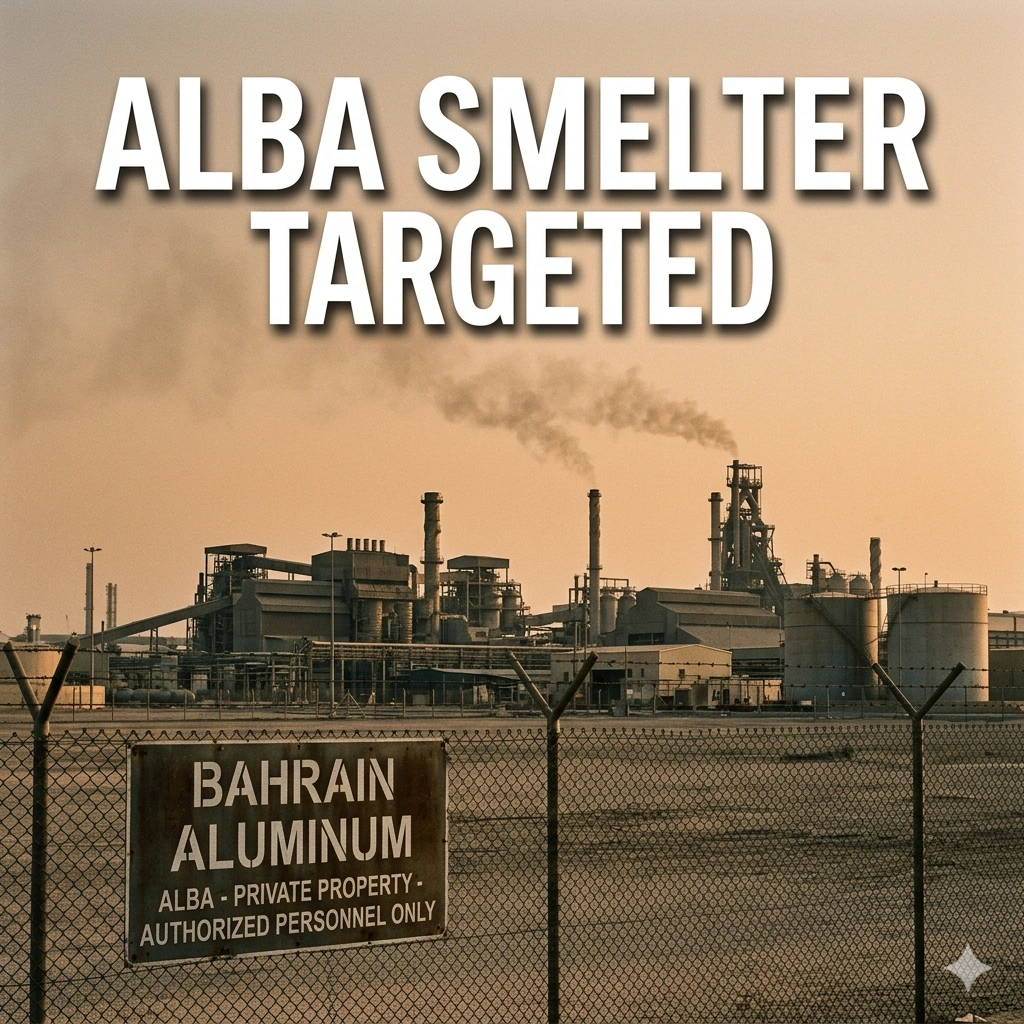
Investigating the Immediate Aftermath of the Alba Iranian Attack
Bahraini authorities and corporate leadership are currently working around the clock to assess the full extent of the structural damage. While the company stated that operations are continuing, the psychological impact on the workforce and the regional market is profound. Security protocols across the entire kingdom have been elevated to the highest possible level to prevent further incursions. Military analysts suggest that the precision of the strike indicates a sophisticated level of planning and intelligence gathering by the IRGC. This incident is not merely a localized skirmish but a calculated move to destabilize the primary economic engine of the Bahraini state.
The response from the Bahraini government has been swift, with officials condemning the act as a violation of international sovereignty. Investors are currently weighing the risks of maintaining high-value industrial assets in proximity to Iranian reach. The Alba Iranian Attack serves as a grim reminder that industrial giants are now on the front lines of modern geopolitical conflicts. Specialized engineering teams have been deployed to the site to ensure that the smelting pots remain operational, as any prolonged cooling could lead to catastrophic equipment failure. Safety remains the absolute priority for management as they navigate this unprecedented crisis while maintaining production quotas for global clients.
The Strategic Significance of the World Largest Aluminum Smelter
Operating the largest single-site smelter on the planet gives Alba a unique position in the global supply chain. Any disruption to this facility impacts industries ranging from aerospace and automotive manufacturing to construction and electronics. The Iranian military likely chose this target specifically because of its vital role in the global economy and its ties to Western markets. By striking this hub, Tehran is demonstrating its ability to throttle the supply of a critical industrial metal at will. The Alba Iranian Attack is therefore a message intended for a much larger audience than just the leadership in Manama.
Global aluminum prices have already seen a sharp uptick in early trading sessions following the news of the explosion. Supply chain managers are scrambling to secure alternative sources of high-grade aluminum to avoid production delays in their own domestic factories. The sheer scale of the Alba facility means that even a minor slowdown in output can create a massive deficit in the global market. This vulnerability is now being scrutinized by economic experts who previously considered these industrial zones to be relatively safe from direct military engagement. The Alba Iranian Attack has effectively shattered that illusion of safety for the foreseeable future.
Analyzing the Role of the Iranian Revolutionary Guard
The Iranian Revolutionary Guard Corps has been vocal about its involvement, framing the strike as a retaliatory measure against U.S.-linked interests. By claiming responsibility so quickly, the IRGC is attempting to project power and deter further Western influence in the Gulf region. Their rhetoric suggests that this may only be the beginning of a broader campaign targeting the economic foundations of GCC nations. The Alba Iranian Attack represents a shift in tactics from maritime harassment to direct land-based strikes on high-value industrial targets. This evolution in aggression presents a new set of challenges for regional defense systems and international security partners.
Intelligence agencies are now reviewing the delivery systems used in the strike, with early reports pointing toward advanced drone or missile technology. The ability of these projectiles to bypass sophisticated defense grids is a point of major concern for defense contractors. It appears the IRGC is utilizing the Alba Iranian Attack to test the limits of regional air defenses and response times. This bold move forces the United States and its allies to reconsider their defensive postures around critical infrastructure. The political fallout from this claim of responsibility is expected to lead to new rounds of international sanctions and heightened diplomatic tensions.
Economic Impacts on the Gulf Cooperation Council Region
The GCC relies heavily on industrial diversification to move away from total petroleum dependence, and Alba is a crown jewel of that strategy. When a facility of this magnitude is compromised, it threatens the long-term economic visions of the entire region. Other neighboring states, such as the UAE, are now looking at their own facilities with increased scrutiny following the Alba Iranian Attack. The IRGC specifically mentioned Emirates Global Aluminium as another potential target, putting the entire regional metal industry on high alert. This creates a climate of uncertainty that can stifle foreign direct investment and slow down regional development projects.
Insurance premiums for industrial sites in the Middle East are expected to skyrocket in the coming weeks. Companies must now factor in the cost of “war risk” insurance for ground-based facilities that were previously considered low-risk. The Alba Iranian Attack has fundamentally changed the cost-benefit analysis for building massive centralized industrial plants in the Gulf. Economists warn that if these attacks continue, the region could face a capital flight as investors seek safer havens for their manufacturing bases. The interconnected nature of the GCC economies means that a blow to Bahrain is felt equally in Riyadh, Abu Dhabi, and Kuwait City.
Global Supply Chain Vulnerabilities Exposed by the Strike
The modern manufacturing world operates on a “just-in-time” delivery model, which leaves very little room for error or interruption. The Alba Iranian Attack has highlighted how a single point of failure in the Middle East can stall assembly lines in Europe and North America. Aluminum is a foundational material for the green energy transition, used extensively in electric vehicles and solar panel frames. Any threat to its production directly hampers global efforts to meet climate goals and technological advancement. This strike proves that industrial security is now synonymous with national security for most developed nations.
- Global aluminum inventory levels are currently at a five-year low, making this disruption particularly painful.
- Shipping routes in the Persian Gulf are facing increased scrutiny, leading to higher freight costs.
- Automotive manufacturers in the EU are reporting concerns over long-term raw material contracts.
- Defense contractors are prioritizing the deployment of point-defense systems around similar industrial sites.
Logistics experts are now recommending that companies diversify their supplier base to include more facilities in South America and Southeast Asia. While these regions may have higher production costs, they offer a level of geopolitical stability that is currently lacking in the Gulf. The Alba Iranian Attack is a catalyst for a global “de-risking” strategy that could reshape trade maps for decades. Companies that once prioritized low-cost production are now pivoting toward supply chain resilience as their primary objective. This shift will likely lead to higher consumer prices for finished goods as the cost of security and diversification is passed down the line.
Human Element and Workforce Safety in Industrial Zones
Behind the massive tonnages of aluminum produced are thousands of workers who now face a direct threat to their lives. The two employees injured during the Alba Iranian Attack are a stark reminder that these geopolitical games have real human costs. Ensuring the safety of a workforce that operates in high-heat, high-pressure environments is already difficult without the threat of missile strikes. Management at Alba is now tasked with maintaining morale and operational focus while the facility remains a potential target. This human factor is often overlooked in economic reports but is critical for the long-term viability of any industrial enterprise.
Psychological support services have been made available to the staff at the Bahraini site to help them cope with the trauma of the explosion. A frightened workforce is less efficient and more prone to accidents, which could lead to further operational setbacks. The Alba Iranian Attack has forced the company to implement new emergency evacuation drills and bunker protocols. These measures, while necessary, add a layer of complexity to the daily routine of smelting aluminum. The resilience of the Bahraini people is being tested, and the government is doing everything possible to reassure the public that the situation is under control.
Geopolitical Repercussions and International Response
The international community has been vocal in its condemnation of the strike, with many Western nations calling for immediate de-escalation. However, the Alba Iranian Attack has already set in motion a series of diplomatic maneuvers that may be difficult to reverse. The United States has reaffirmed its commitment to the security of its partners in the Gulf, suggesting a possible increase in military presence. This potential buildup could either serve as a deterrent or further provoke the IRGC, leading to a dangerous cycle of escalation. The United Nations is expected to hold a briefing on the security of global industrial infrastructure in the wake of this event.
- The U.S. State Department issued a formal warning to American citizens regarding travel to industrial zones in the region.
- The European Union is considering new export controls on technologies that could be used in such attacks.
- Regional allies have pledged intelligence sharing to help identify and neutralize future threats.
Diplomats are working behind the scenes to prevent this conflict from spiraling into a full-scale regional war. The Alba Iranian Attack is seen as a “gray zone” operation, designed to inflict maximum pain while staying just below the threshold of traditional warfare. This ambiguity makes it difficult for international bodies to formulate a unified response. Nevertheless, the pressure on Tehran to cease its targeting of civilian industrial infrastructure is mounting from both the East and the West. The outcome of these diplomatic efforts will determine the stability of the global energy and metals markets for the remainder of the year.
Future Outlook for Aluminum Production in Bahrain
Despite the challenges posed by the Alba Iranian Attack, the company remains defiant and committed to its production goals. The facility is a symbol of national pride and economic independence for Bahrain, and its continued operation is a matter of sovereign importance. Repairs to the damaged sections of the plant are expected to be completed within the next several weeks. However, the long-term strategy for the site will likely include significant investments in anti-drone technology and physical hardening. The Alba Iranian Attack has provided a painful lesson in the necessity of modernizing industrial defense for the 21st century.
Industry analysts believe that Alba will emerge from this crisis with a more robust security posture, though at a significant financial cost. The company may seek to accelerate its digital transformation to allow for more remote monitoring and automated operations. This would reduce the number of personnel required on-site in high-risk areas during periods of tension. The Alba Iranian Attack will forever be a turning point in the history of the company, marking the moment it moved from a commercial giant to a frontline geopolitical asset. The lessons learned here will be studied by industrial leaders around the world for years to come.
Alba Iranian Attack
The Alba Iranian Attack has fundamentally altered the security landscape for global industrial giants. As the world’s largest smelter recovers, the global community must grapple with the reality that economic hubs are now primary military targets. This shift requires a total rethink of how we protect the infrastructure that powers our modern lives. The resilience shown by the workers and management in Bahrain is commendable, but they cannot stand alone against state-sponsored aggression. The coming months will be critical in determining whether the Gulf can return to a state of stability or if the Alba Iranian Attack was the first shot in a much longer industrial conflict.
Aluminum prices will likely remain volatile as long as the threat of further IRGC action persists. Stakeholders must remain vigilant and adaptable in this rapidly changing environment to ensure the continued flow of essential goods. The Alba Iranian Attack is a wake-up call for every nation that relies on centralized production facilities for its economic health. Only through international cooperation and advanced defensive measures can the global supply chain be protected from those who wish to use industrial sabotage as a tool of political leverage. As we look toward the future, the events of March 29, 2026, will serve as a stark reminder of the fragile balance between global trade and regional power dynamics.
The aftermath of the Alba Iranian Attack continues to dominate the headlines as new details emerge regarding the extent of the damage. While the injuries were minor, the message was loud and clear: no industrial site is beyond the reach of regional conflict. The global aluminum market is currently in a state of flux, with traders closely monitoring every announcement from the Bahraini government. It is expected that the recovery process will be a long and arduous one, involving both physical repairs and a complete overhaul of security strategies.
For more details & sources visit: Anadolu Agency (AA)
Read more about Behrain news on 360 News Orbit-Behrain.