
The recent surge of Acid Attacks In Indonesia has sent shockwaves through the international community, signaling a terrifying new era of repression for those who dare to speak truth to power. These brutal assaults on environmental campaigners and human rights defenders are not merely isolated incidents of street crime; they represent a calculated strategy to silence dissent within the world’s third-largest democracy. As prominent activists like Muhammad Rosidi and Andrie Yunus recover from life-altering injuries, the global spotlight is now firmly fixed on the deteriorating safety of the Indonesian civil space. This escalating violence highlights a grim reality where chemical weapons are used as tools of political and corporate intimidation against the nation’s most vulnerable protectors.
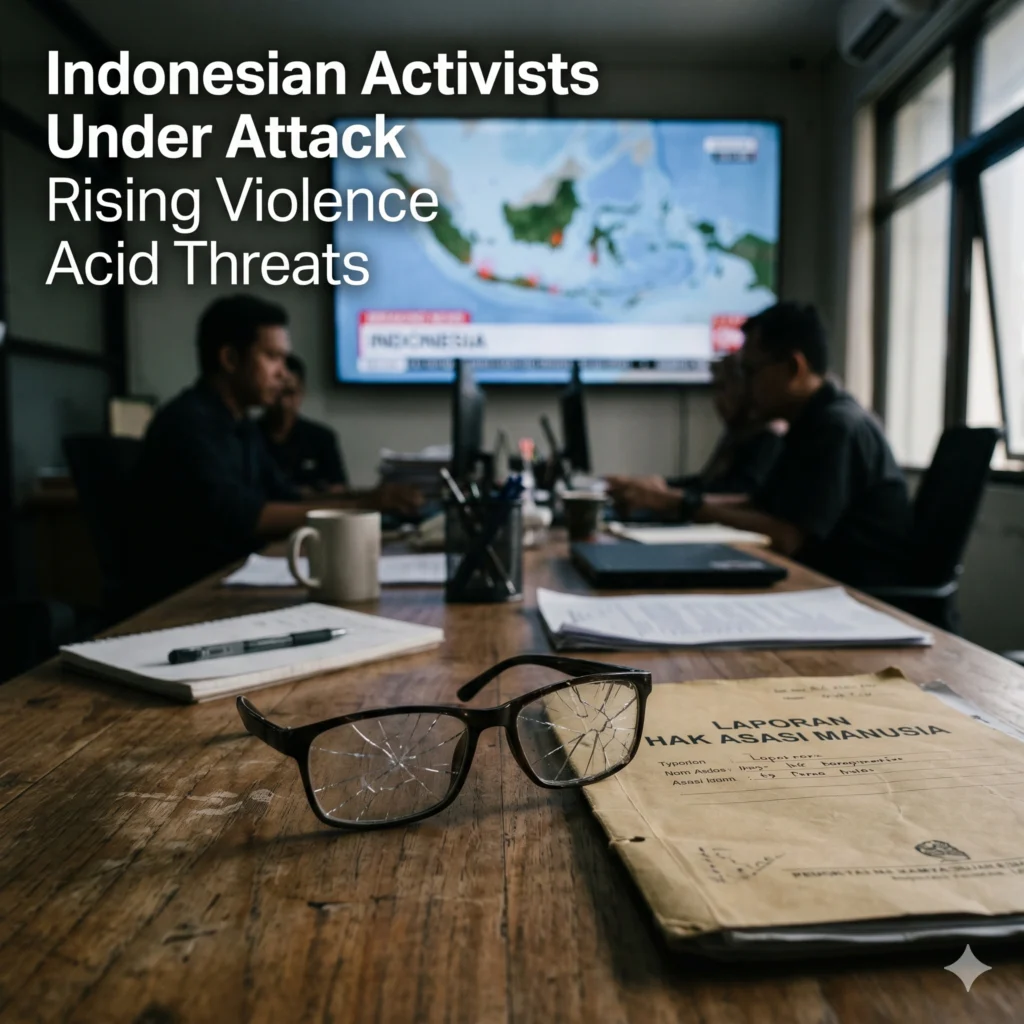
The Brutal Reality of Acid Attacks In Indonesia
The physical and psychological toll of these targeted assaults remains immeasurable for the victims and their families. When we discuss Acid Attacks In Indonesia, we are describing a level of premeditated cruelty designed to leave permanent scars and instill a deep sense of fear. These incidents often involve high-concentration corrosive substances that dissolve skin and muscle tissue within seconds of contact.
Activists who survive such encounters face a long and agonizing road to recovery, involving multiple reconstructive surgeries and long-term rehabilitation. Beyond the physical pain, the emotional trauma creates a chilling effect that resonates throughout the entire activist community. This climate of terror is specifically engineered to ensure that others think twice before investigating corruption or environmental destruction.
Acid Attacks In Indonesia
The case of Muhammad Rosidi serves as a harrowing example of how Acid Attacks In Indonesia are being utilized to protect illicit economic interests. While traveling in South Bangka, Rosidi was intercepted by two assailants who doused his vehicle and person with a corrosive liquid. The attack was a direct response to his vocal opposition against illegal tin mining operations that devastate the local ecosystem.
Despite providing detailed accounts of the incident, Rosidi has seen little progress in the official investigation, which is a common theme in these cases. The lack of accountability for those who perpetrate Acid Attacks In Indonesia emboldens future attackers and suggests a level of impunity for powerful actors. This failure of the legal system further isolates activists who are already operating under extreme pressure.
Why Environmental Defenders Face Such High Risks
Indonesia’s vast natural resources have long been a focal point for conflict between corporate interests and local communities. Activists fighting against illegal mining, deforestation, and land grabbing are frequently the primary targets of Acid Attacks In Indonesia. These individuals stand in the way of massive profits, making them prime targets for those who view human rights as an obstacle to wealth.
The geographic isolation of many mining sites means that environmental defenders often work without immediate access to protection or emergency medical care. When Acid Attacks In Indonesia occur in these remote areas, the damage is often exacerbated by the delay in receiving neutralising treatment. This vulnerability is exploited by those seeking to maintain control over lucrative and often illegal resource extraction projects.
Human Rights Advocacy Under Constant Physical Threat
Human rights lawyer Andrie Yunus recently became another tragic statistic in the rising trend of Acid Attacks In Indonesia. While navigating the busy streets of Jakarta, Yunus was targeted by assailants who threw acid directly at his face, causing severe ocular damage. His work defending political prisoners and marginalized groups made him a high-profile target for those seeking to suppress legal challenges.
This specific incident proves that even the capital city is no longer a safe haven for those practicing law or advocacy. The prevalence of Acid Attacks In Indonesia against legal professionals undermines the very foundation of the judicial system. If lawyers cannot represent their clients without fear of chemical disfigurement, the concept of a fair trial becomes an impossibility.
The Growing Pattern of Repression and Intimidation
Rights organizations such as Amnesty International have noted that Acid Attacks In Indonesia are part of a broader, more systemic crackdown on free speech. In addition to physical violence, activists face digital surveillance, judicial harassment, and public smear campaigns. The transition from digital threats to physical chemical warfare marks a dangerous escalation in the tactics used by repressive forces.
Journalists and academics are also finding themselves caught in the crosshairs as they report on government programs or corporate malpractice. The fear of Acid Attacks In Indonesia has forced some researchers to self-censor or flee the country entirely to ensure their safety. This brain drain of critical thinkers poses a long-term threat to the health of Indonesian democracy and social progress.
- Victims often report receiving anonymous threats via encrypted messaging apps weeks before a physical assault occurs.
- The chemical agents used in these attacks are often industrial-grade acids that are easily accessible but difficult to trace back to a source.
- Police investigations into Acid Attacks In Indonesia frequently stall when the evidence points toward influential political or business figures.
- International human rights observers are increasingly calling for specialized task forces to protect Indonesian whistleblowers.
Economic Critiques and the Price of Speaking Out
Economic researchers like Bhima Yudhistira Adhinegara have highlighted the personal costs associated with criticizing large-scale government initiatives. While Adhinegara has primarily faced death threats, the shadow cast by Acid Attacks In Indonesia remains a constant presence in the minds of all public critics. Criticizing the signature school feeding schemes or infrastructure projects can lead to immediate and violent retaliation.
The intersection of economic policy and physical safety is a burgeoning concern for the international investment community. As Acid Attacks In Indonesia continue to go unpunished, the nation’s reputation as a stable democracy begins to erode. Investors are increasingly wary of markets where the rule of law is superseded by the rule of force and chemical intimidation.
Global Reactions to the Indonesian Safety Crisis
The international community has not remained silent regarding the uptick in Acid Attacks In Indonesia. Diplomatic missions and global NGOs have issued several statements urging the Indonesian government to prioritize the safety of civil society members. There is a growing demand for the implementation of the UN Declaration on Human Rights Defenders within the domestic legal framework.
Despite these calls for action, the domestic response has been criticized as being slow and insufficient to meet the gravity of the situation. The continued occurrence of Acid Attacks In Indonesia suggests that the current protection mechanisms for activists are fundamentally broken. Without significant legislative reform and a genuine commitment to justice, the cycle of violence is likely to persist and perhaps even intensify.
Protecting the Future of Indonesian Civil Society
To combat the scourge of Acid Attacks In Indonesia, a multi-faceted approach involving legislative, judicial, and social reforms is required. Strengthening the Witness and Victim Protection Agency (LPSK) is a critical first step in ensuring that those who survive attacks are not left vulnerable to further harm. Furthermore, the regulation of corrosive substances needs to be tightened to prevent their use as improvised weapons.
The resilience of the Indonesian activist community remains a beacon of hope despite the looming threat of Acid Attacks In Indonesia. By continuing their work in the face of such extreme danger, these individuals demonstrate a profound commitment to the future of their country. Support from the global community is essential to ensure that their sacrifices lead to meaningful change rather than continued suffering.
- Enhanced security protocols for high-risk activists are being developed by local grassroots organizations.
- Medical networks are specializing in the rapid treatment of chemical burns to mitigate the long-term damage of Acid Attacks In Indonesia.
- Legal clinics are offering pro-bono services to ensure that victims can pursue civil and criminal litigation against their attackers.
Conclusion and the Path Forward for Justice
The rise of Acid Attacks In Indonesia is a stain on the nation’s democratic aspirations and a direct challenge to the international human rights regime. These attacks are not just crimes against individuals; they are crimes against the very idea of a free and open society. As we look toward the future, the global community must remain vigilant and continue to hold the Indonesian authorities accountable for the safety of their citizens.
Only through a transparent and vigorous pursuit of justice can the fear instilled by Acid Attacks In Indonesia be dismantled. Every activist who is silenced by acid represents a loss for the global movement for justice and environmental sustainability. It is time for the world to stand in solidarity with those on the front lines in Indonesia, ensuring that their voices are heard and their bodies are protected from the horrors of chemical violence.
For more details & sources visit: The Jakarta Post
Read more about Indonesia news on 360 News Orbit – Indonesia.