
The Kuwait infrastructure defense systems faced their most significant challenge, when a wave of Iranian drones targeted the nation’s survival vitals. This “criminal aggression” struck deep into the heart of the country’s energy and water desalination sectors, causing massive fires and threatening the stability of the national grid. While no human casualties were reported, the material loss has sent shockwaves through the global energy market and highlighted the extreme vulnerability of desert nations to aerial warfare.
As the regional conflict involving Iran, Israel, and the United States escalates, the protection of civilian life-support systems has become the government’s absolute priority. The resilience of the Kuwaiti response in the face of such a massive disruption is now a critical case study for global security analysts.
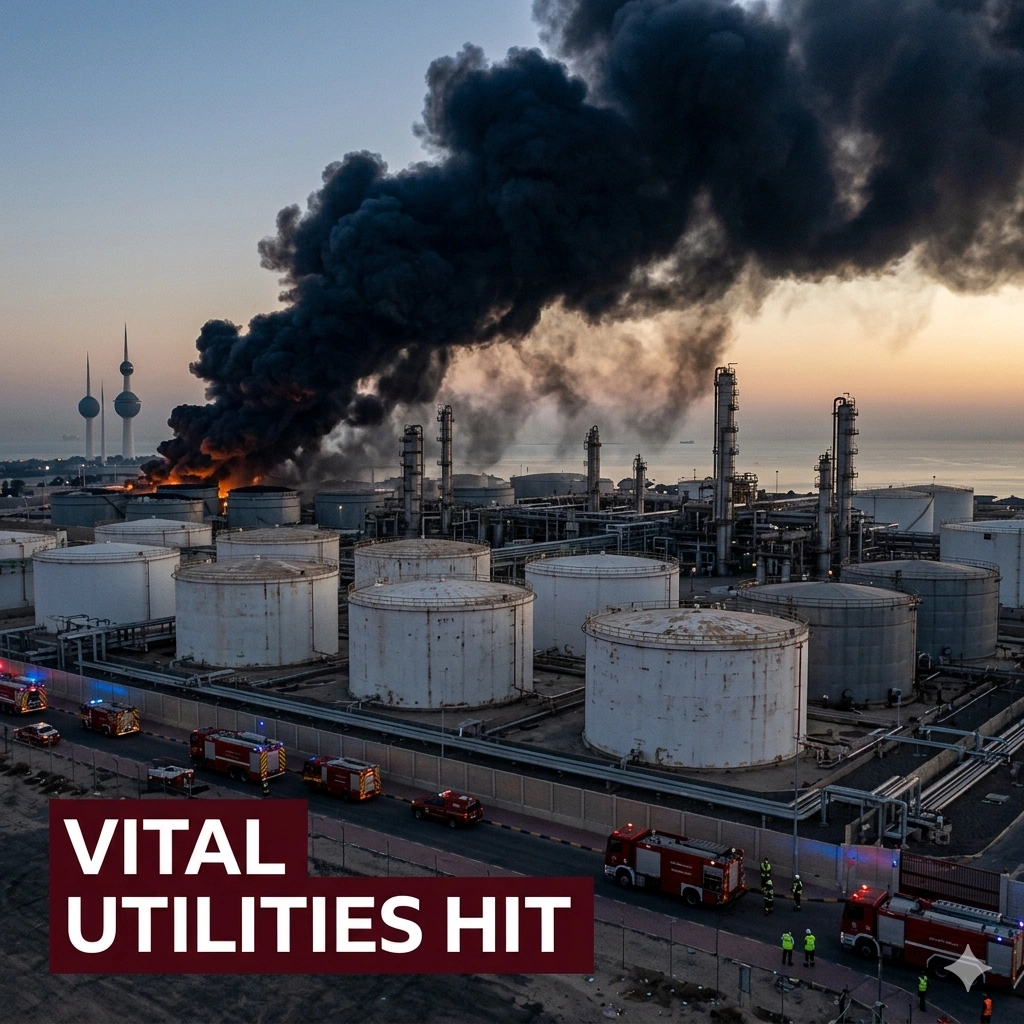
Damage to Desalination and Power Plants
The overnight strikes inflicted serious material damage on two of the nation’s primary power and water desalination plants, which are the lifeblood of the country. Fatima Abbas Johar Hayat, spokesperson for the Ministry of Electricity, Water and Renewable Energy, confirmed that the outage of two major electricity-generating units was a direct result of the drone hits. In a nation where over 90% of drinking water is produced through desalination, any disruption to these facilities is a direct threat to public health. The Kuwait infrastructure defense teams are now working around the clock to restore capacity and prevent a prolonged water crisis. This specific targeting of water resources represents a dangerous shift in the rules of engagement within the region.
Fires at Shuwaikh Oil Sector Complex
Simultaneously, the Kuwait Petroleum Corp (KPC) reported that suicide drones sparked multiple blazes at critical oil facilities, including the prominent Shuwaikh Oil Sector Complex. Although elite fire crews managed to contain the inferno before it reached storage tanks, the reported material losses remain substantial. These facilities are not just economic assets but are central to the Kuwait infrastructure defense strategy, providing the fuel necessary for emergency power generation. The psychological impact of seeing smoke over the oil complexes has been profound, reminding the world of the fragility of the global energy supply chain. KPC has since implemented “Level 4” security protocols across all extraction and refining sites to prevent a repeat of this scenario.
Kuwait Infrastructure Defense
The Kuwait infrastructure defense strategy is now undergoing a radical transformation to counter the evolving threat of low-cost, high-precision drone swarms. Following the April 5 attacks, the Ministry of Defense has accelerated the deployment of electronic jamming equipment and point-defense kinetic interceptors around all utility hubs. This multi-layered approach aims to create a “no-fly zone” for hostile aerial vehicles above critical energy and water sites. The Kuwait infrastructure defense network must now account for the “saturation” tactics used by Iranian forces, where multiple drones are used to overwhelm traditional radar. Strengthening these defenses is essential to ensuring that the civilian population remains insulated from the kinetic reality of the ongoing regional war.
Vulnerability of Water Desalination Systems
Kuwait’s reliance on desalination makes its water infrastructure a “soft target” with catastrophic potential for civilian harm. The Kuwait infrastructure defense teams have long identified these plants as critical vulnerabilities due to their large physical footprint and proximity to the coastline. The damage reported on April 5 has led to the activation of the National Water Emergency Plan, which includes the rationing of supplies to non-essential industries. Protecting these facilities is a record challenge because even a small amount of damage to specialized filtration membranes can take months to repair. This attack serves as a stark warning to other Gulf nations about the existential risks posed by modern aerial aggression targeting basic human needs.
Impact on the National Power Grid
The outage of two electricity-generating units has placed immense pressure on the national grid during a period of rising temperatures. Kuwait infrastructure defense involves not only physical protection but also the ability to reroute power dynamically to prevent total blackouts. The Ministry of Electricity and Water has successfully prevented a systemic collapse by utilizing reserve batteries and temporary cross-border links with neighboring states. However, the stability of the grid remains precarious as long as the threat of follow-up strikes persists. Engineers are currently working in “combat conditions” to bypass damaged switchyards and restore full power to residential areas and hospitals.
Retaliation Patterns in the Regional Conflict
Analysts note that the strikes on Kuwait are part of a broader retaliatory campaign by Iran following U.S. and Israeli operations that began in late February. The Kuwait infrastructure defense systems have been on high alert since the initiation of hostilities, yet the sophistication of the April 5 drone wave managed to penetrate several layers of security. This pattern suggests that Iran is targeting the economic and civilian foundations of U.S. allies to exert diplomatic pressure on Washington and Tel Aviv. Kuwait, alongside the UAE, has become a primary epicenter for these proxy attacks, moving the frontlines of the war directly into urban and industrial centers.
- Deployment of mobile radar units near all coastal desalination intake points.
- Activation of the GCC “Shield” intelligence-sharing agreement for early warning.
- Rapid repair teams stationed permanently at the Shuwaikh and Doha power stations.
- Implementation of a national “Dark Sky” protocol to reduce the visual signatures of oil complexes at night.
Economic Losses in the Petroleum Sector
The “significant material losses” reported by the Kuwait Petroleum Corp will likely have a long-term impact on the nation’s export capacity. While the fires were contained, the damage to specialized processing equipment at the Shuwaikh Complex will require international expertise to fix. Kuwait infrastructure defense now includes economic resilience planning, where insurance and sovereign wealth funds are utilized to mitigate the shock of such strikes. The global price of oil reacted sharply to the news of the blazes, reflecting the world’s dependence on the stability of Kuwaiti energy production. Restoring the full operational status of the oil sector is a top priority for the national cabinet.
Humanitarian Risks of Infrastructure Targeting
The targeting of water and power is a major humanitarian concern, as it directly impacts the survival of the civilian population in a desert environment. Kuwait infrastructure defense is fundamentally a humanitarian mission, ensuring that millions of people have access to air conditioning and potable water. The Ministry of Health has reported no injuries so far, but the psychological toll of the disruptions is significant. Emergency water tankers have been deployed to neighborhoods where the pressure has dropped, showcasing the government’s commitment to social stability. International human rights organizations have condemned the targeting of “dual-use” facilities that are essential for civilian life.
The Role of Drone Technology in Modern War
The April 5 attacks demonstrate the effectiveness of cheap, expendable drone technology in bypassing expensive and sophisticated defense systems. Kuwait infrastructure defense must now evolve to include “C-UAS” (Counter-Unmanned Aircraft Systems) that can neutralize drones at a fraction of the cost of traditional surface-to-air missiles. These drones are often launched from mobile platforms, making it difficult for Kuwaiti and allied intelligence to track their origin before they reach their targets. The successful strike on the Shuwaikh Complex indicates that the guidance systems on these drones are capable of hitting specific, high-value components with extreme precision.
Crisis Management and Public Communication
Fatima Abbas Johar Hayat’s role in communicating the extent of the damage has been vital in preventing public panic. The government’s transparency regarding the “serious material damage” helped manage expectations and ensured that the population cooperated with power-saving measures. Kuwait infrastructure defense relies heavily on public trust and the efficient dissemination of emergency information via SMS and national television. By providing regular updates on the status of the desalination plants, the Ministry of Electricity and Water has maintained a sense of order during a record national crisis. This proactive communication strategy is a key component of the nation’s overall resilience.
Strategic Shifts in Gulf Security
The strikes have forced a fundamental reassessment of security across the entire Gulf Cooperation Council (GCC). Kuwait infrastructure defense is no longer a localized issue but a collective regional necessity, leading to calls for a unified air defense umbrella. The April 5 events have accelerated talks regarding a permanent U.S. and Israeli presence for technical support in monitoring Iranian drone launches. As the war intensifies, the “epicenter” of the conflict is shifting toward these vital economic nodes, requiring a permanent shift in military spending and defensive posture. Kuwait’s experience is now serving as a warning to its neighbors about the speed and scale of modern aerial aggression.
- Integration of AI-driven threat detection systems for low-altitude drones.
- Construction of hardened shelters for critical control systems at desalination plants.
- Development of redundant water storage facilities to provide a 30-day buffer.
- Joint military exercises focusing specifically on “swarming” drone scenarios.
Technological Challenges in Intercepting Swarms
The sheer volume of drones used in the April 5 attack presented a significant technological challenge for the existing Kuwait infrastructure defense systems. When dozens of targets appear simultaneously on a radar screen, prioritizing which ones to engage becomes a life-or-death calculation. New software updates are being implemented to automate this process, allowing the defense network to respond in milliseconds to multiple threats. The goal is to create a “digital shield” that can track and neutralize every incoming object before it crosses the national maritime border. This technological race between offense and defense is the defining characteristic of the 2026 regional war.
Oil Industry Recovery and Global Markets
The Kuwait Petroleum Corp has initiated a fast-track recovery plan to replace the damaged units at the Shuwaikh Oil Sector Complex. This includes sourcing parts from international partners and utilizing 3D printing for specialized components to speed up the repair process. Kuwait infrastructure defense also involves protecting the financial health of the nation by ensuring that oil exports remain as stable as possible. Global markets are watching the recovery efforts closely, as any further disruptions could lead to a record spike in fuel prices. The resilience of the Kuwaiti oil sector is a vital anchor for the global economy during these turbulent times.
International Condemnation of the Attacks
The international community, including several European and Asian nations, has issued strong statements condemning the strikes on Kuwait’s civilian infrastructure. The Kuwait infrastructure defense mission has received offers of technical assistance and equipment from allies concerned about the stability of the Gulf. These diplomatic efforts are aimed at isolating Iran and creating a global consensus against the targeting of water and energy facilities. The U.S. State Department has reiterated its commitment to defending Kuwait’s sovereignty and has promised to enhance the technical capabilities of the Kuwaiti air defense forces. This international support is a critical component of the nation’s long-term security strategy.
Civil Defense Readiness and Public Drills
In response to the escalating threat, the Ministry of Interior has launched a series of civil defense drills to prepare the population for potential utility outages. Kuwait infrastructure defense is bolstered by a population that knows how to respond to emergencies without panic. These drills include training on fire safety and the efficient use of emergency water supplies. The government has also distributed information on how to protect home electronic systems from power surges caused by grid instability. This “whole-of-society” approach to defense ensures that the impact of any future strikes is minimized through preparation and resilience.
Future Infrastructure Design and Hardening
Looking forward, the design of new utility plants in Kuwait will incorporate “defense-by-design” principles to mitigate the impact of aerial attacks. This includes burying critical pipelines deeper underground and decentralizing power generation to reduce the impact of a single strike. The Kuwait infrastructure defense of the future will rely on a network of smaller, more resilient facilities rather than a few massive, vulnerable complexes. This transition is essential for ensuring the long-term survival of the nation in a world where drone technology continues to proliferate. The April 5 strikes have fundamentally changed the architectural philosophy of the Kuwaiti state.
Analysis of Iranian Drone Sophiteness
The drones used in the April 5 attacks were reportedly more advanced than previous models, featuring improved stealth characteristics and jam-resistant guidance systems. Kuwait infrastructure defense personnel noted that some of the vehicles utilized “loitering” tactics, waiting for a gap in the radar coverage before striking. This high level of sophistication suggests that Iran has invested heavily in its unmanned aerial program as its primary tool for regional power projection. Countering these advanced systems requires a constant cycle of technological upgrades and intelligence sharing among the anti-Iran coalition. The race to develop an “unbreakable” defense continues at an unprecedented pace.
- Usage of “stealth” coatings to reduce radar cross-sections on suicide drones.
- Implementation of thermal imaging for precise targeting of energy transformers.
- Utilization of autonomous “hive” logic to coordinate strikes between multiple drones.
Environmental Impact of the Shuwaikh Blazes
The fires at the Shuwaikh Oil Sector Complex also raised environmental concerns, as thick black smoke billowed over the surrounding areas for several hours. Kuwait infrastructure defense teams include environmental specialists who monitor air and water quality following any such incident. Initial reports suggest that the rapid containment of the fires prevented a major oil spill into the Persian Gulf, which would have been an ecological catastrophe. The government is continuing to monitor the area for any long-term pollutants that may have been released during the blaze. Protecting the environment is an often-overlooked but vital part of national defense in the Gulf.
The Epicenter of the Aerial Campaign
Kuwait’s position as a primary target in this conflict is a result of its strategic value and its close cooperation with Western military forces. Along with the UAE, Kuwait is now considered the “epicenter” of the aerial campaign between Iran and its adversaries. The Kuwait infrastructure defense systems are being tested more frequently and with greater intensity than at any point since the 1990s. This ongoing pressure requires a high level of national resolve and a significant commitment of resources to maintain a state of permanent readiness. The events of April 5 have solidified the nation’s determination to defend its way of life against external aggression.
Final Assessment of the April 5 Attacks
The drone strikes of April 5, 2026, will be remembered as a turning point in the history of Kuwaiti national security. The serious material damage to the power and water plants has exposed the vulnerabilities of modern desert civilizations to asymmetric warfare. However, the successful containment of the fires and the stabilization of the grid have also demonstrated the strength and professionalism of the Kuwait infrastructure defense forces. As the regional war continues, Kuwait remains a symbol of resilience, adapting its defenses and protecting its people against a relentless aerial threat. The journey toward a more secure and resilient infrastructure has only just begun.
Conclusion and Outlook for 2026
As Kuwait moves forward from attacks, the focus remains on recovery and the rapid enhancement of its defense capabilities. The lesson learned is clear: the safety of the nation depends on the strength of its Kuwait infrastructure defense networks. With international support and a renewed focus on technological innovation, Kuwait is determined to prevent such a crisis from happening again. The people of Kuwait have shown a record of resilience, and their government is committed to ensuring that the lights stay on and the water continues to flow, no matter the challenges posed by regional instability. The future of the Gulf depends on the success of these defensive efforts.
For more details & sources visit: Al Jazeera
Read more about Kuwait news on 360 News Orbit – Kuwait.