
The Kazakhstan and Jordan partnership reached a significant milestone, as senior officials convened in Astana to elevate their strategic cooperation. This high-level dialogue between Kazakh Deputy Foreign Minister Alibek Bakayev and Jordan’s Moath AlZoubi underscored a mutual desire to deepen multifaceted ties. As global geopolitical shifts continue, the synchronization of policies between Central Asia and the Levant is becoming increasingly vital for regional stability. The meeting focused on translating diplomatic goodwill into actionable legal and political frameworks that benefit both nations. This renewed commitment reflects a broader trend of middle powers seeking stronger alliances to navigate modern international challenges. Both delegations expressed optimism that this engagement would serve as a catalyst for long-term prosperity and security.
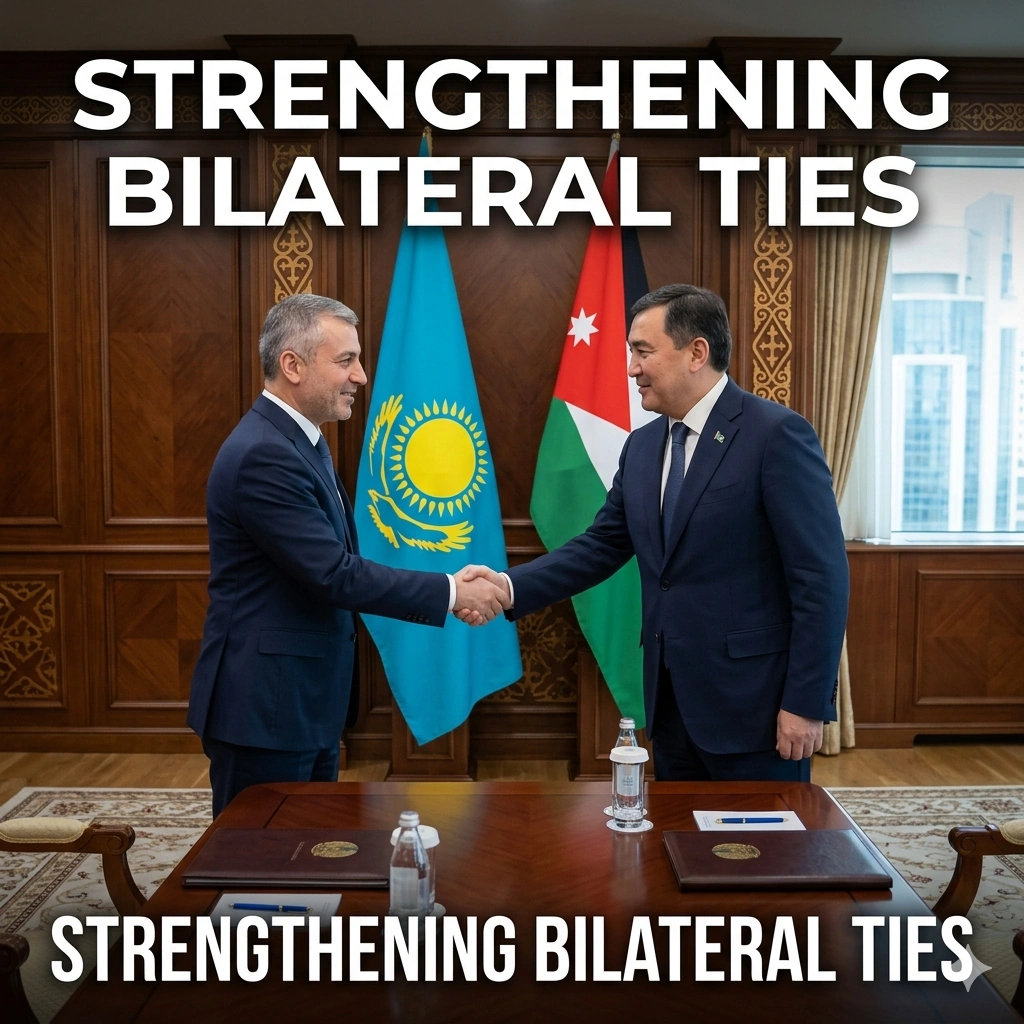
Strengthening the Foundations of Multilateralism
During the intensive sessions at the Kazakh Ministry of Foreign Affairs, both parties highlighted the importance of multilateral cooperation in addressing global issues. The Kazakhstan and Jordan partnership is built on a shared vision of international law and sovereign respect, which forms the bedrock of their diplomatic interactions. By aligning their votes and voices in international forums, these two nations can exert a more significant influence on global policy. This meeting was not just about bilateral trade; it was about defining a unified stance on the most pressing issues facing the world today. The commitment to multilateralism ensures that both countries remain relevant and influential actors on the world stage.
Legal Affairs and Institutional Frameworks
A cornerstone of the April 6 talks was the refinement of legal frameworks to facilitate smoother cooperation across various sectors. Moath AlZoubi, representing the Royal Hashemite Court, brought a wealth of legal expertise to the table to help streamline bilateral agreements. The Kazakhstan and Jordan partnership relies on these technical legal foundations to ensure that trade, security, and cultural exchanges are protected by robust institutional mechanisms. Discussions included the harmonization of extradition treaties, commercial law standards, and mutual legal assistance in criminal matters. These “behind-the-scenes” legal structures are essential for creating a predictable environment for investors and government agencies alike.
Kazakhstan and Jordan Partnership
The Kazakhstan and Jordan partnership has evolved into a strategic necessity as both nations look to diversify their diplomatic and economic portfolios. On April 6, 2026, officials focused on the “Aqaba Process,” thanking Jordan for Kazakhstan’s inclusion in the high-level security meeting held in Rome. This specific focus on security coordination highlights the trust that has developed between Astana and Amman over the past several decades. The Kazakhstan and Jordan partnership is now viewed as a model for how nations from different geographic regions can collaborate effectively on counter-terrorism and regional intelligence sharing. This partnership is expected to expand into the energy and technology sectors as part of the 2026-2030 strategic roadmap.
The Impact of the Aqaba Process on Regional Security
Kazakhstan’s participation in the Aqaba Process meeting in Rome reflects the growing global recognition of its role in international security. The Kazakhstan and Jordan partnership has been instrumental in this development, with Jordan acting as a bridge for Kazakhstan into Levantine security dynamics. The Aqaba Process, initiated by His Majesty King Abdullah II, focuses on coordinating international efforts to combat terrorism and extremist ideologies. By joining this initiative, Kazakhstan gains access to vital intelligence and best practices from a diverse range of global partners. This collaboration is a record achievement for Kazakh foreign policy, demonstrating its ability to contribute to peace far beyond its immediate borders.
Preparing for High-Level Diplomatic Summits
A significant portion of the talks in Astana was dedicated to finalizing the logistics and agendas for upcoming summits between Central Asian and Levantine leaders. The Kazakhstan and Jordan partnership is the primary engine driving this broader regional integration, which seeks to connect the Caspian Sea with the Mediterranean. These summits are designed to go beyond mere symbolism, focusing on concrete infrastructure projects and transit corridors. The officials emphasized that the success of these high-level events depends on the thorough preparation currently being conducted at the deputy-ministerial level. This proactive approach ensures that the heads of state will have a clear and ambitious roadmap to sign during their official visits.
Economic Synergies and Trade Diversification
While political and security talks dominated the headlines, the Kazakhstan and Jordan partnership also seeks to revitalize economic exchange between the two nations. Jordan offers a gateway to Arab markets, while Kazakhstan provides Jordanian businesses with access to the vast resources and markets of Central Asia. Discussions touched on increasing the volume of trade in agricultural products, minerals, and specialized pharmaceutical goods. Both nations are looking to implement a “Green Corridor” for faster customs processing of essential goods to boost the record of bilateral trade volumes. These economic ties provide the necessary financial incentives to sustain long-term political cooperation.
- Implementation of a joint business council to facilitate B2B networking.
- Reduction of tariff barriers for high-priority agricultural and medical exports.
- Development of a direct air cargo route between Astana and Amman.
- Joint investment in renewable energy projects and water management technology.
Celebrating 30 Years of Diplomatic Evolution
The timing of these talks coincides with a period of reflection on Kazakhstan’s foreign policy history, including its 30-year relationship with nations like Algeria. This historical perspective provides a backdrop for the Kazakhstan and Jordan partnership, which has matured significantly since the early 1990s. The longevity of these ties is a testament to the consistency and reliability of Kazakh diplomacy under various global conditions. Officials noted that the lessons learned over the past three decades are now being applied to modernize the partnership for the challenges of the 2020s. This sense of historical continuity builds trust and encourages more ambitious long-term planning between the two capitals.
Security Cooperation and Counter-Terrorism
In an era of asymmetric threats, the Kazakhstan and Jordan partnership provides a vital shield against regional instability. Both nations have significant experience in managing complex borders and diverse internal populations while maintaining social harmony. The dialogue in Astana included a deep dive into how both countries can better share data on extremist movements and illicit financial flows. This cooperation is particularly important as both regions face the ripple effects of conflicts in neighboring states. By strengthening their security partnership, Kazakhstan and Jordan are creating a zone of stability that can withstand external shocks and internal pressures.
Legal Frameworks and Collaborative Governance
The role of Moath AlZoubi in these talks highlights the importance of legal clarity in international relations. The Kazakhstan and Jordan partnership is increasingly focused on collaborative governance, where best practices in administrative law and judicial reform are shared. This includes training programs for legal professionals and the exchange of experts between the Royal Hashemite Court and the Kazakh Ministry of Justice. By building a shared understanding of legal principles, both nations can work together more effectively on international treaties and conventions. This legal diplomacy is a subtle but powerful tool for strengthening the overall bilateral relationship.
Cultural Exchange and Hospitality Initiatives
Beyond the formal corridors of power, the Kazakhstan and Jordan partnership is fostering a renewed sense of hospitality and cultural appreciation between their peoples. Plans were discussed to hold cultural weeks in both Astana and Amman, showcasing the rich history and traditions of the Silk Road and the Levant. These initiatives are designed to promote tourism and people-to-people connections, which are the ultimate guarantors of a lasting alliance. By encouraging educational exchanges and artistic collaborations, both nations are ensuring that the next generation of citizens understands the value of this partnership. Hospitality is not just a social grace but a diplomatic tool that softens the path for political agreement.
- Launching a student exchange program between major universities in Astana and Amman.
- Organizing annual food and film festivals to promote cultural awareness.
- Streamlining visa processes for tourists and legitimate business travelers.
- Joint conservation projects for historical sites along ancient trade routes.
Central Asia and the Levant: A New Strategic Axis
The meeting in Astana signifies the birth of a new strategic axis connecting Central Asia with the Levant through the Kazakhstan and Jordan partnership. This geographical “linking” is essential for the 21st-century global economy, which prizes connectivity and diverse supply chains. Jordan’s strategic location on the Red Sea and Kazakhstan’s position at the heart of Eurasia make them natural partners in the “Middle Corridor” transit route. This axis is not aimed against any other power but is a proactive move to ensure that both regions can benefit from the shifting patterns of global trade. The officials agreed that this axis would be a major focus of the upcoming summits.
Hospitality as a Diplomatic Bridge
The emphasis on increased hospitality during the talks reflects a deep-seated cultural value shared by both Kazakhs and Jordanians. In the world of high-stakes diplomacy, the ability to build personal rapport and show genuine respect is often as important as the text of a treaty. The Kazakhstan and Jordan partnership thrives on this personal touch, with officials often describing their relationship in familial terms. This cultural synergy makes it easier to navigate difficult negotiations and find compromises that might elude less culturally aligned partners. Hospitality remains a core component of the “soft power” that both nations project on the global stage.
Legal Foundations for International Cooperation
The legal talks led by Moath AlZoubi provided a record of achievement in formalizing previously informal agreements. The Kazakhstan and Jordan partnership now boasts a more extensive list of signed memorandums of understanding (MoUs) than at any other time in its history. These documents cover everything from environmental protection to cooperation in the peaceful use of atomic energy. By grounding their relationship in these legal foundations, both nations are protecting their partnership from the whims of changing political administrations. This “legal hardening” of the relationship is a sign of a mature and stable strategic alliance.
Addressing Global Issues with Unified Action
From climate change to food security, the Kazakhstan and Jordan partnership is increasingly active in addressing the most pressing global issues. On April 6, the officials discussed how they could collaborate on water scarcity solutions—a critical issue for both the arid steppes of Kazakhstan and the deserts of Jordan. By sharing technological innovations in desalination and irrigation, both countries can improve their national resilience. This functional cooperation demonstrates that the partnership is not just about high politics but also about solving the everyday problems faced by their citizens. Global issues require local solutions that can be scaled through international cooperation.
Strengthening the Levant-Central Asia Connection
The preparations for the upcoming high-level summits are specifically designed to solidify the bond between the Levant and Central Asia. The Kazakhstan and Jordan partnership acts as the primary facilitator for this inter-regional dialogue, which is a relatively new phenomenon in global diplomacy. By bringing together leaders from these two distinct areas, the partnership is helping to create a more multipolar and interconnected world. The officials stressed that this connection is based on mutual benefit rather than ideological alignment. This pragmatic approach is why the relationship has remained strong despite the various political upheavals in both regions.
- Establishment of a regional forum for Levant-Central Asia security cooperation.
- Coordination of stances on international energy market stability.
- Joint lobbying for increased infrastructure investment from international banks.
Kazakh Foreign Policy: A Record of Growth
The successful talks with Jordan are a clear indication of the success of Kazakhstan’s multi-vector foreign policy. By maintaining strong ties with all major powers while simultaneously building deep partnerships with regional leaders like Jordan, Kazakhstan has secured its position as a “diplomatic bridge.” The record of the past 30 years shows a nation that has consistently punch above its weight in international affairs. The Kazakhstan and Jordan partnership is a central part of this success story, proving that geographic distance is no barrier to effective strategic cooperation. Astana’s diplomatic hospitality is now recognized as a vital asset for global conflict resolution.
The Role of High-Level Legal Talks
The legal and political talks held on April 6 served to resolve several long-standing technical hurdles in the bilateral relationship. By having senior legal officials like AlZoubi directly involved, both nations were able to cut through the red tape that often delays international cooperation. These talks ensured that the Kazakhstan and Jordan partnership is not just a series of lofty statements but a functional reality. The ability to speak the “language of law” allowed both delegations to find creative solutions to complex jurisdictional challenges. This technical proficiency is what differentiates a standard diplomatic relationship from a truly integrated strategic partnership.
Promoting Regional Security through Collaboration
Regional security remains the top priority for both nations as they navigate a world of increasing instability. The Kazakhstan and Jordan partnership is a pillar of this security architecture, providing a stable point of reference in an otherwise volatile landscape. The commitment to sharing intelligence and coordinating border security measures is a record achievement that has already prevented several potential crises. Both Alibek Bakayev and Moath AlZoubi reiterated that security is indivisible; instability in the Levant will eventually be felt in Central Asia, and vice-versa. This shared understanding drives the urgency and depth of their security collaboration.
Shared Commitments to Global Hospitality
The concept of “global hospitality” was a recurring theme during the Astana talks, symbolizing a world where nations welcome one another’s ideas and people. The Kazakhstan and Jordan partnership is a living example of this philosophy, characterized by an open exchange of knowledge and a warm welcome for each other’s representatives. This hospitality extends to the way both nations treat international refugees and those in need, with both countries hosting significant displaced populations. By championing these values, Kazakhstan and Jordan are offering a more humane and collaborative model for 21st-century international relations.
Future Outlook for the Strategic Partnership
As we look beyond 2026, the Kazakhstan and Jordan partnership is poised for even greater growth and integration. The legal and political foundations laid during the April 6 meeting have prepared both nations for the challenges of a rapidly changing world. With a record number of agreements in place and a clear strategic vision, the partnership is set to become a dominant force in inter-regional diplomacy. The world will be watching as Astana and Amman continue to demonstrate that through hospitality, legal rigor, and shared commitment, even the most diverse nations can build a record-breaking partnership for peace and prosperity.
Conclusion on the April 6 Diplomatic Push
The talks were more than just a routine diplomatic meeting; they were a record-setting push for a more integrated future. The Kazakhstan and Jordan partnership has emerged stronger, more focused, and better equipped to handle the complexities of the modern era. From the Aqaba Process to cultural exchange, the breadth of this relationship is a testament to the hard work of diplomats like Alibek Bakayev and Moath AlZoubi. As the summits approach, the world can expect to see the fruits of this labor in the form of increased stability and economic growth across the Levant and Central Asia. The partnership remains a beacon of hope for international cooperation in a fragmented world.
For more details & sources visit: Associated Press of Pakistan (APP)
Read more about Jordan news on 360 News Orbit – Jordan.