
Molucca Sea Earthquake events have once again put the Indonesian archipelago on high alert following a powerful magnitude 7.4 seismic strike. The earthquake, which originated in the northern Molucca Sea, sent shockwaves across eastern Indonesia, causing widespread panic and at least one confirmed fatality. Centered at a depth of 35 kilometers, the tremor was felt intensely in North Sulawesi and the historic Spice Islands. Authorities immediately triggered tsunami warnings for coastlines within a 1,000-kilometer radius, affecting multiple nations including the Philippines and Malaysia.
The fatal incident occurred in Manado, where a resident was tragically struck by falling debris during the height of the shaking. National Disaster Management Agency (BNPB) teams were deployed rapidly to assess infrastructure damage in Bitung and Ternate, where power outages were reported. This Molucca Sea Earthquake serves as a grim reminder of the region’s vulnerability to sudden tectonic shifts. Residents in coastal areas were urged to prepare for potential evacuations as the US Tsunami Warning System monitored hazardous wave activity.
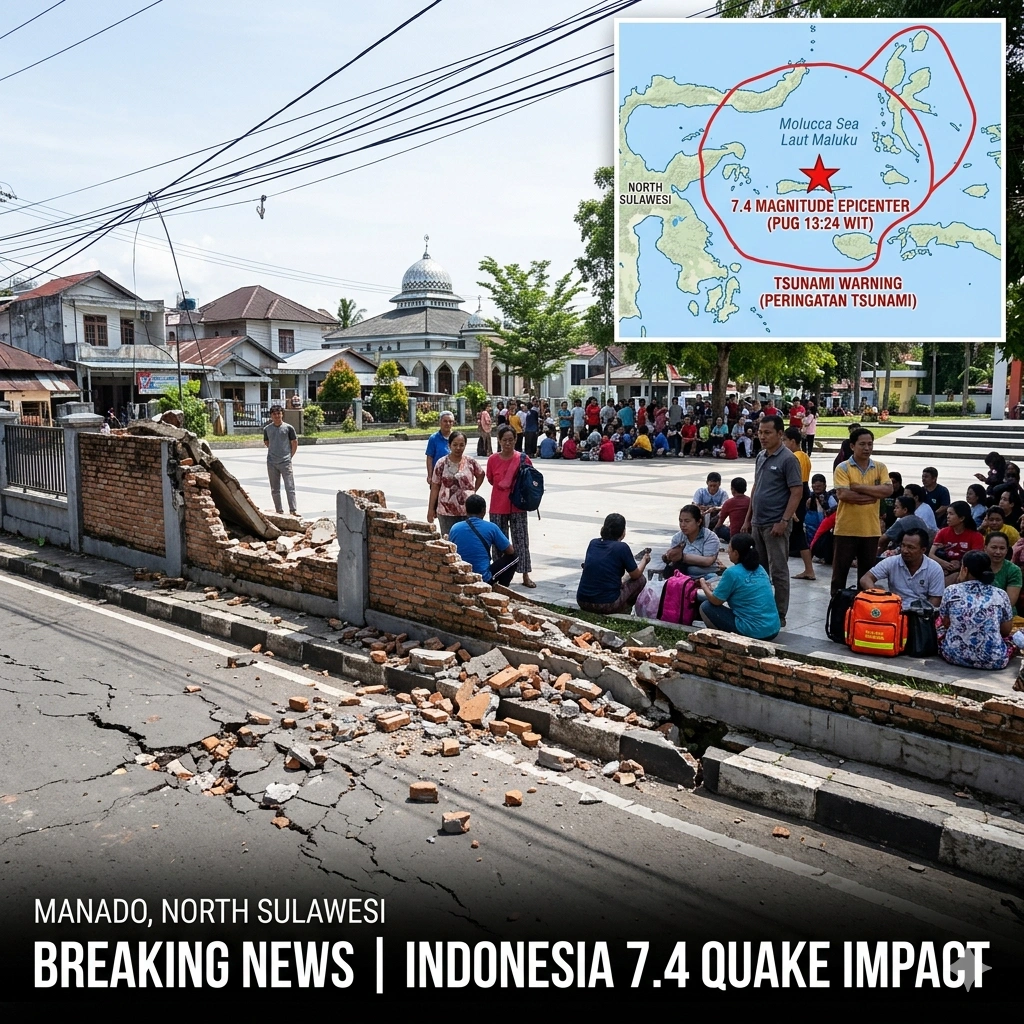
Molucca Sea Earthquake
The seismic energy released during the Molucca Sea Earthquake resulted in significant structural concerns for the surrounding islands. In Ternate and Tidore, items were reported falling from shelves as buildings swayed violently for several seconds. Many residents fled their homes in fear of a larger aftershock or an incoming wall of water from the sea. Emergency responders are currently prioritizing the restoration of electricity and communication lines to facilitate better coordination.
The USGS confirmed the epicenter was approximately 127 kilometers west-northwest of Ternate, a region known for its complex underwater fault lines. Because the Molucca Sea Earthquake occurred at a relatively shallow depth of 35 kilometers, the surface impact was much more pronounced than deeper quakes. Local authorities are continuing to monitor sea levels for any signs of unusual recession or sudden surges. Community leaders are holding emergency briefings to keep the public informed about safety protocols and shelter locations.
Tsunami Alerts and Regional Impact
Following the initial rupture, the US Tsunami Warning System issued a high-priority alert for hazardous waves impacting regional coasts. This warning extended beyond Indonesia, reaching the southern shores of the Philippines and parts of eastern Malaysia. The Molucca Sea Earthquake created a state of emergency for maritime traffic and coastal villages that are highly susceptible to flooding. Coastal residents were advised to move to higher ground immediately until the all-clear was officially given.
While the most severe waves were predicted near the epicenter, the ripple effect caused concern for distant island chains. Disaster management agencies in neighboring countries activated their own protocols to ensure a coordinated regional response to the Molucca Sea Earthquake threats. Fortunately, early sensor data helped refine the threat zones, preventing unnecessary panic in areas further away from the fault line. Constant monitoring remains the standard procedure during the critical hours following such a massive undersea disturbance.
Infrastructure Damage in Manado and Bitung
The city of Manado bore the brunt of the land-based impact, with reports of cracked walls and collapsed ceilings in older buildings. BNPB teams are conducting house-to-house inspections to ensure that structures remain safe for habitation after the Molucca Sea Earthquake. In Bitung, the local port facilities are being checked for underwater damage that could interfere with shipping and aid delivery. The loss of power in several districts has complicated the search and rescue efforts during the overnight hours.
Engineers are particularly concerned about the historic Spice Islands, where ancient structures may not have the seismic resilience of modern architecture. The Molucca Sea Earthquake has highlighted the need for more robust building codes in these culturally significant areas. Temporary shelters have been set up in open fields to accommodate those who are too afraid to return to their homes. Relief supplies, including clean water and medical kits, are being mobilized from Jakarta to assist the affected provinces.
Indonesia and the Pacific Ring of Fire
Indonesia’s geographical position on the Pacific “Ring of Fire” makes it one of the most seismically active nations on Earth. The Molucca Sea Earthquake is a direct consequence of the constant grinding and subduction of the Australian, Eurasian, and Philippine Sea plates. These tectonic movements create a high frequency of earthquakes and volcanic eruptions throughout the archipelago. Understanding these geological forces is essential for developing effective disaster mitigation strategies for the future.
The history of the region is punctuated by devastating seismic events that have reshaped the landscape and influenced local culture. Every Molucca Sea Earthquake provides scientists with new data to better understand the behavior of these underwater fault systems. While technology has improved early warning times, the raw power of the earth remains a formidable challenge for human settlements. Continued investment in seismic monitoring networks is the best defense against the unpredictable nature of the Ring of Fire.
Emergency Response and Evacuation Protocols
The National Disaster Management Agency has emphasized the importance of following official evacuation protocols during a Molucca Sea Earthquake crisis. Local governments have designated high-ground zones and reinforced shelter buildings that are specifically designed to withstand tremors and floods. Education campaigns in schools and workplaces have helped prepare the population for these sudden events, likely saving lives during this recent quake. Clear communication remains the backbone of a successful emergency response effort today.
- Residents should keep a “go-bag” ready with essential documents, food, and water to facilitate a quick exit when a tsunami warning is issued.
- Establishing a family communication plan is vital to ensure everyone can find each other after the chaos of a major Molucca Sea Earthquake.
- Avoiding elevators and staying away from glass windows are basic safety measures that can prevent injuries during the initial shaking phase.
- Staying informed through official government radio and social media channels helps prevent the spread of misinformation during a disaster.
Tectonic Plates and Seismic Activity
The northern Molucca Sea is a unique geological area where several small tectonic plates interact in a complex “collision zone.” This specific environment is prone to vertical fault movements that are particularly effective at displacing water and causing tsunamis. The Molucca Sea Earthquake of 2026 was a typical example of this type of high-magnitude thrust event. Scientists are analyzing the slip distribution of this quake to determine if it has increased stress on neighboring fault lines.
Because these plates are constantly moving, the threat of a follow-up earthquake is always a possibility in the following days. Seismologists have recorded dozens of smaller aftershocks since the main 7.4 event, which is a normal settling process for the earth’s crust. These aftershocks can still be dangerous to already weakened buildings and must be taken seriously by the local population. Monitoring the Molucca Sea Earthquake aftershocks helps experts predict the long-term stability of the region’s geological structures.
Humanitarian Aid and Community Support
In the wake of the Molucca Sea Earthquake, local communities have shown remarkable resilience and solidarity in helping those affected. Neighbors are working together to clear debris and provide food for those who have been displaced from their homes. International aid organizations are also standing by to provide support if the Indonesian government requests additional assistance. The focus is currently on providing psychological support to children and families who have experienced the trauma of the disaster.
Government officials have promised financial assistance for the families of the victims and those whose homes were destroyed. The long-term recovery from a Molucca Sea Earthquake involves not just physical reconstruction but also economic revitalization for the local industries. Small businesses in Ternate and Manado will need support to get back on their feet after the disruption of the past few days. Community-led initiatives are often the most effective way to ensure that aid reaches those who need it most quickly.
Historical Seismic Events in the Molucca Sea
The Molucca Sea has a long history of significant earthquakes, some of which have caused major tsunamis in the past centuries. By studying these historical records, researchers can identify patterns and estimate the return periods of major Molucca Sea Earthquake events. This historical context is invaluable for urban planning and the development of long-term disaster management policies. Each event serves as a case study in how to improve response times and infrastructure resilience.
Previous quakes in 2014 and 2019 also triggered tsunami alerts and caused minor damage, but the 2026 event is one of the strongest in recent memory. The recurring nature of these tremors means that the population must live in a constant state of preparedness. The Molucca Sea Earthquake is part of a larger geological story that defines the life and landscape of eastern Indonesia. Education and awareness remain the most powerful tools for minimizing the impact of these unavoidable natural occurrences.
Strategies for Future Disaster Resilience
- Enhancing the network of deep-sea pressure sensors to provide more accurate and timely tsunami data after a Molucca Sea Earthquake occurs.
- Updating regional building codes to include the latest seismic-resistant materials and engineering techniques for both new and existing structures.
- Conducting regular community-wide earthquake and tsunami drills to ensure that everyone knows exactly what to do when the ground starts shaking.
- Investing in redundant communication systems that can function even when the main power grid and cellular networks are compromised.
The Role of Technology in Early Warnings
Modern technology played a crucial role in the response to the recent Molucca Sea Earthquake by providing rapid data to global monitoring agencies. Satellite imagery and seismic sensors allow experts to determine the epicenter and magnitude within minutes of the initial rupture. This information is then used to generate tsunami models that predict wave arrival times and heights for specific coastal locations. These high-tech systems are essential for saving lives in the high-stakes environment of the Pacific Ring of Fire.
Furthermore, mobile apps and automated alert systems have revolutionized how the public receives emergency information today. During the Molucca Sea Earthquake, many residents received warnings on their smartphones before the shaking even reached its peak intensity. This extra time allows for critical safety actions, such as shutting off gas lines or moving away from high shelves. The integration of technology into daily life has made disaster response more efficient and personalized than ever before.
Protecting Cultural Heritage Sites
The Spice Islands are home to numerous historic forts and mosques that are vulnerable to the forces of a Molucca Sea Earthquake. Preserving these sites is a major challenge for the Indonesian Ministry of Culture, which must balance historical integrity with structural safety. Special grants are being discussed to help retrofit these ancient buildings with hidden reinforcements that do not alter their appearance. Protecting these landmarks ensures that the history of the region remains intact for future generations.
Tourism is a major part of the local economy in Ternate and Tidore, and the preservation of heritage sites is key to its success. The Molucca Sea Earthquake has caused a temporary decline in visitors, but the government is confident that the region will bounce back once the situation stabilizes. Reassuring international travelers of the safety and preparedness of the islands is a top priority for the tourism board. Resilience in the face of natural disasters is a trait that the people of the Molucca Sea have cultivated for centuries.
Global Cooperation in Seismic Research
Seismic activity in Indonesia is of great interest to the global scientific community, leading to extensive international collaboration. The Molucca Sea Earthquake provides a unique opportunity for researchers from around the world to study subduction zone dynamics in real-time. Data shared between the BMKG in Indonesia and the USGS in America helps refine global earthquake models that benefit everyone. This exchange of knowledge is vital for improving our collective understanding of how the earth works.
- International research teams are planning to deploy additional underwater sensors in the Molucca Sea to study the post-quake behavior of the fault lines.
- Collaborative workshops between Indonesian and Japanese engineers are focusing on developing affordable seismic-resistant housing for rural communities.
- Data from the Molucca Sea Earthquake is being used to update the Global Seismic Hazard Map, which informs insurance and construction standards worldwide.
Environmental Impact of Undersea Quakes
The environmental consequences of a Molucca Sea Earthquake can include changes to seafloor topography and damage to coral reef systems. Underwater landslides triggered by the shaking can bury sensitive marine habitats and disrupt local fishing grounds for months. Scientists are using sonar technology to map the changes to the Molucca Sea floor and assess the health of the surrounding ecosystems. Protecting the biodiversity of the region is an important part of the long-term recovery process.
Changes in water temperature and pressure during a seismic event can also affect local fish populations and their migratory patterns. Coastal communities that depend on fishing for their livelihoods are closely monitoring these changes to adapt their practices. The Molucca Sea Earthquake is a reminder of the delicate balance between human activity and the powerful natural forces of our planet. Understanding these environmental impacts helps us build a more sustainable relationship with the sea.
Lessons Learned from the 2026 Event
Every major disaster offers valuable lessons that can be used to improve future response and recovery efforts significantly. The Molucca Sea Earthquake of 2026 demonstrated the effectiveness of the updated early warning systems but also highlighted gaps in rural infrastructure. Moving forward, there will be a renewed focus on ensuring that remote islands have the same level of protection as major urban centers. Continuous improvement is the hallmark of a resilient society that refuses to be defeated by natural disasters.
Public feedback on the evacuation process is being collected to identify any bottlenecks or confusion that occurred during the crisis. This data will be used to refine the next generation of disaster response plans for the Molucca Sea region. The goal is to reach a point where a Molucca Sea Earthquake, no matter how large, results in zero casualties and minimal disruption. The journey toward total resilience is a long one, but each step forward brings us closer to a safer future for all.
Conclusion on Seismic Readiness
The Molucca Sea Earthquake of magnitude 7.4 was a significant test for Indonesia’s disaster management capabilities and the resilience of its people. While the loss of life is tragic, the rapid response and effective warnings undoubtedly prevented a much larger catastrophe. As the region begins the process of recovery, the focus remains on building back better and more securely. The lessons learned today will be the foundation for the safety protocols of tomorrow.
Indonesia’s ongoing struggle with the forces of the Ring of Fire is a testament to the strength and adaptability of its citizens. The Molucca Sea Earthquake is just one chapter in a long history of geological challenges that the nation has faced with courage and innovation. By continuing to invest in science, technology, and community preparedness, the archipelago can look toward the future with confidence. Stay safe, stay informed, and always be prepared for the next time the earth begins to move.
For more details & sources visit: Anadolu Agency / Antara News
Read more about Indonesia news on 360 News Orbit – Indonesia.