
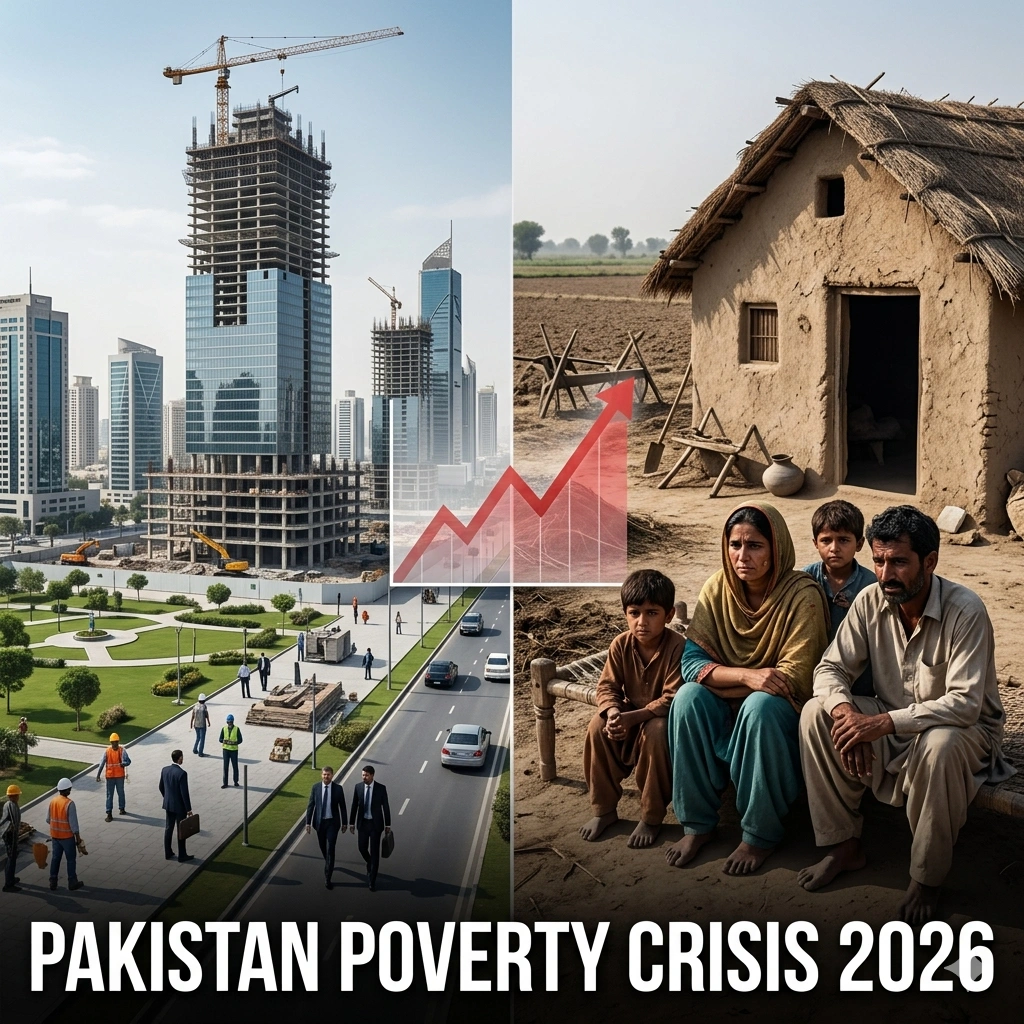
Pakistan Economic Failure has reached a critical tipping point as the national poverty rate surged to 29% in April 2026. This alarming figure, released by the Planning Commission, indicates that approximately 70 million people are now living below the poverty line. This shift represents a sharp increase from the 22% recorded in 2018-19, effectively reversing two decades of hard-won developmental progress. The data suggests that the nation is trapped in a “bad equilibrium” where wealth remains concentrated among a small elite.
The report highlights that the current state of Pakistan Economic Failure is not merely a result of bad luck but a systemic collapse of productivity. While international bailouts from the IMF have prevented a total liquidity crisis, they have failed to trigger any meaningful structural changes. The economy remains stagnant because the underlying political and financial systems prioritize “rents” over actual innovation. Without a radical shift in how the country manages its resources, millions will remain in a state of permanent exclusion.
Structural Economic Failure and Poverty Surge
The depth of the Pakistan Economic Failure is most visible in the rural heartlands, where poverty rates have climbed above 36%. This demographic has been hit hardest by the lack of competitive transformation and the failure of recent stabilization efforts. Despite multiple international assistance programs, the benefits of these funds rarely reach the most vulnerable citizens. The structure of the economy continues to reward those with political access rather than those who contribute to the nation’s productivity.
Experts argue that the current trajectory of Pakistan Economic Failure is the result of a deliberate choice to protect unproductive assets. Instead of investing in human capital or technological advancement, capital is consistently diverted into real estate and protected manufacturing. This prevents the “creative destruction” necessary for an economic take-off and keeps the country in a cycle of low growth. The Planning Commission warns that the window for fixing these structural flaws is closing rapidly as the population continues to expand.
The Role of Elite Rent-Seeking in Stagnation
A primary driver of Pakistan Economic Failure is the pervasive culture of elite rent-seeking that dominates the financial landscape. Powerful actors maintain control over the economy through significant tax exemptions and access to heavily subsidized credit. This system allows a small group to thrive while the rest of the country struggles with inflation and a lack of job opportunities. These rent-creating arrangements effectively stifle competition and prevent new, innovative businesses from entering the market today.
This focus on rents rather than results has created a massive barrier to entry for the younger generation of entrepreneurs. When the economy rewards access over effort, the incentive to innovate is replaced by the incentive to lobby for special treatment. The Pakistan Economic Failure is therefore as much a political crisis as it is a financial one. Dismantling these entrenched interests is the only way to ensure that the national economy can finally move toward a path of sustainable and inclusive growth.
Investment Diversion and Unproductive Assets
One of the most visible symptoms of Pakistan Economic Failure is the massive misallocation of capital into real estate. While land speculation yields high returns for a few, it does nothing to build the country’s industrial base or export capacity. This “dead capital” sits in unproductive plots while the manufacturing sector remains uncompetitive on a global scale. The result is a persistent trade deficit and a constant need for external borrowing to stay afloat.
Furthermore, protected manufacturing sectors enjoy high tariffs that shield them from international competition, leading to inefficiencies. This lack of competitive pressure means that Pakistani consumers pay more for lower-quality goods while the industry fails to modernize. Addressing Pakistan Economic Failure requires a shift in investment toward sectors that can generate foreign exchange and high-quality employment. Without these changes, the country will continue to lurch from one balance-of-payments crisis to the next for the future.
Impact of International Bailouts on Structure
The frequent reliance on IMF programs has become a hallmark of the Pakistan Economic Failure over the last few decades. While these programs provide the foreign exchange needed to avoid an immediate default, they often focus on short-term austerity. Once the immediate crisis passes, the deeper structural changes required for long-term stability are frequently abandoned by the political leadership. This cycle of “stabilize and stall” has prevented the country from achieving its true economic potential.
The Planning Commission’s assessment suggests that international bailouts may inadvertently be subsidizing the very structures that cause the failure. By providing a safety net, these programs reduce the urgency for elites to implement painful but necessary reforms. To break the cycle of Pakistan Economic Failure, future international cooperation must be strictly tied to dismantling rent-seeking mechanisms. Only then can the country move beyond a state of survival and toward a future of genuine economic independence.
Structural Exclusion of the Vulnerable
The human cost of Pakistan Economic Failure is a state of structural exclusion for nearly a third of the population. These individuals lack access to quality education, healthcare, and financial services, making it impossible for them to escape the poverty trap. When 70 million people are unable to contribute to or benefit from the economy, the entire nation suffers from lost potential. This exclusion is a direct result of a system that prioritizes the few over the many.
- Rural communities are increasingly isolated from the formal economy due to a lack of infrastructure and digital connectivity.
- Inflation in basic food items and energy costs has eroded the purchasing power of the working class significantly.
- The lack of investment in vocational training means that even when jobs are created, the local workforce is often unprepared.
- Social safety nets like the Benazir Income Support Programme are essential but cannot replace the need for sustainable economic opportunity.
The Necessity of Creative Destruction
To overcome the current Pakistan Economic Failure, the country must embrace the concept of creative destruction in its industrial policy. This involves allowing inefficient, protected industries to fail so that resources can be reallocated to more productive sectors. While this process is painful in the short term, it is the only way to build a modern, competitive economy. The current policy of propping up “zombie firms” through subsidies is a major drain on national resources.
Resistance to this change is strong because it directly threatens the profits of the most powerful political and business groups. However, the Planning Commission warns that the alternative is a slow and painful decline into permanent poverty. Reversing Pakistan Economic Failure requires a courageous leadership that is willing to put the national interest above partisan gains. The transition from a rent-based economy to a productivity-based one is the great challenge of the 2020s.
Human Capital and the Education Gap
A significant factor contributing to Pakistan Economic Failure is the long-term neglect of the country’s human capital. With one of the world’s largest populations of out-of-school children, the future workforce is being left behind before it even begins. Education is the primary engine of social mobility, yet the current system fails to provide even basic literacy to millions. This gap ensures that the cycle of poverty and exclusion will continue for generations to come.
Investment in the youth is the most effective way to combat the structural flaws of the economy in the long run. By providing quality education and technical skills, the government can empower citizens to create their own opportunities. The Pakistan Economic Failure cannot be solved by financial engineering alone; it requires a deep commitment to the people. A nation is only as strong as its workforce, and currently, Pakistan is underutilizing its greatest natural resource.
Real Estate Speculation vs Industrial Growth
The obsession with real estate as an investment vehicle has been a primary contributor to Pakistan Economic Failure. When the smartest minds and the largest pools of capital are focused on buying and selling plots, innovation suffers. This speculation drives up the cost of doing business and makes it difficult for legitimate industries to acquire land for factories. It is a zero-sum game that adds no real value to the national GDP or the export sector.
To fix this, the government must implement tax reforms that discourage land hoarding and encourage industrial investment. Shifting the tax burden from production to wealth and land could generate the revenue needed for public services. This would also free up capital for startups and small businesses that are currently starved of credit. Addressing this specific aspect of Pakistan Economic Failure is essential for creating a more balanced and dynamic economic landscape.
Strategies for Economic Take-off
- Implementing a simplified and progressive tax code that eliminates exemptions for powerful industries and brings the retail sector into the net.
- Increasing the federal budget for education and healthcare to at least 5% of GDP to build a more resilient and capable workforce.
- Privatizing inefficient state-owned enterprises that currently cost the national exchequer billions in annual losses and subsidies.
- Streamlining the regulatory environment to make it easier for small and medium enterprises to start and grow without political interference.
The Political Economy of Reforms
The primary obstacle to solving Pakistan Economic Failure is the political economy of the country itself. Most political parties are dependent on the support of the very elites who benefit from the current rent-seeking system. This creates a conflict of interest that makes meaningful reform almost impossible during a standard political cycle. Breaking this deadlock requires a broad-based social contract that includes civil society, the private sector, and political leaders.
There must be a collective realization that the current path is unsustainable for everyone, including those at the top. As the poverty rate hits 29%, the risk of social unrest and political instability becomes a real threat to the status quo. Reversing Pakistan Economic Failure is not just an economic necessity; it is a prerequisite for national security. A stable and prosperous Pakistan is only possible if the benefits of growth are shared more equitably across the population.
Improving Trade and Export Competitiveness
Pakistan’s share of global trade has been declining for years, a key symptom of the broader Pakistan Economic Failure. The country relies on a narrow range of low-value exports like textiles, which are vulnerable to competition from other regional players. To grow, the economy must diversify into high-value manufacturing and services like information technology. This requires a stable exchange rate policy and a reduction in the costs of electricity and logistics for exporters.
Improving the “ease of doing business” is critical for attracting foreign direct investment, which currently remains at embarrassingly low levels. Investors are deterred by the unpredictable regulatory environment and the frequent changes in government policy. To overcome Pakistan Economic Failure, the nation must project an image of stability and openness to the world. Export-led growth is the only sustainable way to pay off the national debt and improve the standard of living.
Rural Development and Agricultural Reform
Given that poverty is highest in rural areas, solving Pakistan Economic Failure must start with the agricultural sector. The current system is plagued by low yields, outdated farming techniques, and a lack of access to formal credit for small farmers. Many farmers are trapped in a cycle of debt to local middlemen, preventing them from investing in better seeds or machinery. Agricultural reform is therefore a vital component of any poverty reduction strategy.
Modernizing the supply chain and improving water management are also essential for food security in a changing climate. By increasing the productivity of the land, the government can boost rural incomes and reduce the need for food imports. These efforts are central to addressing the root causes of Pakistan Economic Failure and ensuring a more stable future for the country. The transition to a modern agricultural economy would benefit millions of the most vulnerable citizens.
Digital Economy as a Path Forward
The rapid growth of the digital economy offers a unique opportunity to bypass some of the traditional barriers to growth. Pakistan has a large and talented youth population that is increasingly looking toward the global freelance and tech markets. By providing better internet infrastructure and digital literacy programs, the government can foster a new era of innovation. This would help to diversify the economy and reduce the impact of Pakistan Economic Failure on the urban middle class.
The tech sector has the potential to become a major source of foreign exchange and high-quality jobs for the future. However, this requires a supportive regulatory framework and a stable policy environment that encourages long-term investment. Protecting the digital rights of citizens and ensuring a free and open internet are also crucial for this sector’s success. The digital economy could be the spark that finally triggers the long-awaited Pakistani economic take-off.
Overcoming the “Bad Equilibrium”
- Strengthening the independence of the State Bank of Pakistan to ensure a data-driven and non-political monetary policy for all.
- Establishing a transparent and competitive public procurement system to reduce corruption and waste in government spending projects.
- Encouraging regional trade with neighboring countries to reduce transport costs and open up new markets for Pakistani goods and services.
Conclusion on the Path to Recovery
The Planning Commission’s warning regarding Pakistan Economic Failure should serve as a final wake-up call for the nation’s leadership. With nearly 30% of the population living in poverty, the time for half-measures and temporary fixes has long passed. The country needs a fundamental restructuring of its political and economic systems to prioritize productivity over rents. Only then can the cycle of low growth and structural exclusion be broken for good.
The path to recovery is difficult and will require significant sacrifices from those who have traditionally benefited from the status quo. However, the cost of inaction is far higher, threatening the very stability of the state. By focusing on human capital, innovation, and competitive markets, Pakistan can still achieve a successful economic take-off. The future of 240 million people depends on the choices made today to address the underlying causes of Pakistan Economic Failure.
For more details & sources visit: Dawn
Read more about Pakistan news on 360 News Orbit – Pakistan.