
The Dagestan floods have plunged the southern Russian republic into a state of absolute chaos following a weekend of unprecedented torrential rainfall. The regional government has officially declared a state of emergency in the capital city of Makhachkala to manage the escalating humanitarian disaster. Residents are currently facing a dire situation as water levels continue to rise, swallowing entire neighborhoods and cutting off essential supply lines.
The scale of the destruction caused by the Dagestan floods is becoming clearer as emergency services struggle to reach isolated mountain districts. Local authorities report that the intensity of the storm caught many off guard, leading to rapid inundation of residential areas and commercial zones alike. This natural catastrophe has effectively paralyzed the region’s economy and daily life for over half a million people living in the affected zones.
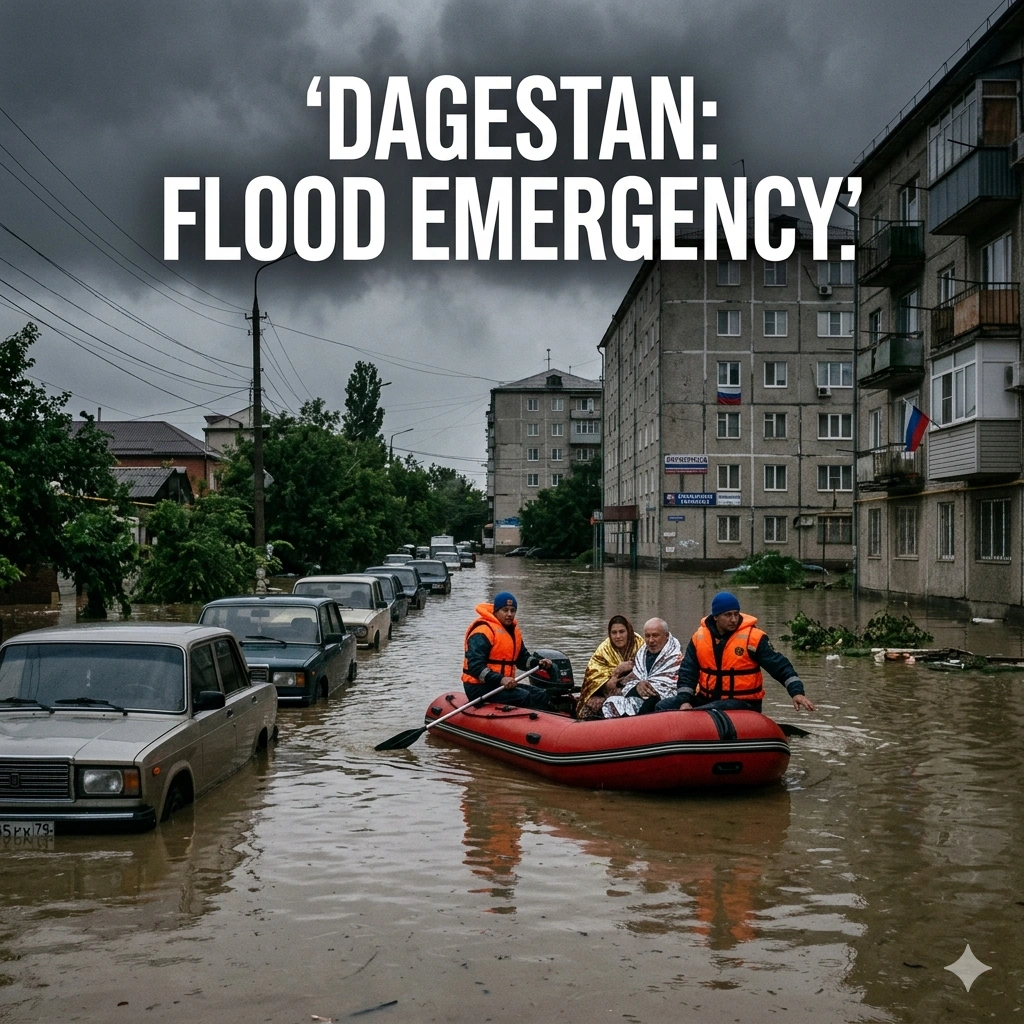
Dagestan floods impact power grid and infrastructure
The most immediate and widespread consequence of the Dagestan floods is the total collapse of the regional electrical grid. Officials have confirmed that three primary power supply centers were completely inundated, leading to a massive blackout affecting 500,000 customers. This power failure spans across 22 municipal districts, making it one of the largest utility crises the region has seen in decades.
Without electricity, communication networks are failing and hospitals are being forced to rely on emergency backup generators to maintain life-saving equipment. The lack of light also complicates nighttime rescue operations, increasing the danger for both the survivors and the first responders on the ground. Repair crews are standing by, but they cannot access the flooded substations until the water recedes to a safe level for technical intervention.
The Dagestan floods have also wreaked havoc on the transportation network, specifically the North Caucasus Railway. Two spans of a critical railway bridge have collapsed under the pressure of the rushing water, bringing all rail traffic to a grinding halt. This disruption significantly hinders the delivery of food, water, and medical supplies to the southern parts of the republic where they are most desperately needed.
Dagestan floods
The official declaration of a state of emergency highlights the severity of the Dagestan floods and the resulting logistical nightmare. In the town of Buynaksk, the threat of landslides has reached a critical level, forcing the mandatory evacuation of hundreds of families from their homes. The ground in these hilly areas has become completely saturated, losing its structural integrity and threatening to bury entire villages under mud.
Road closures are currently in effect in the Tlyaratinsky and Tsumadinsky districts due to significant earth movement and rockfalls. These mountain passes are the only lifelines for many remote communities, and their closure means that help can only arrive via helicopter, weather permitting. The Dagestan floods have effectively turned these districts into islands, isolated from the rest of the country by the fury of nature.
The Tarki train station remains suspended as engineers assess the damage to the tracks and surrounding supporting structures. Authorities are warning citizens to stay away from all railway property and bridges, as the risk of further collapses remains high until the water levels stabilize. The economic impact of these closures will be felt for a long time, as the railway serves as a major artery for regional trade.
Emergency services battle rising waters in Makhachkala
Rescue teams are working tirelessly in the heart of the capital to assist those trapped by the Dagestan floods. Over 103 people have already been evacuated from homes where water reached the second story, but many more remain in precarious positions. The current is so strong in some areas that traditional boats are difficult to maneuver, requiring the use of specialized amphibious vehicles.
The coordination of these rescue efforts is being managed from a central command post that operates twenty-four hours a day. Emergency workers are prioritizing the elderly, children, and those with limited mobility who cannot escape the rising tides on their own. The Dagestan floods have tested the limits of local resources, prompting a call for federal assistance from Moscow to bolster the response team.
Temporary shelters have been established in schools and community centers that remain on high ground, providing food and warmth to the displaced. However, these facilities are quickly reaching capacity as more people flee the encroaching water and the threat of collapsing buildings. The psychological toll on the population is immense, as many watch their life’s work vanish beneath the muddy brown water of the flood.
Regional high alert expands to neighboring Chechnya
The atmospheric conditions causing the Dagestan floods have also triggered a state of high alert in the neighboring Chechnya region. Authorities there are bracing for a similar combination of torrential rain and gale-force winds that could easily mirror the disaster seen in Makhachkala. Bridges in Chechnya are already showing signs of stress, and minor rockfalls have been reported along the main highways.
Cross-border cooperation between the two regions is essential during this crisis to manage the flow of refugees and the sharing of emergency resources. The storm system is large enough to cover the entire North Caucasus, making it a regional emergency rather than a localized event. The high alert status ensures that all emergency personnel are on duty and ready to move at a moment’s notice as the weather worsens.
The impact on infrastructure in Chechnya has so far been limited to localized power outages and minor flooding, but officials remain vigilant. The experience of the Dagestan floods serves as a grim warning of what could happen if the drainage systems fail to cope with the sustained downpour. Residents in low-lying areas of Chechnya are being advised to pack “go-bags” and prepare for potential evacuation orders.
Historical context of weather disasters in the Caucasus
While the North Caucasus is no stranger to seasonal rain, the intensity of the Dagestan floods is being described by meteorologists as a once-in-a-century event. The geography of the region, with its steep mountains and narrow valleys, makes it particularly susceptible to rapid-onset flooding and devastating landslides. Past events have shown how quickly small mountain streams can turn into destructive torrents.
- The 2002 floods in the region resulted in significant loss of life and property damage.
- Localized flooding in 2012 caused several bridge failures in the Dagestani mountains.
- Recent infrastructure upgrades were designed for heavy rain, but the Dagestan floods exceeded all design parameters.
The current disaster will likely lead to a total re-evaluation of flood defense strategies in southern Russia. As global weather patterns become more volatile, the need for more robust drainage and early warning systems is becoming undeniable. The Dagestan floods are a stark reminder of the vulnerability of even the most modern infrastructure when faced with extreme natural forces.
Landslide risks and geological instability in Dagestan
The geological impact of the Dagestan floods extends far beyond the immediate water damage. The saturation of the soil has created a long-term risk of landslides that could persist for weeks after the rain finally stops. Geologists are monitoring high-risk zones where the earth is showing signs of “creep,” which often precedes a major slope failure.
- Over 15 major landslide zones have been identified in the Tsumadinsky district.
- Soil moisture levels are at 200% of their normal capacity for this time of year.
- The risk of rockfalls remains “Extreme” for all mountain roads above 1,000 meters.
- Dams and reservoirs are being monitored for structural integrity under increased pressure.
Protecting the population from these hidden dangers is a complex task for the emergency services. Unlike the visible threat of the Dagestan floods, a landslide can occur without warning in the middle of the night, burying homes in seconds. Public awareness campaigns are being broadcast over the radio to help residents identify the early warning signs of earth movement.
Damage to agriculture and the regional economy
The agricultural sector, which is the backbone of the rural economy in southern Russia, has been decimated by the Dagestan floods. Thousands of hectares of farmland are currently underwater, destroying spring crops and drowning livestock. For many small-scale farmers, this loss represents a total wipeout of their annual income and their ability to feed their families.
The disruption of the North Caucasus Railway also stops the export of local goods to other parts of Russia and beyond. Markets in Makhachkala are closed, and the supply chain for basic goods is fractured, leading to concerns about price gouging and shortages. The Dagestan floods have created an economic shock that will require significant federal subsidies to overcome in the next fiscal year.
Recovery in the agricultural zones will be slow, as the receding floodwaters often leave behind thick layers of silt and debris that must be cleared before replanting can begin. There is also the risk of soil contamination from flooded industrial sites and sewage systems. The government is promising a compensation package for farmers, but the details remain under discussion as the crisis continues.
Health risks and sanitation concerns after the flooding
As the Dagestan floods persist, health officials are raising the alarm about the potential for waterborne diseases. Flooding often compromises sewage treatment plants and septic systems, allowing bacteria to enter the drinking water supply. Residents are being strongly urged to boil all water or use bottled supplies until the official “boil water” notice is lifted.
Medical teams are being deployed to the temporary shelters to provide vaccinations and monitor for outbreaks of gastrointestinal illnesses. The stagnant water left behind by the Dagestan floods also provides a breeding ground for insects once the weather warms up, creating further health complications. Managing the sanitation situation in crowded shelters is a major logistical challenge for the local health department.
The emotional health of the survivors is also a major concern, with many people experiencing severe trauma after losing their homes. Mental health professionals are being integrated into the relief effort to provide counseling and support to those in distress. The road to recovery from the Dagestan floods is as much a mental journey as it is a physical rebuilding process.
Transportation and logistics during the state of emergency
Navigating the region during the Dagestan floods has become nearly impossible for ordinary citizens. The Ministry of Transport has issued a total ban on non-essential travel in the most affected districts to keep the remaining roads clear for emergency vehicles. Helicopters are now the primary method for moving critically ill patients and bringing in high-value supplies like medicine.
The collapse of the railway bridge is the biggest logistical hurdle, as it served as the main conduit for heavy equipment. Plans are already being drawn up for a temporary pontoon bridge, but the high velocity of the water makes such a project extremely dangerous. Until the Dagestan floods recede, the southern part of the republic will remain effectively severed from the national rail network.
Logistics experts are working to establish alternative truck routes through Chechnya and other neighboring territories to bypass the flood zones. However, many of these secondary roads are also under threat from the ongoing storm. The resilience of the regional supply chain is being tested like never before by the widespread nature of the Dagestan floods.
Government response and federal aid for Dagestan
Presidential envoys have arrived in the region to oversee the federal response to the Dagestan floods. The Kremlin has authorized the release of emergency reserve funds to provide immediate relief to those who have lost their homes and livelihoods. This financial support is crucial for the regional government, which does not have the budget to handle a disaster of this magnitude alone.
The military has been called in to assist with the most technical aspects of the recovery, such as repairing bridges and clearing massive mudslides. Engineering battalions are working alongside civilian crews to stabilize the power grid and restore water services as quickly as possible. The Dagestan floods have necessitated a “whole-of-government” approach to prevent a total humanitarian collapse.
Despite the rapid deployment of resources, some local leaders are calling for even more transparency in the distribution of aid. They argue that remote mountain villages often get overlooked in favor of the larger urban centers like Makhachkala. Ensuring that the response to the Dagestan floods is equitable and reaches every citizen in need is a top priority for the oversight committees.
Weather forecasts and the outlook for the coming days
Meteorologists are providing some hope, suggesting that the weather system responsible for the Dagestan floods will begin to move out of the area by late Monday. However, a storm warning remains in effect through Sunday night, with additional heavy rain expected in the high-altitude regions. This means that the water levels could still rise further before they start their slow decline.
The transition from a rescue phase to a recovery phase will only begin once the “all-clear” is given by the weather service. Even then, the risk of landslides and building collapses will remain high for several days. The stabilization of the weather is just the first step in a very long process of returning Dagestan to a state of normalcy after the floods.
Regional officials are bracing for a difficult week ahead as they begin the grim task of assessing the full extent of the damage. The Dagestan floods will be remembered as a defining moment for the region’s infrastructure and its disaster management capabilities. The focus will soon shift from saving lives to the massive engineering challenge of rebuilding a more resilient North Caucasus.
Communication and technology in disaster management
In the wake of the Dagestan floods, the importance of reliable communication technology has never been more apparent. Satellite phones have become the only reliable way to communicate with the isolated Tlyaratinsky district where the cell towers have lost power. The government is also using drone technology to survey the flooded areas and identify the most critical points of bridge and dam failure.
- Drones are providing real-time data on the movement of the North Caucasus Railway debris.
- Satellite imagery is being used to map the extent of the Dagestan floods across 22 districts.
- Social media is being used as an emergency broadcast system to reach younger residents.
- New early-warning sensors are being discussed for future installations on mountain slopes.
Technology is playing a vital role in making the response to the Dagestan floods more efficient and data-driven. By using modern tools, emergency managers can allocate their limited resources to the areas where they will have the greatest impact. The lessons learned about the performance of these technologies during the crisis will shape the future of disaster response in Russia.
Lessons learned from the Dagestan floods disaster
As the water begins to recede, the post-disaster analysis will focus on why the infrastructure was so vulnerable to the Dagestan floods. There are already questions being asked about the maintenance of the railway bridges and the adequacy of the urban drainage systems in Makhachkala. Identifying these weaknesses is essential for preventing a repeat of this catastrophe in the future.
One major takeaway is the need for more diverse power supply options to prevent a single point of failure from causing a half-million-person blackout. The concentration of power substations in low-lying areas made them easy targets for the Dagestan floods. Future planning will likely include elevating critical utility infrastructure or building redundant systems on higher ground.
The disaster also highlighted the incredible bravery and resilience of the local people. Neighbors have been seen helping each other escape the rising waters, and local businesses have opened their doors to those in need. The social fabric of the region has been strengthened by the common challenge of the Dagestan floods, even as the physical fabric has been torn apart.
Summary of the current situation in Southern Russia
To summarize, the Dagestan floods have created a state of emergency that has paralyzed the region and left 500,000 people in the dark. The collapse of the North Caucasus Railway and the threat of landslides have isolated remote communities and created a massive logistical challenge. With a high alert also in effect in Chechnya, the entire North Caucasus is on the front lines of a major natural disaster.
The emergency services are performing heroically under extreme conditions to save lives and provide shelter to the displaced. However, the road to recovery will be long and expensive, requiring significant federal support and a complete overhaul of the region’s flood defenses. The Dagestan floods of 2026 will be studied by engineers and disaster managers for years to come.
As the rain finally begins to taper off, the focus turns to the massive cleanup and the assessment of the billions of rubles in damage. The people of Dagestan are resilient, but they face an uphill battle to rebuild their lives and their communities. The world watches as southern Russia begins the slow process of recovering from the fury of the Dagestan floods.
Final outlook for the North Caucasus region
The coming weeks will determine how quickly the region can bounce back from the Dagestan floods. Restoring power and rail service are the most critical milestones for returning a sense of order to the republic. The government must also work quickly to secure the mountain slopes against the ongoing threat of landslides to allow displaced families to return home.
While the physical scars of the Dagestan floods will be visible for years, the spirit of the people remains unbroken. The recovery effort will be a testament to the strength of the community and the effectiveness of the state’s response. We will continue to monitor the situation and provide updates as more information becomes available from the disaster zone.
Ultimately, the Dagestan floods serve as a powerful reminder of our dependence on a stable climate and robust infrastructure. As we look toward the future, the lessons of this weekend must be used to build a safer and more prepared society. Our thoughts are with the half-million residents currently enduring this crisis and the brave individuals working to bring them relief.
For more details & sources visit: Anadolu Agency (AA)
Read more about Russia news on 360 News Orbit – Russia