
Women’s Retirement Benefit programs in Mexico are undergoing a historic transformation as the government implements a progressive reduction in the age of eligibility for the public sector. Following the recent updates to the ISSSTE Law, female civil servants can now look forward to a structured path toward earlier pension security. This shift represents one of the most significant labor reforms in the Mexican Republic for 2026, aiming to reward decades of government service.
The atmosphere among federal employees has shifted toward optimism as the specific calendar for these age reductions becomes clear. For many years, women in the public sector faced the same rigid age requirements as their male counterparts, despite the additional domestic burdens many carry. Now, the Women’s Retirement Benefit is being recognized as a critical tool for achieving gender equity within the nation’s civil service infrastructure.
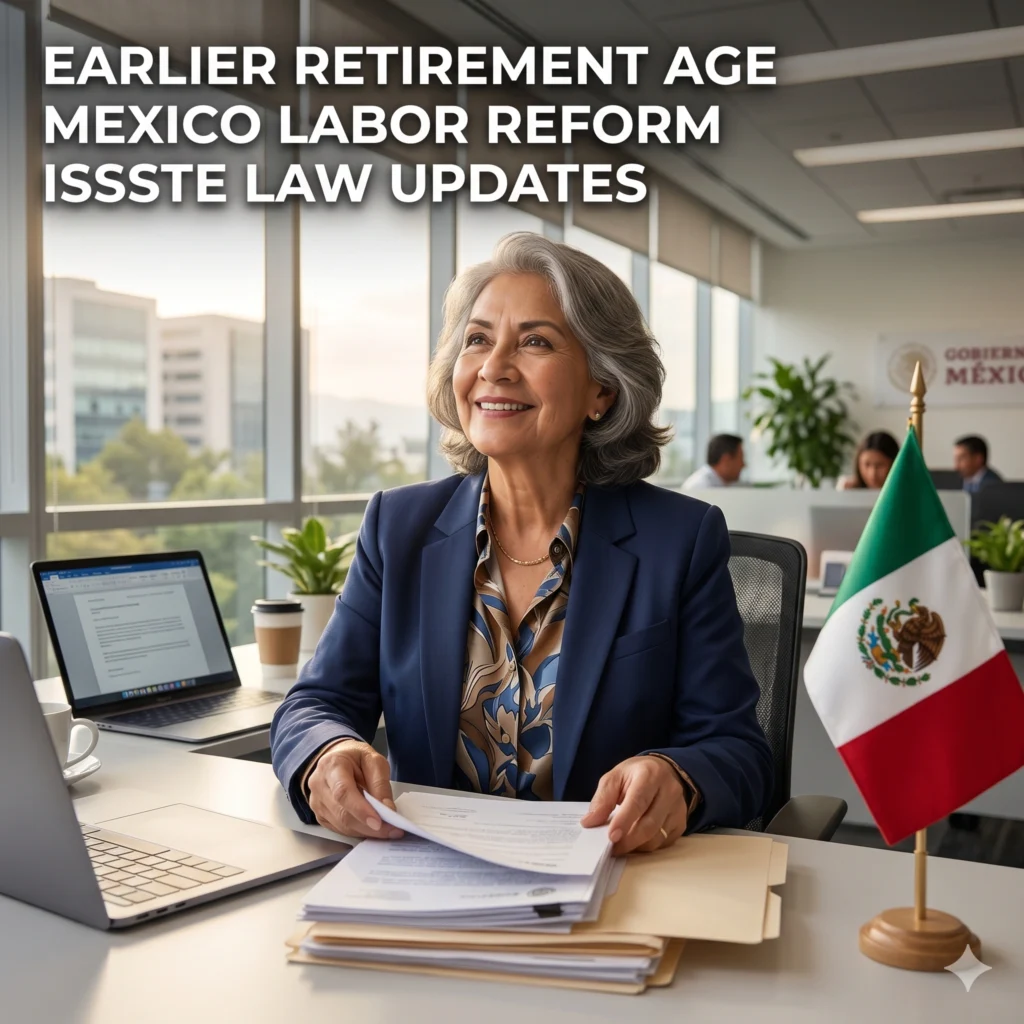
Women’s Retirement Benefit
The core of this legislative update ensures that the Women’s Retirement Benefit is tied to a structured decrease in the age of eligibility based on years of service. Under the new guidelines, the traditional barriers to early retirement are being systematically dismantled to favor long-term employees. This change is particularly impactful for those who entered government service at a young age and have spent thirty years in the federal system.
According to the official decree, the first major milestone will occur in 2028 when the age threshold drops to 55 years for women. This initial phase is designed to test the financial resilience of the ISSSTE pension fund while providing a tangible Women’s Retirement Benefit to thousands of workers. Government officials have emphasized that the transition must be gradual to ensure the administrative continuity of the state.
The second phase of this plan will take place between 2031 and 2033, lowering the age further to 54 years for eligible staff. During this period, the state will enhance its counseling services to help individuals maximize their Women’s Retirement Benefit. The ultimate goal is to reach a permanent retirement age of 53 years by the year 2034, marking a historic achievement in Latin American labor rights.
Strategic Timeline for Pension Reform
The implementation of the ISSSTE Law is organized into distinct phases to ensure fiscal responsibility and administrative clarity. Experts have noted that the Women’s Retirement Benefit is enhanced by the long-term predictability of this calendar, allowing for precise financial planning. Each step of the reduction is carefully tied to budgetary checkpoints managed by federal auditors and pension experts.
Starting in 2028, the mandatory retirement age will begin its downward trajectory, serving as a blueprint for future social security reforms. The government has clarified that the Women’s Retirement Benefit applies specifically to those under the traditional pension regimes who have met their minimum service requirements. This clarity is essential for maintaining the integrity of the civil service while fulfilling new promises.
The gradual nature of the reduction ensures that the ISSSTE can maintain its high standards of healthcare for all its members. Because the Women’s Retirement Benefit is phased in over a ten-year span, the impact on the national treasury is manageable and sustainable. This responsible approach has been praised by international financial organizations as a balanced model for modern pension reform in developing nations.
Addressing the Double Burden of Labor
Proponents of the law argue that the Women’s Retirement Benefit finally recognizes the “double burden” that female workers have historically carried. For decades, women have balanced demanding professional careers with extensive domestic responsibilities and unpaid caregiving roles. This policy change acts as a form of social compensation, acknowledging the holistic contribution women make to the stability of the country.
By allowing retirement at 53 years by 2034, the state acknowledges that the physical toll of a lifelong career is often higher for women. This gender-sensitive approach to the Women’s Retirement Benefit is a cornerstone of the current administration’s social agenda. It seeks to close the gap in quality of life between men and women in their senior years, ensuring a more equitable aging process.
- Recognizing the historical role of women in unpaid domestic care and family support.
- Providing a pathway to early retirement for those in high-stress administrative roles.
- Ensuring that years of service are valued equally with age-based retirement requirements.
- Promoting a healthier work-life balance for the final years of professional service.
Financial Stability of the ISSSTE System
One of the primary concerns during the drafting of this law was the long-term viability of the social security fund. Officials have assured the public that the Women’s Retirement Benefit is supported by a system that is fully funded and protected by law. The gradual age reduction was specifically chosen to allow for the natural growth of the investment portfolio managed by the institute.
To support these changes, the government has introduced new oversight measures to prevent any mismanagement of these vital funds. This transparency ensures that every woman who reaches the age of 53 in 2034 will have her Women’s Retirement Benefit guaranteed. The financial modeling used to create the timeline accounts for inflation and economic growth projections for the next two decades.
- Periodic audits of the pension fund to ensure sufficient liquidity for new retirees.
- Adjustment of contribution rates for active workers to support the aging population.
- Implementation of digital tools for workers to track their eligibility in real-time.
- Creation of a reserve fund specifically dedicated to the age-reduction transition.
Impact on the Mexican Civil Service
The move to lower the retirement age is expected to trigger a significant wave of recruitment within the federal government. As more workers access the Women’s Retirement Benefit, thousands of mid-level and senior positions will become available for the next generation. This provides a unique opportunity to modernize the civil service with fresh talent and digital-first professionals.
The transition also allows for a structured knowledge transfer process where outgoing veterans can mentor their younger successors. Agencies are already developing programs to ensure that institutional knowledge is not lost as people claim their Women’s Retirement Benefit. This proactive management style is crucial for maintaining the continuity of government operations throughout the various states.
Furthermore, the Women’s Retirement Benefit creates a more dynamic workplace where upward mobility is greatly increased. With a lower retirement age, the “bottleneck” at the top of many departments will be cleared, allowing younger women to advance. This ripple effect is expected to improve overall morale and productivity within the secretariats and state-owned enterprises.
International Context of the ISSSTE Reform
Compared to other OECD nations, Mexico’s new policy positions it as a leader in worker-centric retirement benefits. While many countries are raising the retirement age to cope with aging populations, Mexico is expanding the Women’s Retirement Benefit. This bold strategy is based on the country’s unique demographic profile and a desire to reward its most dedicated public servants.
International labor organizations have taken note of the 2034 target, which would give Mexico one of the lowest retirement ages for women globally. This has sparked a debate in other nations about the balance between fiscal austerity and the well-being of the workforce. Mexico’s decision to prioritize the Women’s Retirement Benefit is seen as a major victory for the global labor movement.
- Comparison with European retirement ages which often exceed 65 or 67 years.
- Analysis of the socio-economic benefits of early retirement in emerging markets.
- The role of collective bargaining in achieving gender-specific retirement goals.
- Potential for similar reforms in other Latin American public sectors.
Logistics of the Progressive Reduction
For a female worker to qualify for these benefits, she must remain in good standing and meet the minimum service years. The Women’s Retirement Benefit is accessible through a streamlined application process that eliminates much of the traditional bureaucracy. The government has invested in new IT systems to automatically identify those who reach the new age thresholds each year.
The “phased-in” approach means that a woman who is currently 45 years old will have a very different plan than one who is 55. This requires the ISSSTE to provide personalized projections for the Women’s Retirement Benefit to every female employee. Educational workshops are being held in state capitals to ensure that the workforce understands the nuances of the 2028 and 2034 deadlines.
- Online portals for calculating pension amounts based on the new age tiers.
- Legal clinics for workers to resolve discrepancies in their service records.
- Coordination between federal and state agencies for uniform implementation.
- Public awareness campaigns to explain the benefits of the new ISSSTE Law.
Social and Health Benefits of Early Retirement
Beyond the financial aspect, the Women’s Retirement Benefit offers significant improvements in overall health and well-being. Retiring at 53 or 54 years allows individuals to enjoy a more active lifestyle while they are still in good physical condition. This reduction in workplace stress is expected to lower the long-term healthcare costs associated with chronic age-related illnesses.
Public health experts have long advocated for lower retirement ages for women who face high levels of professional burnout. By accessing the Women’s Retirement Benefit earlier, these women can focus on preventative health and community engagement. This “longevity bonus” allows them to transition into a new phase of life with their full pension and dignity intact.
The social impact on the family unit is also expected to be profound, as retired women often support grandchildren and elderly relatives. This “intergenerational support” is a vital part of Mexican culture, and the Women’s Retirement Benefit directly supports this social fabric. The state is essentially investing in the stability of the family by allowing women to retire earlier.
Challenges and Criticisms of the Law
While the law has been celebrated, it is not without critics who worry about the long-term cost to the national treasury. Some economists argue that the Women’s Retirement Benefit might put pressure on younger generations who fund the system. These concerns have led to calls for more aggressive investment strategies to ensure that the fund remains profitable through 2034 and beyond.
In response, the government has pointed to the increased economic activity generated by retirees who continue to contribute through consumption. The Women’s Retirement Benefit allows these women to remain active participants in the economy even after they leave the civil service. This “silver economy” is a growing sector that could provide significant revenue and stability in the coming decades.
- Debates over the equitable treatment of male versus female workers in retirement.
- Concerns regarding the inflation-adjustment mechanisms of the current pension fund.
- Potential for a “brain drain” if too many experienced workers leave simultaneously.
- The need for continuous legislative oversight to prevent any reversal of benefits.
Preparing for the 2028 Milestone
As the first deadline of 2028 approaches, the ISSSTE is ramping up its capacity to handle a surge in retirement applications. The Women’s Retirement Benefit will be delivered through a digital-first approach that allows workers to submit paperwork from mobile devices. This modernization is a key part of the government’s commitment to making the process as smooth as possible.
Training for managers across all federal departments is currently underway to ensure they can provide accurate advice to their staff. It is essential that workers understand how to maximize the Women’s Retirement Benefit before they make the final decision to retire. The government is also working with banks to ensure that pension payments are disbursed securely and on time.
- Deployment of “mobile retirement units” to rural areas for better accessibility.
- Integration of the ISSSTE database with the national identification system (CURP).
- Testing of the payment systems to handle the increased volume of transactions.
- Development of post-retirement programs for voluntary community and civic service.
Looking Toward the 2034 Goal
The ultimate success of this policy will be measured in 2034, when the retirement age for women finally reaches 53 years. By then, the Women’s Retirement Benefit will have fundamentally changed the nature of work for millions of female civil servants. This long-term vision demonstrates a commitment to social progress that transcends individual political cycles or administrations.
For the young women entering the civil service today, the promise of this benefit is a powerful incentive to pursue a public career. It creates a stable, rewarding professional path that competes with the private sector in terms of long-term security. The Women’s Retirement Benefit ensures a future where dedication to the state is met with a reciprocal commitment to personal dignity.
As the world watches Mexico’s experiment with lower retirement ages, the results will likely influence global labor policy for years. The message sent by the ISSSTE Law is clear: the well-being of the worker is the ultimate goal of a successful social security system. The Women’s Retirement Benefit helps individuals today, but it strengthens the entire nation for a more just future.
Conclusion of the Legislative Impact
In summary, the progressive reduction of the retirement age is a landmark achievement for the Mexican Republic and its workers. The Women’s Retirement Benefit is a policy grounded in fairness, social science, and fiscal responsibility. As the implementation phases roll out in 2028, 2031, and 2034, the lives of millions of women will be improved.
The success of the ISSSTE reform will depend on continued political will and the careful management of the nation’s resources. However, the legal framework is now firmly in place, and the path to earlier retirement is a reality for the female civil service. The Women’s Retirement Benefit remains a testament to a government that listens to its people and acts to protect their future.
For more details & sources visit: N+
Read more on Mexico news: 360 News Orbit – Mexico