
U.S.-Iran Peace Agreement news broke early this morning as President Donald Trump declared a definitive pause in hostilities across the Middle East region. This diplomatic breakthrough comes after months of escalating military tension that threatened to plunge the entire global economy into a deep and lasting recession.
The President confirmed that the 14-day ceasefire will serve as a cooling-off period while both nations finalize the logistical details of a broader security framework. This U.S.-Iran Peace Agreement represents a significant shift from the previous rhetoric of total destruction that had dominated the airwaves for weeks.
Diplomats from both sides are now meeting in neutral territory to ensure that the terms of the pause are strictly followed by all military branches. The world watches with bated breath as the U.S.-Iran Peace Agreement offers the first real glimmer of hope for a lasting resolution in decades.
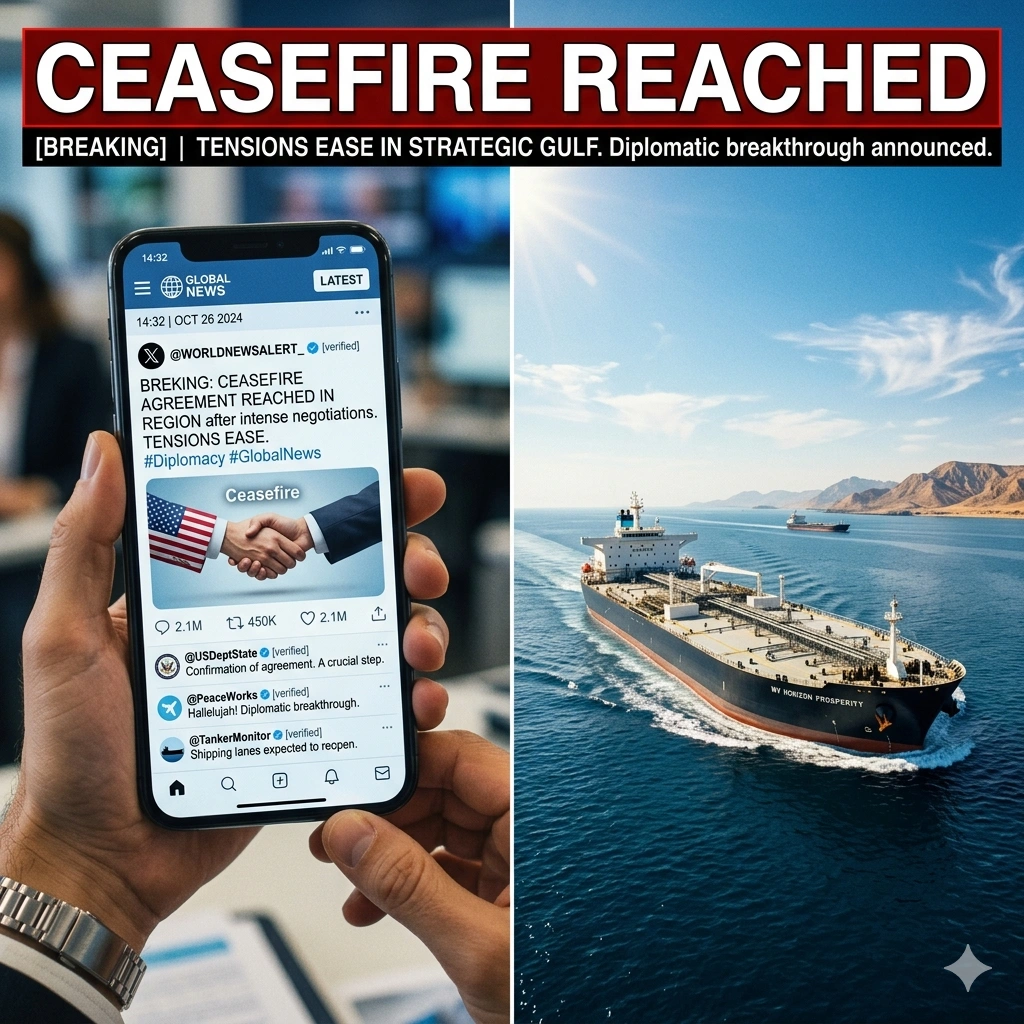
U.S.-Iran Peace Agreement
The official documentation for the U.S.-Iran Peace Agreement was signed electronically before being announced to the press at the White House. This specific document outlines the immediate cessation of all drone strikes and naval provocations within the Persian Gulf and surrounding international waters.
National security advisors noted that the U.S.-Iran Peace Agreement was only possible because of the immense economic pressure applied over the last fiscal quarter. While the situation remains fragile, the commitment to a 14-day window of non-aggression is a massive step forward for international diplomacy.
Military leaders have been ordered to stand down from high-alert status, though they remain prepared to defend interests if the U.S.-Iran Peace Agreement is violated. The administration has emphasized that this is a preliminary step toward a much more comprehensive and permanent regional settlement.
Opening the Strait of Hormuz
A critical component of the U.S.-Iran Peace Agreement involves the immediate reopening of the Strait of Hormuz to all commercial and oil shipping vessels. This waterway is essential for the global energy supply, and its previous closure had sent shockwaves through every major stock exchange.
Under the terms of the U.S.-Iran Peace Agreement, Iranian naval forces will withdraw to their primary ports to allow for safe passage of tankers. This move is expected to stabilize energy costs and provide much-needed relief to European and Asian markets that rely on Middle Eastern exports.
The implementation of the U.S.-Iran Peace Agreement in the maritime sector is being monitored by international observers to ensure transparency. Shipping companies have already begun rerouting their fleets back into the region following the confirmation that the ceasefire is officially in effect.
Market Response to the Ceasefire
Wall Street responded with an immediate surge in futures as the U.S.-Iran Peace Agreement became public knowledge across the major news networks. Investors who had been bracing for a protracted conflict began moving capital back into equities and away from traditional safe-haven assets like gold.
Economists suggest that the U.S.-Iran Peace Agreement could be the catalyst for a robust economic recovery in the second half of the year. The reduction in geopolitical risk allows for more predictable long-term planning for multinational corporations and small businesses alike.
While the U.S.-Iran Peace Agreement is currently limited to two weeks, the optimism in the market reflects a belief that neither side wants a full-scale war. Crude oil prices have already dipped significantly, providing a much-needed break for consumers at the gas pump.
Domestic Political Reaction
The U.S.-Iran Peace Agreement has received a mixed response from lawmakers on Capitol Hill, with some praising the President’s boldness and others expressing deep skepticism. Supporters argue that the “maximum pressure” campaign successfully forced Iran to the negotiating table under favorable terms.
Conversely, some members of the opposition party worry that the U.S.-Iran Peace Agreement may be a temporary fix that fails to address long-term nuclear ambitions. They have called for a full briefing on the specific concessions made by both parties during the secret negotiations.
Despite the political divide, the general public appears relieved that the threat of an immediate military draft or domestic energy crisis has been averted. The U.S.-Iran Peace Agreement remains the primary topic of debate across all major political talk shows and news outlets today.
Regional Allies and Their Stance
Middle Eastern allies have issued cautious statements regarding the U.S.-Iran Peace Agreement, noting that their own security interests must be protected in any final deal. Countries such as Israel and Saudi Arabia are reportedly in close contact with the White House to discuss the nuances of the truce.
The U.S.-Iran Peace Agreement must account for the complex web of proxy conflicts that exist throughout the region to be truly effective over time. Diplomats are working tirelessly to ensure that regional partners feel included in the peace process moving forward.
There is a general consensus that the U.S.-Iran Peace Agreement is a necessary bridge to prevent a wider regional conflagration that would benefit no one. Ensuring the cooperation of all stakeholders is the next major challenge for the administration’s foreign policy team.
Technical Terms of the Reprieve
The technical details of the U.S.-Iran Peace Agreement include a prohibition on the movement of heavy artillery and missile batteries near disputed borders. Satellite imagery will be used by both sides to verify that no secret military buildups are occurring during the 14-day ceasefire.
Furthermore, the U.S.-Iran Peace Agreement establishes a direct communication “hotline” between senior military commanders to prevent accidental escalations. This mechanism is vital for maintaining the peace if a localized misunderstanding occurs on the ground or at sea.
Experts in international law are currently reviewing the U.S.-Iran Peace Agreement to ensure it aligns with existing treaties and United Nations mandates. The goal is to transform this temporary cessation of hostilities into a legally binding international accord within the next month.
Impact on Global Logistics
The U.S.-Iran Peace Agreement is expected to clear the massive backlog of cargo ships that had been anchored outside the conflict zone for weeks. Supply chains that were already strained are now beginning to move again, which will help lower the costs of imported goods globally.
Logistics experts believe the U.S.-Iran Peace Agreement will save the shipping industry billions of dollars in insurance premiums and fuel costs. The restoration of predictable trade routes is essential for the “just-in-time” delivery systems that power modern retail and manufacturing.
Air cargo routes are also being adjusted following the U.S.-Iran Peace Agreement, as many airlines had previously avoided the region’s airspace for safety reasons. This reopening of the skies will reduce flight times and operational costs for international carriers across the board.
Security Protocols During the Truce
Throughout the duration of the U.S.-Iran Peace Agreement, security protocols remain at a heightened state to prevent any extremist groups from sabotaging the deal. Intelligence agencies are collaborating to identify potential threats that could disrupt the fragile peace currently in place.
The U.S.-Iran Peace Agreement specifically mentions that any third-party intervention will be met with a unified response from both primary signatories. This clause is intended to deter non-state actors from launching independent attacks that could be blamed on either government.
Cybersecurity is also a major focus of the U.S.-Iran Peace Agreement, with both nations agreeing to a temporary halt in state-sponsored digital attacks. Protecting critical infrastructure during this period is a top priority for the technical teams on both sides of the negotiation.
Humanitarian Considerations
One of the most overlooked aspects of the U.S.-Iran Peace Agreement is the humanitarian relief it provides to civilian populations in the affected areas. Access to medicine, food, and essential services is expected to improve as the threat of bombardment recedes during the ceasefire.
International aid organizations have praised the U.S.-Iran Peace Agreement for allowing them to deliver supplies to vulnerable communities that were previously unreachable. The pause in fighting gives these groups a window of opportunity to provide much-needed assistance.
The U.S.-Iran Peace Agreement also includes provisions for the exchange of certain detained individuals, which is seen as a gesture of goodwill by both nations. These humanitarian milestones are crucial for building the trust necessary for a long-term diplomatic relationship.
Future Economic Prospects
If the U.S.-Iran Peace Agreement holds, the long-term economic prospects for the region could be transformative, leading to new investment opportunities. Rebuilding infrastructure and re-engaging with the global financial system would provide a significant boost to the local economy.
Investors are already looking at the U.S.-Iran Peace Agreement as a sign that the era of extreme volatility in the Middle East might be coming to an end. This shift in perception is vital for attracting the foreign direct investment needed for sustainable growth and modernization.
The U.S.-Iran Peace Agreement could eventually lead to the lifting of certain trade restrictions that have hampered economic development for years. While this is still a distant prospect, the current ceasefire is the first necessary step on that long and difficult road.
Leadership and Diplomacy
The U.S.-Iran Peace Agreement is being hailed by supporters as a masterclass in “deal-making” by the current administration, showcasing a unique approach to foreign policy. By combining military posturing with sudden diplomatic overtures, the President has kept both allies and adversaries guessing.
Critics, however, argue that the U.S.-Iran Peace Agreement is a risky gamble that relies too heavily on the personal whims of individual leaders rather than established institutions. The debate over the effectiveness of this “disruptive diplomacy” will likely continue for years to come.
Regardless of the political stance, the U.S.-Iran Peace Agreement has undeniably changed the course of history in the short term. The ability to pull back from the brink of total war is a testament to the power of high-stakes negotiation in the modern era.
Technological Monitoring of the Deal
Modern technology plays a massive role in verifying the U.S.-Iran Peace Agreement, with AI-driven surveillance systems tracking every move on the ground. These systems can detect unauthorized troop movements or missile launches with incredible accuracy and speed.
The U.S.-Iran Peace Agreement utilizes shared data feeds to ensure that both sides are looking at the same information, reducing the chance of “false flag” incidents. This technological transparency is a key reason why many experts are more optimistic about this truce than previous ones.
Drone technology is also being used to patrol the borders and shipping lanes established by the U.S.-Iran Peace Agreement. These unmanned vehicles provide a constant presence without the risk of putting human pilots in harm’s way during the sensitive ceasefire period.
Public Sentiment and Social Media
The U.S.-Iran Peace Agreement became the top trending topic on social media platforms within minutes of the President’s initial post. Millions of users shared their thoughts, ranging from extreme relief to deep-seated skepticism about the longevity of the peace.
Digital influencers and political commentators have used the U.S.-Iran Peace Agreement to spark massive debates about the role of the U.S. in global affairs. The speed at which information travels today means that the public is more engaged with the nuances of foreign policy than ever before.
The U.S.-Iran Peace Agreement has also seen a surge in “peace” themed content, with users around the world calling for the ceasefire to become permanent. This global groundswell of support could provide the political cover needed for leaders to make more difficult concessions.
Environmental Impact of the Truce
An often-ignored benefit of the U.S.-Iran Peace Agreement is the reduction in the carbon footprint associated with large-scale military operations. The movement of carrier groups, fighter jets, and heavy armor consumes massive amounts of fuel and resources.
By halting these operations, the U.S.-Iran Peace Agreement provides a brief period of environmental relief in a region already struggling with ecological challenges. Preventing a conflict also avoids the catastrophic pollution that usually accompanies the destruction of oil refineries and industrial sites.
The U.S.-Iran Peace Agreement serves as a reminder that peace is not just a political or humanitarian necessity, but an environmental one as well. Protecting the natural resources of the Persian Gulf is essential for the long-term health of the entire planet’s ecosystem.
Conclusion of the Preliminary Deal
As the first day of the U.S.-Iran Peace Agreement draws to a close, the world remains in a state of cautious optimism about what the future holds. The next fourteen days will be a critical test of the resolve and sincerity of both the American and Iranian leadership.
The U.S.-Iran Peace Agreement has successfully de-escalated a situation that many thought was destined for a violent conclusion. Whether this leads to a “definitive” and lasting peace or merely serves as a brief pause in a longer conflict remains to be seen.
Ultimately, the U.S.-Iran Peace Agreement proves that even in the most tense situations, there is always a path toward dialogue if the stakes are high enough. The international community will continue to monitor the situation closely, hoping that this ceasefire marks the beginning of a new era of stability.
For more details & sources visit: BBC News.
Read more about USA news on 360 News Orbit – United States of America.