
The global energy landscape faced a historic shift, as the Saudi oil pipeline began transporting massive volumes of crude to bypass the blockaded Strait of Hormuz. Following intensive military strikes that effectively closed the world’s most critical maritime chokepoint, Riyadh successfully activated its 1,200-kilometer East-West contingency line. This technical milestone is currently delivering 5 million barrels of crude daily to the Red Sea port of Yanbu, providing a vital lifeline for international markets.
Experts credit this rapid response with preventing oil prices from reaching catastrophic highs during a period of extreme geopolitical volatility. As the Arabian Peninsula becomes the new transit hub for global energy, the world watches closely to see if this secondary route can withstand emerging regional threats. This article explores the deep economic and security ramifications of this unprecedented shift in oil logistics.
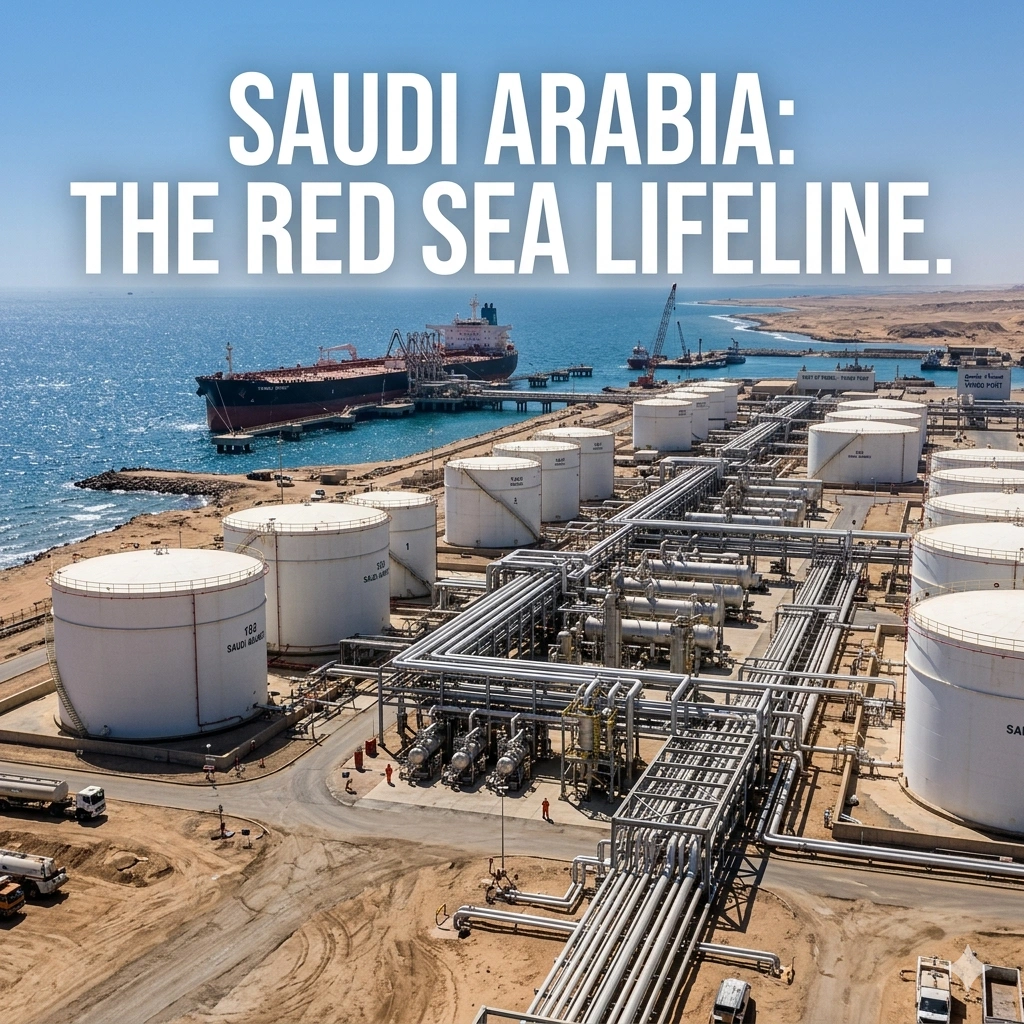
Saudi oil pipeline
The activation of the East-West infrastructure represents the culmination of decades of strategic planning by the Kingdom to safeguard its export capabilities. Because the Saudi oil pipeline was originally designed during the Iran-Iraq War of the 1980s, it serves as a battle-tested contingency for modern crises. Currently, the system is transporting its full capacity of 7 million barrels per day across the vast desert terrain to reach the safety of the Western coast. Consequently, the reliance on the vulnerable Persian Gulf routes has been significantly reduced for the first time in modern history. Furthermore, the technical achievement of scaling up operations within mere hours has stunned global energy analysts and market traders alike.
Modern engineering has allowed the Kingdom to maintain this flow despite the immense pressure placed on the aging infrastructure during this emergency. Since the Saudi oil pipeline is now the primary artery for Saudi crude, maintenance crews are working around the clock to ensure no mechanical failures occur. Moreover, the security forces have been deployed in record numbers along the entire length of the pipe to prevent sabotage from hostile regional actors. This massive mobilization reflects the existential importance of the route to both the Saudi economy and the global energy supply chain. As long as this pipeline remains operational, the total collapse of the energy market can likely be avoided.
The transition to the Red Sea port of Yanbu has transformed the quiet coastal city into the most important oil terminal on the planet overnight. While the Saudi oil pipeline only partially offsets the 15 million barrels that typically transit the Strait of Hormuz, its psychological impact on the market is immeasurable. Traders who feared a complete halt in Middle Eastern exports have found a degree of confidence in this secondary bypass. Therefore, the success of this mission is being hailed as a masterclass in strategic energy resilience. However, the long-term sustainability of this route depends heavily on the security situation in the neighboring Bab El-Mandeb strait.
Global Market Stability and Price Mitigation
The immediate impact of the bypass has been a noticeable cooling of the panicked buying that characterized the early days of the blockade. Before the Saudi oil pipeline reached its full 7-million-barrel capacity, analysts predicted prices could exceed $200 per barrel, threatening a global recession. Instead, the steady flow of crude to Yanbu has kept prices within a manageable, albeit high, range for Western and Asian consumers. This stability is crucial for maintaining the industrial output of major economies like China, India, and Germany during these turbulent times. Consequently, Saudi Arabia has once again solidified its role as the “central bank of oil” for the world.
Strategic petroleum reserves in many nations are also being replenished thanks to the consistent arrival of tankers at the Red Sea terminals. Because the Saudi oil pipeline ensures a continuous stream of light and heavy crude, the immediate threat of fuel rationing in Europe has subsided for now. Nevertheless, the cost of shipping remains high due to increased insurance premiums for vessels entering the Red Sea region. Traders remain wary of the escalating conflict, but the physical availability of oil has prevented a total market meltdown. As a result, the global economic outlook remains cautious but significantly more optimistic than it was just a week ago.
Investment in alternative energy and non-OPEC production is also accelerating as countries realize the fragility of traditional maritime routes. While the Saudi oil pipeline provides a temporary fix, the permanent closure of the Strait of Hormuz would require even more drastic measures. Many nations are now looking to diversify their energy portfolios to include more domestic renewables and nuclear power to avoid future shocks. Therefore, this crisis may act as a catalyst for a faster global transition away from fossil fuels in the long run. In the short term, however, the world remains tethered to the success of Riyadh’s contingency plans and desert infrastructure.
Emerging Threats in the Red Sea Corridor
While the bypass avoids the Strait of Hormuz, it places the Kingdom’s exports directly into a new zone of potential maritime conflict. The Saudi oil pipeline ends at Yanbu, but tankers must still navigate the Red Sea, which is currently under threat from various regional militias. Yemen’s Houthi rebels have recently announced their entry into the wider conflict, raising fears of drone and missile attacks on the tanker flotillas. While no direct hits have been confirmed since the pipeline’s activation, the history of localized skirmishes in this area keeps the market on edge. Consequently, the “security premium” on every barrel of oil remains a significant factor in daily trading prices.
Military experts suggest that the Red Sea could soon become a new front in the widening war between regional powers and their proxies. Since the Saudi oil pipeline is now the target of high-level interest from hostile actors, the Saudi Navy has increased its presence around the Bab El-Mandeb. International coalitions are also considering expanding their maritime patrols to protect the flow of energy to global markets. This militarization of the Red Sea trade route adds another layer of complexity to an already volatile geopolitical situation. If the Houthis successfully disrupt the Yanbu exports, the global energy crisis would enter a much more dangerous phase.
The potential for environmental disaster is another major concern for the nations bordering the Red Sea, which is home to delicate coral reefs. An attack on a fully loaded supertanker carrying crude from the Saudi oil pipeline could cause irreversible damage to the local ecosystem. Therefore, the environmental stakes are just as high as the economic ones for the countries involved in this conflict. Coastal communities that rely on tourism and fishing are watching the horizon with deep anxiety as the drumbeats of war grow louder. The protection of these waters is now a matter of global ecological and economic security.
Logistics and the Yanbu Tanker Flotilla
The logistics of moving 5 million barrels of oil per day through a single port are staggering and require precision timing. Since the Saudi oil pipeline began delivering its full volume, the port of Yanbu has seen a massive increase in maritime traffic from all over the world. Tankers are now queuing for miles in the Red Sea, waiting for their turn to load the precious cargo destined for refineries in the West. This sudden shift in logistics has required a total overhaul of the Kingdom’s maritime scheduling and port management systems. Furthermore, the increased demand for tugboats and pilots has stretched local resources to their absolute limit.
- Advanced tracking systems have been implemented to manage the high volume of tankers.
- New mooring buoys were rapidly installed to increase the port’s loading capacity.
- Fueling stations for the tankers have been expanded to ensure they can make the long journey around Africa if necessary.
Despite the logistical challenges, the operation has been remarkably smooth, showcasing the efficiency of the Saudi energy sector. The Saudi oil pipeline serves as the master switch for this operation, ensuring that the port never runs dry of the crude needed to fill the tankers. This seamless integration between desert transport and maritime loading is a testament to years of infrastructure investment. As the world becomes more dependent on Yanbu, the efficiency of this port will be a key indicator of global economic health. Any delay in the loading process could cause immediate price spikes on the New York and London exchanges.
Geopolitical Ramifications of the Pipeline Activation
The decision to activate the East-West line is not just a technical move; it is a powerful geopolitical statement by the Saudi government. By using the Saudi oil pipeline to bypass the blockade, Riyadh is demonstrating its independence from the traditional constraints of Persian Gulf politics. This move has fundamentally changed the leverage that Iran and its allies can exert over the global economy through maritime threats. Consequently, the strategic value of the Strait of Hormuz has been somewhat diminished, though it remains a critical artery for other regional exporters. This shift in power dynamics will have long-lasting effects on how diplomacy is conducted in the Middle East.
International reactions to the pipeline’s activation have been largely positive, with Western leaders praising the Kingdom for its “decisive action” to stabilize markets. However, some analysts worry that this move could provoke further escalation from those who feel their leverage is being bypassed. Since the Saudi oil pipeline has effectively neutralized one of the most potent economic weapons in the region, the risk of asymmetric attacks has increased. This includes cyber-attacks on the pipeline’s control systems or physical sabotage in the remote desert reaches. Therefore, the Kingdom must remain vigilant against a wide array of conventional and non-conventional threats.
The relationship between Saudi Arabia and its traditional allies is also being redefined by this energy crisis. The U.S. and European nations are now more dependent on the security of the Saudi oil pipeline than ever before, leading to new defense agreements. These pacts often include the provision of advanced missile defense systems like the Patriot and THAAD to protect the critical infrastructure. This deepening of military ties ensures that the Kingdom remains a central pillar of Western security strategy in the region. As the conflict continues, the success of the East-West bypass will be the benchmark by which the effectiveness of these alliances is measured.
Technical Specifications and Capacity Management
The engineering behind the East-West Pipeline is a marvel of the 20th century that has been successfully adapted for 21st-century needs. Spanning the entire width of the Arabian Peninsula, the Saudi oil pipeline consists of twin pipes that are 48 and 56 inches in diameter respectively. These massive conduits are powered by 11 pumping stations that keep the oil moving across high mountain ranges and scorching desert basins. To achieve the current 7-million-barrel flow, every station must operate at peak efficiency with zero downtime. This requires a massive supply of spare parts and a highly mobile team of expert engineers.
- Pressure sensors are monitored in real-time via satellite to detect even the smallest leaks.
- The internal lining of the pipe has been treated with anti-corrosive materials to handle high-sulfur crude.
- Redundant power systems ensure the pumps keep working even if the national grid is compromised.
- Thermal imaging drones patrol the route to identify any external interference or heat signatures.
Maintaining such a high volume of transport through the Saudi oil pipeline is a constant battle against the harsh desert environment. Sandstorms and extreme heat can damage sensitive electronic components and put a strain on the cooling systems for the massive pumps. Therefore, the technical staff at Saudi Aramco are considered the unsung heroes of this energy bypass operation. Their ability to troubleshoot complex mechanical issues in the middle of the desert is what keeps the world’s economy moving. Without their constant vigilance, the 7-million-barrel lifeline would quickly become a 1,000-kilometer liability.
Future Outlook for Saudi Energy Infrastructure
Looking ahead, the success of this contingency plan is likely to spark a new wave of infrastructure investment across the Kingdom. The Saudi oil pipeline has proven its worth, but Riyadh is already planning for even more robust bypass routes to the North and South. There is talk of expanding the Yanbu terminal even further to handle up to 10 million barrels per day in the coming decade. Such an expansion would effectively make the Strait of Hormuz optional for Saudi exports, further insulating the country from regional instability. Consequently, the Kingdom is positioning itself as the most reliable energy provider in an increasingly unpredictable world.
The integration of green energy into the pipeline’s operation is also a key part of the future strategy. Plans are underway to power the pumping stations of the Saudi oil pipeline using massive solar farms located along the route. This would not only reduce the carbon footprint of the oil transport but also lower the operational costs in the long run. By blending traditional fossil fuel logistics with modern renewable technology, Saudi Arabia is attempting to navigate the global energy transition on its own terms. This forward-thinking approach is designed to ensure that the Kingdom remains the dominant player in the energy market for the next century.
For more details & sources visit: Fortune
Read more about Saudi Arabia news on 360 News Orbit – Saudi Arabia.