
Rising Energy Prices and Middle East Conflict are the primary drivers of current market instability as 2026 progresses. Analysts are debating whether the escalating U.S.-Israel war with Iran will finally trigger a long-predicted American recession. While oil prices have surged 43% since the conflict began, experts suggest the duration of the disruption is more critical than the price level itself. Current market data indicates that while headwinds are growing, a full economic contraction is not yet a foregone conclusion for the United States.
The post-Covid economy has proven remarkably resilient against various global shocks, but the current conflict in the Middle East presents a complex challenge. Since the war’s onset, oil prices have jumped from approximately $67 to over $96 per barrel, raising concerns about the closure of the Strait of Hormuz. Economists point to five main transmission channels that could trigger a downturn, including weakened real wages and reduced household wealth from stock market volatility. Rising Energy Prices and Middle East Conflict remain at the center of this geopolitical storm.
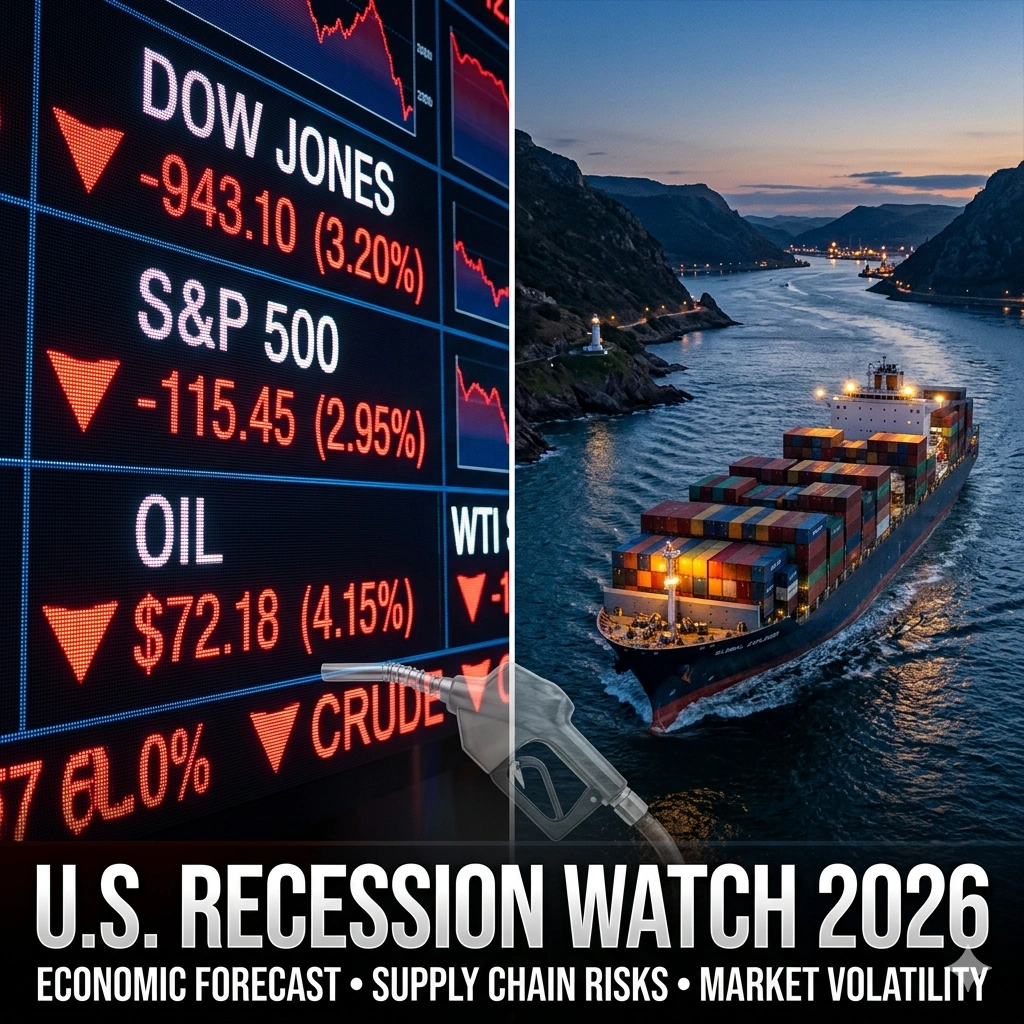
Historical Impact of Oil Shocks on Global Markets
History shows that energy spikes often precede significant economic shifts in the United States and Europe. When examining previous decades, we see that sudden supply disruptions usually lead to immediate cooling in consumer discretionary spending. Rising Energy Prices and Middle East Conflict have historically forced central banks into difficult positions regarding interest rate hikes. The 1970s serve as a stark reminder of how geopolitical instability can derail domestic growth for several years.
Modern energy efficiency has improved significantly since those era-defining crises, yet the core vulnerability remains high for logistics and manufacturing. Companies are now struggling to maintain profit margins while facing increased transportation costs for raw materials. Rising Energy Prices and Middle East Conflict are creating a ripple effect that touches every sector from agriculture to high-tech hardware production. Investors are searching for safe havens as the uncertainty surrounding the Persian Gulf continues to intensify.
Current data suggests that the American economy is better positioned to handle these shocks than it was fifty years ago. The shift toward renewable energy and domestic shale production provides a vital buffer against total supply collapse. Even so, Rising Energy Prices and Middle East Conflict create enough friction to slow down the robust recovery seen in early 2025. Policy experts argue that strategic petroleum reserve releases may be necessary to stabilize the current national average for fuel costs.
Rising Energy Prices and Middle East Conflict
The intersection of military tension and resource scarcity has created a volatile atmosphere for global trade. Rising Energy Prices and Middle East Conflict have fundamentally altered the risk assessment for international shipping companies operating in the region. Many vessels are now opting for longer, more expensive routes to avoid potential combat zones near the Suez Canal. This detour adds significant time to delivery schedules, further complicating the global supply chain recovery.
Insurance premiums for cargo ships have skyrocketed, adding another layer of cost to basic consumer goods. Rising Energy Prices and Middle East Conflict are not just affecting the fuel pump but are also inflating the price of imported electronics and clothing. Economists warn that if these logistical hurdles persist, the cumulative effect could mimic a traditional supply-side recession. The government is currently exploring maritime security initiatives to protect these vital commercial shipping lanes.
Domestic energy production in the United States has reached record levels, yet the global nature of oil pricing keeps local costs high. Rising Energy Prices and Middle East Conflict influence the Brent Crude benchmark, which dictates the pricing for many American refineries. Even if the U.S. produces enough for its own needs, the interconnectedness of the global market remains a primary risk factor. This complex dynamic is why many analysts remain cautious about the economic outlook for the fourth quarter of 2026.
Federal Reserve Policy Response to Inflationary Pressures
The Federal Reserve faces a daunting task as it attempts to balance price stability with the need for continued economic growth. Rising Energy Prices and Middle East Conflict contribute to higher headline inflation, making it difficult for officials to justify cutting interest rates. If the central bank keeps rates high for too long, they risk triggering the very recession they are trying to avoid. Conversely, moving too quickly could allow inflation to become entrenched in the service sector.
Market participants are closely watching the Federal Open Market Committee meetings for any shift in rhetoric regarding geopolitical risk. Rising Energy Prices and Middle East Conflict have become a standard fixture in the “beige book” reports detailing regional economic conditions. Most governors agree that while the labor market remains strong, the cooling effect of high energy costs is starting to appear in retail data. The delicate dance of monetary policy has never been more scrutinized than it is right now.
- Central banks may implement temporary liquidity facilities to help banks manage increased volatility.
- Government subsidies for low-income households could be expanded to offset heating and transportation costs.
- Trade agreements with non-OPEC nations are being fast-tracked to ensure supply diversity for the winter months.
- Strategic energy conservation measures are being discussed at the state level to reduce overall demand.
Consumer Sentiment and Household Spending Habits
American households are feeling the pinch as the cost of living continues to rise alongside global tensions. Rising Energy Prices and Middle East Conflict have a direct psychological impact on how people view their financial future and long-term security. When gas prices exceed certain psychological thresholds, consumers often pull back on dining out and travel. This reduction in local spending can have a devastating effect on small businesses that rely on consistent foot traffic.
The automotive industry is seeing a renewed interest in electric vehicles and fuel-efficient hybrids as a direct result of the crisis. Rising Energy Prices and Middle East Conflict serve as a catalyst for changing consumer preferences toward more sustainable technology. However, the high initial cost of these vehicles remains a barrier for many middle-class families facing general inflation. The gap between the wealthy and the working class is widening as energy costs consume a larger portion of smaller paychecks.
Wage growth has struggled to keep pace with the 43% surge in energy costs seen over the last few months. Rising Energy Prices and Middle East Conflict have essentially neutralized the gains workers achieved through collective bargaining earlier in the year. Many families are now tapping into their savings or increasing credit card debt to cover basic necessities. If this trend continues, the domestic economy could face a significant contraction in the housing and durable goods markets.
Impact on Global Supply Chains and Manufacturing
Manufacturing hubs in Asia and Europe are particularly sensitive to the fluctuations caused by the current war. Rising Energy Prices and Middle East Conflict have increased the cost of electricity needed to run large-scale industrial plants. In Germany and Japan, industrial output has already shown signs of slowing down as energy-intensive industries reduce their shifts. This global slowdown eventually reaches American shores in the form of higher prices for intermediate components.
The “just-in-time” delivery model is being replaced by a “just-in-case” strategy as companies hoard essential materials. Rising Energy Prices and Middle East Conflict have made it clear that relying on a single geographic region for energy or parts is a major risk. Corporations are now investing heavily in near-shoring projects to bring production closer to the end consumer. While this move offers long-term stability, the transition period is marked by high capital expenditures and temporary inefficiency.
- Semiconductor manufacturers are looking for alternative energy sources to power their highly sensitive fabrication facilities.
- The aerospace industry is adjusting its fuel surcharge policies to account for the extreme volatility in kerosene prices.
- Agricultural producers are warning of higher food prices as fertilizer production requires significant amounts of natural gas.
Future Outlook for Energy Markets and Geopolitical Stability
The long-term trajectory of the U.S. economy depends heavily on how quickly the current conflict can be de-escalated. Rising Energy Prices and Middle East Conflict are likely to remain a dominant theme in the news cycle for the foreseeable future. Analysts suggest that a diplomatic breakthrough could lead to a rapid “relief rally” in the stock and bond markets. Until then, defensive positioning remains the preferred strategy for institutional investors and pension fund managers.
Technology may provide the ultimate solution to the volatility introduced by Rising Energy Prices and Middle East Conflict. Advancements in battery storage and nuclear modular reactors are receiving unprecedented levels of private and public funding. If the United States can decouple its economic health from Middle Eastern stability, the threat of a fuel-driven recession would diminish. This transition will take years, but the current crisis is providing the necessary motivation to accelerate the process.
Experts continue to debate the “soft landing” versus “hard landing” scenarios as the year progresses toward its conclusion. Rising Energy Prices and Middle East Conflict have certainly made the soft landing more difficult to achieve for the Federal Reserve. However, the underlying strength of the American labor market provides a solid foundation that may prevent a deep depression. Constant vigilance and adaptive policy will be required to navigate the turbulent waters of the 2026 global economy.
Strategic Defense and Energy Security Initiatives
The United States government is currently rethinking its strategic approach to both defense and energy production. Rising Energy Prices and Middle East Conflict have highlighted the need for a more robust and localized energy infrastructure. New legislation is being proposed to streamline the permitting process for domestic drilling and renewable energy projects. These efforts aim to reduce the country’s reliance on regions that are prone to sudden military escalations and political shifts.
International alliances are also being tested as nations compete for limited energy resources in a tightening market. Rising Energy Prices and Middle East Conflict have forced many European countries to seek deeper partnerships with North American suppliers. This shift in the geopolitical landscape has long-term implications for trade balances and diplomatic leverage. The ability to export liquefied natural gas has become a key component of American foreign policy and economic strength.
Military expenditures are also on the rise as the U.S. seeks to protect commercial interests in the Persian Gulf. Rising Energy Prices and Middle East Conflict require a persistent naval presence to deter further disruptions to the oil supply. These defense costs eventually find their way into the national budget, contributing to the debate over fiscal responsibility. The balance between maintaining global order and ensuring domestic prosperity is a central theme for the upcoming election cycle.
Corporate Earnings and Market Volatility
Wall Street is currently experiencing a period of intense volatility as earnings reports reflect the higher cost of operations. Rising Energy Prices and Middle East Conflict have forced many Fortune 500 companies to revise their guidance for the remainder of the year. Investors are rewarding companies that demonstrate high energy efficiency and strong pricing power over their customers. Conversely, sectors like airlines and traditional retail are seeing significant sell-offs as their margins are squeezed.
The bond market is also reacting to the inflationary pressures caused by Rising Energy Prices and Middle East Conflict. Yields have moved higher as investors demand more compensation for the risk of persistent price increases. This shift affects everything from mortgage rates to the cost of corporate debt, further cooling the broader economy. Many financial advisors are recommending a shift toward commodities and inflation-protected securities to preserve capital in this environment.
- Tech companies are focusing on optimizing data center energy usage to mitigate the impact of rising utility bills.
- Retailers are consolidating shipments to reduce the total number of trips required to stock their shelves.
- Banks are increasing their loan loss reserves in anticipation of potential defaults from energy-sensitive businesses.
Environmental Implications of the Energy Crisis
While the immediate focus is on the economy, the environmental impact of the current situation is also significant. Rising Energy Prices and Middle East Conflict have led some regions to revert to coal and other high-emission fuels to bridge the gap. This temporary setback in climate goals is a concern for scientists and policymakers worldwide. However, it also underscores the urgency of moving toward a more diversified and resilient green energy grid.
The high cost of fossil fuels is making renewable energy projects more economically competitive than ever before. Rising Energy Prices and Middle East Conflict are inadvertently speeding up the “payback period” for solar and wind installations. Homeowners are increasingly looking at heat pumps and home battery systems to gain independence from the fluctuating grid. This bottom-up transition could eventually lead to a more stable energy landscape that is less susceptible to foreign wars.
The discourse around energy policy is shifting from purely environmental concerns to national security and economic survival. Rising Energy Prices and Middle East Conflict have proven that energy independence is a prerequisite for a stable modern society. As the conflict continues, the push for innovation in carbon capture and alternative fuels is likely to gain even more momentum. The goal is to ensure that the next global crisis does not have the same power to paralyze the American economy.
Real Estate and the Impact on Housing Markets
The housing market is not immune to the shocks caused by Rising Energy Prices and Middle East Conflict. Higher energy costs translate to higher utility bills for homeowners, effectively reducing their monthly purchasing power. Construction companies are also facing higher costs for materials like asphalt, plastic pipes, and heavy machinery fuel. These factors combine to keep home prices high even as interest rates make borrowing more expensive for the average buyer.
Suburban areas that require long commutes are seeing a slight cooling in demand as gas prices stay elevated. Rising Energy Prices and Middle East Conflict are making urban living and transit-oriented developments more attractive to young professionals. This shift in real estate trends could have long-term effects on urban planning and infrastructure investment. Developers are now prioritizing energy-efficient appliances and superior insulation as standard features in new builds.
The rental market is also seeing upward pressure as landlords pass on their increased maintenance and utility costs. Rising Energy Prices and Middle East Conflict are contributing to a broader cost-of-living crisis that affects renters more than any other group. Government programs for rental assistance are being stretched thin as more families struggle to keep up with rising costs. The stability of the housing sector remains a key indicator of whether a recession will be mild or severe.
Conclusion and Final Economic Thoughts
As we move further into 2026, the global community remains on edge regarding the potential for further escalation. Rising Energy Prices and Middle East Conflict have clearly shown that the U.S. economy is still deeply linked to global energy markets. While the threat of a recession is real, the resilience of the labor market and technological innovation offer a glimmer of hope. The coming months will be a critical test for leaders in both the public and private sectors.
The primary takeaway for investors and consumers is the importance of adaptability and forward-looking planning. Rising Energy Prices and Middle East Conflict are external shocks that cannot be controlled, but their impact can be mitigated. Diversifying energy sources, reducing waste, and maintaining a cautious financial outlook are the best defenses against current volatility. The American economy has survived many crises before, and with the right strategy, it can weather this one as well.
Ultimately, the duration of the conflict will be the deciding factor for the global economic trajectory. Rising Energy Prices and Middle East Conflict may be a temporary hurdle or a long-term shift in the global order. Staying informed and prepared is the only way to navigate the uncertainty that lies ahead. As 2026 continues to unfold, all eyes will remain on the Middle East and the fluctuating prices at the pump.
For more details & sources visit: Harvard Business Review
For the latest updates from the United States, visit our U.S. news page.