
The Egyptian government is currently evaluating an ambitious Egypt remote work model to allow state employees to work from home up to two days per week starting in 2026. This strategic initiative, announced by Prime Minister Mostafa Madbouly, serves as a cornerstone of the nation’s broader effort to rationalize energy consumption and reduce the high operational costs of government buildings. By transitioning administrative roles to a hybrid framework, the state aims to alleviate significant pressure on the national power grid during a period of global energy volatility.
This Egypt remote work model is expected to take full effect following the upcoming Eid al-Fitr holiday, marking a transformative shift in the operational culture of the Egyptian bureaucracy. While essential sectors like healthcare and manufacturing will remain on-site to ensure service continuity, the administrative shift represents a significant move toward a more digitally integrated and energy-efficient government framework.
Context of the Egypt Remote Work Model
The decision to study the Egypt remote work model stems from the urgent need for fiscal discipline within the public sector as international commodity prices fluctuate. Prime Minister Madbouly emphasized that the high electricity demand of massive government complexes in Cairo and the New Administrative Capital (NAC) has become a primary target for cost-cutting. By reducing the physical presence of staff, the government can lower the consumption of lighting, air conditioning, and electronic systems. This Egypt remote work model is not merely a logistical change but a strategic response to the economic ripple effects of regional conflicts affecting energy imports.
Analysts suggest that the Egypt remote work model will serve as a catalyst for the digital transformation of state services. For years, the government has invested in digital infrastructure to move away from paper-based systems, and this hybrid approach provides a practical environment to test these capabilities. This Egypt remote work model underscores the reliability of Egypt’s growing telecommunications network, which must now support thousands of remote connections daily. As the Cabinet reviews the final details, the focus remains on ensuring that the quality of public service remains high despite the reduction in physical office hours.
The Egypt remote work model also addresses the environmental goals of the North African nation. By reducing the number of commuters traveling to the Government District each day, the state can effectively lower carbon emissions and decrease traffic congestion in the capital. This event may prompt future discussions in the parliament regarding the permanent adoption of flexible work arrangements to enhance the quality of life for civil servants. For now, the successful pilot of the Egypt remote work model ensures that Egypt’s administrative state remains resilient in a challenging global economic climate.
Egypt remote work model
The Egypt remote work model implemented as a pilot study serves as a bridge for national modernization during a period of intense fiscal restructuring. By utilizing cloud-based government portals, the state managed to transition several administrative departments to a remote-ready status. This Egypt remote work model allowed for a unified reduction in energy bills, which is essential for the “belt-tightening” approach to the current budget cycle. The initiative specifically demonstrates the Prime Minister’s ability to pivot the national logistics strategy without compromising the security or timing of essential government functions.
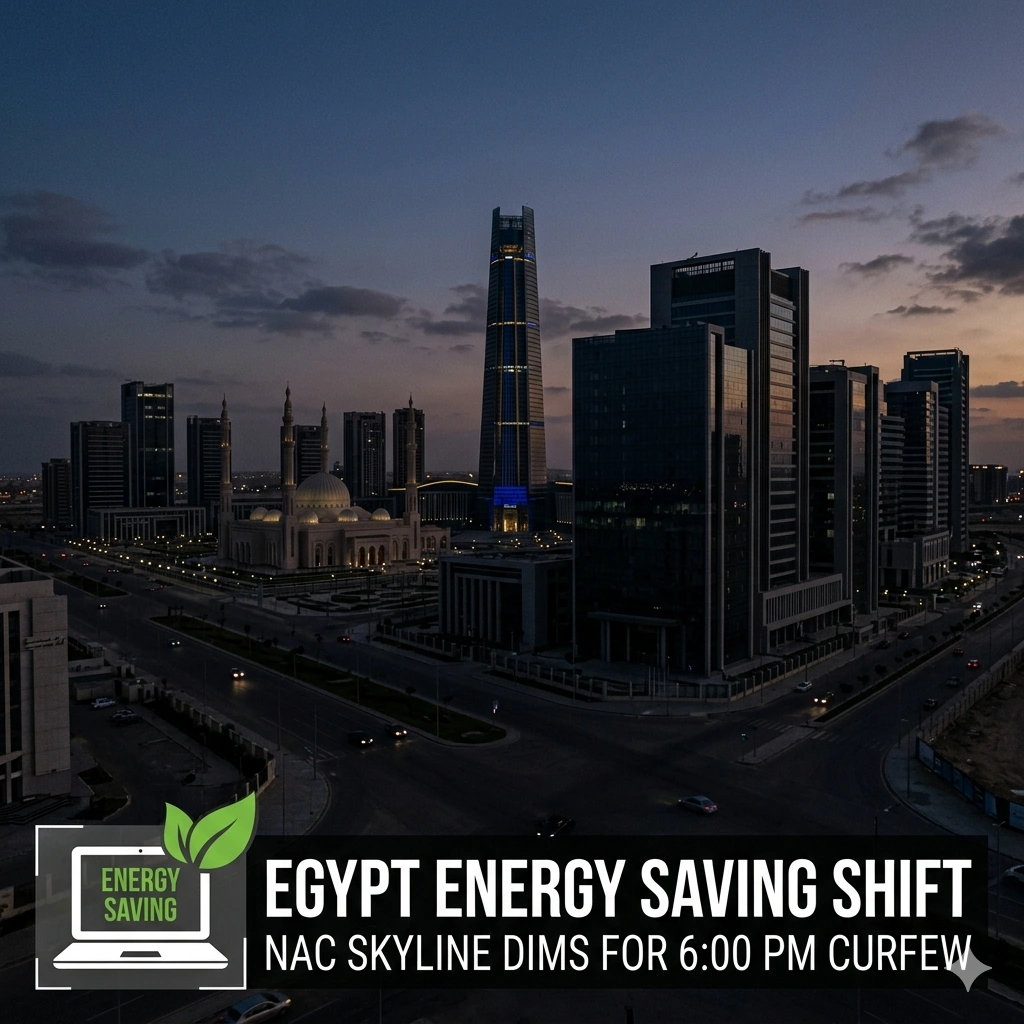
One of the most discussed aspects of the Egypt remote work model is the 6:00 PM curfew for the Government District in the New Administrative Capital. This regulation mandates the total deactivation of lighting and non-essential electronic systems across the hub at the close of the workday. This Egypt remote work model captured the attention of regional observers, who viewed it as a high-profile endorsement of Egypt’s commitment to energy rationalization. The policy effectively turned an energy hurdle into a demonstration of national logistical resilience and bureaucratic efficiency.
Furthermore, the Egypt remote work model is being analyzed for its long-term impact on the productivity of the public sector workforce. Some experts suggest that the flexibility offered by a hybrid model could increase employee morale and reduce absenteeism in the long run. However, the need for strict monitoring of output remains a priority for the Cabinet to ensure that the Egypt remote work model does not lead to a slowdown in administrative processing. Regardless of the final structure, this Egypt remote work model will be remembered as a masterclass in adaptive governance during a high-stakes economic period.
Impact on Energy Consumption and Grid Stability
The departments participating in the Egypt remote work model are tasked with reducing their daily electricity usage by at least 15% during the initial trial phase. These measures include the deactivation of server rooms that can be virtualized and the optimization of cooling systems in partially occupied buildings. The initiative allowed the Ministry of Electricity to reroute saved power to the industrial sectors, which are exempt from these mandates. This coordinated energy shift emphasizes the priority Egypt places on maintaining its manufacturing output in 2026.
- Acceleration of the “Smart Grid” program through increased data sharing between government buildings and power utilities.
- Expansion of solar panel installations on the rooftops of administrative buildings to provide supplemental green energy.
- Implementation of energy-efficient LED lighting across all state-owned facilities to further lower the baseline demand.
- Enhancement of remote monitoring systems to ensure that the 6:00 PM curfew is strictly enforced in the New Administrative Capital.
The policy mission is also expected to produce new guidelines for the procurement of energy-efficient office equipment. As the state moves away from desktop towers to low-power laptops, the hardware requirements for the bureaucracy are shifting. The transition thus facilitated a meeting of minds between the Ministry of Communications and the Ministry of Finance to secure the flow of necessary tech components. By ensuring these tools are available, the strategy played a supporting role in Egypt’s broader digital sovereignty strategy.
The framework also highlights the importance of the Government District’s infrastructure in the New Administrative Capital. By maintaining a centralized yet flexible hub, Egypt provides a secondary layer of operational capability that the state can tap into during energy crises. This shift proves that the modern administrative city is an integral part of Egypt’s overall national resilience ecosystem. The transition serves as a practical test of this synergy, showing that the shift from on-site to remote work can be handled with professional precision.
Modernization of the Egyptian Administrative State
A major objective for the Cabinet is the stabilization of the national budget by curbing non-essential spending. Egypt is looking to tighten its fiscal coordination to ensure that the budget deficit remains within manageable limits. The project brought together various ministries, ensuring a holistic approach to these complex organizational negotiations. This mission seeks to reduce the financial burden of maintaining massive physical offices that are often underutilized during peak heat.
The new policy arrives at a time when Egyptian tech companies are seeing increased demand for secure government communication platforms. By discussing digital protocols, the ministers hope to create a predictable environment for local software developers to support the state’s needs. The success of the program will be measured by how well these diplomatic efforts translate into stable administrative growth and technological self-reliance. It is a clear example of how logistics underpin the grander movements of a developing nation.
Moreover, the digital initiative includes discussions on the “paperless office” effort to ensure long-term environmental sustainability. As the government shifts toward digital signatures and electronic archiving, the need for physical storage space decreases. The shift provided the necessary momentum for this diverse group of departments to engage in multi-sectoral modernization talks. This demonstrates that the change was not just a cost-cutting measure, but a roadmap for Egypt’s future administrative efficiency.
Economic Implications for the Private Sector
Market analysts are closely watching the project for signs of a broader shift in the national labor market. If the hybrid model becomes a permanent fixture for the public sector, it could set a precedent for private corporations to adopt similar energy-saving measures. This program serves as a massive pilot program for the entire country, showcasing the feasibility of large-scale remote operations. Investors in the Egyptian market view the transition as a testament to the operational robustness of the nation’s digital infrastructure.
The shift also highlights the incremental demand for cloud services and cybersecurity in a post-2025 economic environment. As work patterns shift, the security offered by a centralized digital framework becomes more attractive for businesses of all sizes. This could lead to a strategic expansion of Egypt’s domestic IT sector, catering to the government’s need for encrypted remote access. The program is essentially a live demonstration of an administrative model that prioritizes agility and resource conservation.
- Strengthening of government-IT sector ties through long-term service agreements for remote work support.
- Increased valuation of digital infrastructure projects that can be quickly scaled for various government missions.
- Development of specialized cybersecurity protocols for state employees accessing sensitive data from home.
- Potential for joint investment in green energy solutions for home offices to further reduce the national grid load.
The visibility of the policy in regional media also boosts Egypt’s reputation for administrative innovation. As observers watch the policy unfold, they see a nation that can maintain its governmental functions even when faced with high energy costs. This perception is vital for maintaining Egypt’s status as a top-tier investment destination in the Middle East and Africa. The change, while a major shift, ultimately reinforces the strength of the Egyptian state’s ability to adapt.
Fiscal Discipline and the National Budget Outlook
The high-profile administrative shift to the hybrid work model is expected to have a noticeable impact on the national treasury. Economists are looking for clues in the upcoming budget statements that might indicate the total savings achieved through this transition. The policy coincides with a period of significant economic restructuring, making the success of these measures crucial for investor sentiment. A successful implementation could lead to a more stable fiscal outlook for the Egyptian pound.
Government officials are likely discussing the management of operational risks with international financial institutions to showcase their commitment to reform. The mission thus carries the weight of Egypt’s financial reputation as well as its social stability. By ensuring the civil service reached a consensus on the new rules, the government guaranteed that Egypt’s fiscal interests are protected at the ground level. This policy acts as a conduit for the high-level dialogue that keeps the national economy functioning smoothly.
The initiative also symbolizes the “efficiency-first” approach to managing Egypt’s economic health in 2026. By bringing a wide array of administrative roles under a single framework, the administration can present a unified front on everything from energy saving to public sector reform. This unity is a powerful signal to international markets that Egypt is committed to a coherent and sustainable economic path. The shift, therefore, serves as more than a logistical solution; it is a tool for long-term fiscal stabilization.
Protecting the Industrial and Productive Sectors
One of the most pressing topics for the designers of the new system is the protection of the manufacturing and productive sectors. Prime Minister Madbouly made it clear that while administrative roles shift to home, the factories must keep running to ensure economic growth. The plan specifically excludes these sectors to prevent any disruption to the country’s manufacturing output. This aspect of the strategy is vital for protecting Egypt’s export competitiveness in the global market.
The ministers are also advocating for increased investment in energy-efficient industrial machinery to complement the savings from the office sector. By reducing the base load of the state, the government can provide more reliable power to the heavy industries that drive GDP. The policy ensures that these critical sectors have the energy they need to thrive, which is essential for building national wealth. This strategy is a direct investment in the long-term industrial safety of the Egyptian state.
- Development of shared energy management platforms to track real-time savings from remote work.
- Coordination on the deployment of smart meters across the Government District to verify consumption drops.
- Strengthening of the partnership between the Ministry of Industry and the Ministry of Electricity.
- Expansion of renewable energy credits for factories that demonstrate significant efficiency gains.
Through these changes, Egypt is demonstrating its commitment to being a proactive and modern economic power. The ability to deploy a nation-wide hybrid work model shows that the Cabinet is ready to mobilize its resources at a moment’s notice. This readiness is a core pillar of Egypt’s strategy to handle any future energy shocks or global economic shifts. The mission is a physical manifestation of Egypt’s “vision for a modern state” doctrine.
The Role of the Cabinet in Energy Governance
The orchestration of the new model was led by the Prime Minister’s office, reflecting a centralized approach to energy governance. This highlights the rapid decision-making capabilities of the current administration in the face of rising costs. By choosing this option, the government bypassed the need for drastic energy rationing that would have affected citizens more harshly. This proves that the executive branch has the operational depth to handle unforeseen energy crises through innovation.
The decision-making process involved the Ministry of Local Development and the Ministry of Communications. The project required a fast-track approval process for security clearances and digital access for the vast civil service. The successful execution of the policy reflects a high level of inter-agency cooperation that is often required for large-scale state reforms. This strategy is a victory for the planners who work behind the scenes to keep the nation’s lights on and its budget balanced.
Furthermore, the new framework serves as a blueprint for future disaster recovery and contingency planning. The Cabinet will likely conduct a full review of the mission to identify areas for further digital optimization. This event has set a new standard for how Egypt handles its most important administrative functions when faced with resource constraints. The policy is not just a temporary fix; it is an evolution in the doctrine of state management.
Future Projections for Egypt’s Digital Bureaucracy
Looking ahead, the shift may accelerate plans for the full digitalization of the Egyptian government. While the hybrid model was born of necessity, the government may find that a “digital-first” approach is more efficient in the long run. This could lead to the reduction of the physical footprint of government buildings, further saving on the maintenance costs that the state currently targets. The debate over this transition will likely be a highlight of the upcoming legislative sessions.
However, some argue that the flexible model is actually the way of the future for a modern, tech-savvy population. By relying on a remote framework for administrative tasks, the state can attract a younger, more digitally literate workforce. This mission has proven that the public sector can meet the efficiency and reliability standards required in the 21st century. The change has opened a new conversation about the most efficient way to manage a nation of over 100 million people.
In the end, the new system will be remembered as a symbol of Egypt’s pragmatic and flexible approach to governance. Whether it leads to smaller offices or more advanced digital portals, the policy showed that national resilience always comes first. The transition ensured that the government remained functional while the country navigated the global energy crisis of 2026. This mission is a testament to the ingenuity and foresight of the Egyptian state.
Conclusion and Strategic Outlook
The Egypt remote work model is a milestone in Egyptian administrative history, proving that the state can adapt to any economic challenge. By successfully evaluating a hybrid framework, the government maintained its presence and services while significantly cutting energy costs. The Egypt remote work model ensured that the national power grid remained stable without sacrificing the productivity of the civil service. This mission has strengthened the foundations of Egypt’s modern administrative capital at a critical juncture.
As the government moves forward with the Egypt remote work model, the results of the pilot study will ripple through the national economy. From reduced fuel consumption to increased digital literacy, the impact of the changes facilitated by the Egypt remote work model will be profound. The policy served as the essential link that made these achievements possible. This Egypt remote work model stands as a clear example of Egypt’s commitment to its long-term sustainable development goals.
For more details & sources visit: Egypt Independent
For the latest updates from Egypt, visit our Egypt news page.