
The Palestinian prisoners have faced a harrowing increase in fatalities and reported systemic abuse since the escalation of conflict in October 2023. According to recent reports from the Palestinian Prisoners’ Society, at least 89 detainees have died in Israeli custody. This surge in deaths, the majority of which involve individuals from the Gaza Strip, has triggered a wave of international condemnation. Human rights organizations are now calling for immediate independent investigations into what they describe as a “laboratory of calculated cruelty” within the prison system.
Recent data suggests that the Palestinian prisoners are being held in conditions that frequently lead to severe medical neglect and physical trauma. The death of Marwan Herzallah this past Saturday serves as a somber reminder of the vulnerabilities faced by those with pre-existing injuries. Herzallah, who had previously lost a limb, reportedly succumbed to the harsh environment of his detention after being arrested in January. His case is one of many that highlight the lack of adequate specialized care for detainees suffering from chronic conditions or war-related wounds.
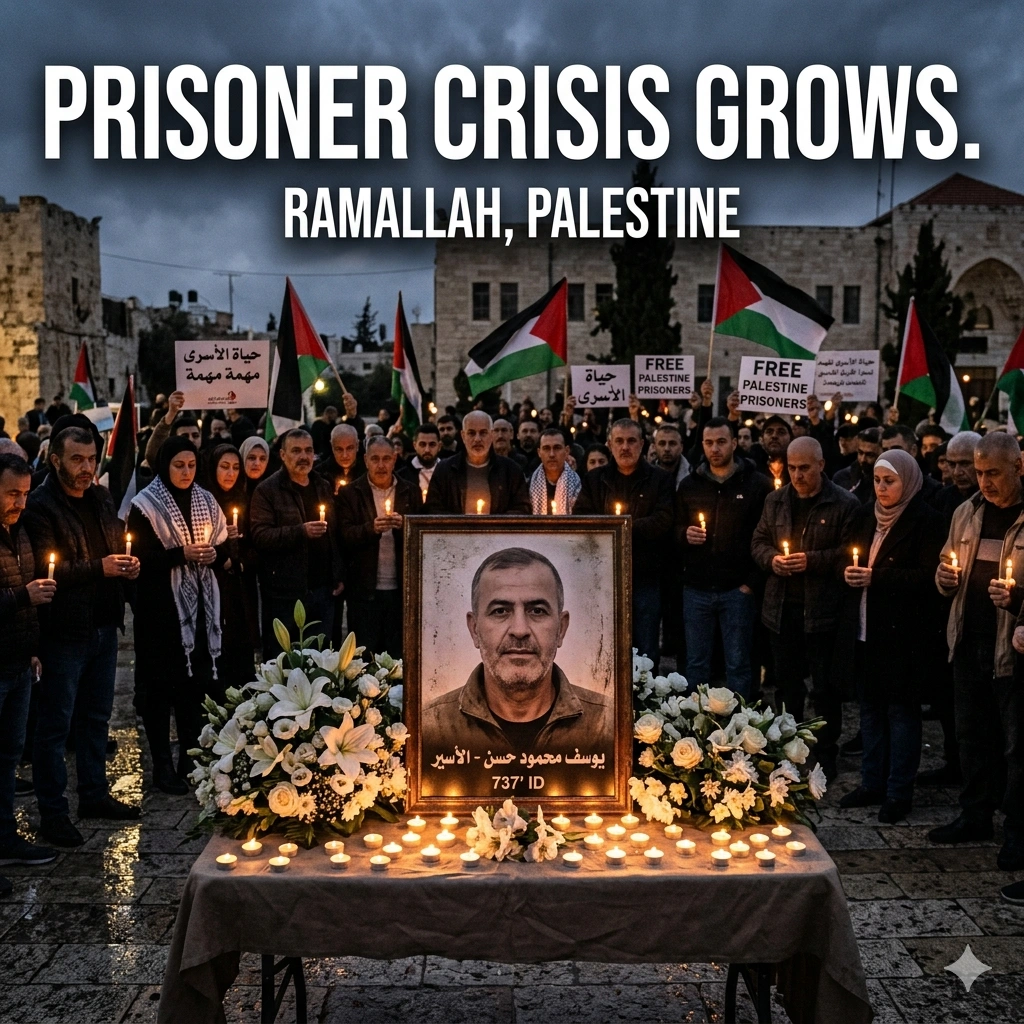
Palestinian prisoners
The Palestinian prisoners from the Gaza Strip constitute the largest demographic among the recent fatalities, with 52 out of the 89 confirmed deaths originating from the enclave. These individuals are often detained during military operations and transported to facilities where their legal status remains ambiguous for extended periods. Human rights groups like Addameer have expressed concern over the “incommunicado” nature of these detentions, which leaves families in the dark regarding the health and whereabouts of their relatives. This lack of transparency is a central theme in the ongoing legal challenges against the prison administration.
The Palestinian prisoners also include a significant number of children, with at least 1,500 minors reportedly detained at various points since October 2023. While many children are eventually released, the experience of incarceration at such a young age is described by UN officials as deeply traumatizing. Reports of starvation and physical abuse among the youth population have surfaced, leading to calls for special protections for underaged detainees. The long-term impact of these experiences on the “Generation of the Conflict” remains a primary concern for social workers and psychologists in the occupied territories.
- Death Toll: 89 confirmed fatalities since October 2023.
- Geographic Origin: 52 of the deceased were residents of the Gaza Strip.
- Child Detainees: At least 1,500 children have been processed through the system.
- Current Population: Roughly 9,500 Palestinians remain in various Israeli jails as of March 2026.
The Palestinian prisoners held in administrative detention—those held without charge or trial—face a unique form of psychological pressure. This practice allows for indefinite incarceration based on “secret evidence” that neither the prisoner nor their lawyer can review. As of 2026, the use of this measure has reached record levels, contributing to the overall sense of injustice felt by the Palestinian community. For many, the prison system has become a symbol of the broader struggle for legal recognition and basic human dignity under occupation.
Systematic Abuse and Medical Neglect
The Palestinian prisoners have consistently reported “systematic” abuse, ranging from sleep deprivation to more severe forms of physical and psychological torture. UN Special Rapporteur Francesca Albanese has been vocal about these conditions, highlighting the use of starvation as a method of control within the facilities. These allegations are supported by testimonies from released detainees who describe a complete lack of medical supplies and the rationing of water to dangerous levels. The term “calculated cruelty” has been used to describe a system that appears designed to break the spirit of the incarcerated.
Medical neglect is cited as a primary cause in many of the 89 deaths recorded for Palestinian prisoners since the escalation began. In many instances, requests for urgent surgical intervention or chronic medication are reportedly ignored or delayed by weeks. The case of Marwan Herzallah is particularly indicative of this trend, as his physical disability made him especially susceptible to the lack of specialized care. Rights groups argue that the failure to provide a minimum standard of healthcare constitutes a violation of the Fourth Geneva Convention regarding the treatment of protected persons.
The Case of Marwan Herzallah
The death of Marwan Herzallah has become a focal point for those documenting the plight of Palestinian prisoners in 2026. Having survived a shooting in the 1990s that cost him his leg, Herzallah was an individual whose health required consistent monitoring. His arrest in January and subsequent death just months later have raised questions about the threshold for “fitness for detention.” His family maintains that he was in relatively stable health prior to his arrest, suggesting that the conditions within the jail were the direct cause of his rapid decline.
Herzallah’s story resonates with many Palestinian prisoners who carry the physical scars of previous decades of conflict. For these individuals, the current prison environment is not just a place of confinement but a site of physical deterioration. The Palestinian Prisoners’ Society has used his case to illustrate the “lethal” nature of current detention policies for the elderly and the disabled. His death has sparked protests across the West Bank, with demonstrators demanding an end to the “neglect unto death” policy they believe is being enacted.
- Arrest Date: January 2026.
- Physical Condition: Amputee from a prior conflict-related injury.
- Reported Cause: Complications arising from detention conditions and lack of medical aid.
Detention Statistics and Child Prisoners
The sheer volume of Palestinian prisoners currently in the system is staggering, with nearly 10,000 people behind bars. This includes men, women, and children from every corner of the occupied territories and the Gaza Strip. The detention of 1,500 children since October is a statistic that particularly haunts international human rights advocates. These children are often subjected to the same harsh interrogation techniques as adults, sometimes without the presence of a guardian or legal counsel. The “legalized” detention of minors remains one of the most controversial aspects of the current security framework.
- Approximately 10% of the current Palestinian prisoners are believed to be under the age of 18.
- Reports of sexual assault and humiliation have been documented by various UN-linked organizations.
- The lack of educational facilities for child detainees is seen as a violation of their basic rights.
The long-term social consequences of having such a large percentage of the youth population as former Palestinian prisoners cannot be ignored. Experts warn that the resentment built during these periods of incarceration will likely fuel future cycles of violence. Instead of acting as a deterrent, the prison system is often viewed by Palestinians as a “factory of resistance.” This cycle of arrest and release is creating a generation that views the legal system through a lens of systemic bias and physical suffering.
Withholding Bodies of the Deceased
A particularly painful aspect of the crisis for Palestinian prisoners is the practice of withholding the bodies of those who die in custody. As of March 2026, 97 bodies remain in Israeli possession, some held in refrigerated units and others in what are known as “cemeteries of numbers.” For Palestinian families, the inability to perform a religious burial is a form of collective punishment that extends the trauma of death indefinitely. This policy is frequently challenged in international courts but continues to be implemented as a matter of state security policy.
The Palestinian Authority has noted that this practice prevents independent autopsies, which could clarify the exact cause of death for many Palestinian prisoners. Without the body, families have no way to verify if their loved ones were subjected to the torture or neglect that rights groups claim is widespread. This “evidentiary vacuum” allows the detaining power to maintain its own narrative regarding the fatalities. The fight to reclaim the remains of deceased prisoners has become a central part of the broader legal struggle for Palestinian rights in 2026.
Laboratory of Calculated Cruelty
The phrase “laboratory of calculated cruelty” has become a shorthand for the environment faced by Palestinian prisoners today. This description suggests that the abuse is not accidental or the result of individual rogue guards, but rather a structured environment of deprivation. Reports of mass starvation, where prisoners are given only a fraction of their caloric needs, have led to significant weight loss and nutrient deficiencies across the prison population. These conditions are reportedly exacerbated by the frequent use of isolation and the denial of family visits.
For the Palestinian prisoners, the “calculated” nature of this environment includes the removal of personal items, including hygiene products and clothing. Released detainees have described being kept in the same clothes for months, leading to skin diseases and other infections. This level of degradation is seen as a psychological tool used to demoralize the inmate population. When combined with the constant threat of physical violence, the result is a system that UN Special Rapporteur Francesca Albanese describes as one of the most punitive in modern history.
- Starvation: Prisoners report receiving one meal a day of poor quality.
- Hygiene: Denial of soap, toothpaste, and clean laundry for extended periods.
- Isolation: Use of solitary confinement as a primary disciplinary tool.
International Legal Accusations
The Palestinian Authority has formally brought the issue of Palestinian prisoners to the international stage, accusing Israel of a “deliberate policy” of lethal abuse. These accusations are supported by a growing body of evidence from international NGOs and UN agencies. The total number of deaths in custody since 1967—reaching 326—is presented as proof of a long-standing pattern of disregard for human life. In 2026, the focus has shifted toward the International Criminal Court (ICC) to determine if these actions constitute war crimes or crimes against humanity.
The defense offered by Israeli authorities typically centers on security necessity and the “terrorist” affiliation of the Palestinian prisoners. They maintain that all deaths are investigated internally and that the conditions meet basic international requirements. However, the lack of access for independent monitors like the International Committee of the Red Cross (ICRC) has made these claims difficult to verify. This “information blockade” is one of the primary hurdles for those seeking to protect the rights of the detainees.
Long-Term Impact on Palestinian Society
The trauma experienced by Palestinian prisoners ripples outward, affecting every family and community in the region. With nearly one in five Palestinians having been detained at some point in their lives, the prison experience is a universal element of the national identity. The 89 deaths since October 2023 have added a new layer of mourning to an already exhausted population. For many, the prison is no longer a place of temporary detention but a site of “terminal” neglect where survival is never guaranteed.
As we look toward the remainder of 2026, the status of the remaining 9,500 Palestinian prisoners hangs in the balance. Without a significant shift in policy or a breakthrough in ceasefire negotiations, the number of fatalities is expected to rise. The international community’s ability to intervene will be a test of the global commitment to human rights in conflict zones. Until then, the families of those in custody remain in a state of constant anxiety, waiting for news that their loved ones are still alive.
For more details & sources visit: Arab News
Read more about Palestine news on 360 News Orbit – Palestine.