
Pakistan Repays UAE Loan is the defining headline as the federal government successfully settled a multi-billion dollar obligation amid intense fiscal scrutiny. This strategic financial move involves returning a substantial $3.5 billion bilateral deposit to the United Arab Emirates during a period of high regional volatility. While the settlement demonstrates immense sovereign commitment, it simultaneously places the central bank’s foreign exchange reserves under significant and immediate pressure.
The timing of this Pakistan Repays UAE Loan event coincides with the recent maturity of a $1.3 billion Eurobond, which was also settled on schedule earlier this month. Consequently, the cumulative outflow of nearly $5 billion within a single week has sparked intense debate among economists regarding the sustainability of the current reserve levels. Maintaining a healthy balance sheet is essential for the ongoing IMF program requirements.
This specific Pakistan Repays UAE Loan transaction represents a departure from the traditional practice of rolling over bilateral deposits to preserve liquidity. Experts suggest that while the move proves Pakistan is not on the verge of default, it complicates the $18 billion reserve target set for June 2026. The intersection of debt servicing and rising energy costs continues to challenge the national economic recovery.
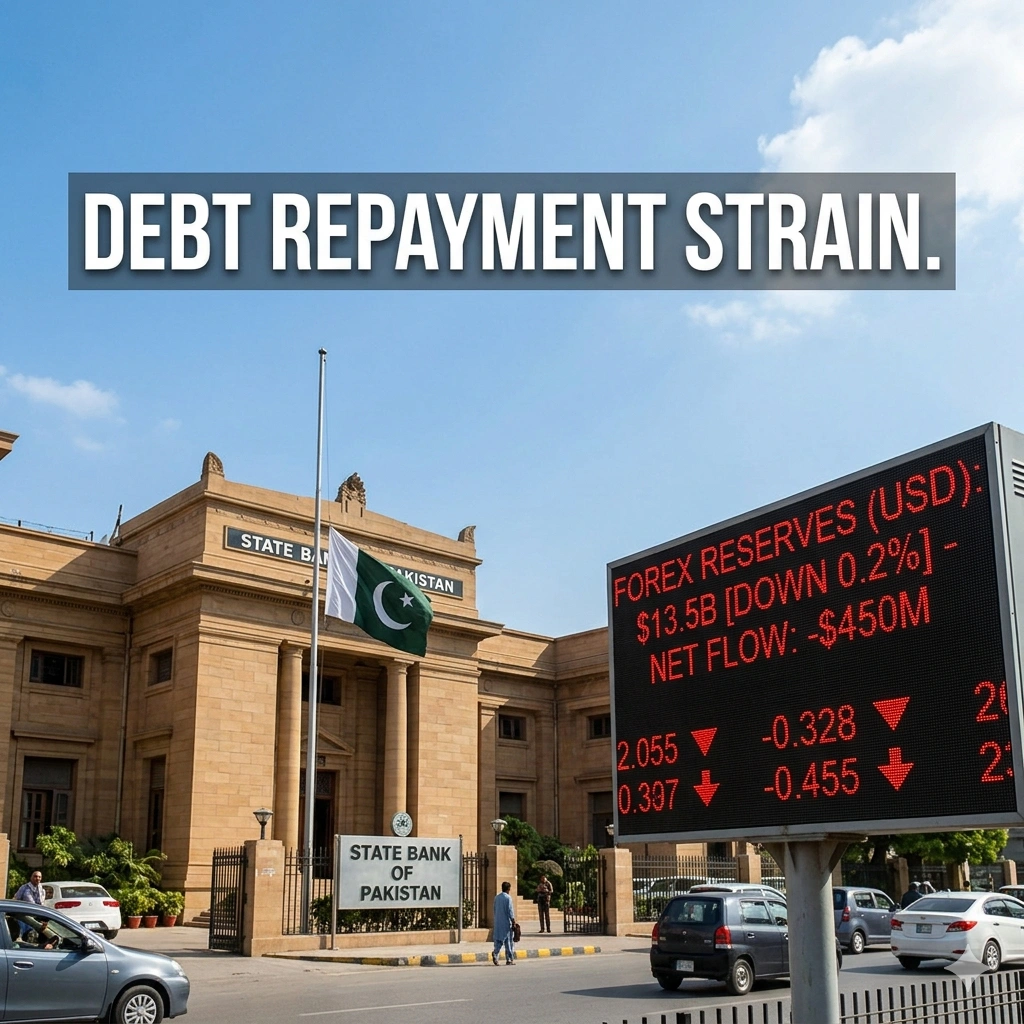
Pakistan Repays UAE Loan
The formal confirmation of the Pakistan Repays UAE Loan settlement has sent ripples through the domestic financial markets as investors assess the impact on currency stability. By transferring $3.5 billion back to the UAE, the State Bank of Pakistan has seen a noticeable dip in its net liquid holdings. This action was necessary to satisfy bilateral agreements that were previously extended during the height of the balance of payments crisis.
Government officials maintain that the Pakistan Repays UAE Loan process was planned well in advance to signal fiscal maturity to international creditors. However, the sheer volume of the payment means that the cushion against external shocks has temporarily thinned. This reduction in liquidity comes at a time when global oil prices remain erratic due to the widening conflict in the Middle East.
Critics argue that the Pakistan Repays UAE Loan decision should have been negotiated for a further extension to protect the rupee from speculative pressure. Despite these concerns, the Ministry of Finance remains optimistic that incoming tax revenues and planned multilateral inflows will bridge the current gap. The delicate balance between debt repayment and economic growth remains the central theme of the 2026 fiscal year.
Economic Implications of the UAE Settlement
The broader impact of the Pakistan Repays UAE Loan cannot be understated when looking at the national debt profile for the second quarter of 2026. This repayment accounts for approximately 18% of the total foreign exchange holdings held by the central bank before the transaction. Such a massive transfer requires careful coordination with the market to prevent a sharp devaluation of the local currency.
While the Pakistan Repays UAE Loan reduces the total external debt stock, it also raises the cost of borrowing for future needs. The IMF has historically encouraged the rolling over of bilateral loans from friendly nations like the UAE, Saudi Arabia, and China. Deviating from this path suggests that Pakistan is attempting to regain a level of financial independence from its traditional lenders.
Furthermore, the Pakistan Repays UAE Loan helps clear the path for a potential upgrade in the country’s sovereign credit rating by global agencies. If the government can prove its ability to handle large outflows without collapsing the economy, international bond yields may stabilize. This strategy is high-risk but offers a potential high-reward scenario for long-term fiscal health and investor confidence.
Impact on Foreign Exchange Reserves
Monitoring the foreign exchange reserves is critical following the Pakistan Repays UAE Loan event, as the central bank aims to stay above the $18 billion threshold. Prior to this payment, the reserves were bolstered by recent disbursements from the IMF and a slight uptick in export earnings. However, the sudden exit of $3.5 billion necessitates an immediate review of the country’s import cover and liquidity ratios.
The Pakistan Repays UAE Loan has effectively reduced the number of weeks the country can sustain its necessary imports, such as fuel and medicine. To mitigate this, the government is reportedly seeking to fast-track new commercial loans from Middle Eastern banks. Maintaining a robust reserve level is not just an IMF requirement but a necessity for internal price stability and managing inflation.
During this transition, the Pakistan Repays UAE Loan serves as a litmus test for the central bank’s market intervention capabilities. If the rupee remains stable despite the outflow, it will be viewed as a massive success for the current administration’s monetary policy. Conversely, any significant volatility could trigger a fresh wave of inflationary pressure on essential consumer goods across the nation.
IMF Program and Reserve Targets
The ongoing $7 billion IMF program hinges on the successful management of the Pakistan Repays UAE Loan and other external obligations. The Fund’s observers are closely watching how the country manages its net international reserves following such a significant bilateral repayment. Usually, the IMF prefers that central banks accumulate reserves rather than spending them on large-scale debt retirements during a crisis.
The Pakistan Repays UAE Loan might necessitate a recalibration of the fiscal targets agreed upon during the last review. If the reserves fall too low, the government may be forced to implement stricter import controls, which could hinder industrial productivity. Balancing the requirements of the IMF with the necessity of the Pakistan Repays UAE Loan remains a top priority for the finance team.
- The government must secure at least $4 billion in new inflows to offset the recent repayments.
- Tax collection targets have been revised upward to improve the primary surplus and reduce domestic borrowing.
- Energy sector reforms are being accelerated to lower the circular debt that hampers foreign investment.
- Export-led growth strategies are being prioritized to create a more sustainable source of foreign currency.
Middle East Conflict and Energy Costs
The geopolitical situation in the Middle East has complicated the aftermath of the Pakistan Repays UAE Loan by driving up the cost of petroleum. As the Iran-Israel conflict persists, the supply chain for oil remains under threat, forcing Pakistan to spend more of its remaining reserves on fuel. The Pakistan Repays UAE Loan was completed just as these global price surges began to take a toll on the domestic budget.
High energy costs directly counteract the benefits of the Pakistan Repays UAE Loan by increasing the monthly trade deficit. When oil prices rise, the central bank must utilize its narrowed reserves to pay for the same volume of fuel, leaving less room for development. This “double whammy” of debt repayment and energy inflation is the biggest hurdle for the 2026 economic outlook.
Moreover, the Pakistan Repays UAE Loan highlights the vulnerability of the national economy to external regional shocks. Since the UAE is a major trade partner, the financial relationship between the two nations is multifaceted. The successful repayment ensures that bilateral ties remain strong, which is vital for future cooperation in the energy and infrastructure sectors.
Strategies for Economic Resilience
To counter the liquidity drain caused by the Pakistan Repays UAE Loan, the government is exploring several avenues for rapid capital injection. One primary strategy involves the privatization of state-owned enterprises, particularly in the aviation and energy sectors. The proceeds from these sales are intended to replenish the reserves that were depleted by the Pakistan Repays UAE Loan this month.
Another critical component is the promotion of foreign direct investment through the Special Investment Facilitation Council. By attracting capital from the Gulf region, the government hopes to create a circular flow of funds that compensates for the Pakistan Repays UAE Loan. This approach focuses on long-term project equity rather than short-term high-interest debt deposits.
- Privatization of Pakistan International Airlines is expected to bring in significant foreign currency.
- New mining agreements with international firms are being drafted to tap into the country’s mineral wealth.
- Agricultural reforms aimed at increasing food exports are being implemented to improve the trade balance.
- Digital banking initiatives are being expanded to encourage more overseas Pakistanis to use formal remittance channels.
Public Perception and Inflationary Risks
The general public views the Pakistan Repays UAE Loan with a mix of pride and apprehension as the cost of living continues to rise. While the move signals national strength, the average citizen is more concerned about the price of electricity and basic food items. The Pakistan Repays UAE Loan has inadvertently fueled fears that a weaker rupee will lead to another round of hyperinflation in the local markets.
To address these concerns, the government has launched various subsidy programs for the lowest income brackets. However, the fiscal space for such programs is limited by the very debt obligations represented by the Pakistan Repays UAE Loan. Ensuring that the macro-level stability trickles down to micro-level relief is the most significant challenge facing the current leadership.
Furthermore, the Pakistan Repays UAE Loan is frequently cited in political debates as a measure of the current administration’s competence. Supporters point to the successful settlement as evidence of a responsible government, while critics argue it was a reckless use of limited funds. Regardless of the political lens, the technical reality of the Pakistan Repays UAE Loan remains a cornerstone of the 2026 financial narrative.
Future Outlook for Debt Servicing
Looking ahead, the Pakistan Repays UAE Loan is just one of several major payments scheduled for the remainder of the fiscal year. The country must navigate a complex schedule of multilateral and bilateral obligations while trying to rebuild its reserve buffer. The Pakistan Repays UAE Loan has set a precedent for how the treasury intends to handle these upcoming challenges with transparency and punctuality.
Continued cooperation with the IMF will be the primary anchor for the economy following the Pakistan Repays UAE Loan. If the next review is successful, it will unlock further tranches of funding that will help stabilize the central bank’s holdings. The goal is to move away from a cycle of debt and towards a model of sustainable, export-driven economic growth.
- Bilateral loans from other partner nations are currently being renegotiated to provide more breathing room.
- The government is looking into issuing green bonds to attract environmentally conscious international investors.
- Strengthening the local manufacturing base is seen as the only way to permanently reduce the reliance on foreign loans.
Conclusion on Fiscal Management
In conclusion, the Pakistan Repays UAE Loan marks a pivotal moment in the nation’s 2026 economic journey. By choosing to settle the $3.5 billion debt, the government has demonstrated a commitment to its international obligations that few expected. While the immediate impact on reserves is significant, the long-term benefit to the country’s creditworthiness could be substantial if managed correctly.
The road ahead requires a disciplined approach to fiscal policy and a relentless focus on increasing foreign exchange inflows. The Pakistan Repays UAE Loan serves as both a challenge and an opportunity to restructure the national economy for a more stable future. As the global landscape shifts, Pakistan’s ability to handle its debt will define its place in the regional financial hierarchy.
Ultimately, the success of the Pakistan Repays UAE Loan strategy will be measured by the stability of the rupee and the inflation rate in the coming months. If the government can navigate the current storm without a major crisis, the Pakistan Repays UAE Loan will be remembered as the turning point that restored international trust in the Pakistani economy.
For more details & sources visit: Reuters
Read more about Pakistan news on 360 News Orbit – Pakistan.