
Pakistan Deploys Fighter Jets to Saudi Arabia as part of a significant shift in the regional security architecture of the Middle East this year. This strategic military movement involves a full squadron of combat and support aircraft arriving at King Abdulaziz Air Base, marking a significant escalation in bilateral defense cooperation. As global observers monitor these maneuvers, the focus remains on how this specific deployment influences the balance of power among neighboring rivals. Pakistan Deploys Fighter Jets not merely as a show of force, but as a formal fulfillment of a binding mutual defense treaty signed in late 2025.
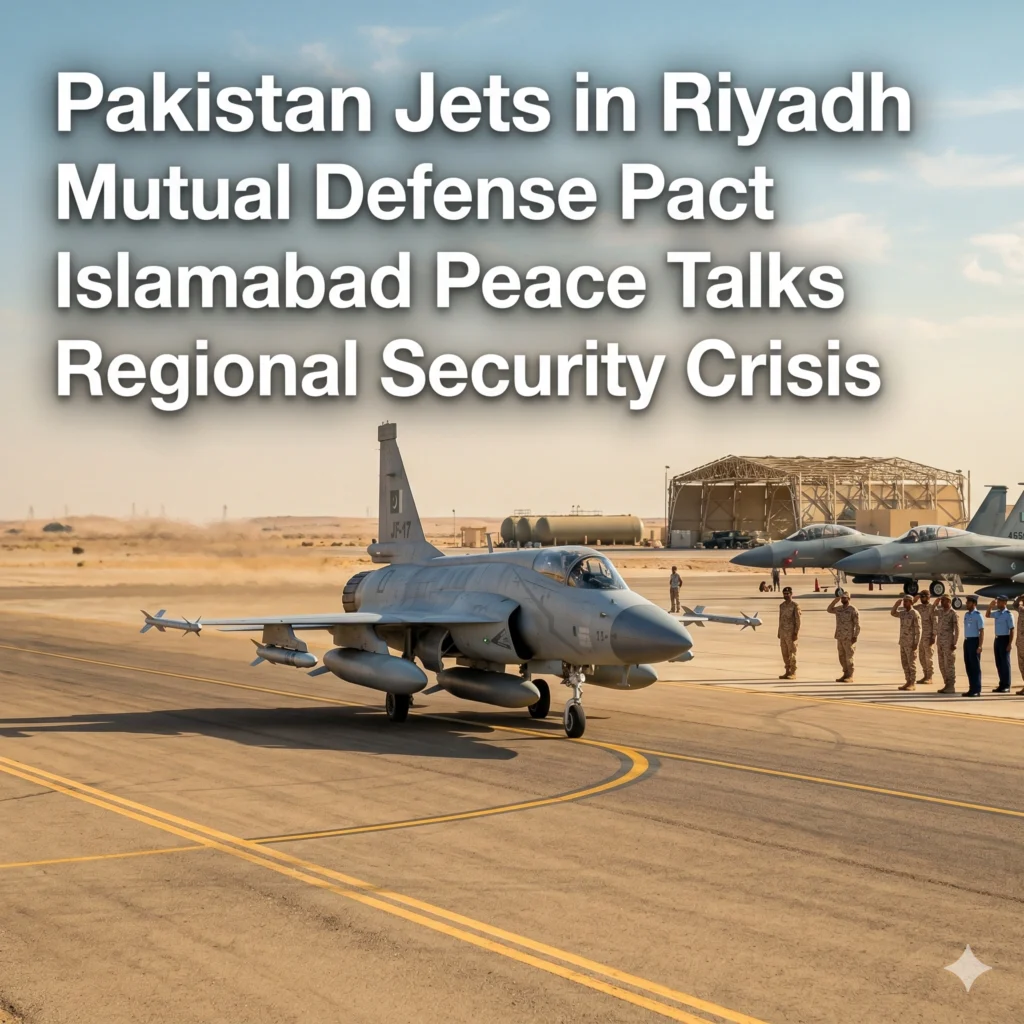
Pakistan Deploys Fighter Jets
The arrival of Pakistani military assets in the Eastern Province follows months of escalating tensions and direct attacks on critical Saudi infrastructure. By sending these advanced aerial units, Islamabad is signaling to the international community that its security guarantees to Riyadh are absolute and actionable. Pakistan Deploys Fighter Jets specifically to bolster the Kingdom’s defensive umbrella against drone and missile threats that have plagued the region recently. This move is the first major test of the 2025 mutual defense pact, which mandates that an attack on one nation is legally considered an attack on both.
Army Chief Field Marshal Asim Munir and Saudi leadership have been in close coordination for weeks leading up to this arrival at the air base. The deployment includes both multi-role combat aircraft and logistics support planes, ensuring that the Pakistani contingent can operate independently within the Saudi theater. Pakistan Deploys Fighter Jets at a time when the Kingdom is seeking to diversify its security partners beyond traditional Western allies. For Islamabad, this is a chance to prove its capability as a primary security provider for the Muslim world, reinforcing a centuries-old cultural and religious bond with modern military muscle.
Strategic Impact of Regional Defense
The integration of these forces into the regional command structure represents a significant shift in the operational readiness of the Gulf defense forces. Pakistani pilots are renowned for their technical expertise, particularly in high-altitude interceptions and rapid response maneuvers against aerial threats. Pakistan Deploys Fighter Jets to provide this specific skill set, which is crucial for neutralizing modern drone swarms. The presence of these assets also serves as a psychological deterrent, indicating that any escalation in hostilities will face a combined military response from two of the region’s largest professional armed forces.
Military analysts suggest that the logistical footprint of this mission is designed for long-term sustainability rather than a brief visit. Advanced maintenance facilities and supply lines have been established to ensure that the squadron remains at peak performance during the deployment. Pakistan Deploys Fighter Jets while maintaining its own domestic security requirements, showcasing the depth and breadth of its current military capacity. This ability to project power across the Arabian Sea is a hallmark of Islamabad’s updated foreign policy which seeks to protect national interests through proactive regional engagement.
High Stakes Diplomacy in Islamabad
While the military is moving assets into the Gulf, the civilian government in Islamabad is busy hosting a different kind of high-level diplomatic mission. Pakistan is currently the site of high-stakes ceasefire negotiations between the United States and Iran, aiming to de-escalate the very conflict that necessitated the jet deployment. Pakistan Deploys Fighter Jets while simultaneously acting as a neutral ground for these two adversarial powers to find common ground. This “dual-track” strategy is a masterclass in diplomatic balancing, where Islamabad provides security to one side while offering a diplomatic bridge to the other.
Foreign Minister Ishaq Dar has been vocal about the fact that the Pakistani jets will not be used for any offensive purposes against neighbors. This is a critical distinction, as any participation in offensive strikes against Iranian territory would likely collapse the ongoing peace talks in the capital. Pakistan Deploys Fighter Jets with the explicit caveat that Saudi soil will not be used as a launchpad for regional aggression. By maintaining this strict boundary, Pakistan hopes to protect its relationship with Tehran while still standing firmly by its commitment to the Saudi Royal family and the safety of the Kingdom’s civilian population.
Economic Incentives for Security Ties
The decision to send military hardware is rarely purely about security; economics play a vital role in these high-level strategic maneuvers. Saudi Arabia recently moved to expedite a massive five billion dollar investment package destined for the Pakistani economy, which has been struggling with inflation. Pakistan Deploys Fighter Jets as a gesture of goodwill that effectively secures these financial lifelines for the foreseeable future. This “defense-for-investment” model has become a cornerstone of the bilateral relationship, ensuring that both nations benefit from their unique strengths—Saudi financial capital and Pakistani military expertise.
- The five billion dollar package supports Pakistan’s critical foreign exchange reserves.
- New joint ventures in the mining and agricultural sectors are currently in development.
- Special economic zones are being established for Saudi firms in Punjab and Sindh provinces.
- Direct energy cooperation agreements are being signed to lower Pakistan’s rising fuel costs.
Beyond the macro-economic benefits, there is a significant human element to consider for the millions of families involved. There are over 2.5 million Pakistani expatriates working within the Kingdom, and their remittances are a primary source of foreign currency for Islamabad. Pakistan Deploys Fighter Jets to protect these citizens and the stability of the host nation where they reside and work. Any major conflict in Saudi Arabia would result in a humanitarian and economic catastrophe for millions of Pakistani families back home, making this deployment a matter of national survival.
Strategic Defense under the 2025 Pact
The legal framework for this deployment is the 2025 Mutual Defense Pact, a document that fundamentally changed the security architecture of the Middle East. Unlike previous informal agreements, this treaty includes specific clauses regarding the deployment of troops and air assets during times of crisis. Pakistan Deploys Fighter Jets under these specific legal obligations, which were ratified by the parliament in Islamabad last year. This formalization of ties was a response to the changing nature of regional warfare, specifically the rise of non-state actors and sophisticated drone technology.
Field Marshal Asim Munir’s visit to Riyadh earlier this year was instrumental in defining the “Rules of Engagement” for the newly arrived squadron. These rules ensure that the Pakistani pilots are integrated into the Saudi command structure without losing their national identity or legal protections. Pakistan Deploys Fighter Jets to participate in joint patrols and integrated air defense drills alongside Saudi forces. These activities are designed to create a seamless shield over critical infrastructure, such as oil refineries and water desalination plants, which have been targeted in recent months.
Regional Reactions to Military Moves
The reaction from neighboring countries has been a mix of caution and calculated silence during this sensitive period. Iran, while currently engaged in talks in Islamabad, has not officially condemned the move, likely because they value the diplomatic channel Pakistan is providing. Pakistan Deploys Fighter Jets with enough transparency to avoid being seen as a direct threat to the administration in Tehran. Meanwhile, other Gulf states like the UAE and Qatar are watching the deployment closely to see if this represents a permanent shift in how South Asian powers interact with Middle Eastern security.
In the West, the United States has largely supported the move, viewing Pakistan as a stabilizing force in a volatile region. Pakistan Deploys Fighter Jets as a “middle power” move that fits perfectly into the current global trend of regionalized security. By taking the lead, Pakistan reduces the burden on Western powers and provides a culturally aligned defense partner for the Saudi Kingdom. This shift is expected to have long-lasting effects on how future crises in the Arabian Peninsula are managed by the international community without requiring direct Western intervention.
Technical Capabilities of the Fleet
The specific aircraft involved in the deployment include a mix of JF-17 Thunder Block III jets and F-16 Fighting Falcons. These platforms are well-suited for the mission, offering advanced radar systems and the ability to intercept low-flying missiles. Pakistan Deploys Fighter Jets that are equipped with the latest electronic warfare suites, providing a significant upgrade to the local air defense capabilities. The inclusion of support aircraft, such as tankers for aerial refueling, ensures that the squadron can maintain a constant presence in the skies over the Eastern Province.
- JF-17 Thunder Block III provides advanced AESA radar and sensor capabilities.
- F-16 Fighting Falcons offer high-altitude interception and precision response options.
- Airborne Early Warning and Control (AEW&C) planes provide essential battle management.
- Dedicated maintenance crews have been stationed at King Abdulaziz Air Base for support.
The logistical challenge of maintaining these aircraft thousands of miles away from home is being managed with professional precision. However, the Pakistani Air Force has a long history of operating in the Gulf, having provided training to various Arab air forces for decades. Pakistan Deploys Fighter Jets with the confidence of a military that is already deeply familiar with the terrain and the operational environment. This familiarity reduces the lead time for the squadron to become “combat ready” in its new home base and effectively engage in defense missions.
The Balancing Act of Neutrality
One of the most complex aspects of this situation is how Pakistan maintains its status as a mediator while clearly picking a side in the defense of the Kingdom. The government in Islamabad insists that defending the territorial integrity of a sovereign state is not the same as taking a side in a geopolitical rivalry. Pakistan Deploys Fighter Jets as a defensive measure, which they argue is a universal right under international law. This nuance is critical for the success of the U.S.-Iran talks occurring in the Pakistani capital, as any perception of bias could lead to a collapse of the peace process.
Security analysts suggest that this deployment actually gives Pakistan more leverage in the negotiations between the two powers. By showing that it has the “hard power” to defend its interests, Islamabad becomes a more credible and serious actor in the eyes of both Washington and Tehran. Pakistan Deploys Fighter Jets to ensure that no one miscalculates its resolve or its commitment to regional stability. This “armed neutrality” is a difficult path to walk, but it is one that Pakistan has successfully navigated during previous Gulf crises throughout the late 20th century and early 21st century.
Impact on US-Iran Peace Talks
The ongoing negotiations in Islamabad are perhaps the most important diplomatic event of 2026 for the global community. Representatives from both the Biden administration and the Iranian leadership are meeting in a secluded government facility to draft a roadmap for peace. Pakistan Deploys Fighter Jets to create a “security buffer” that allows these talks to happen without the immediate threat of a major military escalation. If the talks are successful, the need for the Pakistani jets may eventually diminish, leading to a planned withdrawal later in the year or a transition to training.
However, the talks are currently described as “fragile,” according to sources close to the foreign ministry in Islamabad. There are still major sticking points regarding sanctions relief and regional influence that must be addressed by both parties. Pakistan Deploys Fighter Jets as a contingency plan in case the diplomatic path fails to yield a lasting ceasefire. By having its assets in place, Islamabad is prepared for any outcome, whether it be a peaceful resolution or a further descent into regional conflict. The presence of the aircraft serves as a physical reminder to all parties of the stakes involved.
Protecting the Pakistani Diaspora
The social impact of this military move is profound for the millions of Pakistanis living and working in the Middle East. For many workers in Riyadh, Dammam, and Jeddah, the sight of Pakistani jets provides a sense of security during a time of great global uncertainty. Pakistan Deploys Fighter Jets to reassure its citizens that the state has their back, even across international borders. This commitment to the safety of its people is a primary driver of the current administration’s foreign policy, which prioritizes the welfare of the workforce that supports the national economy.
- Over $20 billion in annual remittances come from the Saudi-based Pakistani workforce.
- Protecting this revenue stream is a top priority for the Ministry of Finance in Islamabad.
- The deployment acts as a deterrent against attacks on civilian and industrial populated areas.
- Enhanced consular services are being rolled out alongside the ongoing military mission.
In many ways, the fighter jets are an insurance policy for the future of Pakistan’s economic development and its youth. With so many young men and women looking to the Gulf for employment opportunities, the stability of Saudi Arabia is inextricably linked to the prosperity of Pakistan. Pakistan Deploys Fighter Jets to ensure that these opportunities remain available for the next generation of workers. It is a stark reminder that in a globalized world, a nation’s defense perimeter often extends far beyond its own physical and geographical frontiers.
Long-term Security Realignment
As we look toward the remainder of 2026, the partnership between Islamabad and Riyadh is expected to deepen even further into new sectors. There are already discussions about expanding the mutual defense pact to include maritime security in the Arabian Sea and counter-terrorism initiatives. Pakistan Deploys Fighter Jets as the opening act of what could be a long-term strategic realignment in the South Asian and Middle Eastern corridor. This evolution reflects a broader trend where emerging powers are taking more responsibility for the security of their own neighborhoods.
The success of this deployment will be measured by its ability to deter further attacks and its positive impact on the peace process. If the presence of Pakistani jets leads to a cooling of regional tensions, it will be hailed as a brilliant move of “preventative defense.” Pakistan Deploys Fighter Jets not to wage war, but to preserve the hard-won peace of the region. As the squadron settles into King Abdulaziz Air Base, the hope is that their presence will be enough to bring all sides back to the reality that diplomacy is the only sustainable path forward.
Conclusion and Final Assessment
The decision of 2026 to send military aid to the Kingdom marks a turning point for Islamabad’s global standing and diplomatic reach. By balancing the roles of protector and peacemaker, the country is carving out a unique niche in the complicated world of international relations. Pakistan Deploys Fighter Jets with a clear mission and a firm legal basis, ensuring that its actions are viewed as responsible by the global community. While the risks of such a deployment are high, the potential rewards for national and regional stability are far greater for everyone involved.
As the situation evolves, the international community will continue to look to Islamabad for leadership and mediation in the Gulf. The Pakistan Deploys Fighter Jets story is more than just a military headline; it is a narrative about a nation finding its voice and its strength on the world stage. Whether through the roar of a jet engine or the quiet hushed tones of a negotiation room, Pakistan is making its presence felt in the pursuit of a more stable world. We remain hopeful that these efforts will lead to the lasting ceasefire that the region so desperately needs.
For more details & sources visit: Al Jazeera
Read more about Saudi Arabia news on 360 News Orbit – Saudi Arabia.