
Mexico Residency Requirements 2026 marks a dramatic shift in the nation’s immigration landscape, as the government implements a series of rigorous financial hurdles for foreign nationals. For decades, Mexico was celebrated as one of the most accessible destinations for retirees and digital nomads seeking a high quality of life at a lower cost. However, the legislative changes enacted in late 2025 have effectively dismantled the old system of inflation-linked adjustments.
Now, prospective residents must navigate a complex web of increased income thresholds and significantly higher administrative costs to secure their legal status. This evolution reflects a strategic move by the Mexican government to be more selective in its residency approvals. As the new rules take full effect this March, many long-term travelers are finding their dreams of a permanent Mexican home increasingly difficult to achieve.
Understanding the Shift to UMA Calculations
The most significant technical change in the Mexico Residency Requirements 2026 update is the transition from “Minimum Daily Wage” multiples to “Units of Measure and Update” (UMA). For years, immigration officials used the daily wage as the benchmark for financial solvency, which kept the barriers relatively low. By shifting to UMAs and increasing the required multiples, the government has effectively raised the bar for savings and monthly income. This change specifically targets those applying for temporary residency from abroad, requiring a much larger financial cushion than in previous years.
Applicants now find that their foreign bank statements must show a consistent balance that far exceeds what was required only twelve months ago. This adjustment is not merely a correction for inflation but a deliberate tightening of the entry criteria to ensure that all new residents can fully support themselves without relying on local social services. The administrative complexity of these new calculations has also led to confusion at various consulates, where the interpretation of the UMA values can vary slightly by region.
Furthermore, the transition to UMA-based solvency means that the gap between those who can afford residency and those who cannot is widening rapidly. Financial advisors specializing in Mexican immigration are now recommending that clients maintain at least 20% more than the official minimum to account for any sudden fluctuations in currency value. As the Mexico Residency Requirements 2026 continue to evolve, staying ahead of these technical benchmarks is the only way to ensure a successful application.
Mexico Residency Requirements 2026
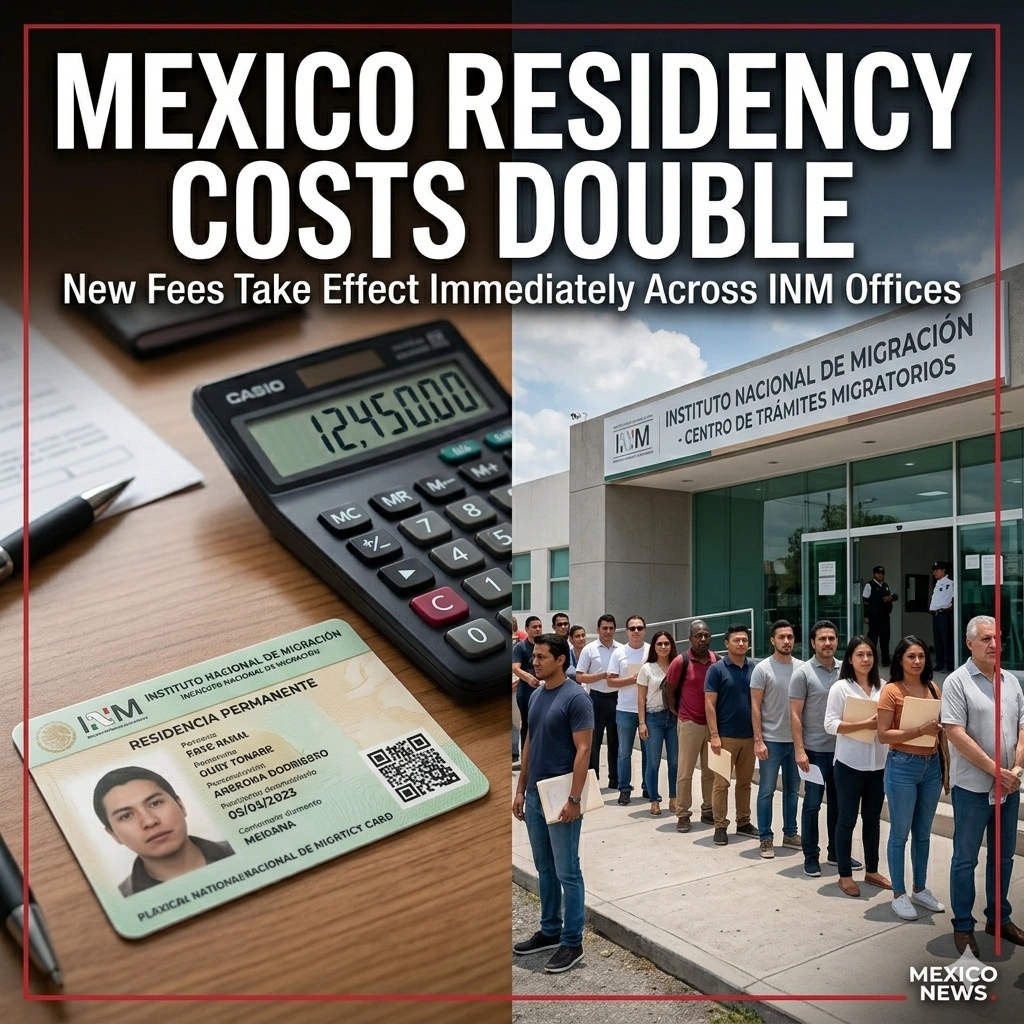
The new Mexico Residency Requirements 2026 have doubled the financial burden on applicants through a 100% increase in government processing fees. In previous years, the journey from a one-year temporary card to a permanent residency status was considered an affordable administrative process. In 2026, the total cost of this five-year transition has surged to over $50,000 pesos, which translates to approximately $2,700 USD based on current exchange rates. This sharp increase represents a significant barrier for many families and retirees living on fixed incomes.
While the government has maintained a 50% discount for those applying under “Family Unit” categories or legitimate job offers, the vast majority of independent applicants face the full brunt of these fees. These costs do not include the additional expenses associated with hiring legal counsel or professional translators, which are becoming nearly mandatory due to the increased scrutiny of the paperwork. The Mexico Residency Requirements 2026 are clearly designed to favor high-net-worth individuals and those with existing family ties in the country.
Immigration offices across the country are also reporting a “modernized administrative crackdown” that accompanies these higher fees. Officials are no longer simply glancing at bank statements; they are conducting deep dives into the source of funds and the consistency of deposits over the previous twelve months. This heightened level of investigation ensures that only those who strictly meet the Mexico Residency Requirements 2026 are granted the privilege of staying in the country long-term.
Stricter Proof of Address Protocols
- Utility bills must be no more than 60 days old and clearly show the applicant’s name or the landlord’s name.
- Rental contracts now require official notarization in many states to be considered valid for residency applications.
- Property tax receipts (Predial) are increasingly requested as secondary proof of a stable residential address.
- Bank statements used for solvency must now also feature a residential address that matches the other submitted documents.
The administrative tightening around residential proof is a direct response to the perceived “gentrification” of certain Mexican neighborhoods. By requiring multiple forms of proof, such as utility bills and notarized rental contracts, the government aims to ensure that residents are actually living in the communities they claim. This part of the Mexico Residency Requirements 2026 is particularly challenging for digital nomads who may move frequently between short-term rentals. Without a long-term lease, proving residency has become an uphill battle for many younger travelers.
Furthermore, the requirement for utility bills to be in the applicant’s name is becoming a standard practice in popular hubs like Mexico City, Playa del Carmen, and San Miguel de Allende. If a landlord refuses to provide the necessary documentation, the residency application can be stalled indefinitely. This puts a significant amount of power in the hands of property owners and requires applicants to be extremely diligent when choosing their Mexican home.
Mandatory Home Visits and Field Scrutiny
One of the most surprising additions to the Mexico Residency Requirements 2026 is the implementation of mandatory home visits for family-based applications. In an effort to curb fraudulent “marriage of convenience” cases, immigration officers are now physically inspecting the residences of applicants. These visits are unannounced and are designed to verify that the couple is indeed living together as a family unit. This level of oversight was previously rare but has now become a standard operating procedure in several major states.
These field inspections are part of a broader trend toward “administrative transparency” that the National Institute of Migration (INM) is championing this year. The visits often involve short interviews with neighbors and a check of the living conditions to ensure they match the information provided in the initial application. While this may seem intrusive to some, the government maintains it is a necessary step to protect the integrity of the Mexico Residency Requirements 2026 framework.
The wait times for these home visits can also add weeks or even months to the total processing time for a residency card. Applicants are advised to remain in the country and be available at their registered address until the verification process is complete. Failure to be present during a scheduled or surprise visit can lead to the immediate rejection of the residency file, forcing the applicant to start the expensive process all over again.
Impact on Digital Nomads and Remote Workers
- Remote workers must prove that their income is generated outside of Mexico and meets the new, higher UMA thresholds.
- Temporary residency via the “digital nomad” route now requires a minimum of 12 months of consistent high-income deposits.
- The 180-day tourist visa “reset” (border runs) is being heavily discouraged through increased digital tracking at all entry points.
- Applicants are now often asked for a “Letter of Intent” explaining how their presence benefits the local Mexican economy.
The days of the casual “border run” to reset a tourist visa are effectively over under the Mexico Residency Requirements 2026. Immigration officials are now using advanced digital tracking to identify individuals who are living in the country on back-to-back tourist permits. Those flagged for this behavior are often denied entry or given a very limited stay, forcing them to either apply for formal residency under the new, stricter rules or leave the country entirely. This has created a sense of urgency among the remote work community.
Remote workers who wish to stay in Mexico legally must now prepare a much more robust application than before. In addition to the higher income requirements, many consulates are asking for professional resumes and proof of employment contracts. The goal is to ensure that these individuals are truly “digital nomads” and not competing for local Mexican jobs. The Mexico Residency Requirements 2026 prioritize those who bring external capital into the country while respecting the local labor market.
The Long Road to Permanent Status
Transitioning from temporary to permanent residency has always been a multi-year commitment, but the Mexico Residency Requirements 2026 have made the final steps much more arduous. After four years of temporary status, residents must now prove their continued financial solvency under the new UMA rates to qualify for the permanent card. This means that even those who were approved under the old rules may find themselves ineligible for permanent status if their income hasn’t kept pace with the new requirements.
The “doubled fees” mentioned in recent legislation apply most heavily during this transition phase. The cost of the final permanent residency card is now a significant financial hurdle, especially for larger families. Because the government is looking for a “five-year journey” of compliance, any small administrative error in the early years can come back to haunt an applicant during their final permanent residency interview. Consistency and meticulous record-keeping are now the most important tools for any prospective resident.
Despite these challenges, permanent residency remains the “gold standard” for those who want to call Mexico home. It offers the right to work without a special permit and removes the need for annual renewals. However, the Mexico Residency Requirements 2026 ensure that only those who are truly committed—and financially capable—can reach this final stage. The government’s message is clear: residency is a privilege that comes with a significant price tag and high expectations of administrative compliance.
Regional Variations in Enforcement
While the Mexico Residency Requirements 2026 are federal laws, the way they are enforced can vary significantly from one state to another. For example, immigration offices in Jalisco and Quintana Roo—areas with high expat populations—tend to be much more strict regarding proof of address and income verification. In contrast, smaller offices in less popular states may still be catching up to the new digital tracking systems, although this window of leniency is closing fast.
Applicants are often tempted to “shop around” for easier immigration offices, but the INM has warned against this practice. Your residency application must be filed in the jurisdiction where you actually live. If an investigator discovers that an applicant is using a “proxy” address in a different state to take advantage of perceived easier rules, the residency can be revoked. The Mexico Residency Requirements 2026 include improved data sharing between states to prevent this exact type of administrative evasion.
This regional scrutiny also extends to the consulates abroad. A residency application that is easily approved in a Canadian consulate might be scrutinized more heavily in a U.S. consulate near the border. It is essential for applicants to research the specific requirements of the consulate where they intend to apply, as the Mexico Residency Requirements 2026 are being interpreted with varying degrees of intensity across the global diplomatic network.
Preparation Strategies for New Applicants
Given the complexity of the Mexico Residency Requirements 2026, prospective residents should begin their preparation at least six months before they plan to apply. This includes consolidating bank accounts to show a clean and consistent history of deposits that meet the UMA thresholds. Any large, “one-off” deposits are often viewed with suspicion and can lead to a request for additional documentation regarding the source of those funds.
It is also highly recommended to gather all necessary civil documents, such as birth and marriage certificates, and have them apostilled and translated by a certified Mexican expert. The Mexico Residency Requirements 2026 leave very little room for error; a single missing stamp or an unofficial translation can result in a rejected application and a lost processing fee. Investing in professional help early in the process is often cheaper than having to restart a failed application.
Finally, applicants should mentally prepare for a longer process. The surge in fee revenue has not yet translated into faster processing times. In fact, the added layers of scrutiny have made the average residency appointment longer and more detailed. Patience and a proactive attitude are just as important as the financial documents when navigating the Mexico Residency Requirements 2026.
Conclusion: The New Era of Mexican Immigration
The implementation of the Mexico Residency Requirements 2026 marks the end of an era of “easy” immigration for North Americans and Europeans. By doubling fees and raising financial thresholds, Mexico is aligning itself with other global destinations that prioritize high-value residency programs. While this shift may be disappointing for those on a tight budget, it reflects the country’s growing economic confidence and its desire to manage the social impact of large foreign populations.
For those who can meet the new standards, Mexico continues to offer a vibrant culture, beautiful landscapes, and a welcoming community. The key to success in this new environment is a thorough understanding of the Mexico Residency Requirements 2026 and a commitment to following every administrative rule to the letter. Those who approach the process with diligence and respect for the new laws will find that their path to a Mexican life is still possible, albeit more expensive and closely monitored than before.
For more details & sources visit: MExperience
Read more on Mexico news: 360 News Orbit – Mexico