
The Gulf Military Transition is rapidly accelerating as Saudi Arabia and the United Arab Emirates move closer to direct involvement in the escalating regional conflict with Iran. This potential escalation follows years of indirect confrontation, but the persistent nature of Iranian-backed strikes has pushed these regional powerhouses toward a more active and visible military role.
The move marks a departure from the cautious diplomacy that has characterized Gulf policy over the last decade. By granting the United States military expanded access to domestic air bases, Saudi Arabia has signaled that it is no longer willing to remain a passive observer while its borders are threatened. This decision is a direct response to the hardening stance of the Saudi Foreign Ministry, which recently declared that the Kingdom’s patience regarding regional instability is nearly exhausted.
Military analysts suggest that this Gulf Military Transition could fundamentally alter the geopolitical landscape of the Middle East. If Saudi and Emirati forces engage in active combat, the conflict would transform from a series of proxy battles into a full-scale regional war. Such a development carries immense implications for global energy markets and international security, as the world watches whether these nations will finally cross the threshold of formal military engagement.
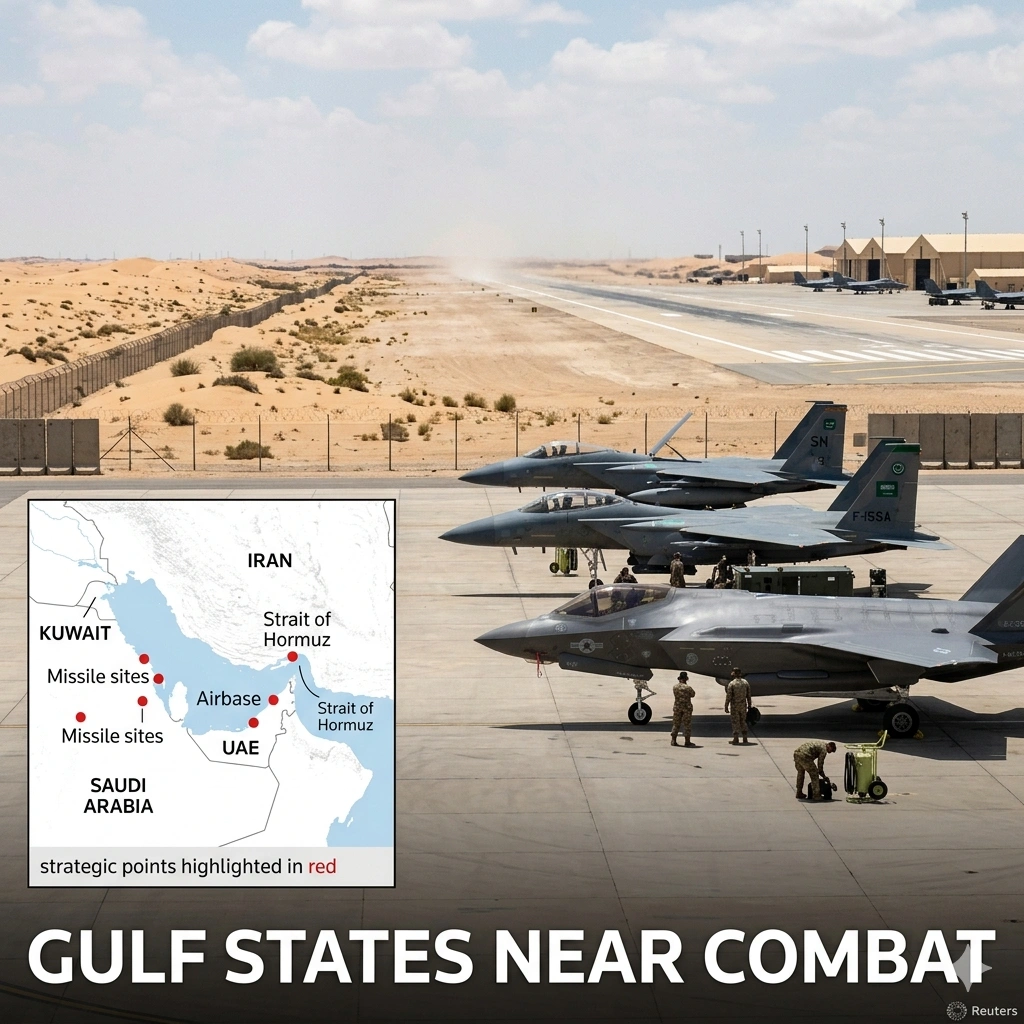
Gulf Military Transition and the End of Strategic Patience
The Gulf Military Transition represents the culmination of years of rising tensions and failed diplomatic overtures between the Gulf monarchies and Tehran. For a long time, both Riyadh and Abu Dhabi relied on a strategy of containment and economic pressure to manage the Iranian threat. However, the continuous targeting of critical infrastructure and maritime routes has proven that defensive measures alone are insufficient to deter ongoing aggression.
This transition is being driven by a realization that the existing security umbrella requires a more proactive contribution from regional players. While the United States remains a key ally, the Gulf states are increasingly focused on developing their own strike capabilities and operational independence. The authorization for U.S. forces to use Saudi air bases is seen as a cooperative step that prepares the ground for joint offensive operations if the situation continues to deteriorate.
Furthermore, the Gulf Military Transition is an ideological shift as much as a tactical one. The leadership in both nations is under domestic pressure to demonstrate strength and protect national sovereignty against external interference. By moving toward an active military role, they are signaling to both their citizens and their adversaries that the era of “strategic patience” has officially ended, replaced by a doctrine of active deterrence and potential retaliation.
Factors Driving the Gulf Military Transition in 2026
The acceleration of the Gulf Military Transition is fueled by several critical factors that have converged in early 2026. First among these is the increased frequency of sophisticated drone and missile attacks that have bypassed traditional defense systems. These incidents have highlighted vulnerabilities in the current security framework, making a more aggressive “source-neutralization” strategy appear necessary to the defense ministries in Riyadh and Abu Dhabi.
Another major factor is the changing dynamic of international alliances, where the Gulf states no longer feel they can rely solely on Western intervention. The push for a more localized military response is a way to ensure that regional interests are prioritized during any ceasefire negotiations or escalations. This newfound assertiveness is a hallmark of the modern Gulf Military Transition, where local powers seek to become the primary architects of their own security.
Additionally, the economic stakes have never been higher, with multi-billion dollar “Vision 2030” projects at risk from regional instability. Investors require a guarantee of safety that can only be provided by a robust and active military presence. The transition toward combat readiness is therefore seen as an insurance policy for the future of the region’s economic diversification and global standing.
- The failure of previous de-escalation agreements to produce lasting peace.
- Recent intelligence indicating a buildup of hostile assets near maritime chokepoints.
- A desire to integrate advanced AI-driven defense platforms into active combat roles.
- Public sentiment shifting toward a more nationalistic and assertive foreign policy.
Gulf Military Transition
The core of this geopolitical shift is the formalized Gulf Military Transition, which now dictates how the UAE and Saudi Arabia interact with the broader coalition. This term describes the process of moving from a defensive alignment to an integrated offensive posture capable of sustained regional operations. By adopting this new framework, both nations are preparing their populations for the possibility of a prolonged conflict that goes beyond simple border protection.
The implementation of the Gulf Military Transition involves massive logistical overhauls across the Arabian Peninsula. Air bases that once served primarily as transport hubs are being refitted to support advanced fighter wings and long-range surveillance drones. These technical upgrades are essential for any nation looking to project power across the Persian Gulf and counter the asymmetric threats posed by non-state actors and their sponsors.
Legal and diplomatic frameworks are also being rewritten to support the Gulf Military Transition. New mutual defense treaties between Riyadh and Abu Dhabi are reportedly being finalized to ensure that a strike on one is treated as a strike on both. This level of military integration is unprecedented in the history of the Gulf Cooperation Council, highlighting the severity of the current security crisis and the determination of its leaders to prevail.
Strategic Benefits of U.S. Access to Saudi Air Bases
A pivotal component of the Gulf Military Transition is the decision to allow U.S. forces to utilize Saudi domestic air bases for active operations. This move provides the coalition with a significant tactical advantage by reducing the flight time for response units and increasing the persistence of overhead surveillance. It effectively creates a continuous “wall of steel” that monitors and protects the region’s most sensitive energy corridors.
From a strategic perspective, this cooperation solidifies the partnership between Washington and Riyadh at a time when many questioned its durability. It sends a clear message that the two nations remain aligned on the fundamental goal of regional stability. For the Saudi leadership, this is a key step in the Gulf Military Transition, as it brings world-class logistical and intelligence support directly to their doorstep, enhancing their own domestic defense capabilities.
The presence of U.S. assets on Saudi soil also acts as a massive deterrent against any large-scale conventional assault. It forces adversaries to reconsider the cost of escalation, knowing that a strike against Saudi infrastructure could now trigger a direct response from the most powerful military in the world. This synergy is the backbone of the current Gulf Military Transition, blending local resolve with global military might to maintain order.
UAE’s Role in Enhancing Maritime Security Operations
While Saudi Arabia focuses on land-based and aerial defense, the UAE is playing a critical role in the maritime aspect of the Gulf Military Transition. As a major global logistics hub, the UAE has a vested interest in keeping the Strait of Hormuz open and safe for commercial shipping. The Emirati navy has recently stepped up its patrols and joint exercises with international task forces to combat piracy and state-sponsored harassment at sea.
The UAE’s contribution to the Gulf Military Transition includes the deployment of advanced naval corvettes and electronic warfare suites designed to detect underwater threats. By securing the waterways, Abu Dhabi ensures that the economic lifelines of the region remain intact even as tensions on land reach a breaking point. This specialized focus complements the Saudi aerial strategy, creating a multi-domain defense network.
Furthermore, the UAE has become a leader in regional intelligence sharing, hosting new coordination centers that track suspicious movements across the Gulf. This data-driven approach is a vital part of the Gulf Military Transition, allowing for “smart” defense that prioritizes high-value targets and minimizes the risk of unintended escalation. The Emirati leadership views this as a necessary evolution to protect their status as a global trade sanctuary.
- Deployment of specialized rapid-response naval units for merchant ship protection.
- Enhanced satellite monitoring of critical maritime chokepoints.
- Integration of Emirati command structures with international maritime security coalitions.
The Role of the Saudi Foreign Ministry in Direct Signaling
The Saudi Foreign Ministry has been the public face of the Gulf Military Transition, using increasingly blunt language to describe the Kingdom’s new stance. By stating that their patience is “not unlimited,” Saudi officials are moving away from the traditionally subtle language of Arab diplomacy. This transparency is intended to ensure that there is no miscalculation by adversaries regarding Riyadh’s willingness to use force.
This shift in rhetoric is a key psychological component of the Gulf Military Transition. It serves to prepare the international community for a change in behavior, framing any future military action as a necessary and defensive response rather than an unprovoked escalation. The Foreign Ministry is effectively setting the legal and moral stage for the Kingdom to take a more active role in the regional conflict.
Moreover, the ministry is actively working to build a broader coalition of support among other Arab and Islamic nations. By presenting the Gulf Military Transition as a broader effort to protect regional stability, they hope to gain diplomatic cover and logistical support from allies further afield. This proactive diplomacy ensures that the transition is seen as a legitimate collective effort rather than a unilateral move by a single power.
Implications for Global Oil Markets and Energy Security
The global economy is hyper-sensitive to any signs of the Gulf Military Transition leading to active combat. As the primary exporters of crude oil and liquefied natural gas, any disruption to Saudi or Emirati production would cause an immediate spike in global energy prices. Traders are currently monitoring the situation with extreme caution, pricing in a “war premium” that reflects the heightened risk of supply chain interruptions.
However, proponents of the Gulf Military Transition argue that an active military role will actually provide more long-term stability for the markets. By taking the fight to those who threaten the oil fields and shipping lanes, the Gulf states aim to create a “security bubble” that protects the global energy supply. This proactive approach is seen as more reliable than the previous reactive strategy, which left the markets vulnerable to sudden shocks.
The transition also includes significant investments in hardening energy infrastructure against cyber and physical attacks. New redundant pipelines and specialized defense units are being deployed as part of the Gulf Military Transition to ensure that even in the event of a conflict, the flow of energy to the world remains uninterrupted. This resilience is a key selling point for the new military doctrine being adopted by the region’s leadership.
Technological Advancements in Gulf Defense Systems
A major driver of the Gulf Military Transition is the rapid acquisition and indigenous development of cutting-edge military technology. Both Saudi Arabia and the UAE have invested billions into drones, missile defense systems, and cyber-warfare capabilities. These tools allow them to engage in “low-footprint” combat that can neutralize threats without the need for large-scale troop deployments, a crucial factor in modern regional warfare.
The integration of artificial intelligence into the command-and-control structures of these nations is a hallmark of the current Gulf Military Transition. AI systems can analyze vast amounts of sensor data in real-time to identify and track incoming threats much faster than human operators. This technological edge gives the Gulf states a significant advantage in defending their vast territories and high-value infrastructure.
Furthermore, the domestic production of military hardware is a key goal of the transition. By reducing their reliance on foreign suppliers, Riyadh and Abu Dhabi are ensuring they have the “strategic depth” needed for a prolonged engagement. The Gulf Military Transition is therefore not just about buying weapons, but about building a self-sustaining defense industry that can support a new era of regional power projection.
- Expansion of domestic drone manufacturing facilities in both Riyadh and Abu Dhabi.
- Testing of new laser-based defense systems for short-range missile interception.
- Recruitment of global tech talent to enhance national cyber-defense brigades.
Potential for Regional Escalation and “Total War” Scenarios
While the Gulf Military Transition is intended as a deterrent, there is an inherent risk that it could lead to the very regional war it seeks to prevent. If Iran perceives the transition as a prelude to a preemptive strike, it may choose to escalate first, leading to a “spiral of violence” that could engulf the entire Middle East. This delicate balance is the primary concern for international diplomats working to prevent a total collapse of order.
A “total war” scenario would involve massive missile exchanges, the closure of the Strait of Hormuz, and widespread cyber-attacks on civilian infrastructure. The Gulf Military Transition is designed to survive such a scenario, but the human and economic costs would be astronomical. This is why the move toward active combat is being handled with such gravity by the leadership in the UAE and Saudi Arabia.
The possibility of a broader conflict also raises questions about the involvement of other regional players, such as Israel, Turkey, and Egypt. The Gulf Military Transition could serve as a catalyst for a massive realignment of the entire Middle Eastern security architecture. Whether this leads to a new era of “Pax Arabica” or a generation of conflict remains the most pressing question of the 2026 geopolitical calendar.
Diplomatic Overtures vs. Military Readiness
Despite the clear trajectory of the Gulf Military Transition, both Saudi Arabia and the UAE maintain that the door to diplomacy remains open. They view their military buildup as a way to “negotiate from a position of strength.” The logic is that without a credible military threat, their adversaries have no incentive to come to the bargaining table and offer meaningful concessions on regional security.
This dual-track approach is a sophisticated component of the Gulf Military Transition. While the generals prepare for war, the diplomats continue to meet with international mediators to explore potential off-ramps. However, the conditions for peace have been significantly raised, with Riyadh now demanding an end to all proxy support as a non-negotiable prerequisite for any new security arrangement.
The international community, led by the UN and various European powers, is desperately trying to find a middle ground that honors the security concerns of the Gulf states without triggering a full-scale war. But as the Gulf Military Transition moves from the planning stages to active implementation, the window for a purely diplomatic solution appears to be closing, leaving the fate of the region in the hands of its military commanders.
- Recent “Track II” diplomatic meetings in neutral venues like Muscat and Geneva.
- Continued economic cooperation on non-security issues as a de-escalation tool.
- The role of China and Russia as potential mediators in the escalating crisis.
Impact on Domestic Stability and Public Opinion
The Gulf Military Transition is also having a profound effect on the internal social fabric of Saudi Arabia and the UAE. In both countries, the government is using the media to build a sense of national unity and purpose in the face of external threats. This “rally round the flag” effect is essential for maintaining public support for the increased defense spending and the potential loss of life that combat entails.
For the younger generation, who have grown up during a period of rapid modernization and social change, the Gulf Military Transition represents a new kind of national service. The narrative is no longer just about economic prosperity, but about the defense of the homeland. This shift is being reflected in everything from school curricula to popular culture, creating a more martial and resilient national identity.
However, there are also concerns about the long-term impact of a prolonged conflict on domestic stability. If the war leads to economic hardship or significant casualties, the currently high levels of public support could begin to erode. The leadership is acutely aware of this risk, making the success of the Gulf Military Transition a matter of domestic political survival as much as regional strategy.
Conclusion: The New Reality of the Middle East
The Gulf Military Transition is the most significant development in Middle Eastern security since the end of the Cold War. It represents a fundamental shift in the way the region’s most powerful economies view their role in the world. No longer content to rely on others for their safety, Saudi Arabia and the UAE are taking direct control of their destinies, even if it means moving toward an active role in a regional war.
As we move further into 2026, the implementation of this transition will continue to dominate the headlines. The global community must now adjust to a reality where the Gulf states are not just “oil powers,” but “military powers” capable of projecting force far beyond their borders. The success or failure of the Gulf Military Transition will determine the shape of the Middle East for decades to come, for better or for worse.
Ultimately, the goal of this transition is to achieve a lasting peace through strength. Whether this gamble pays off depends on the ability of the Gulf leadership to balance military assertiveness with diplomatic wisdom. The stakes could not be higher, and the world can only hope that the Gulf Military Transition leads to a more stable and secure future rather than a catastrophic regional conflagration.
For more details & sources visit: Times of Israel (citing WSJ)
Read more about Saudi Arabia news on 360 News Orbit – Saudi Arabia.