
The Guam Student Cultural Exchange project recently reached a new milestone as three award-winning culinary students from Hirosaki Vocational High School arrived on island. This initiative, spearheaded by the Guam Visitors Bureau (GVB), serves as a strategic bridge between Japan and the United States territory. By focusing on the shared language of food, the program aims to strengthen educational tourism and foster deep cultural growth. As international travel trends shift toward experiential learning, this exchange positions Guam as a premier destination for youth academic markets.
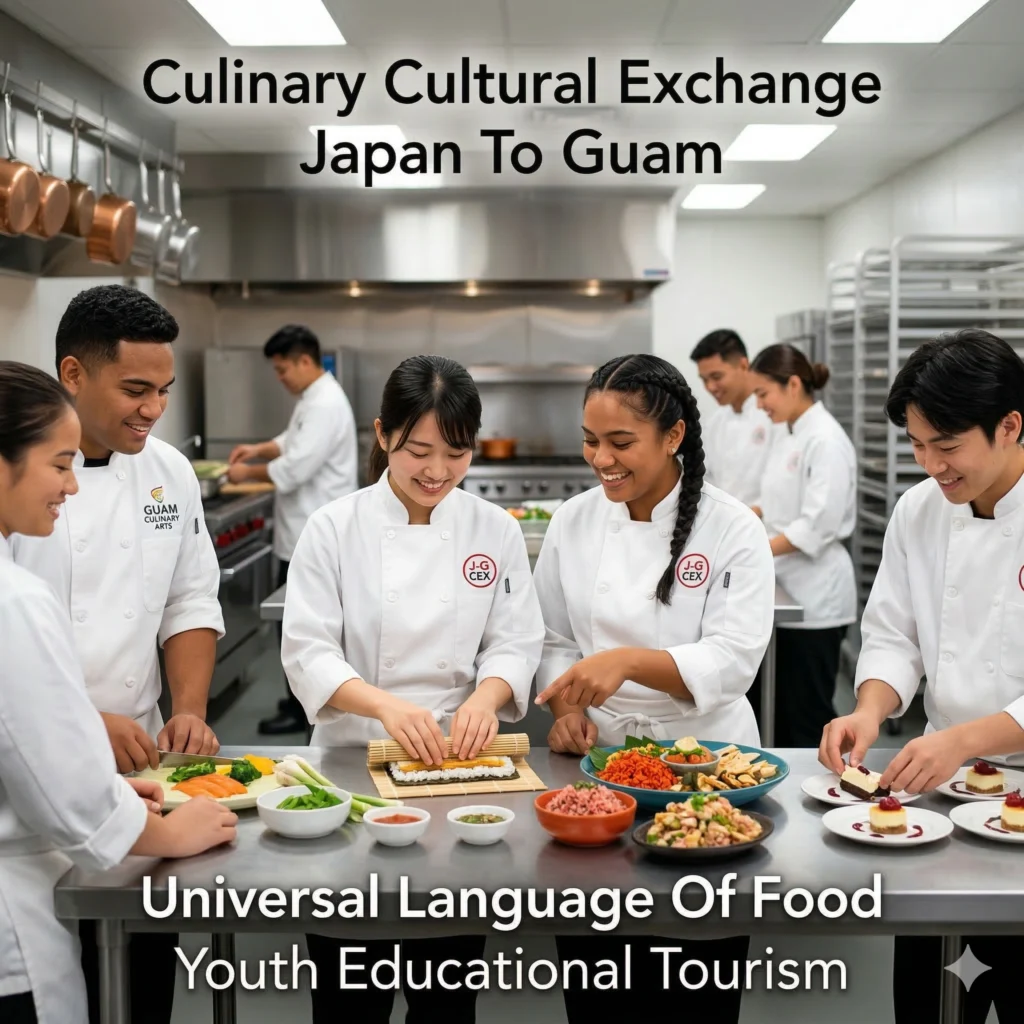
The Guam Student Cultural Exchange program provided a platform for Hina Nagai, Kotoko Niwa, and Aoi Kamada to showcase their talents at Guam Community College (GCC). These young chefs earned their place in the program after outperforming over three hundred schools in the prestigious Umamaimon Koshien competition in Japan. Their arrival marks a significant moment for GCC’s culinary department, which recently opened its refurbished kitchen facilities. The event was not just a cooking class but a sophisticated diplomatic engagement involving the next generation of global culinary leaders.
Strategic Benefits of the Guam Student Cultural Exchange Program
The Guam Student Cultural Exchange offers a unique opportunity for students to compare the precision of Japanese techniques with the bold flavors of the Pacific. During the workshop, local GCC students demonstrated the intricate process of making manha tatiyas and the delicate balance required for fish kelaguen. These dishes are staples of Guam’s culinary identity and require a deep understanding of local ingredients. Observing these techniques allowed the visiting students to appreciate the complexity behind seemingly simple traditional recipes.
A major highlight of the Guam Student Cultural Exchange was the live demonstration of coconut harvesting and juice extraction. For many visitors, seeing how a fresh coconut is opened is a quintessential island experience that highlights the self-sufficiency of traditional Pacific life. The Japanese students were captivated by the physical skill and timing required to access the fruit’s juice and meat. This hands-on experience provided a sensory connection to the land that goes far beyond what can be learned in a standard classroom setting.
The Guam Student Cultural Exchange also serves as a vital tool for the Guam Visitors Bureau to diversify its tourism portfolio. By promoting educational exchanges, the island can attract a younger demographic of travelers who are interested in more than just beaches. These students return to Japan as ambassadors for Guam, sharing their stories and photos with friends and family. This organic word-of-mouth marketing is incredibly valuable for building long-term interest in the island as a cultural and educational hub in the Western Pacific.
Guam Student Cultural Exchange
The Guam Student Cultural Exchange reached its peak when the visiting trio from Hirosaki Vocational High School presented their award-winning culinary creation. Their featured dish was a sushiko parfait, a unique dessert that combines traditional rice elements with modern confectionery aesthetics. This dish represented the innovation currently happening in Japanese vocational schools, where students are encouraged to reinvent classic flavors. The GCC students were impressed by the meticulous presentation and the surprising combination of textures found within the parfait.
Within the Guam Student Cultural Exchange, communication was facilitated by GVB representatives who provided real-time translation between Japanese and English. Despite the language barrier, students from both countries found that they could communicate effectively through the observation of knife skills and kitchen organization. Local participants noted that the Japanese students maintained an incredible level of cleanliness and precision throughout their cooking process. These shared values of professionalism created an immediate bond between the two groups of aspiring chefs.
The Guam Student Cultural Exchange also included a massive buffet where participants could sample a wide variety of local delicacies. The spread featured red rice, smoked meat, and ube bread, providing a comprehensive taste of the island’s flavor profile. For the Japanese students, the sweet cassava cake was a particular favorite, showcasing the versatility of root crops in Pacific island baking. This communal meal served as the ultimate icebreaker, allowing students to relax and enjoy the fruits of their collective labor in a social setting.
Educational Synergy in the Guam Student Cultural Exchange
The Guam Student Cultural Exchange is part of a larger effort by Guam Community College to modernize its vocational training programs. By hosting international competitions and exchanges, the college ensures its students are prepared for the high standards of the global hospitality market. The newly refurbished culinary arts kitchen and baking center provided the perfect backdrop for this high-level technical exchange. These facilities are designed to mimic professional environments, giving students the confidence they need to succeed in international kitchens.
Through the Guam Student Cultural Exchange, department chairs emphasized that culinary arts are a universal language. When a student observes the way a fish is filleted or the way dough is kneaded, they understand the intent regardless of the words being spoken. This non-verbal communication is a powerful tool for building international empathy and cooperation. The exchange proved that even students from vastly different backgrounds can find common ground when they share a passion for excellence and a respect for ingredients.
The Guam Student Cultural Exchange also included a cultural immersion component that took the students beyond the walls of the college. The visiting trio explored Two Lover’s Point, one of Guam’s most iconic landmarks, where they learned about the island’s legends and history. They also visited the Wednesday Night Market in Hagåtña, a vibrant center of local commerce and food. These excursions provided a broader context for the flavors they experienced in the kitchen, helping them understand the lifestyle and values of the people of Guam.
Enhancing Identity Through the Guam Student Cultural Exchange
The Guam Student Cultural Exchange is a strategic step toward elevating Guam’s cultural identity in the international youth market. For many years, Guam has been seen primarily as a shopping and sun destination, but initiatives like this highlight its rich history. By focusing on “food tourism,” the island can tap into a growing global interest in authentic and indigenous experiences. This shift not only benefits the tourism industry but also helps preserve local knowledge by giving it a platform for international appreciation.
In the Guam Student Cultural Exchange, the interaction between students serves as a catalyst for future collaborations between Hirosaki and GCC. There are already discussions about making this an annual event, potentially sending Guam students to Japan for a similar exchange. Such a reciprocal relationship would provide local students with invaluable exposure to one of the world’s most respected culinary cultures. Expanding the program in this way would solidify the bond between the two regions and create a sustainable pipeline for talent exchange.
- The program highlights the potential for “Culinary Diplomacy” in the Western Pacific.
- Youth markets in Japan are increasingly looking for authentic cultural interactions.
- Local students gain confidence by teaching their traditions to international winners.
- The exchange validates the high standard of GCC’s vocational training facilities.
Global Reach of the Guam Student Cultural Exchange
The impact of the Guam Student Cultural Exchange extends far beyond the kitchen, influencing how both regions approach hospitality education. As the culinary world becomes more interconnected, chefs who understand multiple cultural perspectives are in high demand. This program gives students a head start by exposing them to different philosophies of food preparation and service. Whether it is the Japanese focus on seasonal precision or the Chamoru focus on community and family style, students walk away with a broader professional toolkit.
During the Guam Student Cultural Exchange, the visiting students were also introduced to the concept of “farm-to-table” as it exists in a tropical environment. They learned how local ingredients like manha (young coconut) and ube are sourced and processed directly from the land. This understanding of the food supply chain is a critical part of modern culinary education. It encourages students to think about sustainability and the environmental impact of their ingredient choices, a topic of growing importance in both Japan and Guam.
- Traditional ingredients like manha and ube are showcased as premium culinary assets.
- Students learn about the logistical challenges and rewards of island-based agriculture.
- Sustainability is a core theme in the discussions between Japanese and local educators.
- The program encourages the use of indigenous techniques in modern menu development.
Future Projections for the Guam Student Cultural Exchange
As the Guam Student Cultural Exchange continues to grow, there is potential to include more vocational schools from across Asia. This would transform Guam into a regional hub for culinary competition and cultural sharing. The success of this inaugural event with Hirosaki Vocational High School provides a proven model that can be pitched to other international partners. The Guam Visitors Bureau is keen on using these success stories to secure more funding for educational tourism initiatives in the coming years.
The Guam Student Cultural Exchange will also likely incorporate digital elements in the future, such as live-streamed cooking battles or virtual recipe sharing. This would allow students who cannot travel to still participate in the cultural dialogue. By leveraging technology, GCC and GVB can reach a much wider audience, further promoting Guam’s culinary brand to millions of potential visitors. This digital expansion is a key part of the island’s 2030 tourism strategy, which prioritizes innovation and global connectivity.
Impact on Local Student Careers via Guam Student Cultural Exchange
Local students who participated in the Guam Student Cultural Exchange have already reported a renewed interest in their studies. Seeing the level of skill possessed by their Japanese peers has motivated many GCC students to push themselves harder in their technical training. This competitive yet friendly environment is perfect for rapid skill acquisition. Many students now see their culinary education as a passport that can take them all over the world, starting with the connections they made during this exchange.
The Guam Student Cultural Exchange also provides local students with networking opportunities that are usually unavailable in a standard classroom. Interacting with GVB officials and international educators gives them a glimpse into the professional world of tourism and international relations. Some students have even expressed interest in applying for internships in Japan to further their understanding of the techniques they witnessed. This broadening of horizons is perhaps the most significant long-term benefit of the Guam Student Cultural Exchange.
- Participation in international events looks excellent on student resumes and portfolios.
- Students learn the importance of cultural sensitivity in the global hospitality workplace.
- The exchange fosters a sense of global citizenship among Guam’s youth.
- New career pathways in international food tourism are introduced to local students.
Sustainable Tourism and the Guam Student Cultural Exchange
The Guam Student Cultural Exchange aligns perfectly with the global trend toward sustainable and responsible tourism. By focusing on local food and culture, the program encourages visitors to engage with the island in a way that is respectful and mutually beneficial. This type of tourism has a much lower environmental impact than mass-market tourism while providing a higher economic return to the local community. It is a win-win scenario for both the visitors and the hosts.
Within the Guam Student Cultural Exchange, the emphasis on traditional cooking methods also helps to preserve endangered culinary techniques. As processed foods become more common, the knowledge of how to prepare dishes from scratch using local plants is at risk of being lost. By teaching these skills to international visitors, local students are helping to ensure that their heritage remains a living, breathing part of the island’s culture. This preservation is a core goal of the Guam Student Cultural Exchange and a major reason for its continued support.
- Indigenous recipes are documented and shared with a global audience.
- The program promotes the use of locally grown produce, supporting Guam’s farmers.
- Cultural exchange creates a deeper level of respect between tourists and residents.
- Sustainable practices in the kitchen are modeled for the next generation of chefs.
Final Reflections on the Guam Student Cultural Exchange
The Guam Student Cultural Exchange has proven to be a resounding success, blending education, culture, and tourism into a single impactful initiative. The three students from Hirosaki Vocational High School leave Guam with a deep appreciation for CHamoru hospitality and flavor. Meanwhile, the students at Guam Community College have gained a new perspective on the precision and artistry of Japanese cuisine. This mutual enrichment is the true heart of the program and the reason it is so vital for the island’s future.
For more details & sources visit: Pacific Daily News
For the latest updates from Japan, visit our Japan news page.