
Germany Vietnam Partnership initiatives have reached a transformative stage, with the launch of a specialized development cooperation program. This strategic alliance, supported by the Deutsche Gesellschaft für Internationale Zusammenarbeit (GIZ), aims to solve a critical shortage of overhead line technicians in Europe. By recruiting and training up to 200 skilled Vietnamese workers for German firms like Omexom, the project creates a “win-win” scenario for both nations. As Germany accelerates its transition to renewable energy, the integration of international talent is becoming the backbone of its power grid expansion.
The Germany Vietnam Partnership focuses on bridging the massive skills gap in the high-voltage electricity sector. Facing a severe domestic labor deficit, German infrastructure giant Omexom Hochspannung has turned to Vietnam’s national provider, EVN, to establish a world-class training center. This collaboration ensures that Vietnamese technicians receive instruction that meets the rigorous standards of the German Chamber of Industry and Commerce. Beyond technical mastery, the program includes intensive German language courses and cultural integration modules to prepare workers for their new lives in Europe.
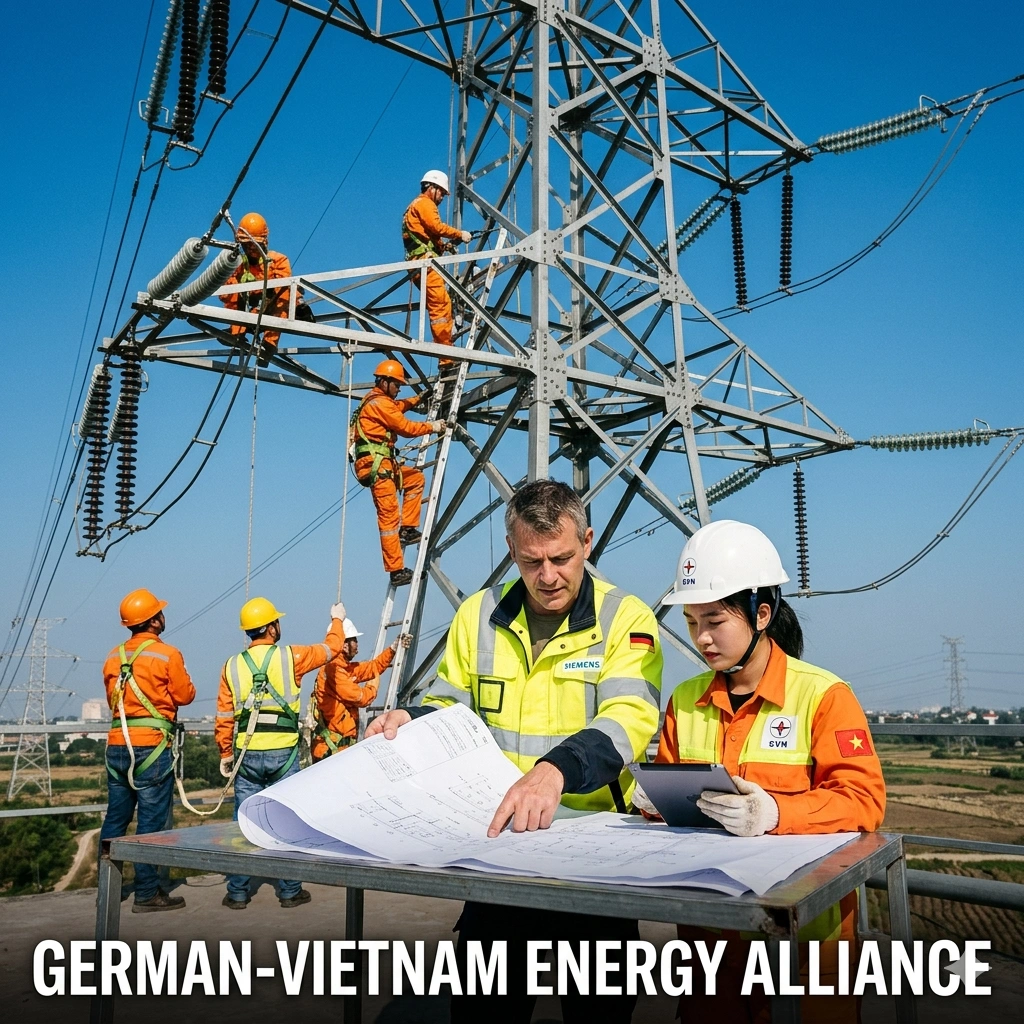
Technical Training and International Certification
The Germany Vietnam Partnership utilizes a “train-the-trainer” model to ensure long-term sustainability and educational quality. Vietnamese instructors are being sent to Germany for advanced pedagogical training, allowing them to bring European technical standards back to EVN’s local facilities. This knowledge transfer ensures that the curriculum remains aligned with the latest innovations in overhead line technology and safety protocols. Students are taught to work with complex high-voltage systems that are critical for connecting offshore wind farms to the national grid.
Under the Germany Vietnam Partnership, every graduate receives a certification that is recognized globally, significantly increasing their career mobility. The training environment mimics the challenging conditions found in the German field, from weather resistance to advanced climbing techniques. This hands-on approach reduces the “onboarding” time once the workers arrive in Germany, allowing them to contribute to infrastructure projects immediately. Such precision in training is what distinguishes this GIZ-supported project from standard labor migration schemes.
The Germany Vietnam Partnership also prioritizes the safety and well-being of the participants through a “Fair Recruitment” framework. This ensures that all workers are treated with the same rights and benefits as their German counterparts, preventing the exploitation often seen in international labor markets. By establishing a transparent and legal pathway for migration, both governments are protecting the dignity of the workforce. This ethical stance has earned the project praise from international labor organizations and environmental NGOs alike.
Germany Vietnam Partnership
The Germany Vietnam Partnership is currently the centerpiece of Germany’s “Skilled Immigration Act” implementation in the energy sector. As the country phases out coal and nuclear power, the need for a modernized grid has never been more urgent. This partnership provides the “boots on the ground” necessary to physically string the miles of cable required for a carbon-neutral future. Without the influx of Vietnamese expertise, many of Germany’s flagship green energy projects would face multi-year delays due to a lack of specialized staff.
Within the Germany Vietnam Partnership, the role of GIZ is to act as a bridge between the private sector and governmental bodies. GIZ handles the complex logistics of visa processing, language testing, and the initial integration of workers into German society. This comprehensive support system minimizes the “culture shock” that can often lead to high turnover rates in international programs. By investing in the human side of the energy transition, Germany is ensuring the long-term success of its industrial workforce.
The Germany Vietnam Partnership also has a significant impact on Vietnam’s domestic energy goals. Many of the workers who participate in this program will eventually return to Vietnam with world-class experience and technical leadership skills. They will be perfectly positioned to lead Vietnam’s own domestic grid upgrades as the country seeks to integrate more solar and wind power. The partnership is therefore a form of “brain gain” for Hanoi, providing a high-return investment in its most valuable natural resource: its people.
Language and Cultural Integration Strategies
A unique feature of the Germany Vietnam Partnership is the emphasis on linguistic proficiency before departure. GIZ has funded dedicated language centers where students undergo six months of intensive German studies tailored to technical terminology. Being able to communicate effectively on a high-voltage construction site is not just a matter of convenience; it is a critical safety requirement. This focus on communication ensures that the Vietnamese teams can integrate seamlessly with their German supervisors and local communities.
- Intensive technical German vocabulary training for electrical engineering.
- Cultural orientation workshops to navigate German workplace etiquette.
- Ongoing support services for families remaining in Vietnam during the contract.
- Digital platforms for peer-to-peer mentoring between new and senior workers.
The Germany Vietnam Partnership recognizes that successful labor migration requires more than just a job offer. By fostering a sense of community among the participants, the program builds a resilient support network that lasts for years. Many of the first recruits have already begun sharing their experiences via social media, encouraging more young Vietnamese professionals to join the project. This organic growth is a testament to the high level of satisfaction among those already enrolled in the program.
Addressing the European Energy Crisis
The Germany Vietnam Partnership is being launched against the backdrop of a broader European fuel and energy crisis. As discussed in the “Vietnam Russia Energy” summit earlier this week, nations are scrambling to diversify their energy sources and modernize their grids. Germany’s reliance on international labor is a direct result of the shrinking domestic working-age population. By securing a reliable pipeline of talent from Vietnam, Berlin is insulating its energy transition from the demographic pressures facing the rest of the European Union.
- Reduction in project completion times for major North-South power links.
- Lowering of recruitment costs for German energy firms through GIZ hubs.
- Enhanced technical cooperation between European and Asian energy ministries.
- Strategic positioning of Germany as a preferred destination for Asian tech talent.
The Germany Vietnam Partnership proves that environmental goals and labor policy are inextricably linked in 2026. You cannot build a green economy without the specialized hands needed to construct the physical infrastructure. This realization is driving similar deals across the continent, but the German-Vietnamese model remains the most advanced in terms of training and ethical standards. It is a proactive solution to a problem that was once thought to be insurmountable.
Future Expansion and Long-Term Outlook
Looking ahead, the Germany Vietnam Partnership is expected to expand beyond overhead line technicians into other green tech sectors. Plans are already in motion to include training for heat pump installers and electric vehicle charging station engineers. The “win-win” logic of the program is easily scalable, and both governments are eager to double the number of participants by 2028. This long-term commitment provides stability for the firms involved and a clear career path for the students in Vietnam.
The Germany Vietnam Partnership also facilitates broader academic research into sustainable migration and technical education. Universities in both countries are collaborating to study the effectiveness of the “train-the-trainer” model in different cultural contexts. This academic oversight ensures that the project remains at the cutting edge of international development theory. As the world watches the “Amazon Water Pilgrimage” or the “Antarctic Sleeper Shark” discovery, the quiet work of these technicians is what powers the global shift toward sustainability.
In conclusion, the Germany Vietnam Partnership is a landmark achievement in international cooperation. It solves a critical labor shortage for Germany while providing transformative opportunities for the youth of Vietnam. By focusing on quality training, ethical recruitment, and cultural integration, the program sets a high bar for the global community. The power lines being built today by these dedicated technicians will carry the energy of a cleaner, more connected world for generations to come.
As the 200 graduates prepare to depart for Germany, the eyes of the global energy sector are on them. Their success will be the ultimate proof that the Germany Vietnam Partnership is a viable strategy for the future of the planet. We must continue to support such initiatives that bridge the gap between developed and emerging economies. The energy transition is a global challenge, and through partnerships like this, we are finally finding the global solutions we need.
The Germany Vietnam Partnership reminds us that the greatest resource we have is not oil, gas, or even the sun—it is human ingenuity and cooperation. As these technicians climb to new heights in the German countryside, they are quite literally building the bridge to a brighter future. Let us celebrate this alliance as a beacon of hope and a practical roadmap for the 21st-century labor market. The grid is growing, the lights are staying on, and the partnership is just getting started.
For more details & sources visit: DW (Deutsche Welle)
Read more about Germany news on 360 News Orbit – Germany.