
Egypt Horizontal Drilling Expansion is a strategic cornerstone in the nation’s 2026 roadmap to achieve energy independence and economic stability. President Abdel Fattah Al-Sisi recently convened a high-level summit with Prime Minister Mostafa Madbouly and Petroleum Minister Karim Badawi to finalize a massive technological rollout. This initiative focuses on deploying advanced extraction methods to unlock unconventional hydrocarbon reserves that were previously unreachable. By modernizing the energy sector, Egypt aims to significantly reduce its reliance on costly imports and secure its domestic power supply for the long term.
The Egypt Horizontal Drilling Expansion plan is not merely about increasing volume but about precision and efficiency in the oilfield. For decades, the Egyptian energy sector relied on traditional vertical wells, which often left significant quantities of gas and oil trapped in tight rock formations. The shift to horizontal methods allows drillers to follow thin, productive layers of rock over long distances, maximizing the contact area with the reservoir. This technical pivot is essential for the government’s ambitious goal of achieving total self-sufficiency in crude oil production by the year 2030.
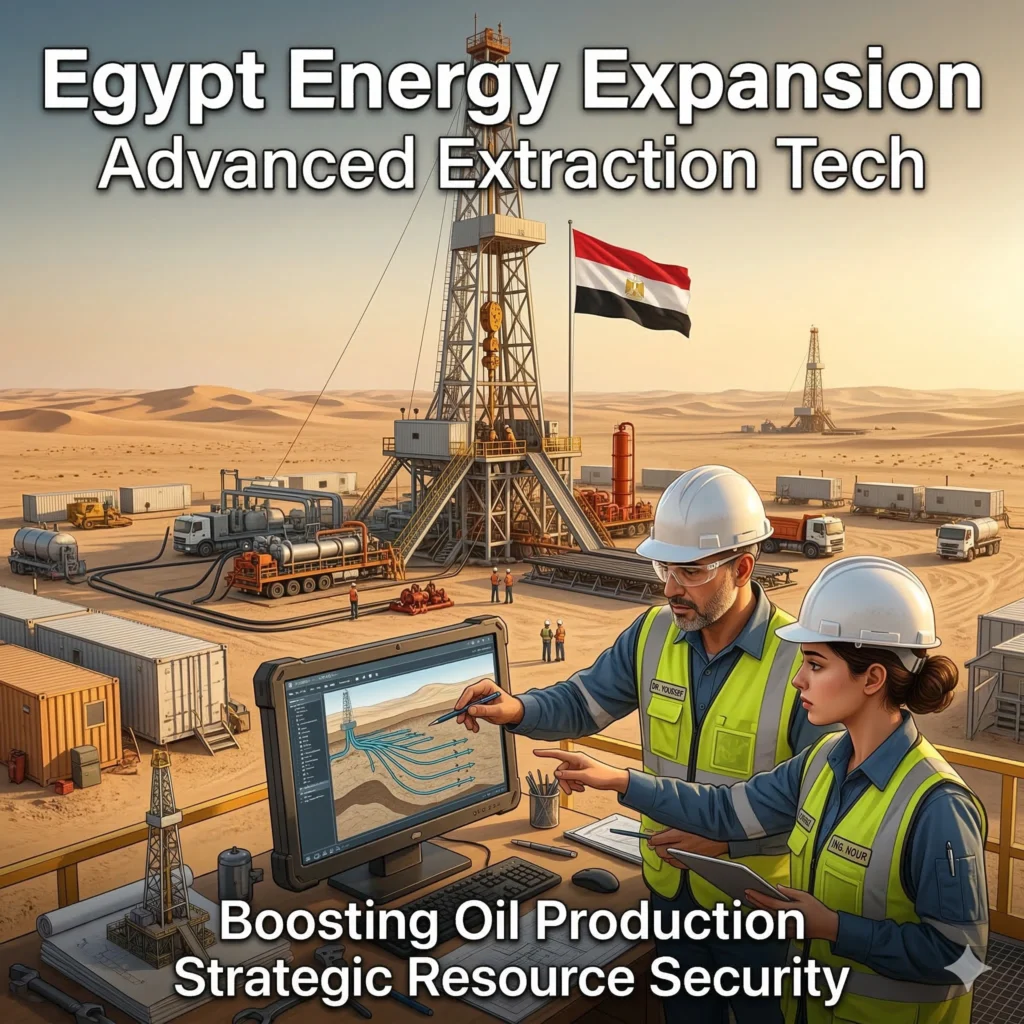
Strengthening the Egypt Horizontal Drilling Expansion Infrastructure
The infrastructure supporting the Egypt Horizontal Drilling Expansion is undergoing a rapid transformation to accommodate high-pressure extraction equipment. New pipelines and processing facilities are being designed to handle the increased flow rates expected from unconventional wells in the Western Desert and other key regions. These facilities must be robust enough to withstand the specific chemical and pressure profiles associated with hydraulic fracturing. By investing in this hardware now, Egypt is building a resilient foundation that will support the nation’s energy needs for decades to come.
Government officials believe that the Egypt Horizontal Drilling Expansion will serve as a magnet for international investment. To facilitate this, Petroleum Minister Karim Badawi is developing new incentive models that offer better returns for technology partners who bring advanced drilling rigs to Egypt. These models are designed to be flexible, accounting for the higher operational costs associated with unconventional extraction. By creating a favorable business environment, Egypt is positioning itself as a primary destination for global energy capital in the Middle East and North Africa.
Moreover, the Egypt Horizontal Drilling Expansion is closely tied to a new five-year exploration plan that integrates aerial mineral resource surveys. These surveys use advanced sensors to identify geological signatures of oil, gas, and mineral deposits from the air, covering vast tracts of land more quickly than ground teams. This multi-layered approach to resource identification ensures that the government can prioritize the most promising sites for horizontal drilling. The integration of aerospace technology and geology marks a new era for Egypt’s resource management strategy.
Egypt Horizontal Drilling Expansion
The Egypt Horizontal Drilling Expansion project is a record boost for the national economy, as it directly addresses the high cost of energy imports. For the past several years, Egypt has spent billions of dollars on liquefied natural gas (LNG) to meet the demands of its growing population and industrial base. By successfully tapping into domestic unconventional reserves, the government can redirect those funds toward education, healthcare, and infrastructure. This financial shift is a critical component of the country’s broader economic reform program aimed at long-term fiscal health.
In the context of the Egypt Horizontal Drilling Expansion, the government has recently settled five billion dollars in arrears to foreign energy partners. This significant payment was a necessary step to restore investor confidence and ensure that international companies remain committed to Egyptian projects. Maintaining a regular monthly payment schedule is now a top priority for the Ministry of Finance and the Ministry of Petroleum. When international partners feel financially secure, they are more likely to deploy their most advanced horizontal drilling rigs and fracking technologies to Egyptian fields.
The Egypt Horizontal Drilling Expansion also plays a vital role in regional energy security during times of geopolitical tension. With global energy prices fluctuating due to external conflicts, having a strong domestic production capacity provides a buffer against market volatility. President Al-Sisi emphasized that energy security is a matter of national sovereignty, and the deployment of advanced technology is the best way to protect the Egyptian people from global price shocks. This perspective has turned the energy sector into a primary focus of the national security apparatus.
Economic Incentives for the Egypt Horizontal Drilling Expansion
Attracting global giants like Eni, BP, and Chevron is essential for the Egypt Horizontal Drilling Expansion to reach its full potential. The government is currently drafting “Production Sharing Agreements” (PSAs) that are specifically tailored for unconventional resources. These agreements often feature higher cost-recovery limits to compensate companies for the expensive technology used in horizontal drilling and fracking. By aligning Egyptian law with global industry standards, the government is removing the barriers that previously hindered unconventional exploration.
The Egypt Horizontal Drilling Expansion is also expected to stimulate the local supply chain, from construction firms to logistics providers. As more rigs move into the Western Desert, there is a growing demand for specialized services, such as water management for fracking and chemical sourcing. Local companies are being encouraged to form joint ventures with international service providers to gain the necessary certifications and expertise. This “multiplier effect” ensures that the benefits of the energy boom are felt across various sectors of the Egyptian economy.
- New PSAs offer better cost-recovery terms for high-tech unconventional projects.
- Joint ventures between local and global firms are being prioritized for service contracts.
- The expansion creates a massive demand for logistics, housing, and industrial services.
- Incentives are being offered for companies that invest in carbon-capture during extraction.
Environmental Management in the Egypt Horizontal Drilling Expansion
Environmental protection is a critical consideration for the Egypt Horizontal Drilling Expansion, particularly regarding water usage and waste disposal. Fracking requires significant volumes of water, and in a water-scarce nation like Egypt, this must be managed with extreme care. The government is mandating the use of recycled or brackish water for industrial purposes to preserve the country’s precious freshwater resources. Advanced water-treatment facilities are being built alongside new drilling sites to ensure that flowback water is cleaned and reused.
The Egypt Horizontal Drilling Expansion also focuses on minimizing “fugitive” methane emissions during the drilling and completion phases. Methane is a potent greenhouse gas, and the Ministry of Petroleum is implementing strict leak detection and repair (LDAR) protocols for all new unconventional wells. By using “green completions,” which capture gas that would otherwise be flared, Egypt is making its energy sector more sustainable. This commitment to environmental best practices is essential for maintaining the country’s standing in the international community.
- Mandatory water recycling protocols protect Egypt’s limited freshwater supplies.
- Leak detection technology is used to minimize methane emissions during fracking.
- “Green completion” techniques are used to capture gas instead of flaring it.
- Environmental impact assessments are required for all horizontal drilling permits.
Future Outlook for the Egypt Horizontal Drilling Expansion
As the Egypt Horizontal Drilling Expansion moves into its operational phase, the focus will shift toward optimizing production from the first wave of unconventional wells. Data gathered from these initial sites will be used to build a comprehensive digital model of Egypt’s subsurface resources. This “digital twin” of the nation’s reservoirs will allow engineers to simulate different extraction scenarios and choose the most efficient path forward. This data-driven approach is a key part of the government’s modernization strategy for the 2030 vision.
The Egypt Horizontal Drilling Expansion is also expected to pave the way for a more robust mining sector. The technologies used for deep exploration in the oil and gas industry, such as seismic imaging and directional drilling, are often applicable to the search for minerals like gold and copper. By building a high-tech extraction workforce, Egypt is creating a versatile industrial base that can pivot to other resource sectors as needed. This diversification is essential for creating a resilient and modern Egyptian economy.
- Subsurface digital modeling will optimize future drilling paths and reservoir drainage.
- Technical skills from the oil sector will be transferred to the expanding mining industry.
- The project aims to make Egypt a regional hub for unconventional energy expertise.
- Long-term goals include the export of technology and services to neighboring nations.
Overcoming Challenges in the Egypt Horizontal Drilling Expansion
One of the primary challenges for the Egypt Horizontal Drilling Expansion is the high upfront cost of the necessary machinery. A single horizontal well can cost three to four times as much as a conventional vertical well, and the results are not always guaranteed. To mitigate this risk, the government is pooling resources through the Egyptian General Petroleum Corporation (EGPC) to fund the most promising pilot projects. This state support provides a safety net that encourages private companies to take the leap into unconventional exploration.
The Egypt Horizontal Drilling Expansion also faces logistical hurdles in moving massive drilling rigs across rugged desert terrain. This requires the construction of new roads and support infrastructure in remote areas that were previously inaccessible. The military and the Ministry of Transport are collaborating to build these vital links, ensuring that the energy sector has the physical support it needs to succeed. These infrastructure projects also benefit local communities by improving regional connectivity and creating temporary construction jobs.
- State-funded pilot projects reduce the financial risk for private international partners.
- Military-civilian collaboration ensures the construction of heavy-duty desert roads.
- Rig logistics are being streamlined through a new centralized coordination center.
- Training programs are being accelerated to fill the gap in specialized technical labor.
The Role of Innovation in the Egypt Horizontal Drilling Expansion
Innovation is at the heart of the Egypt Horizontal Drilling Expansion, with a particular focus on “nanotechnology” in fracking fluids. Researchers at Egyptian universities are collaborating with oilfield firms to develop tiny particles that can help keep fractures open more effectively, even under the immense pressure of deep rock layers. This home-grown innovation is a perfect example of the “localization” of technology that President Al-Sisi has championed. By fostering a culture of research and development, Egypt is ensuring that it remains a leader in the global energy transition.
The Egypt Horizontal Drilling Expansion also explores the use of artificial intelligence (AI) to monitor well performance in real-time. Sensors placed deep inside the wellbore transmit data back to a central command center, where AI algorithms look for patterns that might indicate a potential problem. This proactive maintenance reduces downtime and prevents costly accidents, making the entire extraction process safer and more profitable. This integration of the digital and physical worlds is the hallmark of the “Industry 4.0” approach currently being adopted by the Egyptian Ministry of Petroleum.
- Nanotechnology is being developed locally to improve the efficiency of fracking fluids.
- AI-driven monitoring systems provide real-time data on well health and pressure.
- Collaborative research between universities and industry speeds up tech adoption.
- Digital command centers allow for the remote management of multiple drilling sites.
Social Impact of the Egypt Horizontal Drilling Expansion
The social impact of the Egypt Horizontal Drilling Expansion is largely positive, as it creates a wealth of high-paying jobs for the nation’s youth. Petroleum engineering has always been a prestigious field in Egypt, but the shift to horizontal drilling provides a new set of challenges and opportunities for the next generation. Training centers are being established in the Suez Canal zone and other industrial hubs to teach the specific skills needed for unconventional extraction. This investment in human capital is perhaps the most lasting legacy of the project.
Furthermore, the Egypt Horizontal Drilling Expansion contributes to the development of remote regions by bringing electricity and infrastructure to the desert. As energy companies build out their networks, nearby villages often gain access to better roads and more reliable power. The government is also encouraging energy firms to invest in social responsibility projects, such as building schools and clinics in the areas where they operate. This ensures that the wealth generated from the earth benefits the people who live above it, fostering a sense of national unity and progress.
- High-tech jobs in the energy sector provide a path to the middle class for thousands.
- Remote desert communities benefit from the infrastructure built for drilling sites.
- Corporate social responsibility (CSR) initiatives improve local health and education.
- The project inspires a new generation of scientists to focus on energy and the environment.
Conclusion: The Legacy of Egypt Horizontal Drilling Expansion
The Egypt Horizontal Drilling Expansion represents a bold vision for a nation that refuses to be limited by its conventional resource base. By embracing the most advanced technologies available, Egypt is turning difficult-to-access hydrocarbons into a source of national strength and prosperity. The project is a testament to the power of strategic planning and international cooperation, bringing together the world’s best engineers to work on the shores of the Nile and the sands of the Sahara. As the 2030 deadline approaches, the success of this expansion will be a defining moment in Egypt’s modern history.
Ultimately, the Egypt Horizontal Drilling Expansion is about more than just oil and gas; it is about the transformation of a nation into a high-tech industrial powerhouse. The skills, infrastructure, and financial stability gained from this project will provide the foundation for decades of future growth. Under the leadership of President Al-Sisi and the Ministry of Petroleum, Egypt is proving that even the most challenging obstacles can be overcome with innovation and determination. The future of Egypt is bright, and it is being drilled, one horizontal kilometer at a time.
For more details & sources visit: Egypt Today
For the latest updates from Egypt, visit our Egypt news page.