
Economic cooperation between Germany and Syria has reached a significant milestone as experts highlight new pathways for mutual growth and industrial modernization. The recent forum held in Berlin marks a strategic shift toward long-term development, moving beyond temporary aid to focus on sustainable production models. This high-level dialogue serves as a vital platform for technology transfer, ensuring that both nations can navigate the complexities of the modern global market through direct investment and shared expertise.
Strengthening economic cooperation requires a multi-faceted approach that addresses infrastructure, human capital, and legal clarity. By fostering direct communication between Damascus and Berlin, the forum has laid the groundwork for reconstruction efforts that prioritize essential services and industrial output. The transition to a production-driven economy is no longer just an aspiration but a necessary step for regional stability and financial independence in an increasingly interconnected world.
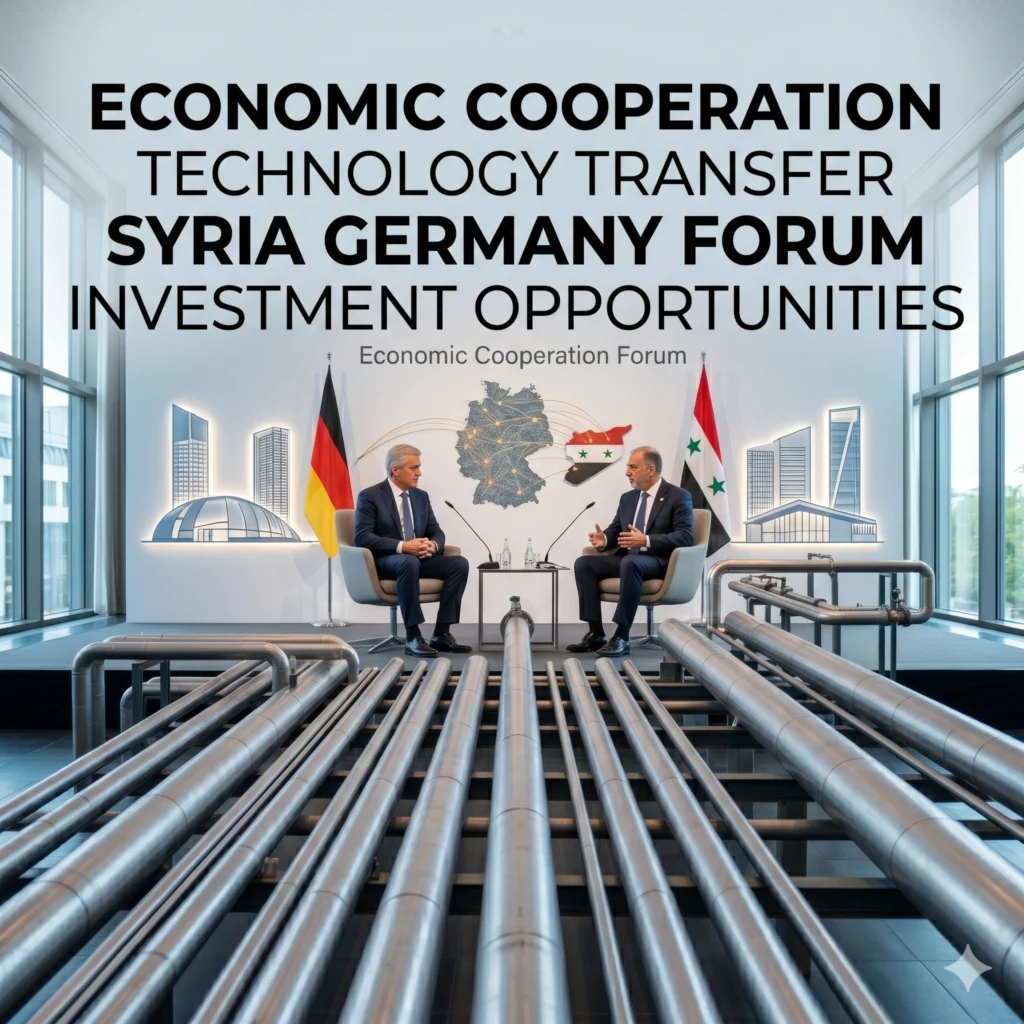
The Shift Toward Production-Driven Models
Expert Samer Rahal emphasized during the forum that the future of bilateral relations depends on a fundamental change in economic philosophy. Economic cooperation must now pivot from a relief-based system to one that incentivizes local manufacturing and value-added services. This transition is expected to create thousands of jobs while reducing the reliance on imports for basic commodities. By focusing on production, Syria can begin to rebuild its national competitiveness and reintegrate into the global supply chain.
The move toward a production-heavy model involves upgrading existing production lines with modern German technology. This type of economic cooperation ensures that local industries are not just surviving but are equipped to compete at an international level. Leaders at the forum agreed that a robust industrial base is the backbone of any successful recovery, providing the necessary fiscal space for the government to invest in social programs and further infrastructure development.
Energy Sector as a Primary Priority
A critical component of successful economic cooperation is the stabilization and expansion of the energy sector. Currently, a significant gap exists between energy production and local demand, which hampers industrial growth and domestic stability. German expertise in renewable energy and grid efficiency offers a transformative opportunity for the Syrian energy landscape. By partnering on large-scale power projects, both nations can ensure a reliable flow of electricity for factories and households alike.
Addressing the energy deficit requires significant capital investment and technical know-how, areas where Berlin has a proven track record. Economic cooperation in this field will likely involve the construction of new power plants and the rehabilitation of older units using high-efficiency turbines. These projects not only solve immediate power shortages but also serve as a training ground for local engineers, fostering a culture of technical excellence and innovation.
Industrial Partnerships and Technology Transfer
Expanding industrial partnerships is a cornerstone of the new strategy for economic cooperation discussed in Berlin. German firms are world leaders in machinery and automotive engineering, making them ideal partners for upgrading Syrian manufacturing plants. This transfer of technology is essential for modernizing the agricultural processing and textile sectors, which have historically been the pillars of the national economy. Through these partnerships, local businesses can adopt leaner and more efficient production methods.
- Implementing automated quality control systems in textile factories.
- Introducing advanced irrigation technology for large-scale farming.
- Upgrading chemical processing plants to meet European environmental standards.
- Establishing joint ventures for the assembly of specialized medical equipment.
Economic Cooperation
True economic cooperation is achieved when both parties find mutual benefit in long-term investments and knowledge sharing. The forum showcased how German companies can provide the technical “know-how” while Syrian partners offer deep knowledge of local markets and regional logistics. This synergy is particularly potent in the construction and logistics sectors, where rebuilding efforts require a massive influx of materials and organized labor management.
The forum also highlighted the role of small and medium-sized enterprises (SMEs) in driving economic cooperation at the grassroots level. By facilitating business-to-business meetings, the event helped bridge the gap between European investors and local entrepreneurs. These connections are vital for creating a diverse economic ecosystem that is resilient to external shocks and capable of organic growth over the next decade.
Structural Reforms in the Banking Sector
Banking expert Ibrahim Nafeh Qoushji noted that for economic cooperation to thrive, significant structural reforms are required within the financial legal framework. Transparency is the most critical element for building trust with international investors who demand clear and stable regulations. By aligning banking practices with global standards, Syria can create a more attractive environment for foreign direct investment and secure trade financing for its exporters.
Enhancing the transparency of the banking sector involves implementing rigorous auditing processes and digitalizing financial records. These steps ensure that economic cooperation is supported by a reliable monetary system that protects the assets of all participants. Furthermore, stable investment protection guarantees are essential for convincing German firms to commit their capital to long-term infrastructure and industrial projects within the country.
Agriculture and Food Security Goals
Agriculture and food processing have been identified as high-potential areas for deep economic cooperation. Ensuring food security is a top priority for any recovering nation, and German agricultural technology can play a major role in increasing crop yields. By focusing on high-value exports, the agricultural sector can become a significant source of foreign currency, which is needed to fund other areas of the reconstruction process.
- Adopting precision farming techniques to conserve water and fertilizers.
- Building modern cold-storage facilities to reduce post-harvest losses.
- Developing organic certification programs for export to European markets.
- Training local farmers in the use of sustainable pest management systems.
The Role of Vocational Training
Both experts at the forum agreed that a sustainable production economy is impossible without a highly skilled workforce. Economic cooperation therefore includes a heavy emphasis on vocational training and technical education. German “dual-education” models, which combine classroom learning with on-the-job training, are being adapted to suit the local context. This ensures that the youth are equipped with the specific skills required by modern industrial employers.
Investing in human capital is the most durable form of economic cooperation because it empowers the local population to drive their own recovery. Technical schools are being revitalized with updated curricula that focus on electronics, mechanical engineering, and digital literacy. By producing a steady stream of qualified technicians, the country becomes a more attractive destination for international companies looking to set up manufacturing hubs in the region.
Transparency and Legal Frameworks
The global economy increasingly depends on the private sector to stimulate markets, but this requires a foundation of legal certainty. Economic cooperation is often hindered by bureaucratic hurdles that can be solved through legislative modernization. The forum participants discussed the need for a unified investment law that provides clarity on tax incentives, land ownership, and dispute resolution. Such a framework would significantly lower the perceived risk for German investors.
Stable regulations act as a magnet for high-quality investment that brings more than just capital—it brings standards of corporate governance and environmental responsibility. Economic cooperation that is built on a solid legal footing is more likely to result in long-term partnerships rather than short-term speculative ventures. This focus on “quality over quantity” in investment is a key theme of the Berlin discussions.
Re-engaging with European Markets
The Berlin forum represents a gradual but steady step toward re-engaging with the broader European markets through economic cooperation. By meeting the stringent quality standards required by German consumers, Syrian products can eventually find their way into shops across the European Union. This integration is vital for the long-term economic health of the region, providing a stable destination for exports and a source of high-tech imports.
Re-engagement also involves diplomatic efforts to normalize trade relations and remove barriers that currently impede the flow of goods and services. The dialogue initiated at the forum provides a roadmap for how economic cooperation can lead to a more comprehensive partnership. As trust is rebuilt through successful business ventures, the scope of cooperation is expected to expand into new areas like tourism and digital services.
Enhancing National Competitiveness
To boost national competitiveness, every sector must be optimized for efficiency and innovation. Economic cooperation with Germany provides a shortcut to this goal by allowing local industries to skip over outdated technologies and move directly to modern solutions. This “leapfrogging” strategy is particularly effective in the digital and energy sectors, where new innovations are rapidly changing the global landscape.
- Integrating renewable energy sources into the industrial power grid.
- Utilizing data analytics to optimize supply chain management.
- Developing specialized industrial zones with world-class infrastructure.
Financial and Monetary Policies
The private sector’s ability to stimulate markets depends heavily on supportive fiscal and monetary policies. Economic cooperation extends to the realm of policy advice, where experts share best practices for managing inflation and encouraging private credit growth. A stable currency and a predictable tax regime are the prerequisites for any business to plan for the future.
The forum highlighted the importance of a collaborative approach to policy-making, where the government consults with the private sector to ensure that new regulations are practical and effective. Economic cooperation is most successful when there is a shared vision between the state and the business community. This alignment allows for the efficient allocation of resources toward the most productive sectors of the economy.
Infrastructure and Reconstruction Efforts
Rebuilding the nation’s infrastructure is a massive undertaking that requires international economic cooperation. Roads, bridges, and ports must be modernized to facilitate the movement of goods and people. German engineering firms have expressed interest in participating in these projects, bringing their world-renowned expertise in logistics and heavy construction to the table.
Reconstruction is not just about physical buildings; it is about creating a functional environment where commerce can thrive. Economic cooperation in infrastructure also includes the development of telecommunications networks that are essential for a modern digital economy. High-speed internet and reliable mobile services are the foundations upon which all other modern industries are built.
Future Outlook for Cooperation
The outlook for German-Syrian economic cooperation remains optimistic as both nations see the clear benefits of a closer relationship. The success of the Berlin forum has prompted calls for a follow-up meeting in Damascus to further cement these ties. As the security situation continues to stabilize, the volume of trade and investment is expected to grow exponentially.
Leaders are now looking toward 2027 and beyond, planning for a decade of growth and industrial renewal. The foundations laid today through economic cooperation will determine the prosperity of future generations. By staying focused on production, technology transfer, and legal reform, both nations are ensuring a partnership that is as durable as it is beneficial.
Environmental Sustainability in Industry
Modern economic cooperation must also account for the global shift toward green technology and environmental sustainability. German companies are at the forefront of the “Energiewende,” or energy transition, and this knowledge is invaluable for a nation looking to rebuild its industry responsibly. Sustainable economic cooperation means building factories that are energy-efficient and minimize their environmental impact.
- Implementing water recycling systems in heavy industry.
- Reducing carbon emissions through modern filtration technology.
- Promoting the use of biodegradable materials in food packaging.
Strengthening Human Resource Development
At its heart, economic cooperation is about people. Developing human resources through education and international exchanges is the best way to ensure the long-term success of any economic strategy. The forum discussed programs for Syrian students to study in Germany and for German experts to provide on-site training in Damascus. This cultural and intellectual exchange enriches both societies and builds lasting personal connections.
A workforce that is globally connected and technically proficient is the ultimate asset for any country. Through economic cooperation, the next generation of leaders, engineers, and entrepreneurs is being prepared to take their place on the world stage. This focus on the human element ensures that the economic gains of today are translated into social progress and a higher standard of living for all.
Conclusion: A New Era of Partnership
The German-Syrian Economic Cooperation Forum has set a new tone for international relations in the region. By focusing on practical, production-oriented solutions, both nations are moving toward a future of shared prosperity. Economic cooperation is the key that unlocks the potential of the national economy, providing the technology, capital, and training needed for a full recovery.
As we move forward, the commitment to transparency and structural reform will be the benchmark of success. The journey toward a stable and prosperous economy is a marathon, not a sprint, but the steps taken in Berlin have provided a powerful start. With continued dedication to economic cooperation, the goal of a modernized, competitive, and self-sufficient nation is well within reach.
For more details & sources visit: SANA (Syrian Arab News Agency)
Read more about Syria news on 360 News Orbit – Syria.