
The official Cuba travel warning has reached a critical level as the nation grapples with a systemic collapse of its most basic infrastructure. Diplomatic authorities escalated their advisory to the highest possible alert, urging all foreign nationals to cancel pending trips. This drastic measure stems from a total breakdown in electricity, water, and transportation services across the island. Consequently, the safety of international visitors can no longer be guaranteed by local or foreign governments.
The current Cuba travel warning reflects a nation paralyzed by a severe energy deficit and dwindling fuel reserves. While the island has historically faced economic challenges, the present crisis is described by experts as a near-total societal halt. With hospitals struggling to maintain power and food supplies rotting in non-functional refrigerators, the humanitarian situation has become dire. Travelers are being told that the “tourist experience” has effectively vanished, replaced by survival logistics.
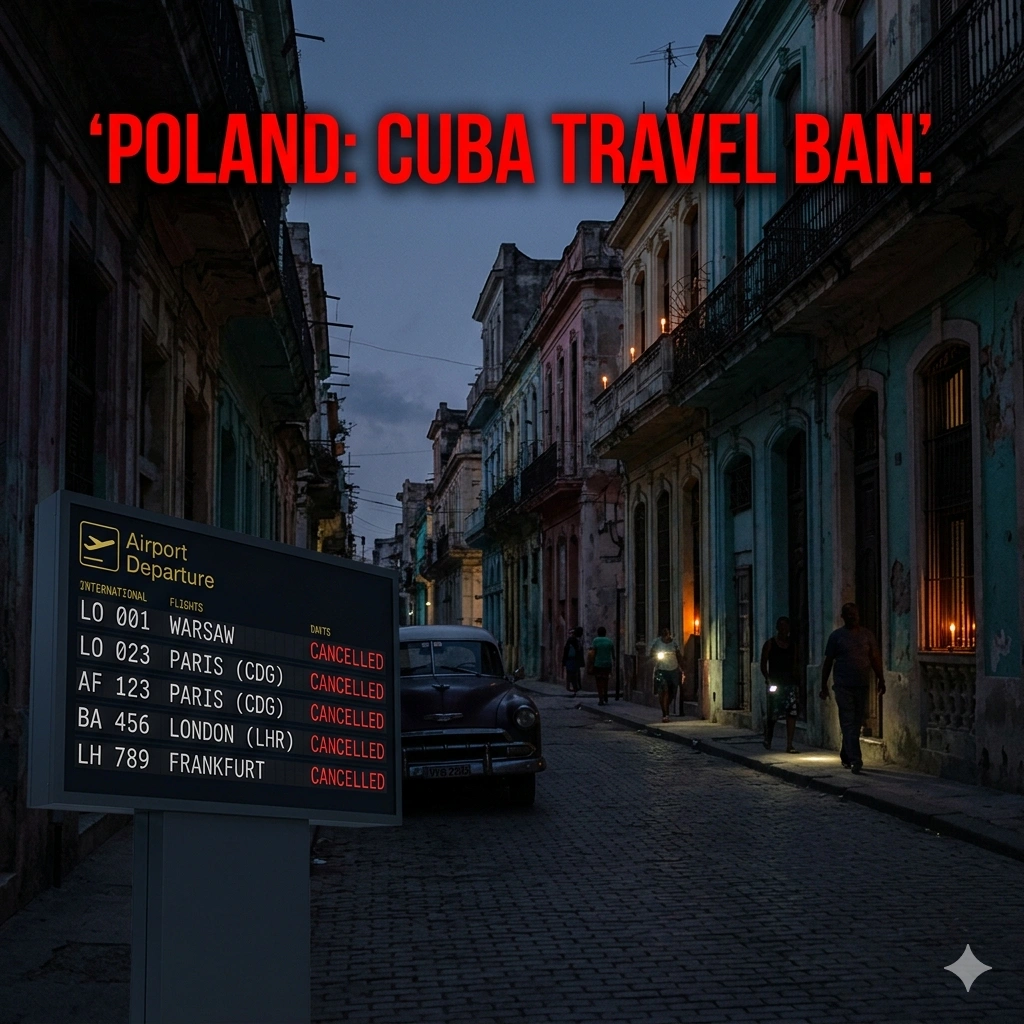
The Total Breakdown of the National Power Grid
The primary factor behind the recent Cuba travel warning is the catastrophic failure of the electrical grid. For several weeks, major urban centers, including the capital, have been plunged into darkness for up to 20 hours per day. This lack of power affects everything from street lighting to electronic payment systems, making daily life impossible. Without a functional grid, the basic safety measures that protect tourists have completely evaporated.
Furthermore, the Cuba travel warning highlights that these blackouts have led to a secondary crisis involving water sanitation. Pumping stations require electricity to deliver clean water to hotels and residential areas alike. As these pumps fail, the risk of waterborne illnesses has spiked, posing a significant health threat to any visitors. The lack of air conditioning in the tropical heat further complicates the health of those with pre-existing conditions.
The energy crisis cited in the Cuba travel warning also means that digital communication is intermittent at best. Most cell towers and internet hubs lack the backup power necessary to stay online during prolonged outages. This creates a dangerous information vacuum where travelers cannot contact their embassies or families during emergencies. The isolation caused by this technological failure is a major reason for the “Do Not Travel” status.
Cuba travel warning
The escalating Cuba travel warning is now a central topic for international aviation authorities and maritime agencies. As of late March 2026, the shortage of aviation fuel has reached a point where international carriers are canceling flights without notice. This has created a logistical nightmare at Havana’s airport, where hundreds of European and North American travelers are currently stranded. The lack of a clear exit strategy for these individuals has prompted a wave of emergency diplomatic cables.
In addition to flight issues, the Cuba travel warning notes that local ground transport is effectively stalled. Gasoline and diesel are being prioritized for state-led emergency services, leaving taxis and buses without fuel. This means that even if a traveler manages to arrive, they may have no way to reach their destination or return to the airport. The sheer unpredictability of movement on the island is a key component of the current safety advisory.
The official Cuba travel warning also emphasizes that the “tourist bubbles” once considered safe are now failing. Luxury resorts that previously operated on independent generators are now running out of fuel to keep those systems going. Visitors are reporting that they are being asked to leave their hotels as staff can no longer provide meals or clean water. This collapse of the hospitality infrastructure marks a permanent shift in the island’s risk profile for 2026.
Rising Geopolitical Tensions and Social Unrest
A significant layer of the Cuba travel warning involves the increasing risk of civil disobedience and public protests. As the local population faces extreme shortages of food and medicine, spontaneous demonstrations have broken out in various provinces. While these protests are a cry for help, they often lead to a heavy-pitched security presence. Travelers are warned that being in the vicinity of these gatherings could lead to accidental detention or injury.
Moreover, the Cuba travel warning is influenced by the heightened rhetoric coming from international powers regarding the island’s stability. Diplomatic channels suggest that the internal decay could lead to a broader regional conflict or a sudden change in governance. This geopolitical instability makes the island a volatile environment where the rules of engagement can change in an instant. Foreigners are advised that they could become pawns in a larger political struggle.
The Polish Foreign Ministry, which led the charge on the Cuba travel warning, specifically noted that the risk of crime is rising. As the economic situation worsens, opportunistic thefts targeting affluent-looking foreigners have become more frequent. Local police forces are focused on maintaining state order and have little bandwidth to investigate petty crimes against tourists. This lack of legal protection is a major deterrent for any potential visitor.
Critical Failure of the Healthcare System
The health sector is perhaps the most tragic victim of the crisis described in the Cuba travel warning. Most hospitals are now operating in “survival mode,” with limited access to basic medications like antibiotics or even bandages. For a tourist, an accidental injury that would be minor elsewhere could become life-threatening in Cuba. The lack of refrigeration for vaccines and specialized medicines has rendered most clinics ineffective for serious care.
Medical evacuation is also becoming nearly impossible under the conditions mentioned in the Cuba travel warning. Because of the fuel crisis and the grounding of flights, air ambulances are finding it difficult to secure landing permits and refueling. This means that a traveler who suffers a heart attack or a major trauma may have no way to be transported to a modern facility. The risk-to-reward ratio for visiting the island has shifted into dangerous territory.
International insurance providers are now responding to the Cuba travel warning by excluding the island from standard coverage. Many policies have “war and civil unrest” clauses that are triggered by the current Level 4 advisories. This means that anyone who chooses to ignore the warnings may be personally liable for hundreds of thousands of dollars in medical or evacuation costs. The financial risk is now as significant as the physical danger.
Impact on International Diplomacy and Consular Services
The Cuba travel warning has forced many nations to reduce their diplomatic footprints on the island. Consulates are operating with minimal staff as they struggle to keep their own offices powered and supplied. This reduction in personnel means that the ability to provide passports or legal aid to stranded citizens is severely limited. The “safety net” that travelers usually rely on has been pulled back significantly.
Diplomatic missions are using the Cuba travel warning to coordinate a possible multi-national evacuation effort. However, such an operation is complicated by the fact that the Cuban government maintains strict control over its borders. Negotiating the entry of foreign relief vessels or planes is a slow process that cannot be relied upon in a sudden crisis. This bureaucratic hurdle adds another layer of anxiety for those currently trapped in the country.
Finally, the Cuba travel warning serves as a message to the Cuban authorities that the status quo is unsustainable. By cutting off the flow of tourists, the international community is signaling that the current mismanagement of resources has consequences. While this pressure is intended to force reform, the immediate result is a further tightening of the economic noose. Travelers are caught in the middle of a high-stakes game of international pressure and local survival.
Summary of the Current Travel Restrictions
- The Cuba travel warning is currently at the highest “Do Not Travel” level.
- Blackouts lasting over 20 hours have paralyzed all major cities.
- Aviation fuel shortages have grounded international and domestic flights.
- Hospitals lack the power and supplies to treat foreign nationals.
- Public protests and social unrest are increasing due to food shortages.
What to Do if You Are Currently in Cuba
If you find yourself on the island despite the Cuba travel warning, your primary goal should be to secure a means of exit. Contact your embassy immediately and register your location, even if the internet is spotty. It is vital to stay away from any public gatherings or protests, as these can turn violent without warning. Stock up on any available bottled water and shelf-stable food while you still have the chance.
The Cuba travel warning also suggests that you carry a significant amount of hard currency in cash, as ATMs are likely non-functional. However, keep this cash hidden to avoid becoming a target for theft. If your hotel or guesthouse loses its ability to provide services, try to move toward Havana. The capital generally receives a higher priority for what little electricity and security resources remain during the total grid failure.
Check with your airline daily, as some “rescue flights” may be organized at the last minute. The Cuba travel warning implies that these windows of opportunity will be brief and highly competitive. Do not wait for a formal invitation to leave; if a seat becomes available on any flight out of the country, take it regardless of the destination. Your goal is to reach a stable territory where you can then re-route to your home country.
The Long-Term Consequences for Cuban Tourism
The damage done by the current Cuba travel warning will likely take years, if not decades, to repair. The tourism industry relies on a reputation for safety and reliability, both of which have been shattered. When the lights eventually come back on, the memory of these “dark weeks” will remain in the minds of travel agents and vacationers. This represents a catastrophic loss of revenue for a nation that desperately needs it.
Moreover, the Cuba travel warning highlights a shift in how we view “adadventure travel.” There is a fine line between visiting a developing nation and entering a failed state, and Cuba has crossed that line in 2026. Future travelers will likely demand much higher levels of infrastructure guarantees before returning to the island. This could lead to a more “enclaved” form of tourism where guests never leave the security of foreign-owned resorts.
In conclusion, the Cuba travel warning is a somber reflection of a national tragedy. As the island struggles to find a path toward stability, the international community must prioritize human safety over leisure. We must hope for a swift resolution to the energy and economic crises, but for now, the message is clear. Stay away from Cuba until the government can once again guarantee the basic rights and safety of its guests.
For more details & sources visit: News.az (citing Xinhua)
Read more on Poland news: 360 News Orbit – Poland.